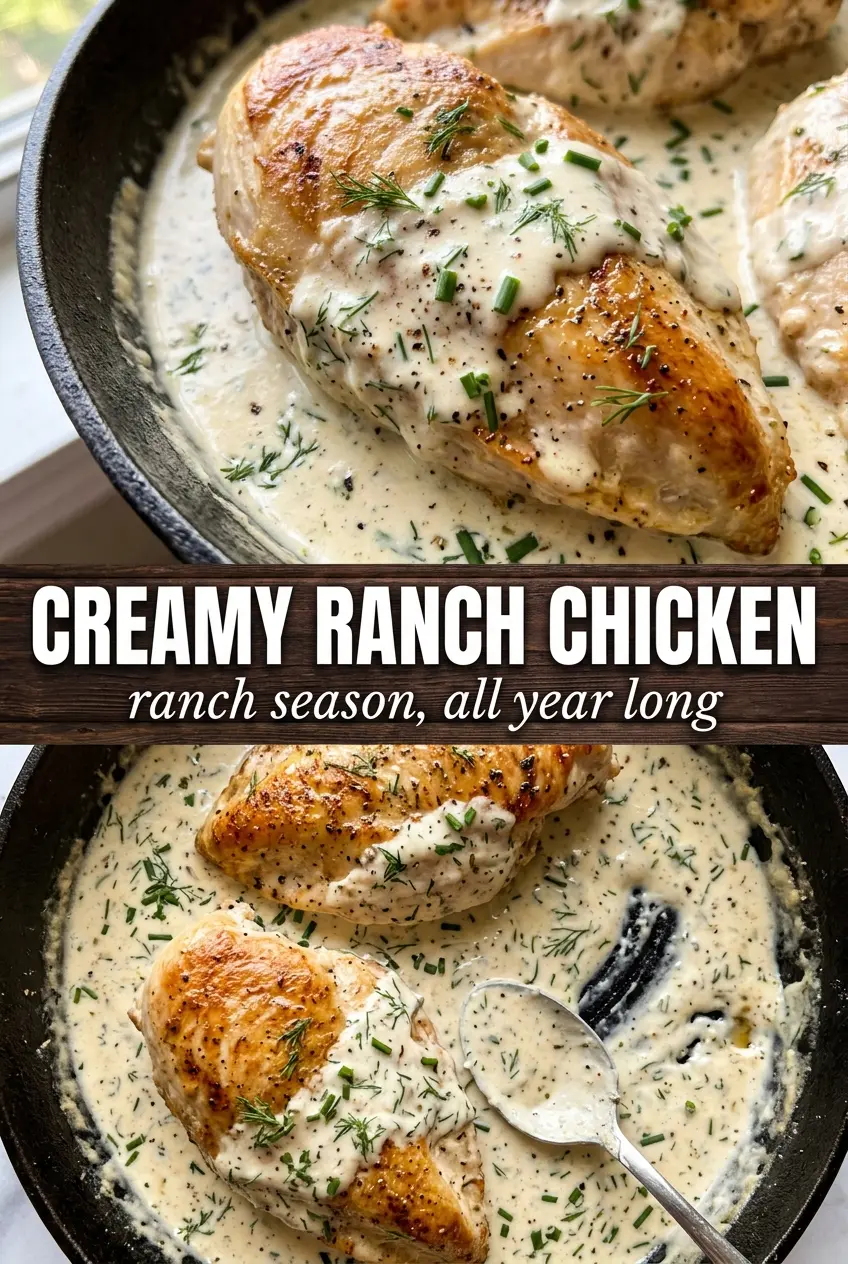
Juicy chicken breasts wrapped in a thick ranch cream sauce have a way of turning a plain skillet dinner into something people actually look forward to. The sauce clings to the chicken instead of running off the plate, with enough tang from the ranch seasoning and cream cheese to keep every bite lively. It’s rich without feeling heavy, and the herbs give it that familiar ranch taste that works with mashed potatoes, noodles, rice, or even just a hunk of bread.
The trick here is building the sauce in the same pan you used for the chicken. Those browned bits on the bottom carry a lot of flavor, and the broth lifts them up before the cream and cream cheese go in. That little bit of deglazing keeps the sauce from tasting flat. I also like adding the cream cheese in cubes and giving it a few minutes over medium-low heat so it melts evenly instead of leaving little lumps behind.
Below, you’ll find the best way to keep the chicken juicy, how to avoid a grainy sauce, and the swaps that still give you a good result when you need to work with what’s in the fridge.
The sauce thickened up beautifully and coated the chicken instead of pooling at the bottom of the pan. I served it over egg noodles, and my husband went back for seconds before I even sat down.
Creamy Ranch Chicken with that silky skillet sauce is the kind of dinner you’ll want to pin for busy nights and leftover lunches.
The Reason the Sauce Stays Smooth Instead of Turning Grainy
The sauce for this dish only works if the heat stays controlled once the dairy goes in. Heavy cream can handle a simmer, but cream cheese gets temperamental if the pan is too hot, and that’s when the sauce turns speckled or separated. Low to medium-low heat gives the cheese time to melt into the broth and cream instead of tightening up.
Another detail that matters is the broth deglaze. If the pan looks a little messy after the chicken comes out, that’s a good thing. The browned bits dissolve into the liquid and give the sauce a deeper, savory base so the ranch seasoning doesn’t taste one-note.
- Chicken breasts — Use pieces that are roughly the same thickness so they finish cooking at the same time. If one side is much thicker, pound it lightly or slice it in half horizontally.
- Ranch seasoning mix — This brings the salt, herbs, and tang that define the sauce. Homemade ranch seasoning works too, but the packet has a stronger, more consistent punch.
- Cream cheese — This is what gives the sauce body. Full-fat cream cheese melts the cleanest; reduced-fat versions can work, but they’re more likely to leave the sauce a little looser.
- Heavy cream — Don’t swap this for milk if you want the sauce to stay rich and stable. Half-and-half can work in a pinch, but it won’t thicken quite as much.
- Fresh chives — They don’t just garnish the plate. The sharp green finish cuts through the richness and keeps the last bite from feeling heavy.
What Each Ingredient Is Actually Doing in This Creamy Chicken

- Chicken (the protein foundation) — Cook through but don’t overcook or it becomes dry and stringy. Use a thermometer for 165°F.
- Cream or sour cream (the richness base) — This creates the sauce. Add off heat or it can break and look curdled.
- Garlic (the aromatic depth) — Minced and cooked with oil, it becomes sweet and mellow. Fresh garlic infuses the sauce with flavor.
- Lemon or wine (the brightness and acid) — This prevents heavy cream from tasting flat. Balance is key so it doesn’t overpower.
- Herbs (dill, parsley, thyme) — Fresh herbs add complexity. Add some during cooking and some after so you get both cooked and fresh flavors.
- Parmesan or cheese (optional richness) — This adds umami and creaminess. Melt it into the sauce so it doesn’t get grainy.
- Butter (the silky finish) — A little butter at the end makes the sauce glossy and smooth. Add off heat for best results.
- Pasta or rice (the vehicle) — This carries the creamy sauce and makes the dish complete. Cook separately so it stays al dente.
Getting the Chicken Golden Before the Sauce Goes In
Season and Sear
Season the chicken with salt, pepper, and garlic powder, then place it in a hot skillet with the olive oil. You want a steady sizzle as soon as the meat hits the pan. Give it 5 to 6 minutes per side until the surface turns deep golden and the center reaches 165°F. If the pan is crowded or the heat is too low, the chicken will steam instead of sear, and you’ll lose that browned flavor under the sauce.
Build the Pan Sauce
Take the chicken out and cook the garlic for just 30 seconds, long enough for it to smell fragrant but not brown. Pour in the broth and scrape the bottom of the pan with a wooden spoon. That’s where the good stuff is. Once the liquid has picked up the browned bits, stir in the cream and ranch seasoning and bring it to a gentle simmer, not a boil.
Finish with Cream Cheese and Dill
Add the cream cheese cubes and stir over medium-low heat until the sauce turns smooth and glossy. If you rush this part, the outside of the cheese softens before the center melts, which leaves little lumps behind. Stir in the dill, return the chicken to the skillet, and spoon the sauce over the top for the last few minutes so the meat picks up flavor without overcooking.
How to Adapt It for Different Nights and Different Pantries
Swap in chicken thighs for a richer result
Boneless, skinless thighs stay juicier and give you a little more wiggle room on cook time. They also bring a richer taste to the sauce, which works well if you’re serving the chicken over rice or mashed potatoes.
Make it gluten-free without changing the texture
This recipe is naturally close to gluten-free, but check the ranch seasoning packet and the broth label. Some brands add flour or malt-based ingredients. If both are certified gluten-free, the sauce behaves the same and still thickens nicely.
Use half-and-half when you’re out of heavy cream
Half-and-half will work, but the sauce will be a little lighter and may need an extra minute or two to come together. Keep the heat low so it doesn’t separate. Don’t use milk unless you’re fine with a thinner sauce.
Make it ahead for meal prep
Cook the chicken and sauce, cool them, and store them together so the meat stays coated. The sauce will thicken in the fridge, which is normal. Add a splash of broth or cream when reheating to bring it back to a spoonable consistency.
Storage and Reheating
- Refrigerator: Store in an airtight container for up to 4 days. The sauce will set up as it chills.
- Freezer: It freezes, but the cream sauce can separate a bit after thawing. If you want the best texture, freeze the chicken and sauce only if you’re okay whisking in a little fresh cream after reheating.
- Reheating: Warm gently in a covered skillet over low heat with a splash of broth or cream. Microwaving on high tends to break the sauce and makes the chicken tough.
Answers to the Questions Worth Asking
Creamy Ranch Chicken
Ingredients
Equipment
Method
- Season the chicken breasts with salt, pepper, and garlic powder to taste, then sear in olive oil in a large skillet over medium-high heat for 5-6 minutes per side until golden and the internal temperature reaches 165°F; remove to a plate.
- Cook the minced garlic in the same pan for 30 seconds, then pour in the chicken broth and deglaze, scraping up browned bits from the bottom.
- Stir in the heavy cream and ranch seasoning mix, then bring the mixture to a simmer.
- Add the cream cheese cubes and stir over medium-low heat until completely melted and the sauce is smooth.
- Stir in the dried dill, return the chicken to the skillet, and spoon sauce over each breast.
- Simmer for 3 minutes so the chicken heats through and the sauce thickens slightly.
- Garnish with fresh chives and serve over mashed potatoes or pasta.