Garlic bread deviled eggs hit that sweet spot between familiar and unexpected: creamy yolk filling, a sharp little bite of Parmesan, and a buttery garlic breadcrumb topping that gives each half the crunch people usually miss in classic deviled eggs. The first bite tastes like a party snack with actual personality, not just another tray that sits untouched until the end.
The trick is balancing the garlic in two places. Grated raw garlic goes into the filling for a clean, punchy background note, while the minced garlic gets gently toasted in butter with panko for a warm, garlic bread-style finish. That split keeps the flavor from turning harsh, and it gives you layers instead of one flat note.
Below, I’m walking through the part that matters most: keeping the eggs tender, the filling smooth, and the topping crisp right up to serving time. If you’ve ever had deviled eggs go watery or breadcrumbs turn limp, the fixes here will save you a lot of frustration.
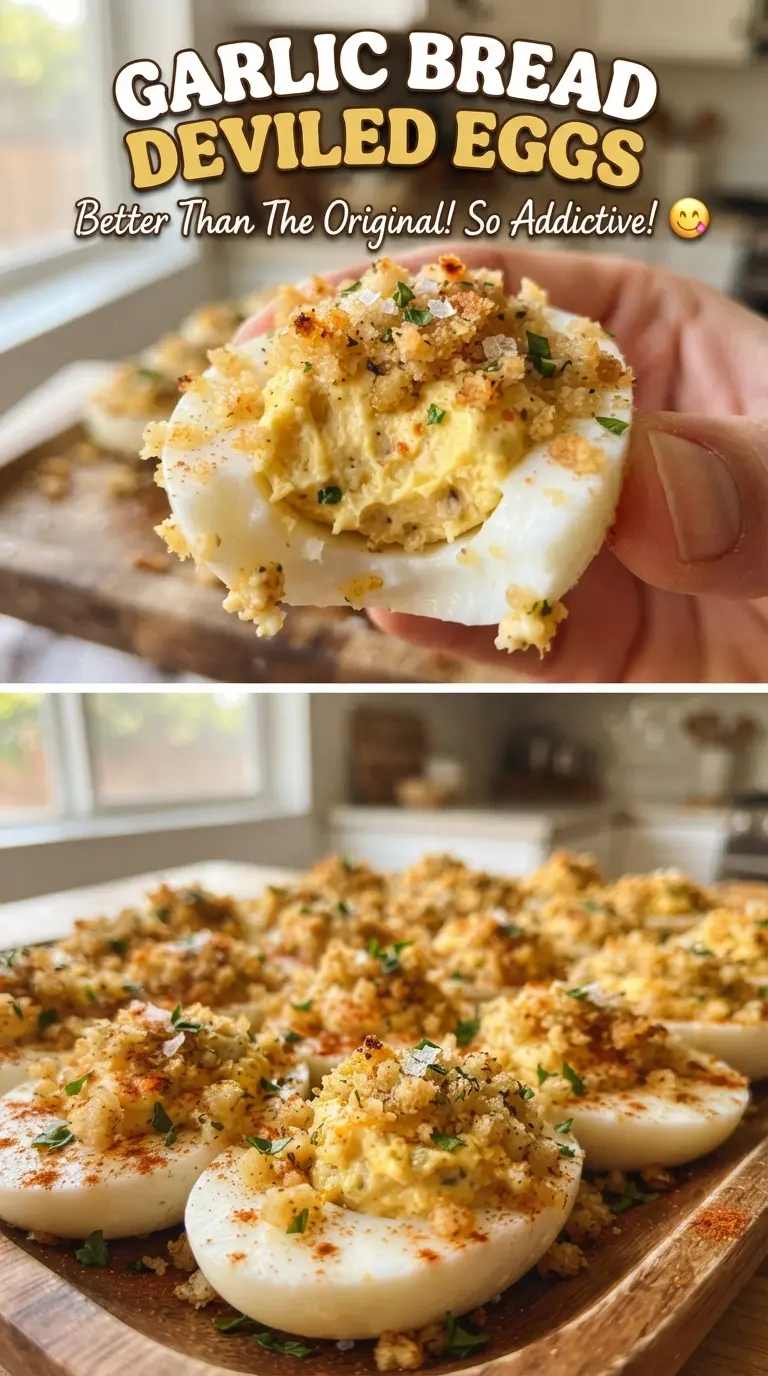
The filling was smooth and the garlic breadcrumbs stayed crunchy until the platter was empty. I added the topping right before serving and it tasted like garlic bread and deviled eggs had the best kind of mash-up.
Love the salty Parmesan and crunchy garlic topping? Save these Garlic Bread Deviled Eggs for your next appetizer spread.
The Secret to Keeping the Garlic Flavor Bold Without Turning It Bitter
The biggest mistake with garlic bread deviled eggs is treating every bit of garlic the same. Raw garlic is sharp and direct, which works in the yolk mixture because mayo and Parmesan soften it. But if you cook garlic too long in butter, it turns bitter fast, and that bitterness will sit on top of every bite. The sweet spot is a quick 30-second bloom in the butter, just long enough to take the raw edge off before the panko goes in.
These eggs also depend on texture contrast. The filling should be creamy enough to pipe cleanly, but not loose enough to slump off the whites. Parmesan helps tighten the filling a little, so if your yolk mixture looks too soft, let it sit for a minute before piping instead of adding more mayo right away.
What Each Ingredient Is Actually Doing in These Eggs
- Eggs — Start with large eggs and cook them just until set. Older eggs peel more easily, which matters here because the whites need to stay smooth for piping and topping.
- Mayonnaise — This gives the filling its silkiness. A neutral, good-quality mayo works best because it lets the garlic and Parmesan come forward without tasting heavy.
- Parmesan — Use finely grated Parmesan, not the coarse shreds, so it melts into the filling instead of leaving it grainy. A little extra on top adds a salty finish that makes the garlic breadcrumb layer taste even more like garlic bread.
- Dijon mustard — This keeps the filling from tasting flat. You won’t taste mustard outright, but you’ll notice the filling has more lift and the richness doesn’t sit as heavily.
- Garlic, divided — Grated garlic in the filling gives sharpness; minced garlic in the butter gives the toasted topping its garlic bread character. Don’t swap one for garlic powder if you want the same layered flavor.
- Panko breadcrumbs — Panko stays lighter and crisper than regular breadcrumbs, which is important because the topping is meant to bring crunch, not weight. Toast them until golden, not dark brown.
How to Build the Crunchy Topping and Pipe the Filling Cleanly
Getting the Eggs Cooked and Peeled Without Torn Whites
Put the eggs in cold water first, then bring the pot up to a boil. That slower start helps reduce cracking and gives you more even cooking. Once the water boils, cover the pot, pull it off the heat, and let the eggs stand for 12 minutes; that timing gives you firm yolks without chalkiness. Chill them immediately in cold water so the peel loosens, then crack and peel under running water if the shells are clinging.
Making the Filling Smooth Instead of Grainy
Mash the yolks while they’re still warm enough to break down easily, then work in the mayonnaise, Parmesan, Dijon, grated garlic, and salt until the mixture looks creamy and unified. If it looks dry at first, keep mixing before adding more mayo; yolks often need a minute to fully absorb the moisture. Graininess usually means the yolks weren’t mashed enough or the Parmesan was too coarse.
Toasting the Garlic Breadcrumbs the Right Way
Melt the butter over medium-low heat, add the minced garlic, and stir for about 30 seconds until fragrant. The moment the garlic smells sweet instead of raw, add the panko and keep it moving so the crumbs toast evenly. Pull the pan as soon as they turn golden, then stir in the parsley off the heat. If you keep cooking after they’re browned, the garlic goes bitter before the crumbs have time to cool.
Finishing and Serving So the Topping Stays Crisp
Pipe or spoon the yolk filling into the egg whites, then top with the garlic breadcrumbs right before serving. If you add the crumbs too early, they soak up moisture from the filling and lose the whole point of the crunchy topping. A final pinch of Parmesan over the top gives you that familiar garlic bread finish and makes the eggs look as good as they taste.
How to Adapt These Eggs for Different Crowds and Pantry Situations
Gluten-Free Version
Swap the panko for a gluten-free breadcrumb blend that toasts well, or use crushed gluten-free crackers for a slightly richer topping. You’ll still get the crunch, though crackers will taste a little more buttery and less airy than panko.
Dairy-Free Adjustment
Use a dairy-free mayo and replace the Parmesan with a finely grated dairy-free hard cheese alternative. The filling will still be creamy, but the topping won’t have the same salty, nutty edge, so add a tiny pinch more salt if needed.
Make-Ahead Party Tray
Prepare the egg whites and filling up to a day ahead, but keep them separate until serving. The topping should always be made fresh and added at the last minute, because even a few hours in the fridge will soften the crumbs.
Storage and Reheating
- Refrigerator: Store the filled eggs without the breadcrumb topping for up to 2 days. The whites stay fine, but the filling may firm up a little in the fridge.
- Freezer: Don’t freeze these. Egg whites turn rubbery and the filling separates after thawing.
- Reheating: These are best served cold or at cool room temperature. If the filling feels too firm after chilling, let the eggs sit out for 10 to 15 minutes before serving, then add the crumbs right before they hit the table.
Answers to the Questions Worth Asking
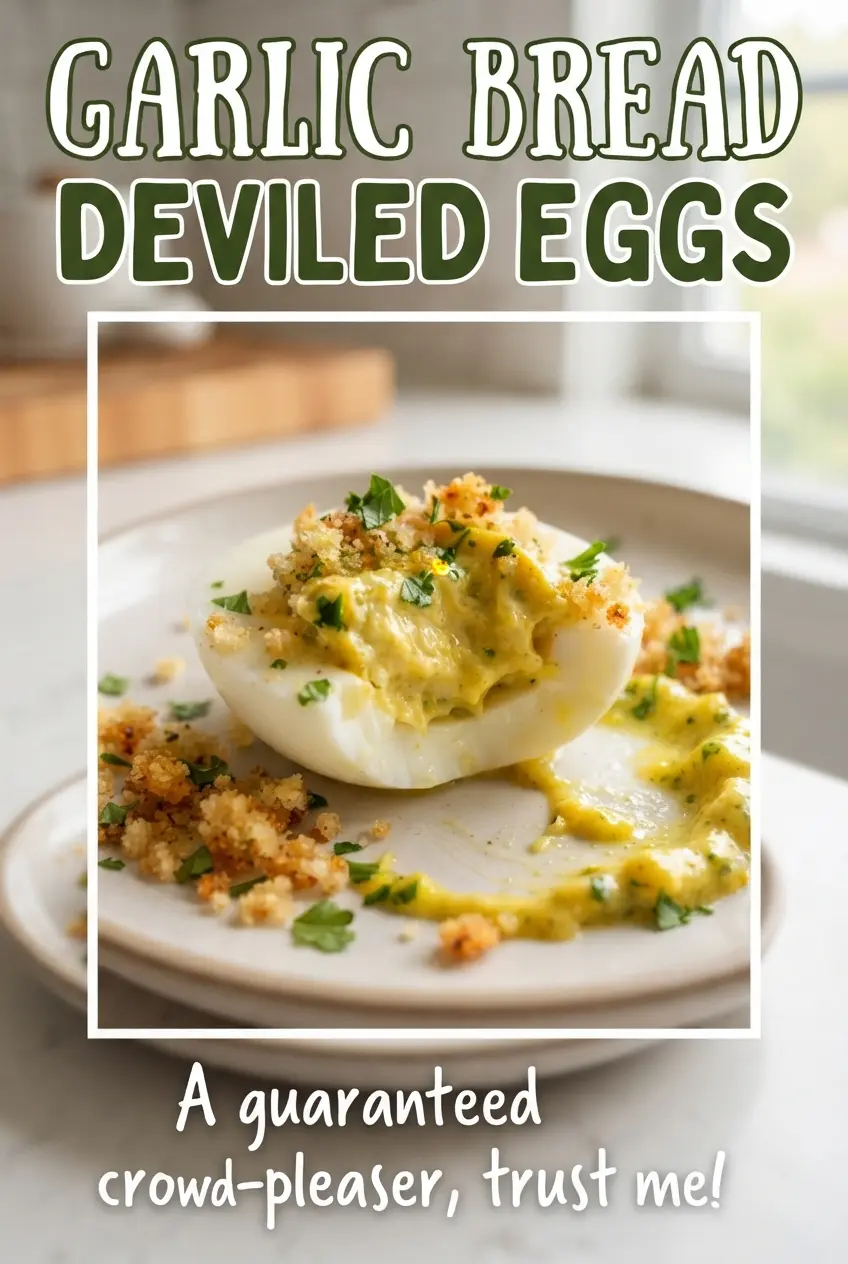
Garlic Bread Deviled Eggs
Ingredients
Equipment
Method
- Melt butter in a skillet over medium heat, then cook minced garlic for 30 seconds until fragrant, stirring constantly. Add panko breadcrumbs and toast for 3-4 minutes until golden, watching closely so they don’t burn.
- Stir in chopped parsley and remove the topping from heat. Transfer to a bowl so it cools slightly and stays crisp.
- Place eggs in a Dutch oven and cover with cold water by about 1 inch. Bring to a boil over high heat, then cover and remove from heat.
- Let the covered eggs stand for 12 minutes, then chill until cool. Peel the eggs, then halve them lengthwise.
- Mash the yolks with mayonnaise, grated Parmesan, Dijon mustard, grated garlic, and salt until smooth and thick. Taste and adjust salt if needed.
- Pipe (or spoon) the filling into the egg halves, filling each well. Keep the eggs chilled until you’re ready to serve.
- Sprinkle generously with the garlic breadcrumbs just before serving so they stay crunchy. Finish with extra Parmesan on top.