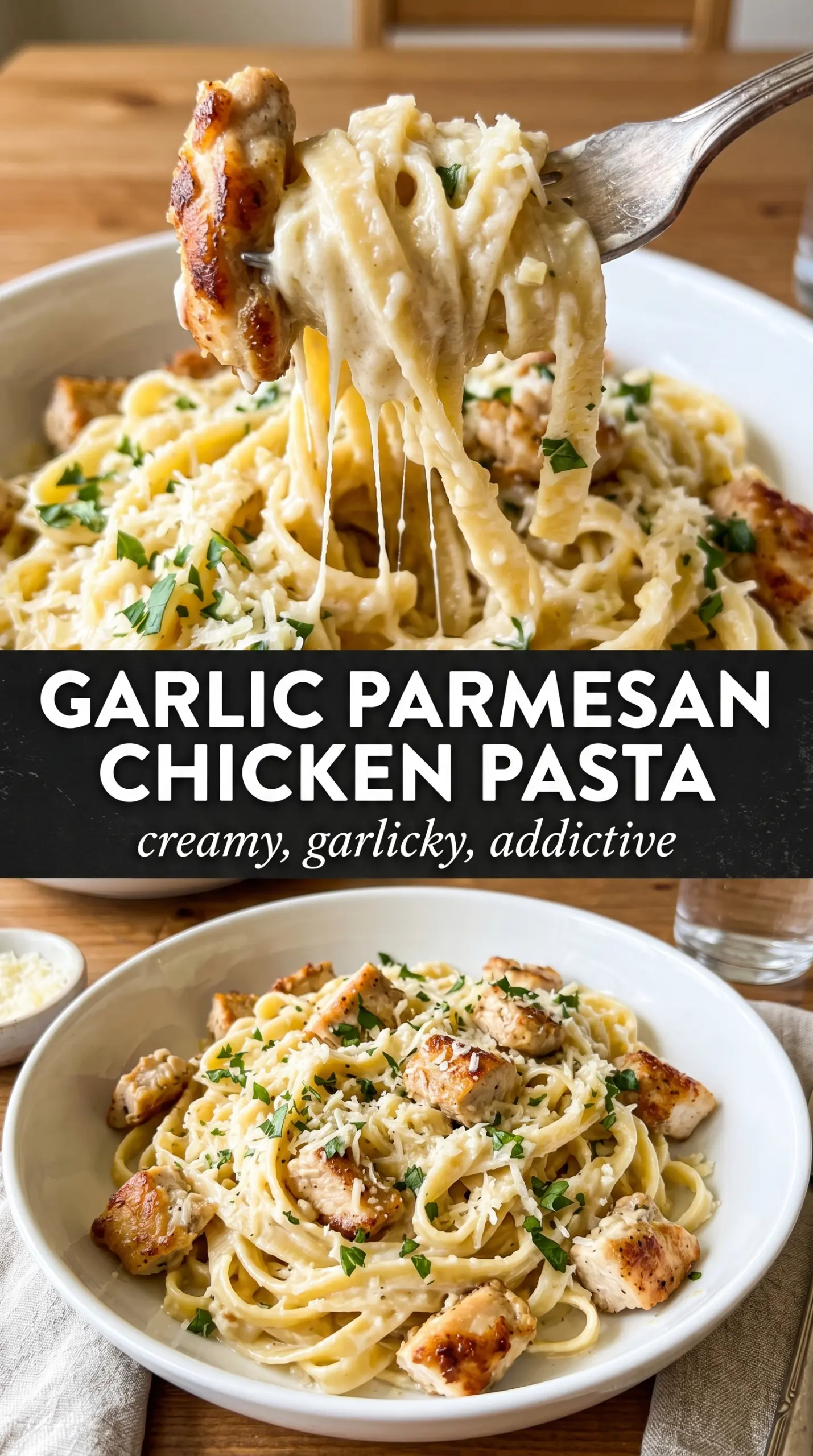
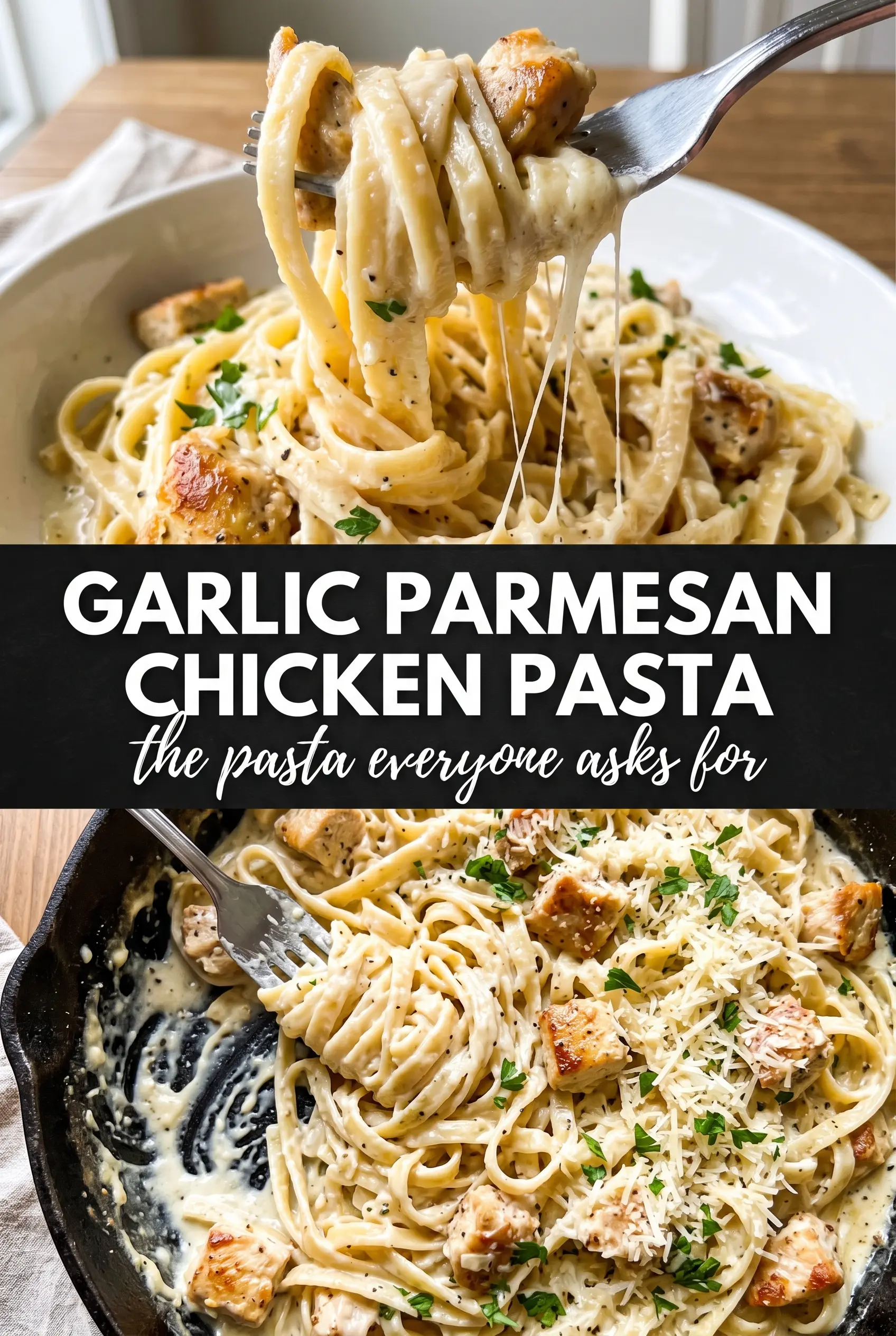
Silky garlic Parmesan sauce clings to every strand of pasta, and the sliced chicken on top stays juicy instead of disappearing into the bowl. That’s what makes this one a repeat dinner: it eats like something from a restaurant, but it comes together in one skillet after the pasta is done.
The difference here is in the order. The chicken gets a hard sear first, then the same pan builds the sauce so all those browned bits turn into flavor instead of getting washed down the drain. Freshly grated Parmesan melts into the cream smoothly, and a splash of pasta water gives the sauce the stretch it needs to coat spaghetti without turning gluey.
Below, I’ve included the little details that matter most — how to keep the sauce from tightening up, what to swap if you’re out of cream, and the timing that keeps the chicken tender while the pasta finishes.
The sauce coated the spaghetti perfectly and didn’t break when I added the Parmesan. My husband asked for seconds before I even sat down.
Save this Garlic Parmesan Chicken Pasta for the nights when you want a creamy chicken pasta with a glossy sauce and golden seared chicken.
Why the Sauce Stays Silky Instead of Turning Grainy
The biggest mistake in Parmesan cream pasta is blasting the sauce with heat after the cheese goes in. Parmesan can tighten fast if the pan is too hot, and once that happens you get little flecks instead of a smooth finish. This version avoids that by simmering the cream and broth first, then pulling the sauce into a gentler heat before the cheese joins the party.
Freshly grated Parmesan matters here. Pre-shredded cheese is coated to keep it from clumping in the bag, and that same coating can keep it from melting cleanly in the skillet. If your sauce looks a little loose before the pasta goes in, that’s fine — the noodles and a little pasta water will thicken it into the right coating texture.
What Each Ingredient Is Doing in the Pan
- Chicken breasts — Lean chicken works well because it slices cleanly over the pasta, but it needs a good rest after cooking so the juices stay in the meat. If you want a little more forgiveness, boneless thighs will stay juicier and still taste great in this sauce.
- Garlic — Fresh minced garlic gives the sauce its backbone. Cook it only until fragrant; once it starts browning, the whole sauce can pick up a bitter edge.
- Heavy cream — This is what gives the sauce its body and lets it cling to the pasta. Half-and-half can work in a pinch, but the sauce will be thinner and need more pasta water reduction to feel finished.
- Chicken broth — The broth loosens the cream just enough so the sauce feels savory instead of heavy. Use low-sodium if you can, since the Parmesan brings plenty of salt.
- Freshly grated Parmesan — This is the flavor and texture anchor. Grate it yourself for the smoothest melt, and add it off the hottest part of the burner so it folds into the sauce instead of seizing up.
- Reserved pasta water — Don’t skip this. The starch helps emulsify the sauce and gives you the exact consistency you need when the pasta goes in.
The 20 Minutes That Matter Most
Getting a Golden Sear on the Chicken
Season the chicken well before it hits the pan, then cook it in olive oil over medium-high heat until both sides are deeply golden and the center reaches 165°F. If the chicken sticks at first, leave it alone for another minute; it will release once a crust forms. Pull it out and let it rest before slicing, or the juices will run across the cutting board instead of staying in the meat.
Building the Garlic Cream Base
Use the same skillet and drop the heat to medium before adding butter and garlic. Stir just until the garlic smells sweet and sharp at the same time, about a minute, then add the cream and broth. Let it simmer until it lightly coats a spoon and looks a shade deeper in color. If it boils hard, the dairy can separate, so keep the simmer gentle and steady.
Melting the Parmesan Without Breaking the Sauce
Take the heat down a little before stirring in the Parmesan, Italian seasoning, and red pepper flakes. Add the cheese gradually and stir until the sauce goes from thin to velvety. If it tightens too much, splash in pasta water a little at a time until it loosens into a glossy sauce that still clings to the spoon.
Tossing the Pasta and Finishing the Bowl
Add the cooked pasta directly to the skillet and toss until every strand is coated. The sauce should move easily around the noodles, not sit in a puddle at the bottom of the pan. Slice the chicken and lay it over the pasta, then finish with basil and extra Parmesan while everything is still hot enough to melt the cheese on contact.
Ways to Shift This Pasta Without Losing What Makes It Good
Use boneless thighs for a juicier finish
Chicken thighs stay tender even if they cook a minute or two longer, which makes them a good choice if you’re worried about dry breast meat. They bring a little more richness to the dish, and they still slice nicely over the pasta.
Make it gluten-free with a sturdy pasta
Use a gluten-free spaghetti or fettuccine that holds its shape well, and cook it just shy of tender so it doesn’t fall apart when tossed with the sauce. Gluten-free pasta water can be less starchy, so you may need a little more Parmesan or a smaller splash of cream to keep the sauce thick.
Swap in milk only if you’re willing to work slower
Whole milk can stand in for the cream, but the sauce will be lighter and less plush. Let it reduce a bit longer before the cheese goes in, and keep the heat low so it doesn’t split before it thickens.
Skip the cream and go dairy-light with a broth-forward sauce
For a lighter version, use extra chicken broth plus a small splash of pasta water and a little more Parmesan for body. You’ll lose some of the rich, silky texture, but the sauce still clings well if you reduce it patiently before tossing the pasta.
Storage and Reheating
- Refrigerator: Store leftovers in an airtight container for up to 3 days. The sauce will thicken as it chills.
- Freezer: It’s not my first choice for freezing because cream sauces can separate after thawing, and the pasta softens. If you do freeze it, do it in a tightly sealed container for up to 1 month.
- Reheating: Reheat gently on the stove or in the microwave with a splash of broth or water. The mistake people make is cranking up the heat, which turns the sauce oily and makes the chicken tough.
Answers to the Questions Worth Asking
Garlic Parmesan Chicken Pasta
Ingredients
Equipment
Method
- Season the boneless skinless chicken breasts with salt, pepper, garlic powder, and Italian seasoning to taste. Heat olive oil in a large skillet over medium-high heat and cook for 5-6 minutes per side until golden and cooked through to 165°F, then rest and slice thin.
- In the same skillet, cook the minced garlic in butter over medium heat for 1 minute. Pour in heavy cream and chicken broth, then simmer for 4-5 minutes until slightly thickened.
- Stir in freshly grated Parmesan cheese, Italian seasoning, and red pepper flakes until smooth. Add reserved pasta water a splash at a time to reach a silky consistency.
- Toss the cooked spaghetti or fettuccine in the garlic Parmesan sauce until every strand is coated and glossy.
- Divide the pasta among plates and top with the sliced chicken.
- Garnish with fresh basil and extra Parmesan for serving so the shavings fall across the top.