Ginger garlic chicken noodle soup lands with the kind of clean, savory broth that wakes everything up without feeling heavy. The ginger gives it a warm brightness, the garlic rounds it out, and the noodles soak up just enough of the broth to turn each bowl into something comforting without going mushy. It’s the sort of soup that tastes like you paid attention the whole time, even though the method stays straightforward.
What makes this version work is the order. The vegetables soften first so they can build sweetness into the pot, then the garlic and ginger bloom briefly before the broth goes in. That short step matters more than most people think; if you rush it, the ginger stays flat and the garlic loses its edge. A little sesame oil and rice vinegar at the end keep the broth clear-tasting instead of muddy.
Below, I’ve laid out the small details that keep the chicken tender, the noodles from overcooking, and the broth tasting balanced. There’s also a few useful swaps if you want to use what you already have on hand.
The broth had such a clean ginger-garlic flavor, and the noodles stayed just tender instead of turning bloated. I used thighs and the chicken shredded beautifully after simmering.
Save this ginger garlic chicken noodle soup for the nights when you want a clear, fragrant broth with tender chicken and just-cooked noodles.
The Broth Gets Flat When You Skip the Aromatic Bloom
The biggest mistake in a soup like this is treating ginger and garlic as an afterthought. They need a brief turn in the pot before the broth goes in so their flavor opens up and perfumes the oil. If they hit liquid too early, they taste boiled instead of vibrant, and the whole soup loses that warming edge.
Chicken breast works fine here, but thighs give you more forgiveness if you tend to simmer a little longer than planned. Either way, pull the chicken out as soon as it’s cooked through and shred it before returning it to the pot. That keeps the meat tender and lets it soak up broth without drying out. The noodles are the other place people stumble: they should go in at the very end, because even a few extra minutes can turn them soft and swollen.
What Each Ingredient Is Actually Doing in This Soup
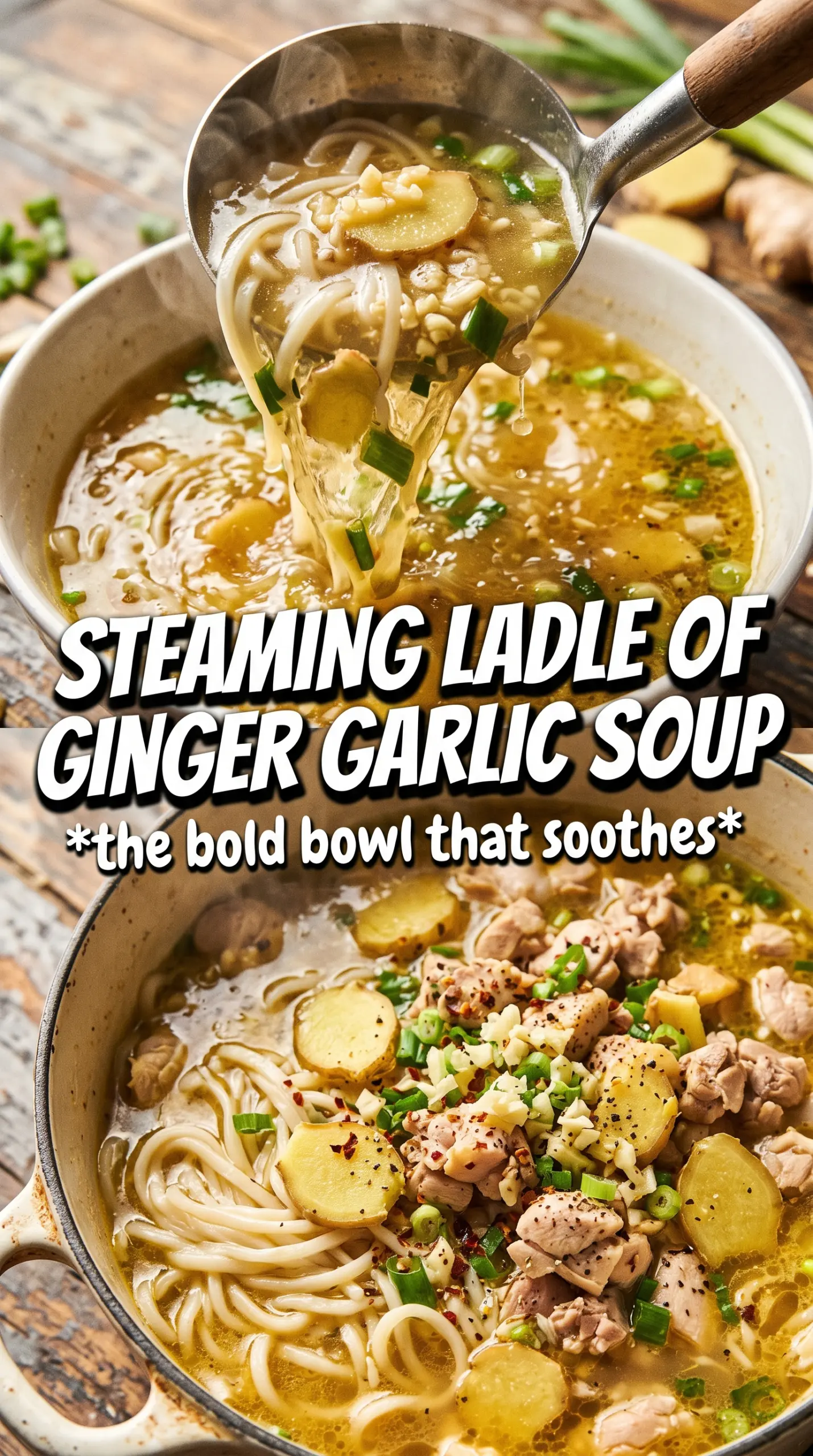
- Chicken thighs or breast — Thighs stay juicier and shred with less fuss, while breast gives you a leaner bowl. If you use breast, keep the simmer gentle so the meat doesn’t turn stringy.
- Fresh ginger and garlic — Fresh is worth it here. Powder won’t give the same bright, aromatic bite, and it won’t perfume the broth the same way. Grate the ginger finely so it distributes evenly instead of leaving fibrous bits.
- Chicken broth — This is the backbone, so use one you’d actually sip. A low-sodium broth gives you room to season properly at the end without boxing yourself in early.
- Sesame oil and rice vinegar — These go in at the finish, not the beginning. Sesame oil adds depth and fragrance; rice vinegar lifts the broth so it doesn’t taste heavy after the noodles go in.
- Ramen or egg noodles — Either works, but the type changes the texture. Ramen gives a springier bite, while egg noodles are softer and a little more classic. Cook them just until tender because they keep softening in the hot broth.
Building the Soup So the Noodles and Chicken Stay in Their Lane
Softening the Vegetables First
Start with the onion, carrots, and celery in a little oil and cook them until the onion turns translucent and the carrots look a shade deeper in color. This is where the soup gets its base sweetness, so don’t rush it over high heat. If the vegetables brown too fast, the broth can pick up a scorched edge instead of a clean savory one.
Waking Up the Ginger and Garlic
Add the garlic and ginger after the vegetables have softened and stir them for about two minutes, just until the pan smells strong and fragrant. That short window is enough to take the raw edge off without burning the garlic. If the pot starts sticking, lower the heat right away and splash in a little broth rather than letting the aromatics darken.
Simmering the Chicken Gently
Pour in the broth and soy sauce, add the chicken, and bring everything just to a boil before dropping it to a simmer. A hard boil will tighten the chicken and can make the broth cloudy. You want small, steady bubbles and chicken that feels firm but not tough when you pull it apart with a fork.
Finishing with Noodles and Brightness
Take the chicken out, shred it, and return it to the pot before adding the noodles. Cook the noodles separately in the soup for only a few minutes until they’re tender with a little bite left in the center. Stir in the sesame oil and rice vinegar at the end so their aroma stays fresh, then taste and salt the broth after the noodles have had a chance to season it a little.
How to Adapt This Soup When You Need a Different Bowl
Use gluten-free noodles without changing the broth
Swap in rice noodles or a certified gluten-free noodle and keep the rest the same. Rice noodles soften faster than ramen, so add them only in the final minutes and watch closely. The broth stays just as flavorful, but the texture turns lighter and a little silkier.
Make it dairy-free and naturally light
This soup is already dairy-free as written, which makes it an easy fit for a wide range of diets. If you want a richer finish without dairy, add a little extra sesame oil right before serving. That gives the bowl more fragrance and body without turning it heavy.
Turn it into a vegetable-heavy version
Leave out the chicken and add mushrooms, napa cabbage, or baby spinach near the end. You’ll lose the deeper meaty backbone, so use a very good broth and don’t skip the sesame oil and vinegar finish. The result is lighter, but it still feels complete in the bowl.
Storage and Reheating
- Refrigerator: Store for up to 4 days. The noodles will keep absorbing broth, so the soup gets softer as it sits.
- Freezer: Freeze the broth, chicken, and vegetables without the noodles for best texture. Cook fresh noodles when you reheat.
- Reheating: Warm gently on the stove over medium-low heat until steaming, not boiling. If the noodles are already in the soup, add a splash of broth or water before reheating so they don’t turn pasty.
Questions I Get Asked About This Recipe
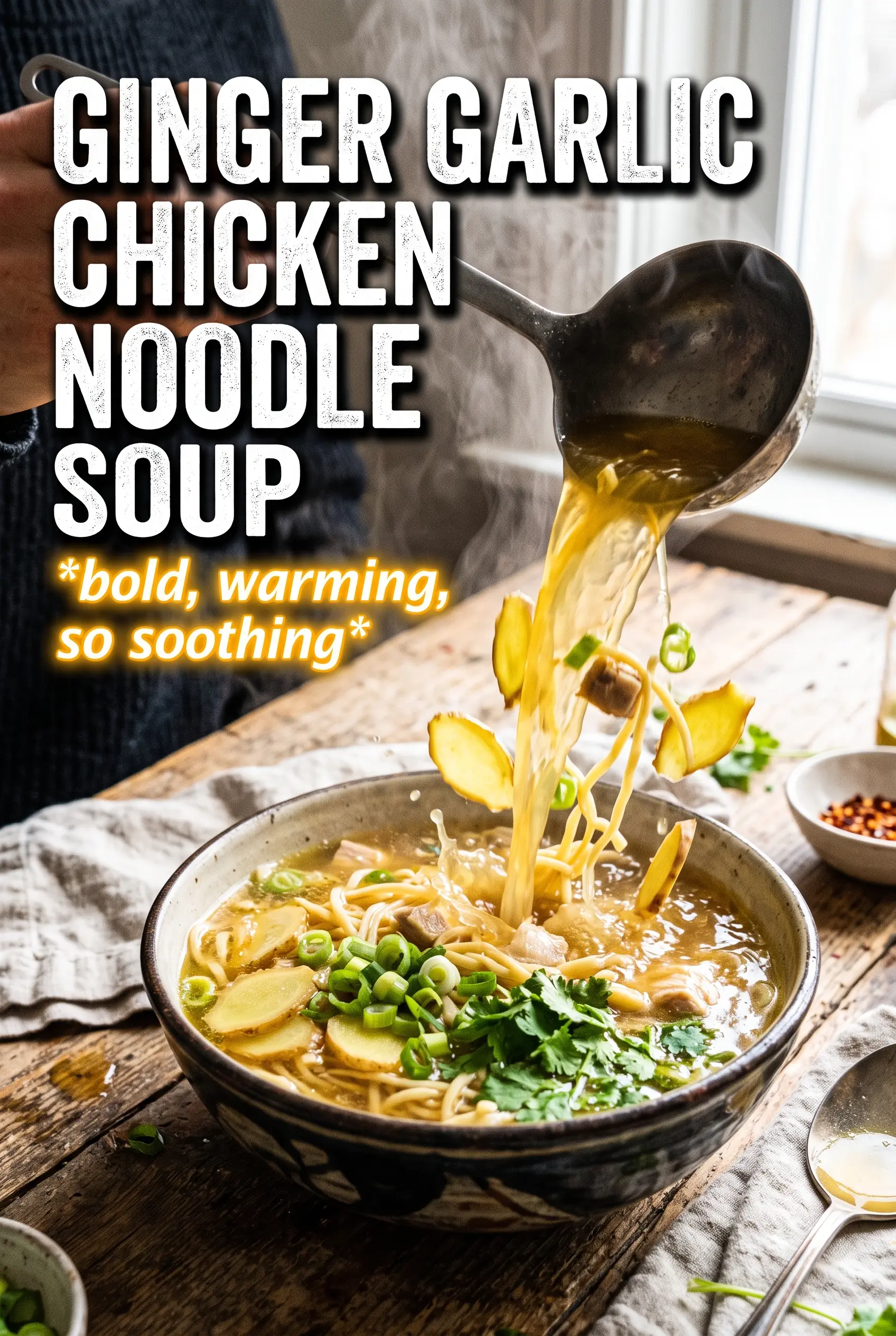
Ginger Garlic Chicken Noodle Soup
Ingredients
Equipment
Method
- Heat 1 tablespoon oil in a large pot over medium-high heat, then add onion, carrots, and celery. Sauté for 4 minutes, stirring until slightly softened and fragrant (visual cue: edges start to look translucent).
- Add garlic and grated ginger, then cook for 2 minutes. Stir constantly until very fragrant (visual cue: strong aroma and lightly toasted-looking bits).
- Pour in chicken broth, soy sauce, and add chicken. Bring to a boil, then reduce to a simmer and cook for 20 minutes until the chicken is cooked through (visual cue: chicken registers no pink in the center).
- Remove the chicken from the pot and shred it with forks, then return the shredded chicken to the broth. Let it heat back through for 1-2 minutes, keeping the broth at a gentle simmer.
- Add ramen noodles or egg noodles to the pot and cook for 3-5 minutes until tender. Stir occasionally so the noodles don’t clump (visual cue: noodles soften but still hold shape).
- Stir in sesame oil and rice vinegar, then season with salt and pepper to taste. Turn off the heat and taste for balance (visual cue: broth looks glossy and evenly seasoned).
- Ladle into bowls and top with green onions, cilantro, and sesame seeds. Serve immediately while the noodles are at their best texture.