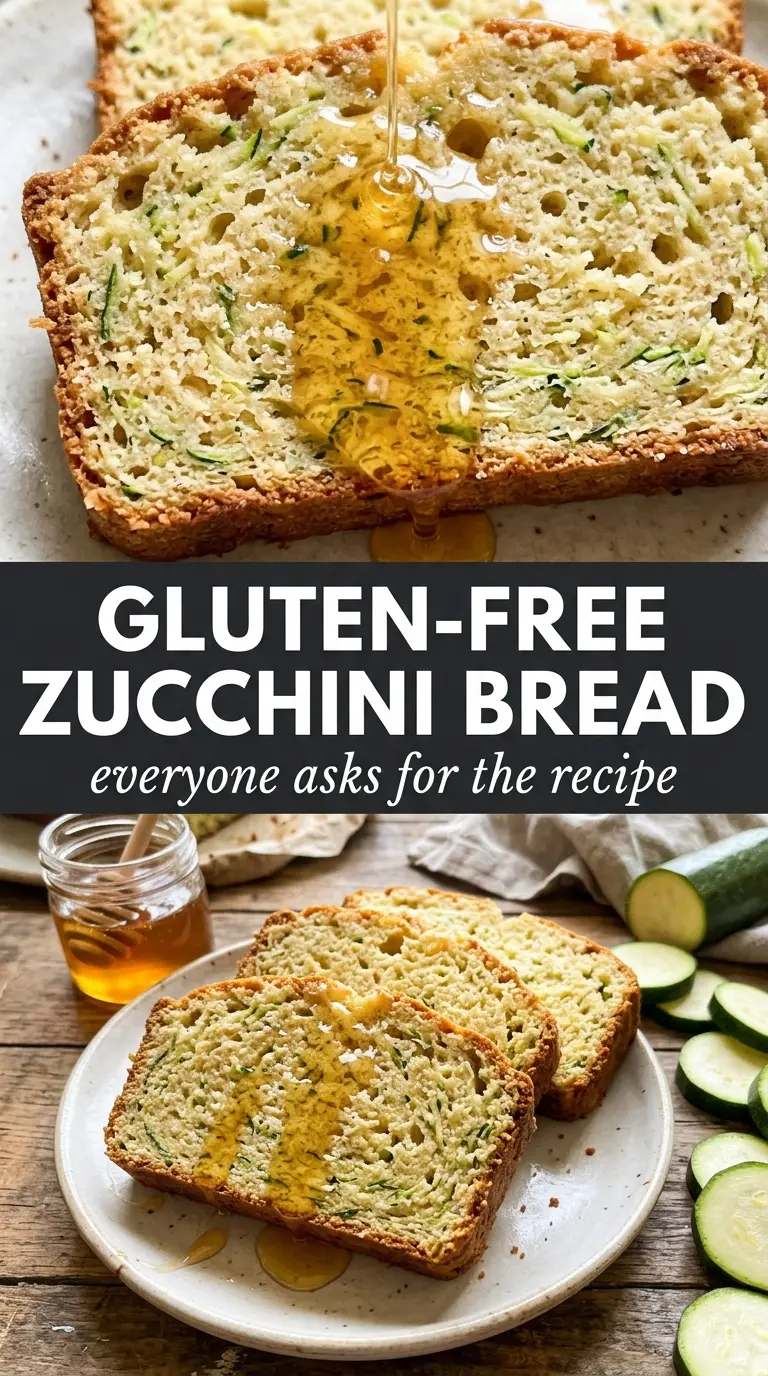
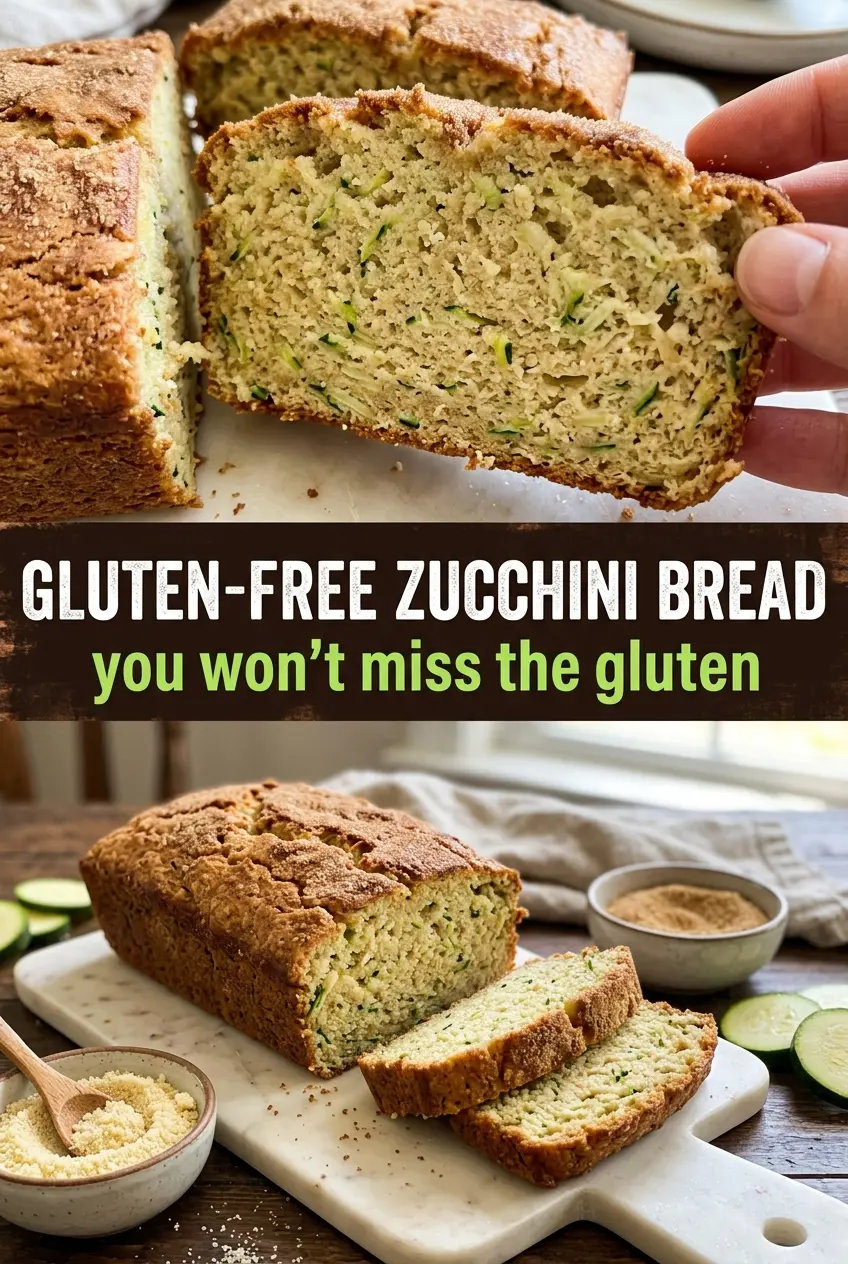
Golden edges, a tender crumb, and just enough moisture to keep each slice soft for days — that’s what makes this gluten-free zucchini bread worth baking on repeat. It doesn’t have the dry, sandy bite that turns so many gluten-free loaves into a disappointment. Instead, it slices cleanly, holds together well, and tastes like the kind of quick bread you’d happily serve without having to explain anything about what’s missing.
The trick is using grated zucchini that’s squeezed very dry, then balancing almond flour with tapioca starch so the loaf stays sturdy without turning dense. Eggs and yogurt do the heavy lifting for structure and softness, while cinnamon and vanilla keep the flavor warm and familiar. If you’ve ever had a gluten-free loaf collapse in the middle or bake up gummy, this version fixes both problems by giving the batter enough body before it goes into the oven.
Below, I’ll walk through the part that matters most: how dry the zucchini really needs to be, why the loaf needs the full cooling time, and how to swap in a GF flour blend if almond flour isn’t your thing.
I was shocked how well this held together after cooling. I used the almond flour and chocolate chips, and the loaf sliced cleanly with a moist crumb instead of that gummy middle I usually get from gluten-free quick breads.
Save this gluten-free zucchini bread for the mornings when you want a moist, sliceable loaf that doesn’t crumble apart.
The Zucchini Moisture Problem That Ruins Gluten-Free Loaves
Most zucchini bread goes wrong before the batter even hits the pan. Zucchini carries a lot of water, and in a gluten-free loaf that extra moisture can push the crumb into gummy territory or make the center sink after baking. Squeezing the zucchini until it feels almost dry is the difference between a clean slice and a loaf that needs a spoon.
Almond flour adds richness and tenderness, but it doesn’t behave like wheat flour. That’s why the tapioca starch matters here — it gives the loaf a little stretch and helps the crumb hold together instead of breaking apart at the first slice. If you’re using a certified GF all-purpose blend instead, you can skip the tapioca starch because the blend usually already includes starches that do that work for you.
The other place people lose this recipe is the cooling time. Almond flour quick breads finish setting as they cool, so slicing too early will make the center look underbaked even when it isn’t.
What Each Ingredient Is Actually Doing in This Loaf
- Almond flour — This is what gives the loaf its moist, tender bite and subtle richness. Use finely ground almond flour, not almond meal, or the texture turns coarse and heavy. If you switch to a certified GF all-purpose flour blend, start with the same amount and omit the tapioca starch.
- Tapioca starch — This helps bind the loaf and adds a little spring to the crumb. It matters most when you’re baking with almond flour. If you’re using a blend that already contains starches, this extra addition can make the loaf too gummy.
- Greek yogurt — This adds moisture and a slight tang that keeps the bread from tasting flat. Plain full-fat yogurt works too, but thinner yogurts can make the batter looser, so the loaf may need a few extra minutes in the oven.
- Zucchini — Grate it finely and squeeze it dry in a clean kitchen towel or several layers of paper towels. That last step changes everything. Wet zucchini is the fastest way to end up with a loaf that never sets properly.
- Eggs — They provide the structure this gluten-free loaf needs to rise and slice cleanly. Don’t try to reduce them here; the bread depends on them more than a wheat-based quick bread would.
- Walnuts or chocolate chips — Both work, but they change the loaf in different ways. Walnuts add crunch and a little bitterness, while chocolate chips make it richer and more dessert-like. Skip them entirely if you want the cleanest, most classic zucchini bread flavor.
How to Build the Batter So It Bakes Up Tender, Not Gummy
Mix the dry ingredients first
Whisk the almond flour, tapioca starch, baking soda, baking powder, salt, and cinnamon together until the mixture looks even. That step keeps the leaveners from clumping, which matters more in gluten-free baking because the batter doesn’t have wheat gluten to even things out later. If you see streaks of baking powder in the finished loaf, it usually means the dry ingredients weren’t distributed well enough.
Beat the wet ingredients until smooth
Stir the sugar, eggs, coconut oil, yogurt, and vanilla together until the mixture looks glossy and uniform. The batter should look loose but not thin. If your coconut oil is too hot, it can scramble the eggs or make the yogurt look curdled, so let it cool slightly after melting before it goes in.
Fold in the zucchini and dry mix
Stir the zucchini into the wet ingredients first, then fold in the dry ingredients just until the flour disappears. Overmixing can make almond flour baking turn dense, and it isn’t worth chasing a perfectly smooth batter. If you’re adding walnuts or chocolate chips, fold them in at the very end so they stay evenly distributed instead of sinking.
Bake until the center is set, then wait
Pour the batter into a greased 9×5 loaf pan and bake at 350°F until the top is deeply golden and a toothpick comes out clean from the center. The loaf should spring back lightly when pressed and pull a little from the sides of the pan. Let it cool for a full 20 minutes before slicing; if you cut too soon, the crumb will seem soft and fragile even though it firms up as it rests.
Three Ways to Adapt This Gluten-Free Zucchini Bread
Use a certified GF all-purpose flour blend
Swap the almond flour for the same amount of a cup-for-cup gluten-free flour blend and leave out the tapioca starch if your blend already includes starches. The loaf will be a little less rich and more bread-like, but it still bakes into a sturdy, sliceable quick bread.
Make it dairy-free
Use a thick dairy-free yogurt with some body, like coconut or almond-based yogurt. Thin substitutes can loosen the batter too much and make the center bake up wet, so choose one that spoon-holds rather than pours.
Turn it into a breakfast loaf or a treat loaf
Leave the batter plain for a classic breakfast slice, or fold in chocolate chips for a sweeter version that leans more dessert-like. Walnuts keep the loaf balanced and lightly savory, while chocolate chips soften the zucchini flavor and make the bread taste richer.
Storage and Reheating
- Refrigerator: Store in an airtight container for up to 5 days. The crumb stays moist, though the loaf will firm up a bit when chilled.
- Freezer: It freezes well. Wrap slices individually, then store them in a freezer bag for up to 3 months so you can thaw only what you need.
- Reheating: Warm a slice in the toaster oven or microwave just until barely heated. Overheating dries almond flour quick bread out fast, especially if it has already been refrigerated.
Answers to the Questions Worth Asking
Gluten-Free Zucchini Bread
Ingredients
Equipment
Method
- Preheat the oven to 350°F and grease a 9x5 loaf pan.
- If using almond flour, have your tapioca starch ready so the dry mix can be whisked evenly.
- Whisk almond flour, tapioca starch (if using almond flour), baking soda, baking powder, salt, and cinnamon together until no dry streaks remain.
- Beat sugar, eggs, coconut oil, yogurt, and vanilla until smooth and glossy.
- Stir in the grated, squeezed very dry zucchini until the batter looks evenly speckled.
- Fold the dry ingredients into the wet ingredients until just combined; fold in walnuts or chocolate chips if using.
- Pour the batter into the prepared loaf pan and bake 50–60 minutes until a toothpick comes out clean and the top is golden.
- Cool for 20 minutes before slicing so the loaf firms up as it cools.