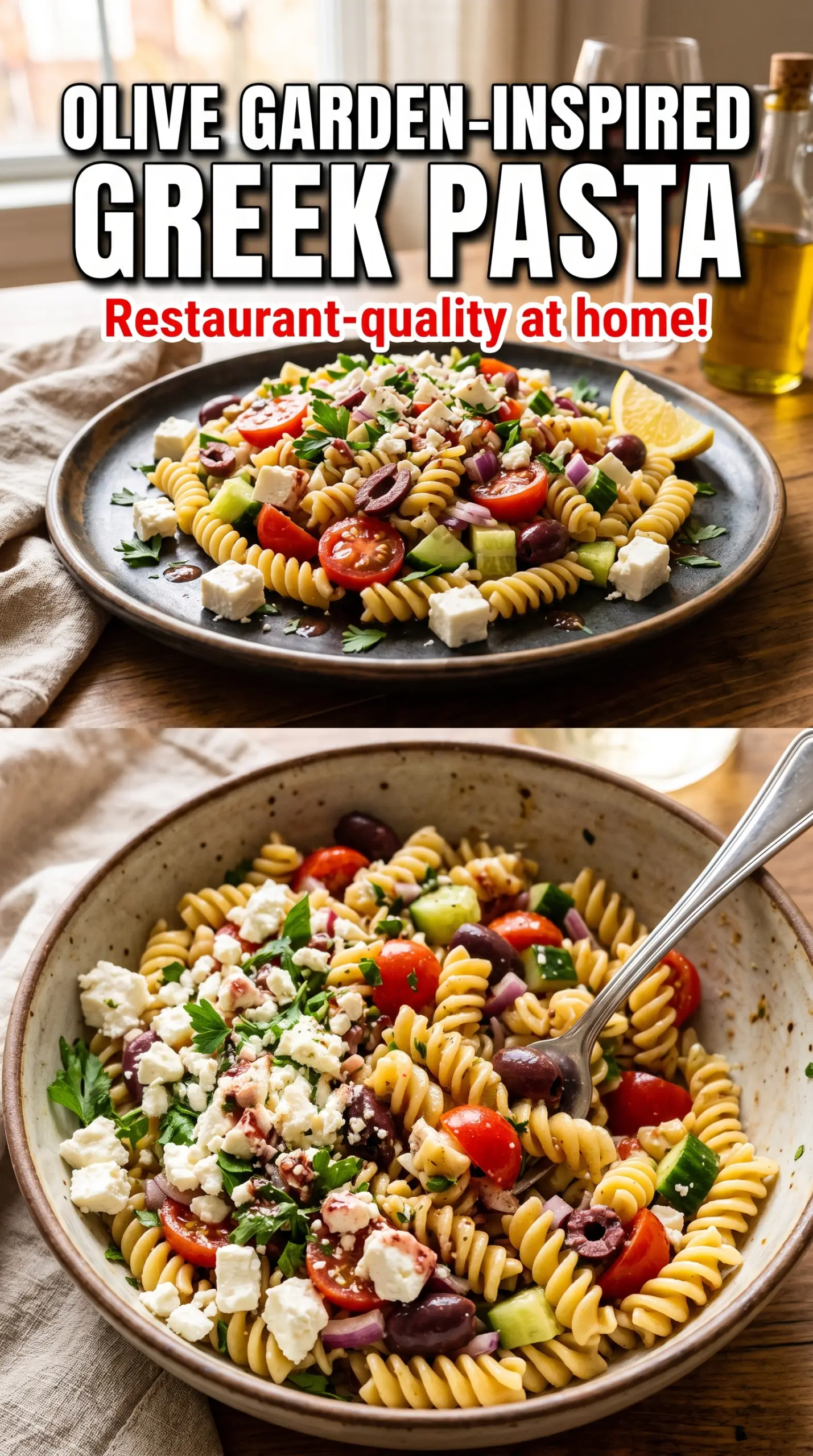
Pasta salad only earns a permanent spot in the fridge when it stays bright after chilling, and this Greek version does exactly that. The dressing clings to the noodles without turning heavy, the cucumber stays crisp enough to give each bite some snap, and the feta brings enough salt to wake up the tomatoes and olives without taking over the bowl.
The trick is in the balance. A good pasta salad needs a little extra dressing because the pasta drinks some of it up as it sits, but too much makes the whole thing slick. Rinsing the pasta under cold water stops the cooking fast and keeps the vegetables from wilting when everything gets tossed together. I also like adding most of the feta before chilling and saving a handful for the top so the salad tastes fresh right at serving time.
Below you’ll find the small choices that make this salad hold up well for lunch, potlucks, and make-ahead dinners, plus the one ingredient swap that still keeps the Greek-style flavor intact.
The dressing soaked in just enough after an hour in the fridge, and the feta stayed creamy instead of disappearing into the pasta. My husband kept sneaking forkfuls straight from the bowl.
Like this Greek pasta salad with feta cheese? Save it to Pinterest for the make-ahead side that stays crisp, salty, and bright after chilling.
Why This Pasta Salad Stays Bright After Chilling
The biggest mistake with pasta salad is treating it like a cold afterthought. Pasta needs seasoning while it’s still warm enough to absorb the dressing, but it also needs to be cooled fast so it doesn’t slump and go gummy. Rinsing under cold water stops the cooking at the right point, and that matters here because soft pasta turns the whole bowl heavy once the dressing settles in.
This version also avoids the bland, watered-down problem that happens when too many mild ingredients are left to carry the dish on their own. The olives, feta, oregano, lemon juice, and red wine vinegar all pull in the same direction, so each bite tastes clean and salty instead of flat. If the salad tastes muted after chilling, it usually means it needed a little more salt or a final splash of vinegar right before serving.
What Each Ingredient Is Actually Doing in This Salad
- Penne or rotini pasta — Both shapes hold the dressing well, but rotini gives you more little ridges for the vinaigrette to cling to. Use a sturdy pasta here; delicate shapes go soft too quickly after chilling.
- Feta cheese — Buy a block and crumble it yourself if you can. Pre-crumbled feta is drier and often less creamy, which matters because feta should give the salad little bursts of salt and tang, not just dusty bits.
- Kalamata olives — Their deep briny flavor is part of what makes this taste Greek instead of just pasta with vegetables. If you need to swap, use another good-quality black olive, but the flavor will be milder.
- Red wine vinegar and lemon juice — The vinegar brings the sharp backbone, while the lemon keeps the dressing from tasting flat. You need both; using only one makes the dressing less lively after the salad chills.
- Cucumber and cherry tomatoes — These give the salad its crunch and juiciness, but they work best when the cucumber is diced small enough to distribute through the bowl. If your tomatoes are especially watery, scoop out a few seeds so the salad doesn’t pool at the bottom.
- Dried oregano and garlic — This is the part that makes the dressing taste like a proper Greek-style vinaigrette instead of generic oil and vinegar. Fresh garlic can be sharp at first, but it mellows as the salad rests.
Building the Bowl So the Pasta Absorbs the Dressing the Right Way
Cooling the Pasta Fast
Cook the pasta until just tender, then drain it and rinse it under cold water until it feels cool to the touch. That stops the cooking and washes off excess starch, which keeps the dressing from turning muddy. If you skip the rinse, the pasta keeps softening and the salad can taste sticky instead of fresh.
Whisking the Dressing Until It Tastes Sharp Enough
Whisk the olive oil, vinegar, lemon juice, garlic, oregano, salt, and pepper until the dressing looks unified and smells bright. It should taste a little more assertive than you want in the finished salad because the pasta and vegetables will soften it. If it tastes flat now, it will taste flat later.
Tossing Without Crushing the Feta
Combine the pasta, vegetables, olives, and most of the feta in a large bowl, then pour the dressing over top and toss gently. Use a lifting motion instead of aggressive stirring so the cucumber keeps its crunch and the tomatoes stay intact. Save a small handful of feta for the top after chilling; that last layer gives the salad a fresher look and a better first bite.
Letting the Flavors Settle
Refrigerate the salad for at least an hour before serving. That resting time lets the pasta drink in the vinaigrette and gives the garlic, lemon, and oregano time to settle into the vegetables. If the salad looks a little dry after chilling, loosen it with a drizzle of olive oil and a spoonful of vinegar before serving.
How to Adjust This Salad for Different Tables
Dairy-Free Version
Leave out the feta and add an extra handful of olives plus a little more salt. You’ll lose the creamy, salty pockets of cheese, but the salad still tastes balanced because the vinaigrette and briny olives do most of the heavy lifting.
Gluten-Free Pasta Swap
Use a sturdy gluten-free pasta with ridges or curves, and stop cooking it a minute before the package says it’s done. Gluten-free pasta can soften faster after chilling, so rinsing it well and tossing it with dressing while it’s just cool helps it hold together.
Make It More Filling
Add chickpeas or diced grilled chicken if you want this to work as a main dish. Chickpeas keep the Mediterranean feel and soak up the dressing well, while chicken makes the salad more substantial without changing the overall flavor.
Storage and Reheating
- Refrigerator: Keeps for 3 to 4 days. The pasta softens a bit and the vegetables release some moisture, so give it a stir before serving.
- Freezer: I don’t recommend freezing this salad. The cucumber, tomatoes, and feta all change texture after thawing, and the dressing separates.
- Reheating: Don’t reheat it. Serve it cold or let it sit at room temperature for 15 to 20 minutes so the olive oil and feta taste less muted straight from the fridge.
Answers to the Questions Worth Asking

Greek Pasta Salad with Feta Cheese
Ingredients
Method
- Cook penne or rotini pasta according to package directions, then drain and rinse with cold water to stop cooking. The pasta should be tender but not mushy with a springy texture.
- Whisk olive oil, red wine vinegar, lemon juice, minced garlic, dried oregano, salt, and pepper until evenly combined. The dressing should look glossy and smell sharply herby.
- Combine pasta, cherry tomatoes, diced cucumber, halved Kalamata olives, and thinly sliced red onion in a large bowl. Keep the mix visible so you can see the red tomatoes, green cucumbers, and black olives.
- Add most of the crumbled feta and pour the dressing over the salad. Toss gently just until everything is coated without breaking the pasta.
- Refrigerate the salad for at least 1 hour, covered, to let flavors meld. The surface should look fresh and lightly glossy after chilling.
- Top with the remaining feta before serving. Sprinkle so the feta stays white and distinct against the red tomatoes and green cucumber.