Golden chicken thighs, roasted potatoes with crisp edges, and blistered tomatoes all on one pan make this Greek sheet pan chicken dinner the kind of meal that feels pulled together without much fuss. The chicken turns deeply savory while the lemons soften and char at the edges, and the feta melts just enough to cling to the olives and vegetables. It’s the sort of dinner that lands on the table looking effortless, but every bite tastes like the pan did the work.
What makes this version reliable is the order. The potatoes get a head start so they have time to brown before the chicken goes in, and the chicken sits directly in the center where the heat is strongest. The lemon juice, olive oil, garlic, oregano, and thyme do double duty as both marinade and finishing sauce, which means the whole pan tastes seasoned all the way through instead of just on the surface.
Below, I’ll walk through the small timing choices that keep the potatoes from going soft and the chicken skin from steaming. I’ve also included a few smart swaps and storage notes, because this is the kind of dinner that earns a repeat spot.
The potatoes got those crisp edges I was hoping for, and the chicken skin stayed golden instead of soggy. I loved how the lemon slices mellowed in the oven and made the whole pan taste bright without being sour.
Save this Greek sheet pan chicken dinner for the night you want crispy potatoes, juicy chicken thighs, and one pan that tastes like you worked harder than you did.
The Trick to Crisp Potatoes Before the Chicken Goes In
The biggest mistake with sheet pan chicken dinners is crowding everything at once and hoping the vegetables catch up. Potatoes need that first burst of dry heat so their cut sides can start browning before the chicken releases any juices. If they go in raw under the chicken, they steam.
This recipe fixes that by giving the potatoes a 10-minute head start on a hot, lined pan. That short roast starts the crust, and once the chicken is added, the pan finishes the job without turning the potatoes soft. The result is a better texture across the whole tray: crisp edges underneath, tender centers inside, and no pale, boiled-looking pieces hiding under the chicken.
What the Garlic, Lemon, and Oregano Are Actually Doing Here
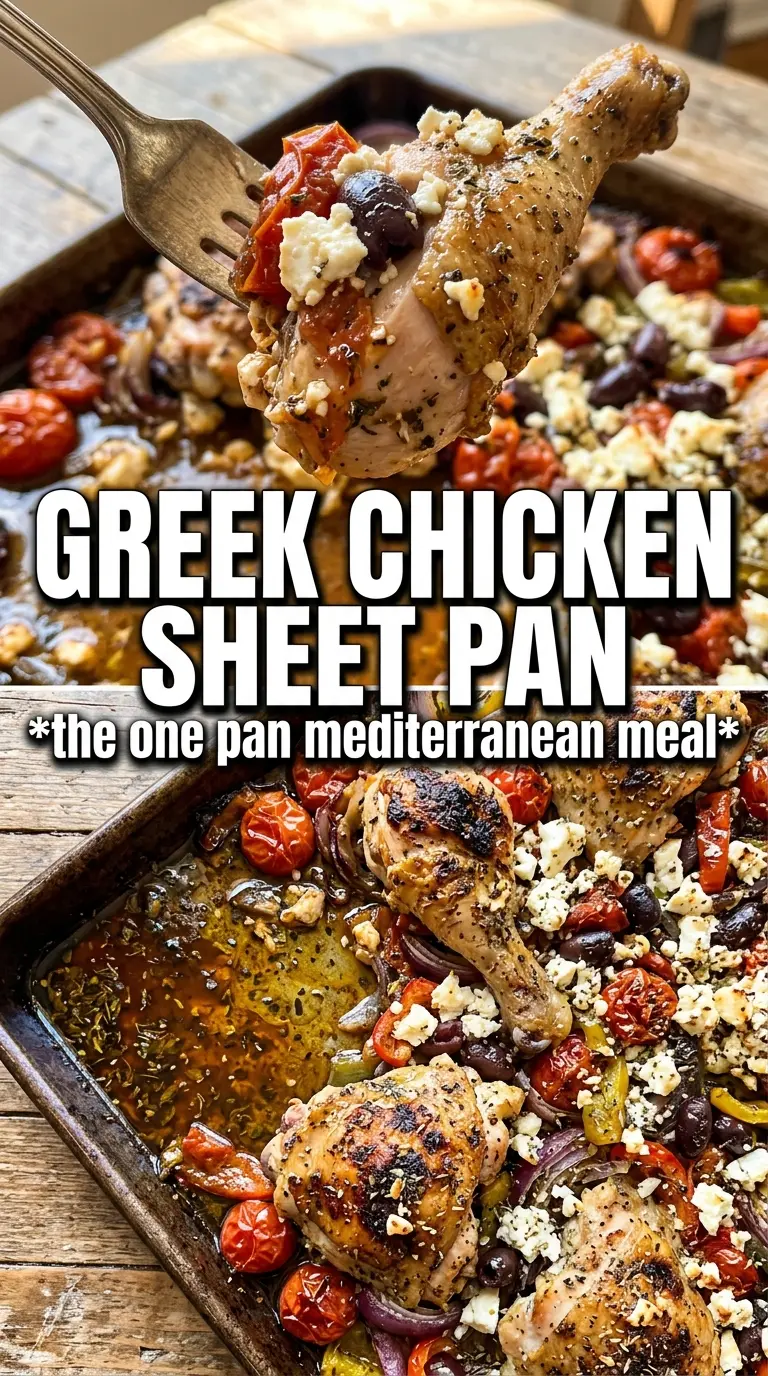
- Chicken thighs — Bone-in, skin-on thighs stay juicier than breasts and the skin has a chance to crisp. That matters here because the vegetables roast in the same pan and you want a cut that can handle the full 40 minutes without drying out.
- Baby potatoes — These are the anchor of the pan. Halving them gives you more cut surface for browning, and keeping them around the same size helps them cook evenly before the chicken goes in.
- Lemons — Two are sliced for roasting, one is juiced for the dressing. The sliced lemons turn mellow and caramelized in the oven, while the juice cuts through the richness of the chicken and feta. Bottled juice won’t give the same brightness.
- Feta — Crumbled feta is best added at the end so it softens without disappearing. A block that you crumble yourself usually tastes better and stays a little creamier than pre-crumbled feta, which is often drier.
- Olives — Kalamatas bring salt and depth that balance the lemon. If you use a milder olive, the pan tastes flatter, so this is one place where the stronger olive is worth it.
Building the Pan in the Right Order
Whisk the Dressing First
The olive oil, garlic, lemon juice, oregano, thyme, salt, and pepper need to be mixed before anything touches the pan. That gives the garlic a chance to spread through the oil instead of clumping in one spot, and it helps the herbs coat the potatoes evenly. If the dressing sits for a few minutes while you prep the vegetables, the oregano blooms a little more and tastes fuller once it hits the heat.
Start the Potatoes Alone
Toss the halved potatoes with half the dressing and spread them out in a single layer. They need contact with the pan to brown, not a pile that traps steam. A foiled baking sheet helps with cleanup, but the real key is giving the potatoes room so their cut sides can dry and caramelize before the chicken crowds in.
Add the Chicken and Roast Until the Skin Turns Deep Gold
After the first 10 minutes, push the potatoes to the sides and nestle the chicken thighs in the center. Brush on the remaining dressing, then scatter the tomatoes, onion, and lemon slices around the chicken. Roast until the skin is deeply golden and the thickest part of the thigh reaches 165°F; if the skin is pale, it needs more time, and if the vegetables are browning too fast, move the pan one rack lower.
Finish With Olives, Feta, and Parsley
The olives and feta go on at the end because both are already fully seasoned and can overcook if they stay in the oven too long. A quick broil gives the feta a little color and softens it into the hot vegetables without turning it grainy. Add the parsley right before serving so it stays bright and fresh against the rich roasted pan juices.
How to Adapt This for Different Nights
Use Chicken Breasts Instead of Thighs
Chicken breasts can work, but they need less time and more attention. Add them after the potatoes have had a good head start and pull the pan as soon as the thickest part reaches 165°F, or they’ll dry out before the vegetables are done. The tradeoff is leaner meat and less rich pan juices.
Make It Dairy-Free
Skip the feta and finish with extra parsley and a few more olives. You’ll lose the creamy-salty finish, so add a small pinch more salt at the table if needed. The rest of the pan still holds up because the lemon and oregano are doing most of the heavy lifting.
Swap the Potatoes for Low-Carb Vegetables
Broccoli florets or cauliflower florets can take the place of the potatoes if you want a lower-carb dinner. Add them later in the roast, since they cook faster and can burn at the edges before the chicken is done. You’ll get less of the hearty, starchy base, but the lemon-garlic dressing still makes them taste complete.
Storage and Reheating
- Refrigerator: Store leftovers in an airtight container for up to 4 days. The potatoes soften a little, but the flavor gets even better overnight.
- Freezer: The chicken freezes well for up to 2 months, though the potatoes and tomatoes turn softer after thawing. Freeze in portions and expect a less crisp finish once reheated.
- Reheating: Warm on a sheet pan in a 375°F oven until hot. The oven keeps the chicken skin and potatoes from turning rubbery the way a microwave can.
Questions I Get Asked About This Recipe
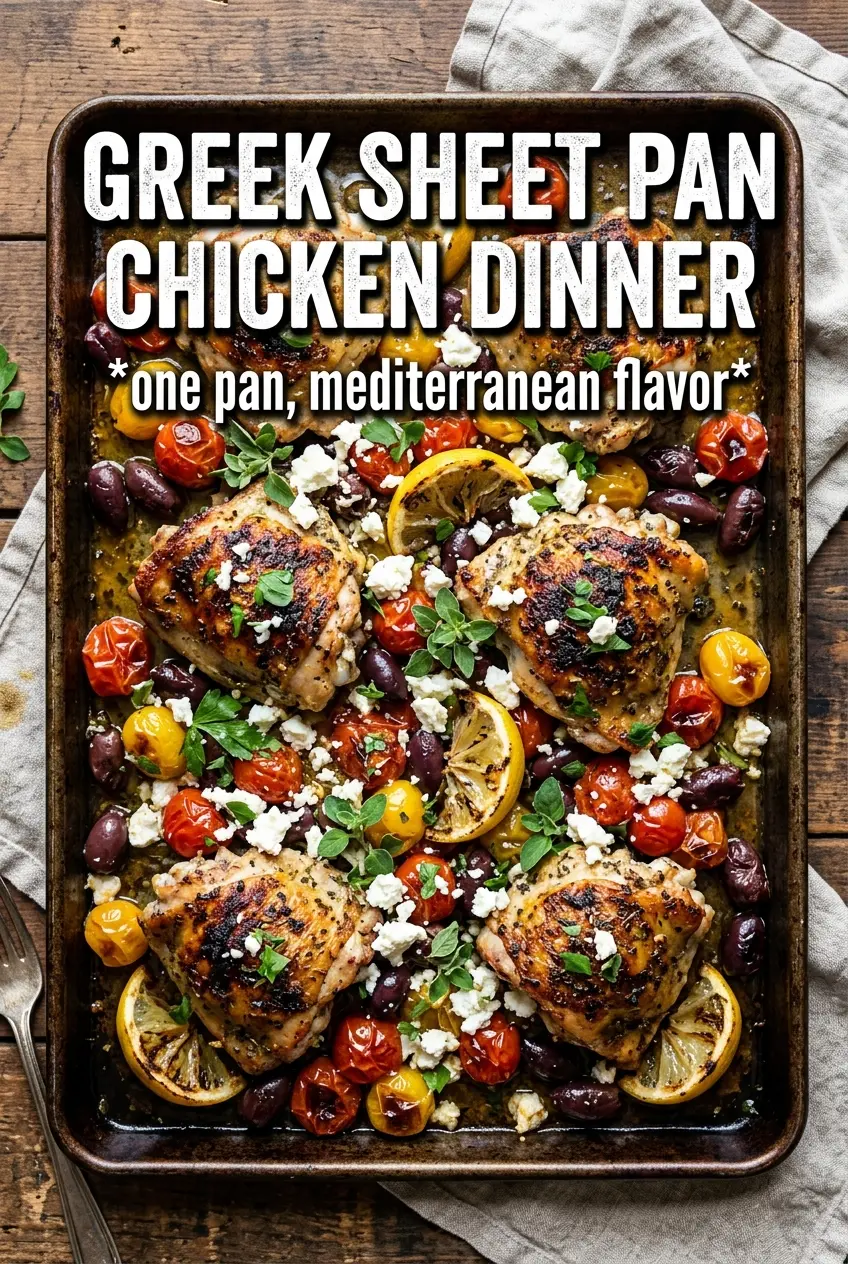
Greek Sheet Pan Chicken Dinner
Ingredients
Equipment
Method
- Preheat oven to 425°F and line a large rimmed baking sheet with foil.
- Whisk olive oil, garlic, lemon juice, dried oregano, dried thyme, salt, and black pepper together until combined.
- Toss halved baby potatoes with half the dressing and spread on the baking sheet.
- Roast for 10 minutes at 425°F, until the potatoes look slightly drier and starting to brown at the edges.
- Push the potatoes to the sides and nestle the chicken thighs in the center.
- Brush the chicken thighs with the remaining dressing, letting any extra dressing drip onto the pan.
- Scatter cherry tomatoes, red onion wedges, and sliced lemon around the chicken and potatoes.
- Roast for 30–35 minutes at 425°F until the chicken skin is golden and the internal temperature reaches 165°F.
- Scatter kalamata olives and crumbled feta over the top during the last few minutes of roasting.
- Broil for 3 minutes, until the feta starts to brown and the lemon slices show charred spots.
- Scatter fresh parsley over the pan and serve directly from the sheet pan while hot.