Sticky BBQ chicken earns its place on the table when the sauce turns glossy and dark at the edges without burning, and the meat stays juicy all the way to the bone. The best version has that mix of smoky seasoning under the glaze and a lacquered finish that clings instead of sliding off the skin.
What makes this method work is patience in two places: first, the chicken gets time to absorb seasoning and a little sauce before it ever hits the grill, and second, the last layer of BBQ sauce goes on near the end so it can caramelize instead of scorch. Bone-in, skin-on pieces handle the heat better than boneless cuts, and the skin helps protect the meat while adding those crisp, charred edges everyone wants.
Below, I walk through the timing that keeps the sauce from burning, the ingredient choices that matter most, and a few simple ways to adapt the recipe for the oven or the stove when grilling isn’t the plan.
The sauce got that sticky, caramelized coating without burning, and the chicken stayed juicy even after I turned it every few minutes. My husband kept picking at the crispy edges straight off the platter.
Like this sticky BBQ chicken? Save it to Pinterest for the nights when you want deeply caramelized sauce and juicy bone-in chicken off the grill.
The Trick That Keeps BBQ Sauce From Burning on the Grill
BBQ sauce is loaded with sugar, which is exactly why it turns sticky and lacquered on the chicken — and exactly why it burns if it goes on too early. The best flavor comes from two separate layers: seasoning and a little sauce before grilling, then the heavier saucing during the last stretch when the chicken is already mostly cooked.
If you’ve ever had barbecue chicken that tasted bitter at the edges, the grill was too hot or the sauce sat on the heat for too long. Medium heat gives the skin time to render and the chicken time to cook through before the glaze tightens up. Keep turning the pieces every few minutes so the sugars build color instead of blackening in one spot.
What Each Seasoning Is Doing Before the Sauce Goes On
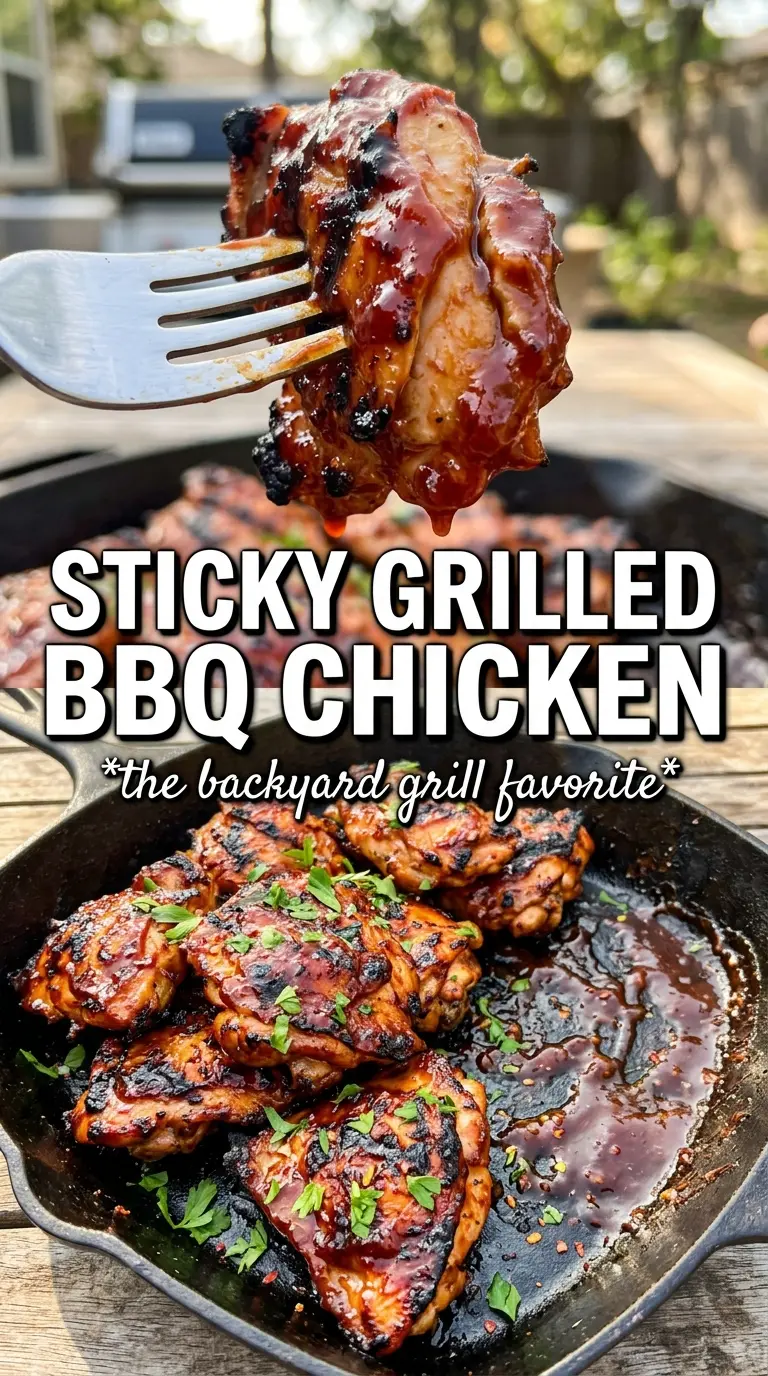
- Bone-in, skin-on chicken — This is the right cut for grilling because the bone slows the cooking and the skin protects the meat from drying out. You can use thighs, legs, or breasts, but breasts need the closest watch since they cook faster and dry out sooner.
- BBQ sauce — Use a sauce you actually like eating on its own, because it becomes the finish. A thinner sauce brushes on more evenly; if yours is thick, warm it slightly so it spreads without tearing up the skin.
- Olive oil and dry spices — The oil helps the seasoning cling and keeps the surface from sticking to the grates. Smoked paprika brings that grill-house note even before the chicken picks up any char.
- Fresh parsley — This isn’t essential to the cooking, but it gives the finished chicken a clean, fresh look and a little brightness against the dark glaze.
Building the Heat So the Chicken Cooks Through Before It Glazes
Seasoning and Marinating
Rub the chicken with oil and the dry spices first, then coat it with about half a cup of BBQ sauce and let it sit for at least an hour. That short marinate gives the surface flavor and helps the glaze start working into the meat without making the skin soggy. If you go overnight, keep it covered and refrigerated; the flavor deepens, but don’t drown the chicken in sauce or it can steam instead of grill.
Grilling Over Medium Heat
Set the chicken bone-side down first and keep the heat at medium, not high. You want steady sizzling, not aggressive charring. Turn the pieces every 8 to 10 minutes so the skin renders evenly and the sugars don’t sit on one hot spot long enough to burn. If flare-ups start, move the chicken to a cooler part of the grill until the flames settle.
Finishing With the Final Layer of Sauce
Brush on the remaining sauce only during the last 10 minutes. By then, the chicken should be mostly cooked and the sauce can tighten into that glossy coating without turning bitter. Keep basting and turning until the surface looks sticky and deep mahogany, and the internal temperature hits 165°F at the thickest part. Let it rest for 5 minutes before serving so the juices settle back into the meat.
Three Ways to Work This BBQ Chicken Into Your Week
Oven-Baked BBQ Chicken
Bake the seasoned chicken on a rack over a sheet pan at 400°F until nearly done, then brush on the sauce and finish under the broiler for a minute or two. The oven gives you steady heat and the broiler gives you the sticky edges, but you won’t get the same smoke and char as a grill.
A Lower-Sugar BBQ Chicken
Use a lower-sugar barbecue sauce and add the final coating even later in the cooking time. The glaze won’t get quite as thick or shiny, but it will caramelize with less risk of burning, which helps if you’re watching carbs or just prefer a less sweet finish.
Using Boneless Chicken
Boneless thighs work better than breasts if you want to keep the meat juicy, and they’ll cook faster than bone-in pieces. Cut the grilling time down and start checking early, because the sauce can go from glossy to scorched fast once the meat is close to done.
Storage and Reheating
- Refrigerator: Store leftovers in an airtight container for up to 4 days. The sauce will thicken and the skin softens, but the flavor holds up well.
- Freezer: It freezes well for up to 2 months if you wrap the chicken tightly and store it with a little extra sauce. Thaw it in the refrigerator overnight so the glaze doesn’t separate from the meat.
- Reheating: Reheat covered in a 325°F oven until warmed through, then uncover for the last few minutes to re-set the glaze. The biggest mistake is blasting it in the microwave, which turns the skin rubbery and can make the sauce taste flat.
Answers to the Questions Worth Asking
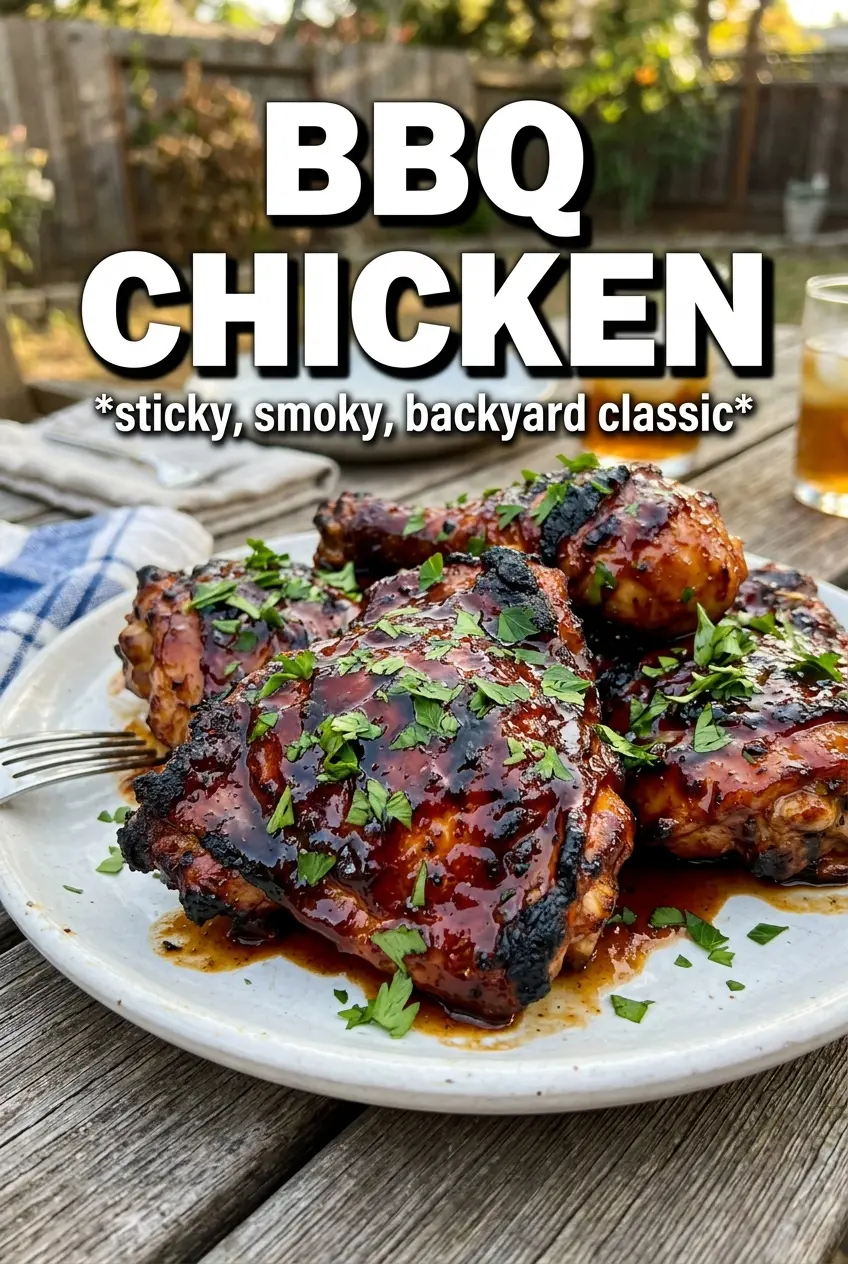
BBQ Chicken
Ingredients
Equipment
Method
- Rub the chicken with olive oil, garlic powder, onion powder, smoked paprika, salt, and black pepper until evenly coated.
- Marinate the chicken in 1/2 cup BBQ sauce for at least 1 hour or overnight in the refrigerator.
- Preheat the grill to medium heat.
- Place the chicken on the grill bone-side down and cook for 8-10 minutes, then turn every 8-10 minutes for even cooking.
- Cook 25-30 minutes without sauce, turning regularly until the chicken is cooked through but not yet glazed.
- In the last 10 minutes, brush generously with the remaining BBQ sauce, turning and basting each time for a sticky coating.
- Continue grilling until the BBQ sauce is deeply caramelized and sticky, and the internal temperature reaches 165F.
- Rest the chicken 5 minutes before serving.
- Serve with extra warmed BBQ sauce and garnish with fresh parsley.