Grilled Huli Huli chicken lands on the plate with sticky, lacquered skin, smoky edges, and that sweet-salty pineapple glaze that makes people keep reaching for one more piece. The best part is the contrast: juicy chicken underneath a deeply caramelized coating, with just enough char to keep the glaze from tasting flat. When it’s done right, every bite tastes like the grill had a hand in building the flavor, not just heating the meat.
This version works because the marinade pulls double duty. Pineapple juice brings sweetness and a little acidity, soy sauce lays down the savory backbone, and the brown sugar helps the glaze darken fast over medium heat. The trick is to reserve part of the marinade before the chicken goes in, then simmer it until it turns glossy and safe for basting. That gives you the same bold flavor without brushing raw marinade onto cooked chicken.
Below, I’m walking through the part that matters most: how to keep the glaze from burning before the chicken is cooked through, plus a few ways to adapt it if you’re working with what’s already in the pantry.
The glaze thickened up beautifully after a quick simmer, and the chicken stayed juicy even with all that basting. I grilled the pineapple rings too and that sweet char on the side was the best part.
Like this grilled Huli Huli chicken? Save it to Pinterest for the nights when you want sticky pineapple glaze, charred edges, and an easy grill dinner that feels special.
The Glaze Burns Fast, So the Grill Heat Has to Stay Moderate
Huli Huli chicken has a built-in balancing act: the sugar and pineapple that make it taste iconic also make it prone to scorching. High heat gives you blackened glaze before the thighs are cooked through, and once that sugar burns, the whole batch starts tasting bitter. Medium heat keeps the sauce moving from thin and shiny to thick and clinging without crossing into charred-black territory.
Bone-in pieces help here because they stay juicy during the longer cook time the glaze needs. Turning the chicken every 8 to 10 minutes gives you a chance to baste in layers instead of flooding the surface all at once, which is how you get that lacquered finish instead of a sticky mess. If the grill flares, move the pieces to a cooler spot and let the heat settle down before basting again.
What the Pineapple Juice, Mirin, and Brown Sugar Are Doing in the Marinade
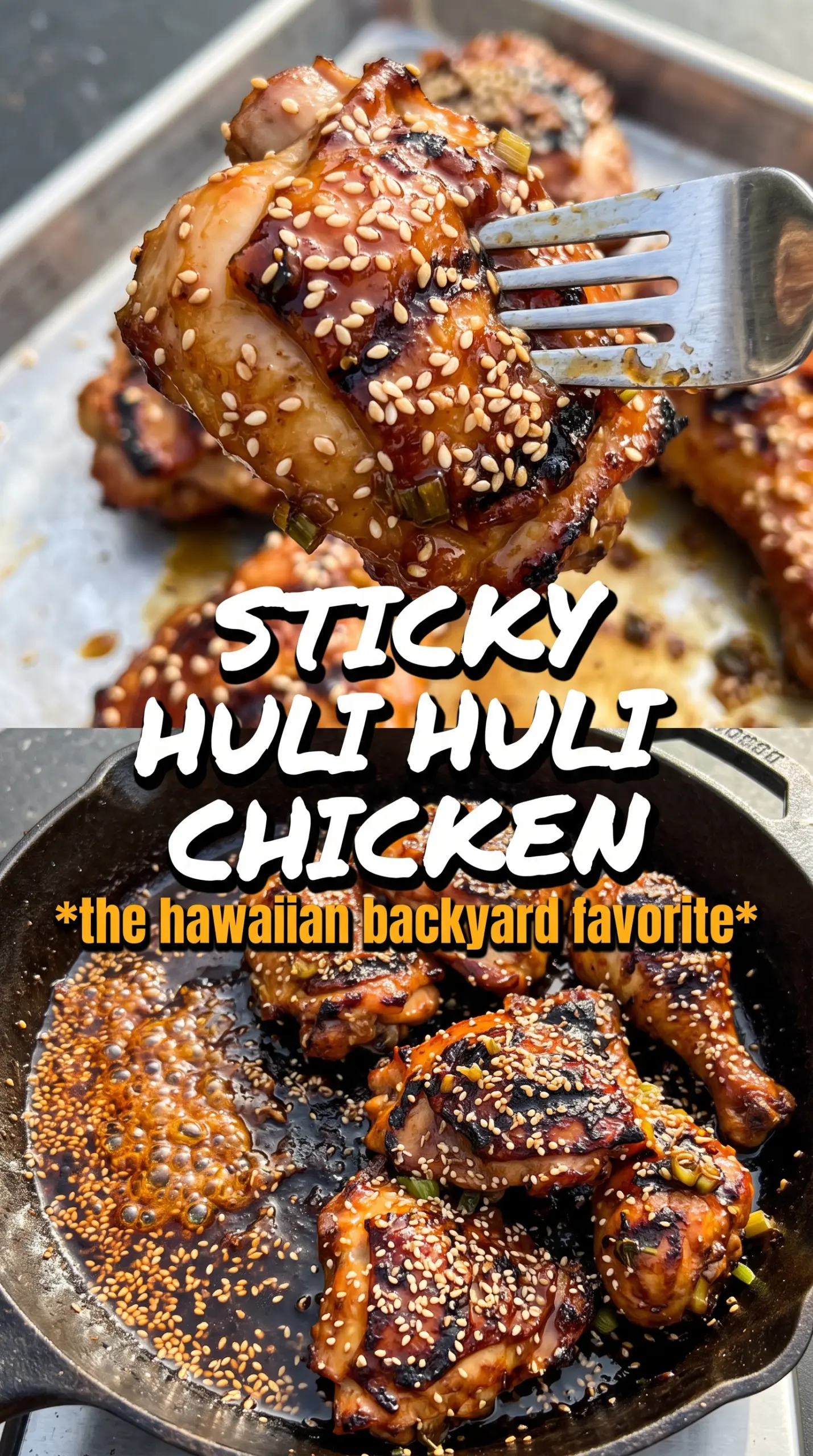
- Pineapple juice — This is what gives the marinade its signature sweetness and helps the glaze caramelize on the grill. Fresh or bottled both work, but don’t use extra-pulp juice if it’s heavily sweetened; you want something clean so the sauce reduces predictably.
- Soy sauce — This brings the salty backbone and helps the chicken taste seasoned all the way through, not just on the surface. Regular soy sauce is fine; if you use low-sodium, expect a lighter savory note and add a touch more salt only if the finished glaze tastes flat.
- Mirin or dry sherry — This adds depth and roundness that plain sugar can’t mimic. If you don’t have either one, a splash of rice vinegar plus a pinch more brown sugar will get you in the neighborhood, though the finish will be sharper.
- Sesame oil — A small amount goes a long way here, giving the marinade a nutty, toasted edge that survives the grill. Keep it measured; too much and it can overpower the pineapple.
- Chicken thighs or leg quarters — Bone-in pieces are worth using because they stay juicy while the glaze has time to reduce and cling. Boneless chicken cooks faster, but you lose some of the forgiving texture that makes this recipe work so well on the grill.
Building the Sweet-Savory Layer Without Burning the Chicken
Whisk the Marinade and Split It Before It Touches the Chicken
Mix the soy sauce, pineapple juice, ketchup, brown sugar, mirin, garlic, ginger, and sesame oil until the sugar starts dissolving and the marinade looks smooth. Reserve one-third before the chicken goes in; that portion is what you’ll simmer and use for basting later. If you skip this split, you’re left trying to salvage raw marinade after the chicken is cooked, and that’s not a place to improvise.
Let the Chicken Marinate Long Enough to Matter
Four hours is the minimum, and overnight is even better if you want the seasoning to reach beyond the surface. The chicken should look glossy and slightly darker after marinating, not pale and wet. Don’t leave it in for days, though, or the pineapple juice can start making the texture a little mushy around the edges.
Reduce the Reserved Marinade Before Basting
Bring the reserved marinade to a simmer in a small saucepan for about 5 minutes until it thickens slightly and turns shiny. You’re looking for a glaze that coats a spoon, not a syrup so thick it won’t brush on cleanly. If it’s still thin, keep cooking it a minute or two longer; a loose glaze just runs off the chicken and burns on the grates instead of staying put.
Grill Bone-Side Down and Baste in Layers
Start the chicken bone-side down on a medium grill so the meat can cook steadily while the skin side stays protected. Turn every 8 to 10 minutes, basting each time the surface has set enough to hold the glaze. The chicken is done when the juices run clear and the internal temperature hits 165°F, but for the best texture the glaze should also be deep amber with charred spots, not black flakes.
Char the Pineapple Rings at the End
The pineapple only needs 2 to 3 minutes per side, just enough to pick up grill marks and intensify its sweetness. Put it on after the chicken is nearly done so it doesn’t collapse into a soft, overcooked mess. Those caramelized rings cut through the sticky glaze and make the whole plate taste brighter.
How to Adapt This for Different Grills and Different Diets
Use chicken thighs for the juiciest result
Thighs handle the sweet glaze best because they stay tender while the sugars in the marinade caramelize. Leg quarters work too, but give them a few extra minutes if the bone is thick. If you use breasts, lower the heat and watch them closely or they’ll dry out before the glaze thickens.
Make it gluten-free without losing the sticky finish
Swap in gluten-free soy sauce or tamari and keep the rest of the marinade the same. The texture and caramelization stay close to the original, since the real work is coming from the pineapple juice and brown sugar. Just check your ketchup too, because some brands sneak in wheat-based additives.
Skip the grill and use a broiler
Set the chicken on a foil-lined rack and broil it on the middle rack, turning and basting as it colors. You won’t get the same smoke, but you’ll still get the sticky surface and dark edges if the glaze has been reduced properly. Watch it closely, because broilers can go from glossy to burned in a minute.
Make the marinade less sweet
Cut the brown sugar back by a tablespoon if you want a tighter savory edge, especially if your pineapple juice is already sweet. The glaze will still caramelize, just a little more slowly and with less candy-like finish. That works well if you’re serving it with a sharp slaw or plain rice.
Storage and Reheating
- Refrigerator: Store leftovers in an airtight container for up to 4 days. The glaze will thicken and the skin will soften, but the flavor stays strong.
- Freezer: It freezes well for up to 2 months. Wrap portions tightly and thaw overnight in the fridge so the sauce doesn’t split when reheated.
- Reheating: Warm gently in a covered skillet over low heat with a splash of water to loosen the glaze, or reheat in a 325°F oven until hot. High heat dries out the chicken and turns the sugars bitter.
Questions I Get Asked About This Recipe
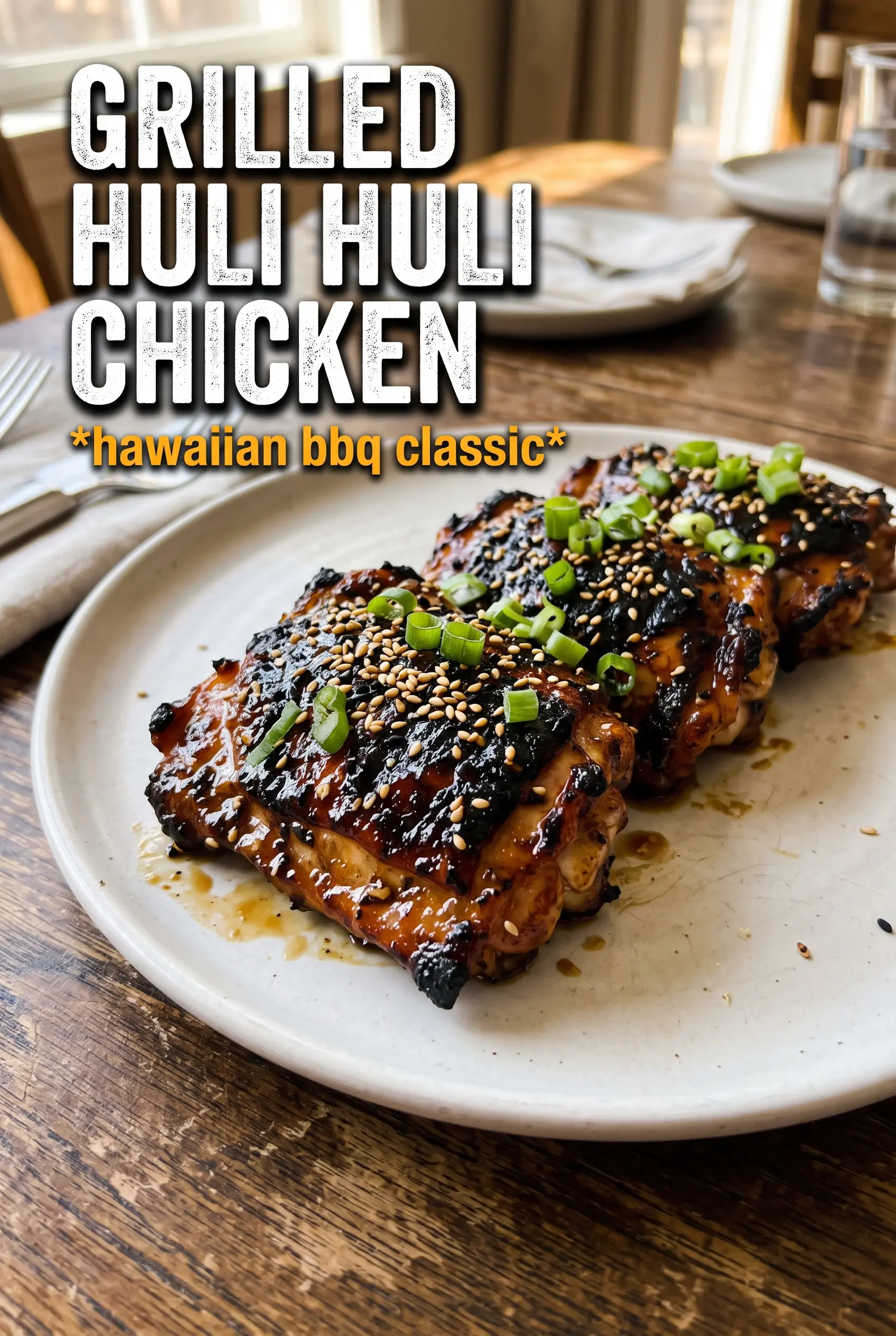
Grilled Huli Huli Chicken
Ingredients
Equipment
Method
- Whisk soy sauce, pineapple juice, ketchup, brown sugar, mirin (or dry sherry), garlic, ginger, and sesame oil in a bowl until smooth, then reserve 1/3 of the mixture for basting.
- Marinate the chicken in the remaining sauce for at least 4 hours or overnight, turning once if possible, until the meat looks coated.
- Simmer the reserved marinade in a small saucepan for 5 minutes until slightly thickened, glossy, and lightly reduced.
- Preheat the grill to medium heat.
- Place chicken on the grill bone-side down and cook, turning every 8-10 minutes, basting generously with the reduced glaze each time.
- Continue grilling 30-35 minutes total until deeply caramelized with visible char, and the internal temperature reaches 165°F.
- Grill pineapple rings for 2-3 minutes per side until marked and lightly caramelized.
- Serve the grilled pineapple rings alongside the huli huli chicken, then top with green onions and sesame seeds.