Grilled teriyaki chicken gets its best texture from contrast: sticky, lacquered edges, smoky grill marks, and juicy meat underneath. The glaze clings instead of sliding off, and when it hits the hot grates it turns glossy and a little caramelized, with just enough sweetness to balance the soy and ginger.
The trick is to separate the marinade from the glaze before the chicken ever touches the grill. That gives you a clean, safe sauce to thicken later without guessing whether it has been contaminated, and it keeps the finished glaze bold instead of watery. A short simmer with cornstarch is enough to turn the reserved marinade into something brushable and shiny without making it gummy.
Below, I’ll show you how to keep the chicken moist on the grill, how to know when the glaze is ready, and a few practical swaps if you only have rice vinegar instead of mirin.
The glaze turned out thick and glossy, and brushing it on during the last few minutes gave the chicken those sticky caramelized edges without burning. I served it with rice and my kids scraped their plates clean.
Save these grilled teriyaki chicken thighs for the nights when you want sticky glaze, smoky grill marks, and dinner on the table fast.
The Marinade Gets Its Best Flavor Before It Ever Touches the Grill
The biggest mistake with teriyaki chicken is using one bowl of sauce for everything and then wondering why the glaze tastes flat or the coating won’t thicken. The marinade needs time to sink into the chicken, but the finishing sauce needs to start clean so it can reduce into something glossy and clingy. That split is what gives this recipe its restaurant-style finish instead of a thin, sugary coating.
Boneless skinless thighs are the right cut here because they stay juicy even after a direct grill. Chicken breast can work, but it dries out faster and gives you less margin for the last few minutes of glazing. If you’ve ever had teriyaki turn bitter on the grill, it usually means the sauce went on too early and the sugars scorched before the chicken was cooked through.
What the Honey, Soy, and Sesame Oil Are Doing Here
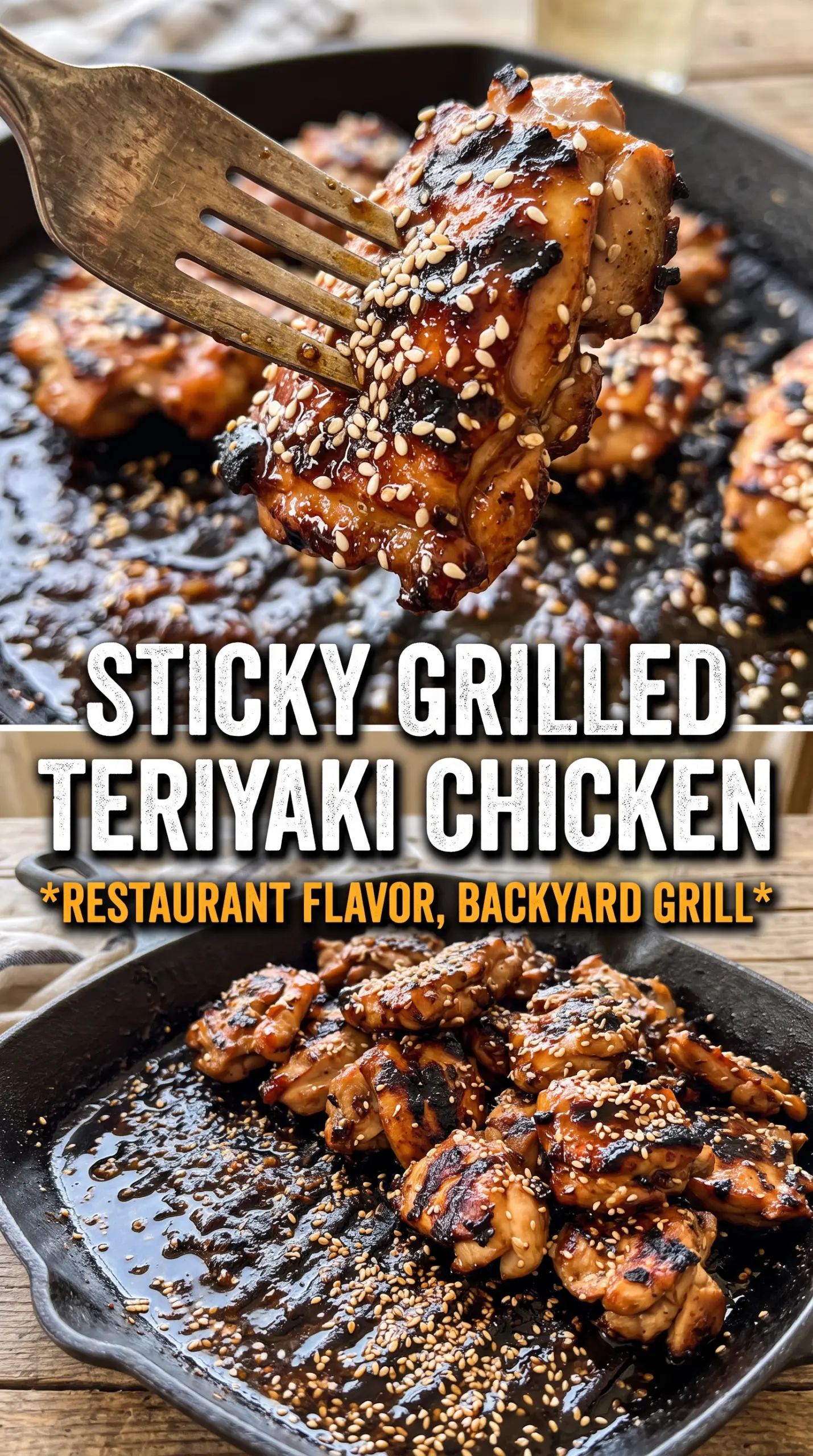
- Chicken thighs — These stay tender over medium-high heat and handle the glaze better than leaner cuts. You can use breast if that’s what you have, but pull it sooner and keep the grill covered only briefly so it doesn’t dry out.
- Soy sauce — This is the backbone of the glaze, bringing salt, color, and that deep savory edge. Use regular soy sauce for the best balance; low-sodium works if you want more control, but the finished sauce will taste a little softer.
- Honey and brown sugar — The honey gives shine and a smooth finish, while the brown sugar helps the glaze caramelize and stick. If you cut both down too much, the sauce still tastes savory but won’t lacquer the chicken the same way.
- Mirin or rice vinegar — Mirin adds gentle sweetness and depth. Rice vinegar is the cleanest substitute, but it needs the sugar in the recipe to keep the glaze from tasting sharp.
- Sesame oil, garlic, and ginger — These are what make the sauce smell like teriyaki the second they hit heat. Fresh ginger matters more than dried here; dried ginger tastes dusty in a sauce this simple.
- Cornstarch slurry — This is what turns the reserved marinade into a brushable glaze instead of a loose sauce. Mix it smooth before it goes into the pan so you don’t get little floury lumps in the finish.
Getting the Glaze Thick Enough Without Burning It
Building the Marinade
Whisk the soy sauce, honey, mirin, brown sugar, sesame oil, garlic, and ginger until the sugar starts dissolving. Pull off one-third before the chicken goes in; that portion is your glaze, and it stays clean because it never touches raw meat. If you skip that split, you either have to boil the marinade too long or live with a thin sauce that won’t cling.
Marinating for Real Flavor
Give the chicken at least two hours in the marinade so the surface picks up seasoning and the thighs stay juicy on the grill. Overnight is even better if you have the time. Don’t go much past that, though, because the soy and salt can start to make the texture a little too firm around the edges.
Turning the Reserved Sauce into a Glaze
Simmer the reserved marinade with the cornstarch slurry over medium heat for three to four minutes, stirring often. You’re looking for a sauce that goes from thin and cloudy to glossy and slightly syrupy. If it still looks loose, keep cooking for another minute; if it gets too thick, a splash of water loosens it back up without ruining the shine.
Grilling and Brushing at the End
Oil the grates well and cook the chicken over medium-high heat for six to seven minutes per side. Brush on the glaze only during the last four minutes so the sugars caramelize instead of burning. The chicken is done when the internal temperature hits 165F and the glaze has turned deep mahogany with a few dark, sticky edges.
Three Ways to Work This Recipe Around What’s in Your Kitchen
Make it gluten-free
Swap in a gluten-free soy sauce or tamari and keep everything else the same. The glaze will still thicken and caramelize the same way, and you won’t lose the deep savory flavor that makes the chicken taste finished.
Use rice vinegar instead of mirin
Rice vinegar works well if that’s what you have, but it’s sharper and less sweet than mirin. Keep the brown sugar and honey as written so the sauce still tastes balanced and doesn’t come across as tart.
Make it lower sugar
You can reduce the brown sugar a little, but don’t remove both sweeteners entirely. Teriyaki needs enough sugar to caramelize into that shiny coating; otherwise the sauce tastes flat and won’t brown properly on the grill.
Turn it into a skillet dinner
If you don’t have a grill, sear the marinated chicken in a hot skillet, then brush on the glaze during the last few minutes. You’ll miss the smoky char, but you’ll still get a sticky, glossy coating and juicy thighs.
Storage and Reheating
- Refrigerator: Store leftovers for up to 4 days. The glaze will tighten as it chills, but the flavor holds up well.
- Freezer: Freeze the cooked chicken for up to 2 months. Wrap it tightly and freeze with a little extra glaze if you have it so the meat doesn’t dry out.
- Reheating: Warm it gently in a covered skillet over low heat or in the oven at 325F. High heat will toughen the chicken and can make the sugary glaze stick and scorch.
Questions I Get Asked About This Recipe
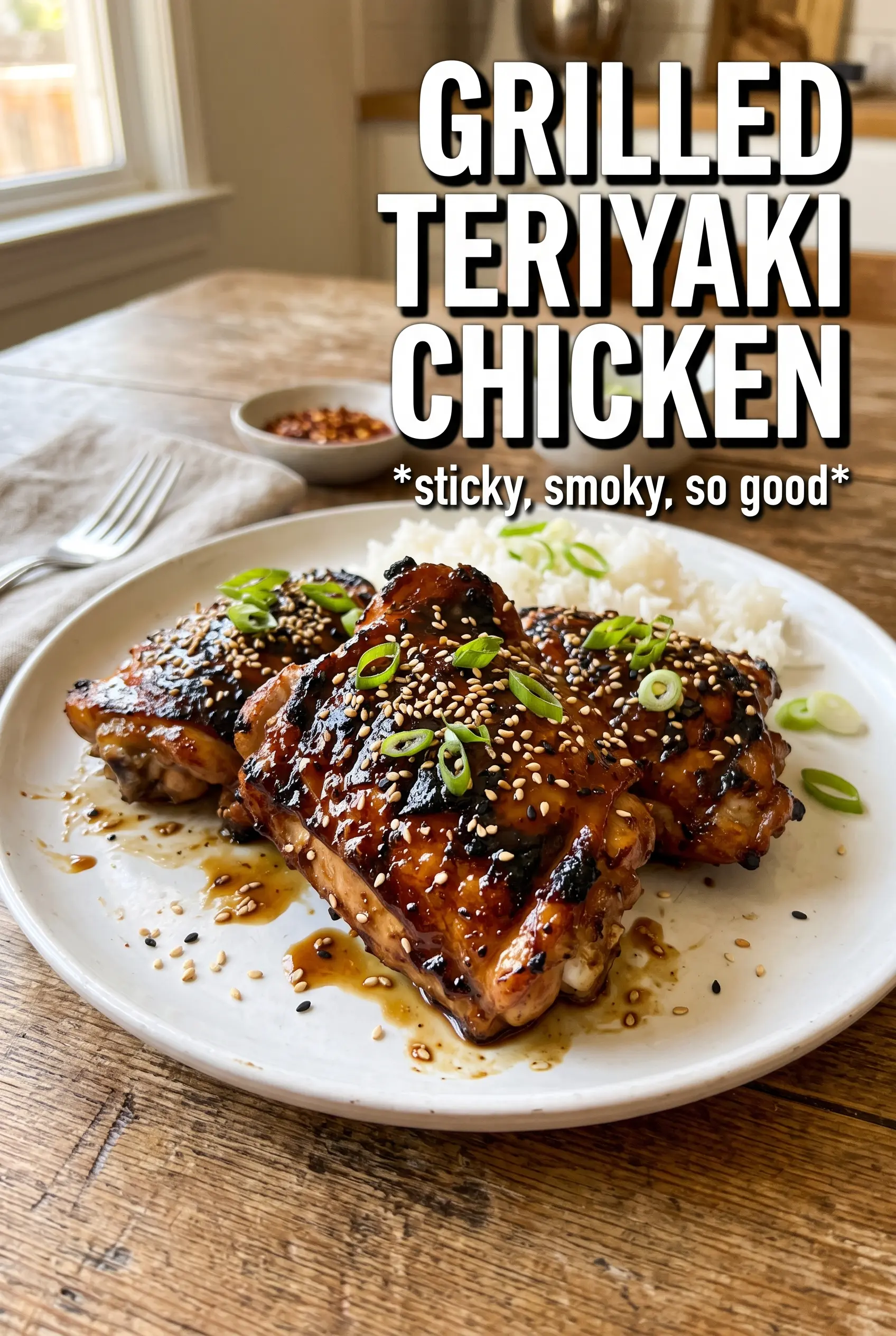
Grilled Teriyaki Chicken
Ingredients
Equipment
Method
- Whisk soy sauce, honey, mirin (or rice vinegar), brown sugar, sesame oil, garlic, and ginger together, then reserve 1/3 of the mixture for glazing.
- Marinate the chicken thighs in the remaining sauce for at least 2 hours or overnight, turning once if possible, until coated.
- Simmer the reserved teriyaki sauce with the cornstarch slurry (cornstarch mixed with water) in a small saucepan over medium heat for 3-4 minutes until thickened to a glaze, stirring to prevent lumps.
- Preheat the grill to medium-high heat and oil the grates well so the chicken releases cleanly.
- Grill the chicken thighs for 6-7 minutes per side, brushing with the teriyaki glaze in the last 4 minutes for deep color.
- Continue grilling until the internal temperature reaches 165°F and the glaze looks deeply caramelized around the grill marks.
- Garnish with sesame seeds and sliced green onions, then serve hot with steamed rice.