Healthy banana bread earns its place because it stays tender and fragrant without leaning on a pile of sugar. The bananas do the sweetening, the honey rounds out the flavor, and the whole wheat flour gives each slice a little more body and a heartier crumb that still feels soft, not heavy. It’s the kind of loaf that works for breakfast, an afternoon snack, or a lunchbox slice that doesn’t fall apart in your hand.
The trick is keeping the batter just mixed. Whole wheat flour needs a little more hydration than white flour, so the mashed bananas and honey pull more than their weight here, but overmixing still turns the loaf dense and tight. I also like a blend of whole wheat and all-purpose flour because it keeps the texture lighter while still giving you that nourishing, wheat-forward flavor.
Below you’ll find the small details that matter most: how ripe the bananas should be, why the loaf needs to cool all the way before slicing, and how to swap the flour if you want to lean fully whole grain.
The loaf came out moist with a deep banana flavor, and I loved that it sliced cleanly once it cooled. I swapped in olive oil and walnuts, and it still had that soft, hearty crumb my kids kept sneaking from the counter.
Save this healthy banana bread for the days when you want a naturally sweetened loaf with a soft, hearty crumb.
The Mistake That Makes Banana Bread Heavy Instead of Tender
Most banana bread gets dense for two reasons: the bananas aren’t ripe enough, or the batter gets worked too hard after the flour goes in. Ripe bananas bring sweetness and moisture, but they also mash into the batter more smoothly, which helps the loaf bake evenly instead of leaving dry pockets. If the bananas still have plenty of yellow left, the bread will taste flatter and you’ll be tempted to add more sweetener, which can throw off the texture.
The other trap is mixing until the batter looks perfectly smooth. Stop when the dry streaks disappear. Overmixing develops the flour and gives you a tighter crumb, especially with whole wheat flour already adding more structure. You want the batter thick and slightly rustic going into the pan, not glossy and elastic.
- Very ripe bananas — The browner the peel, the better the loaf. They mash easily and bring the natural sweetness this bread depends on.
- Whole wheat flour — This is what gives the bread its sturdier, more nourishing texture. White whole wheat flour works beautifully if you want a milder flavor.
- All-purpose flour — A partial blend keeps the crumb softer. If you want to use all whole wheat, expect a slightly more rustic loaf with a bit more chew.
- Honey or maple syrup — Either one works. Honey gives a rounder, deeper sweetness; maple syrup stays a little lighter and more neutral.
What Each Ingredient Is Doing in This Loaf
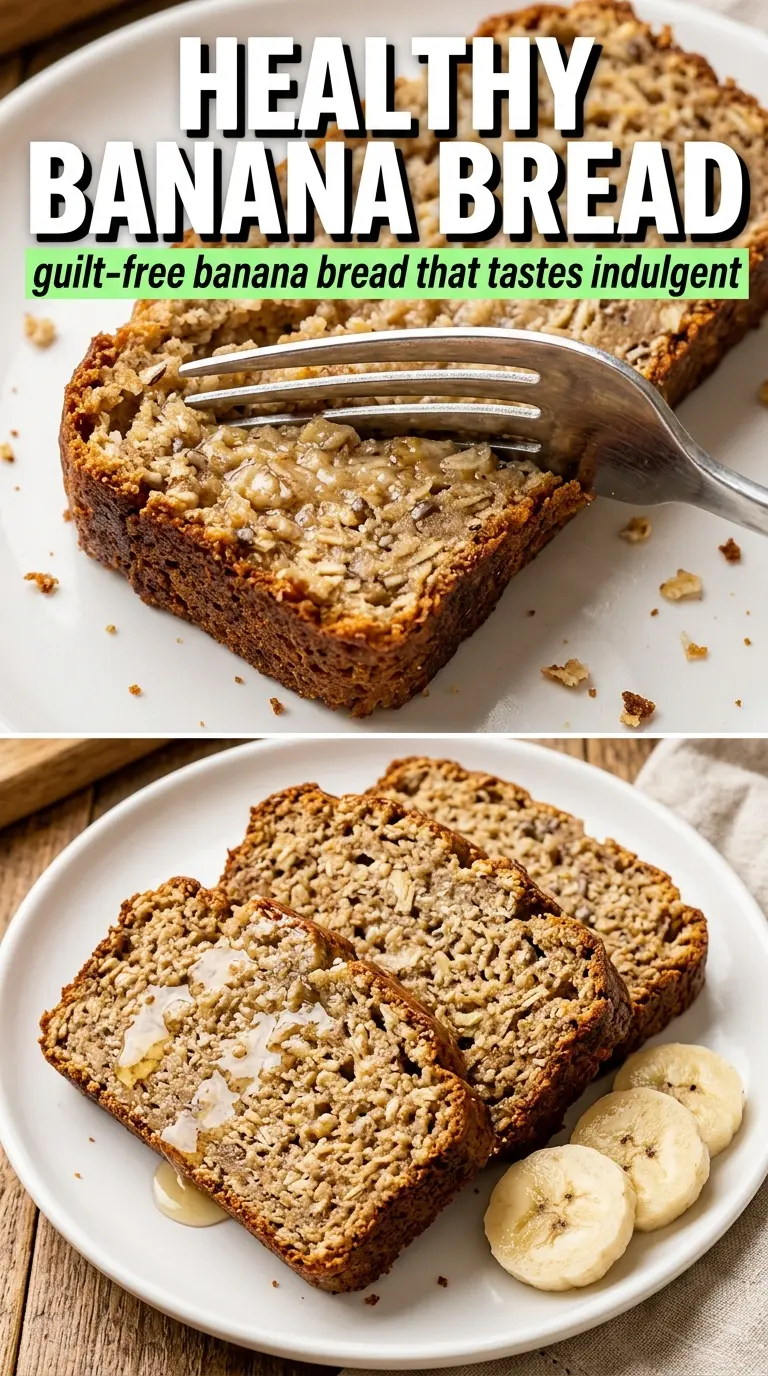
The bananas carry the flavor and most of the moisture, so don’t skimp on ripeness. You want soft, heavily speckled bananas that mash into a spoonable puree. Honey or maple syrup sweetens the loaf without making it cloying, and it also helps keep the crumb soft after baking.
Coconut oil gives a subtle richness, while olive oil makes the loaf a little more savory and keeps it tender for days. Eggs add structure and help the bread rise without getting gummy. If you’re using walnuts or almonds, chop them small enough that they scatter through the batter instead of sinking to the bottom.
Cinnamon is there to warm up the banana flavor, not overpower it. The baking soda handles most of the lift because the bananas and honey bring enough acidity and moisture to wake it up. Baking powder gives the loaf a little extra insurance so the center doesn’t turn heavy.
How to Mix the Batter So the Crumb Stays Soft
Starting With the Wet Ingredients
Mash the bananas until they’re mostly smooth, then whisk in the oil, honey, eggs, and vanilla. The mixture should look glossy and well blended before any flour goes in. If the bananas are still in large chunks, they won’t distribute evenly and you’ll get uneven pockets of sweetness in the finished loaf.
Adding the Dry Ingredients
Fold in the flour, baking soda, baking powder, cinnamon, and salt just until the streaks disappear. A few small lumps are fine. The batter should be thick and scoopable, not beaten thin. If you stir for too long, the loaf bakes up tight and a little rubbery, especially around the edges.
Baking Until the Center Sets
Pour the batter into a greased 9×5 loaf pan and bake at 350°F until the top is deeply golden and a toothpick comes out clean from the center. The top should split naturally and feel set when you touch it lightly. If the top is browning too fast before the middle is done, tent it loosely with foil for the last 10 to 15 minutes.
Cooling for the Best Slice
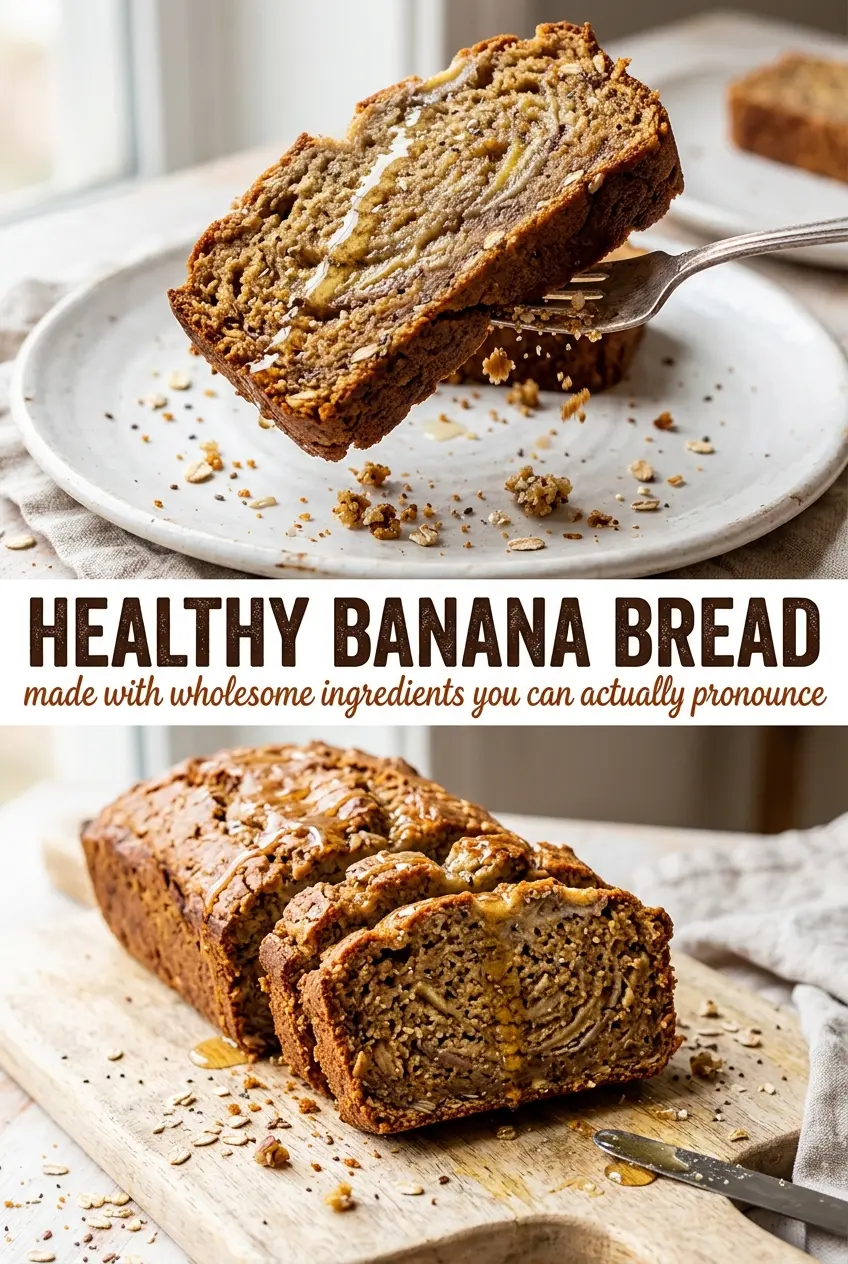
Let the loaf cool completely in the pan before slicing. That part matters more than people think. Fresh from the oven, the crumb is still setting and the slices can collapse or look gummy even when the bread is fully baked. Once it cools, the texture becomes tighter and cleaner, and the banana flavor comes through more clearly.
How to Adapt This for Different Kitchens and Diets
All Whole Wheat, Slightly Heartier Texture
Swap the all-purpose flour for an equal amount of whole wheat flour. The loaf will be a little denser and nuttier, which works well if you like a more wholesome crumb. Add an extra tablespoon of mashed banana or a splash of milk only if the batter looks unusually stiff.
Dairy-Free and Naturally Sweetened
This recipe is already dairy-free as written when you use coconut oil or olive oil. Keep the honey for a deeper, floral sweetness, or use maple syrup for a more neutral finish. Both work, but maple syrup gives the loaf a slightly softer aroma.
Nut-Free Banana Bread
Leave out the walnuts or almonds and bake the loaf as-is. The crumb stays tender and the flavor is still complete without them. If you want a little texture in place of the nuts, add a tablespoon or two of rolled oats on top before baking.
Storage and Reheating
- Refrigerator: Store tightly wrapped for up to 5 days. The loaf may firm up a little in the fridge, but the flavor stays good.
- Freezer: Freezes well. Slice first, wrap individual pieces, and freeze for up to 3 months so you can thaw only what you need.
- Reheating: Warm slices in a toaster oven or microwave just until heated through. Don’t overheat or the bread turns dry at the edges.
Answers to the Questions Worth Asking
Healthy Banana Bread
Ingredients
Equipment
Method
- Preheat the oven to 350°F and grease a 9x5 loaf pan so the banana bread releases cleanly after baking.
- Whisk the melted oil, honey, eggs, and vanilla into the mashed bananas until smooth and fully combined for an even texture.
- Fold in the whole wheat flour, all-purpose flour, baking soda, baking powder, cinnamon, and salt until just combined—stop as soon as no dry flour remains so it stays tender.
- Fold in the chopped walnuts or almonds if using, distributing them through the batter without overmixing.
- Pour the batter into the prepared pan and bake for 55–65 minutes at 350°F until deeply golden and a toothpick comes out clean.
- Cool the banana bread completely in the pan before slicing so the crumb sets and the texture improves significantly as it cools.