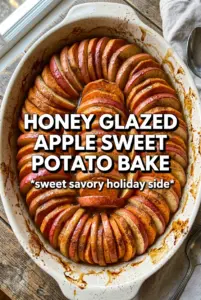
Sweet potatoes and apples turn into something far better than the sum of their parts when they’re layered together and baked under a warm honey glaze. The edges soften into a spoon-tender casserole, the tops caramelize just enough to pick up a glossy finish, and the pecans add the kind of crunch that keeps each bite interesting. It lands on the table looking humble and polished at the same time.
What makes this version work is the balance. Sweet potatoes bring body, apples bring brightness, and the honey-butter glaze keeps everything from tasting flat or dry. The spices are measured to support the fruit and root vegetable instead of burying them, which matters here because both ingredients need room to taste like themselves. Covering the dish first lets the slices steam until tender, then uncovering it at the end concentrates the glaze and gives you those caramelized edges that make people reach for a second helping.
Below, I’m walking through the small details that keep the casserole from turning watery or overbaked, plus a few smart swaps if you want to make it dairy-free or change up the texture a little.
The sweet potatoes got perfectly tender without the apples turning to mush, and the honey glaze thickened up on the edges just like I hoped. I used Honeycrisp apples and the whole pan disappeared before dinner was over.
Save this honey glazed apple and sweet potato casserole for the holiday table or any night you want a glossy, caramelized side with real texture.
The Trick to Keeping the Apples Tender, Not Mushy
The biggest mistake with a casserole like this is treating the apples and sweet potatoes as if they bake at the same pace without any help. Sweet potatoes need the full bake to turn soft all the way through, but apples can collapse if they’re cut too thin or baked uncovered for too long. The foil trap at the start is what keeps the apples intact while the sweet potatoes soften underneath.
Layering matters too. Overlapping slices create a little structure in the dish, which helps the glaze run between the layers instead of pooling at the bottom. If the slices are uneven, the thinner pieces will overcook before the thicker ones are done, so keep the cut size close to 1/4 inch and try to match the thickness as you go.
- Foil cover first: This holds in steam and gets the sweet potatoes tender before the glaze starts reducing too much.
- Even slicing: Consistent thickness keeps the apples and sweet potatoes on the same cooking timeline.
- Uncover at the end: That last bake is what gives you the caramelized edges and glossy top instead of a wet casserole.
What Each Ingredient Is Actually Doing in This Dish
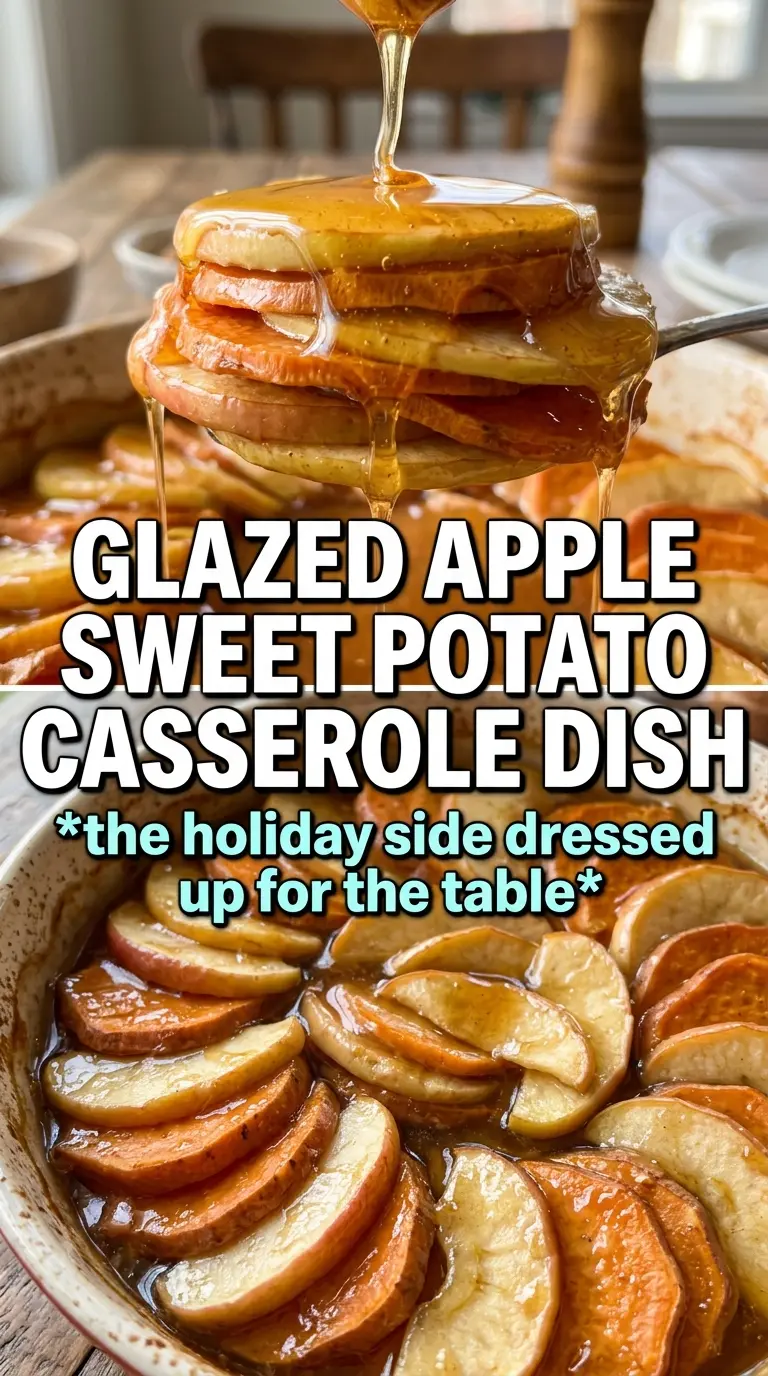
- Sweet potatoes: These provide the soft, creamy base. Jewel or garnet sweet potatoes work well because they bake up moist and hold their shape better than very dry varieties.
- Apples: Use a firm baking apple like Honeycrisp, Braeburn, or Granny Smith. A soft apple will fall apart before the casserole finishes, while a firmer one keeps a little bite and gives the dish contrast.
- Honey: This is the main glaze flavor, and it does more than sweeten. It helps the top turn shiny and lightly sticky as it bakes, which is part of what makes the casserole feel finished.
- Butter: Melted butter carries the spices and gives the glaze enough richness to coat every slice. If you use a dairy-free butter substitute, choose one that melts cleanly and doesn’t separate.
- Pecans: They’re not just garnish. Added near the end, they toast lightly instead of burning, which keeps the topping crisp against the soft fruit and potatoes.
Building the Glaze and Finishing the Bake
Mix the glaze until it looks fully smooth
Whisk the honey, melted butter, brown sugar, cinnamon, nutmeg, ginger, and salt until the mixture looks glossy and even. If the brown sugar stays in little clumps, it won’t spread evenly once it hits the casserole, and you’ll end up with sweet spots in some places and bland ones in others. The glaze should pour easily but still feel thick enough to coat a spoon.
Layer the fruit and sweet potatoes tightly
Alternate the slices in overlapping rows so the dish looks full and the glaze can slip between the layers. Loose packing leaves gaps that dry out in the oven, while too much crowding makes the center cook unevenly. Press the slices just enough that they sit level, not mashed together.
Cover, bake, then uncover for color
Bake covered for the first 30 minutes so the steam softens the sweet potatoes and keeps the apples from drying out. When you remove the foil, the dish should already smell like warm spice and honey, and the slices should be starting to relax when pierced with a knife. Scatter the pecans over the top now, not earlier, so they toast instead of turning bitter.
Watch for the finish, not the clock alone
The casserole is done when the sweet potatoes are tender, the apples still hold their shape, and the glaze has thickened into shiny pockets around the edges. If the top looks dry before the center is tender, the foil may have been off too long or your dish may be shallow; add a loose piece of foil and give it a few more minutes. A few browned spots are good. Dark, scorched edges mean the glaze reduced too far.
How to Adapt This for Different Tables and Different Pantries
Dairy-Free Version
Swap the butter for a good dairy-free butter substitute with a neutral flavor and a similar melt. You’ll still get a glossy glaze, but the finish may be a touch less rich, so don’t skip the brown sugar or the caramelization at the end.
Make It More Tart
Use half Granny Smith apples and half a sweeter variety like Honeycrisp. The tart apples cut through the honey and brown sugar, which keeps the casserole from leaning too sweet and gives the glaze a brighter edge.
Nut-Free Finish
Leave off the pecans and add the thyme at the end if you want a cleaner, softer top. You’ll lose the crunch, but the casserole will still have plenty of texture from the layered fruit and potatoes.
Storage and Reheating
- Refrigerator: Store leftovers covered for up to 4 days. The apples soften a bit more after chilling, but the flavor stays good.
- Freezer: It freezes, but the texture gets softer after thawing, especially in the apples. Freeze in tightly wrapped portions for up to 2 months if you don’t mind a more spoonable result.
- Reheating: Reheat covered in a 325F oven until warm through. Microwaving works for a small portion, but it softens the top and dulls the pecans, so the oven is the better call if you want the best texture.
Questions I Get Asked About This Recipe
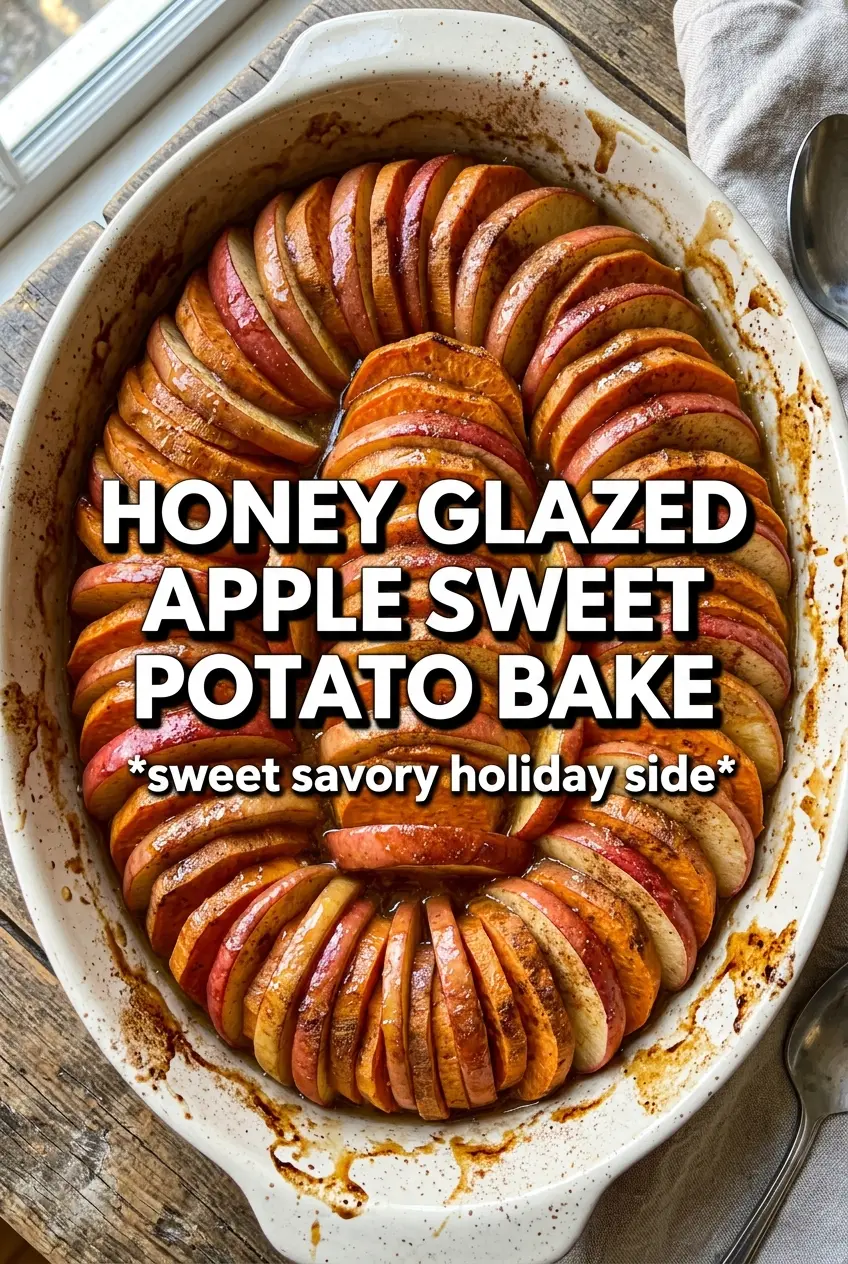
Honey Glazed Apple and Sweet Potato Casserole
Ingredients
Equipment
Method
- Preheat the oven to 375F and grease a 9x13 baking dish.
- Layer sweet potato slices and apple slices in alternating overlapping rows in the dish.
- Whisk honey, melted butter, brown sugar, cinnamon, nutmeg, ginger, and salt together until smooth.
- Pour the glaze evenly over the layered sweet potatoes and apples.
- Cover tightly with foil and bake for 30 minutes.
- Uncover and scatter the pecans over the top.
- Bake uncovered for 15 more minutes at 375F until the slices are tender and caramelized.
- Garnish with fresh thyme if desired.