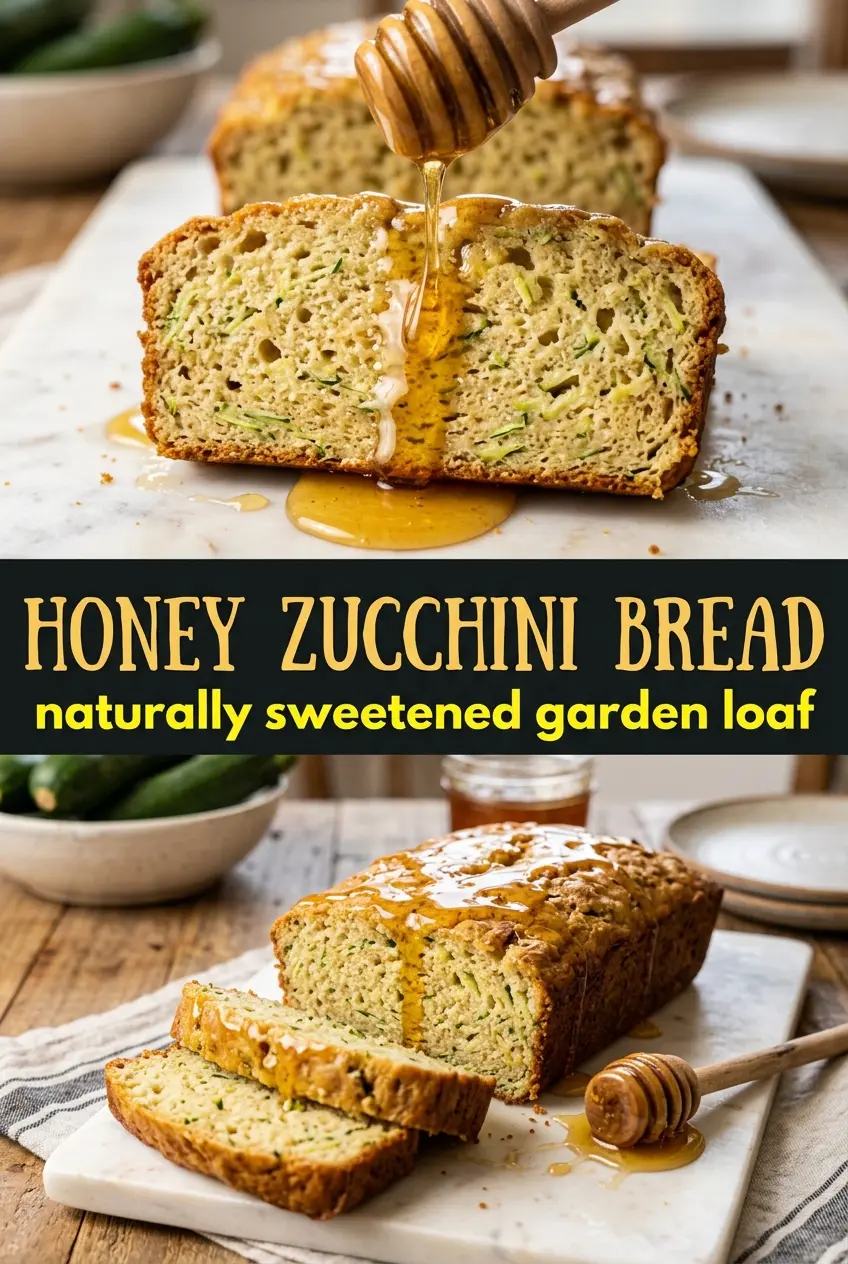
Honey zucchini bread bakes up with a soft, moist crumb and a gentle floral sweetness that lands somewhere between breakfast loaf and afternoon snack cake. The zucchini melts into the batter as it bakes, leaving the bread tender without tasting vegetal, and the honey gives it a rounder, warmer sweetness than plain sugar ever does. The honey glaze on top isn’t just decoration. It sinks into the warm crust and gives each slice a glossy finish that tastes like it belongs there.
What makes this version work is balance. The yogurt adds a little tang and keeps the crumb plush, while the oil holds onto moisture better than butter in a quick bread like this. Squeezing the zucchini dry matters more than people think. Skip that step and the loaf can turn gummy in the middle, even when the edges look done. The spices stay restrained on purpose so the honey and zucchini can stay front and center.
Below, I’ve included the part that matters most with zucchini bread: how dry the batter should look before it goes into the pan, how to tell when the center is baked through, and a few swaps that still keep the loaf tender.
The loaf came out perfectly tender, and the honey glaze soaked into the top without making it sticky. I loved that the zucchini disappeared into the crumb instead of leaving wet pockets.
Save this honey zucchini bread for the mornings when you want a tender loaf with a honey glaze and no dry crumbs.
The Trick to Keeping Zucchini Bread Tender Instead of Wet
Zucchini bread fails in one of two ways: it turns gummy in the center or bakes up dry around the edges and damp in the middle. Both problems come from the same place. Zucchini carries a lot of water, and if that water goes into the batter unchecked, the loaf has to spend too long in the oven before the structure sets.
That’s why this recipe starts with squeezing the zucchini dry. You don’t need to wring it until it’s desert-dry, but it should no longer clump into a wet mass. The other thing that helps is not overmixing after the flour goes in. Once the dry ingredients hit the bowl, the batter should look a little rough. That’s the point. Overworking it wakes up too much gluten and gives you a tight, chewy loaf instead of a soft one.
- Grated zucchini — Use the fine side of a box grater and squeeze it in a clean towel or paper towels. Packed zucchini without the extra liquid gives you the moisture you want without the soggy middle.
- Honey — Honey sweetens and perfumes the loaf at the same time. It also keeps the crumb softer than granulated sugar does, which is part of why this bread stays tender on day two.
- Greek yogurt — This adds moisture and a little acidity, which helps the baking soda do its job. Plain full-fat yogurt gives the best texture, but low-fat works if that’s what you keep on hand.
- Vegetable oil — Oil gives quick breads a plush crumb that stays soft after cooling. Melted butter can work, but the loaf will be a little firmer and less moist.
What Each Ingredient Is Actually Doing in This Zucchini Bread
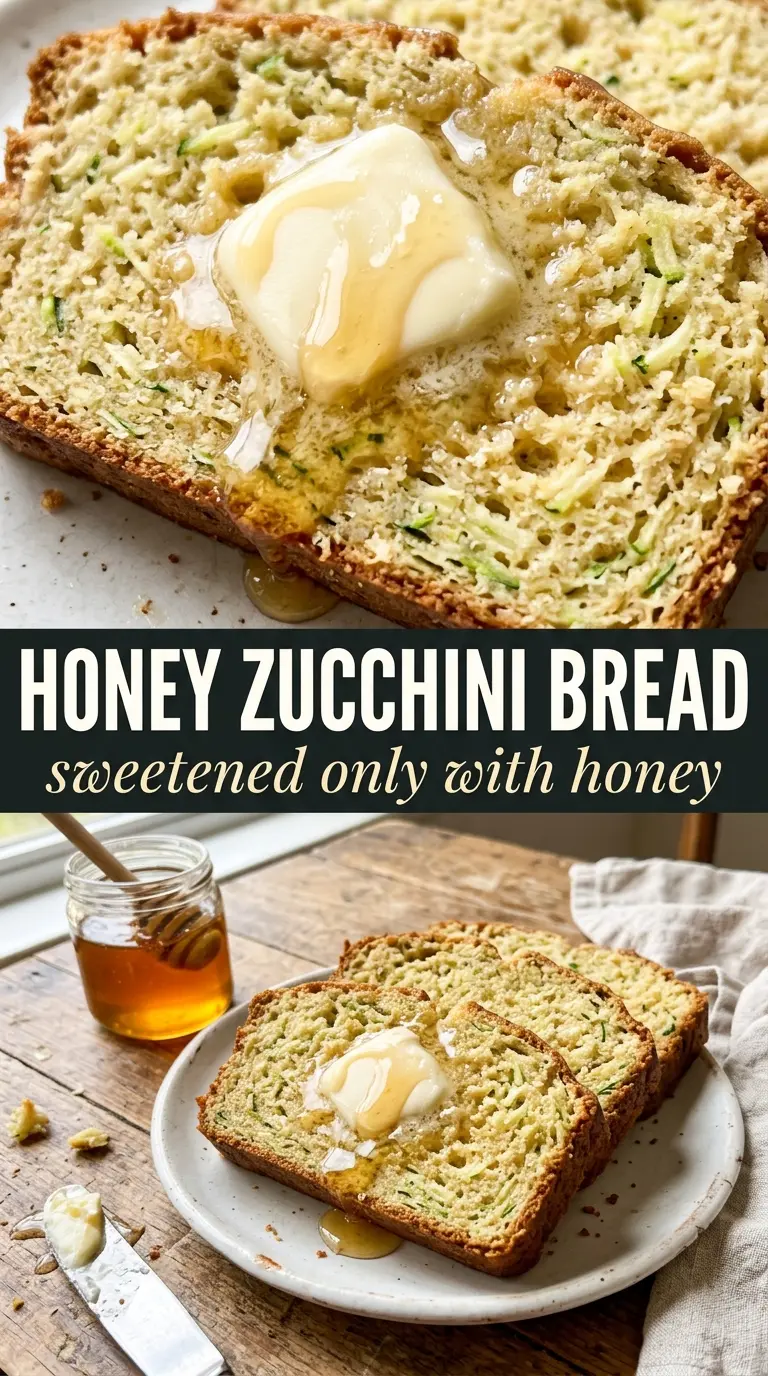
- Zucchini (the moisture keeper) — Grate finely and squeeze out excess moisture. The remaining moisture adds tenderness without making it soggy.
- Flour (the structure base) — Don’t overmix or the bread becomes tough. Mix just until dry ingredients are incorporated.
- Sugar (the sweetness and browning) — This tenderizes the bread and helps create browning. Adjust based on other ingredients.
- Oil or butter (the richness) — This creates tender crumb. Oil makes moister breads; butter makes them richer.
- Eggs (the binder) — These hold everything together and add structure. Use room temperature eggs for better incorporation.
- Leavening (baking powder or soda) — This creates rise and light crumb. Too much makes it taste bitter.
- Spices (cinnamon, nutmeg, or allspice) — These warm up the zucchini flavor. Layer spices so no single one overpowers.
- Optional mix-ins (nuts, chocolate, or dried fruit) — These add texture and flavor. Don’t overfill or the batter becomes dense.
Building the Batter Without Overworking It
Mix the dry ingredients first
Whisk the flour, baking soda, baking powder, salt, cinnamon, and nutmeg together until the spices disappear into the flour. This keeps the leaveners evenly distributed so the loaf rises in a steady dome instead of in random tunnels. If you see a pocket of baking soda in the finished bread, it usually means the dry ingredients weren’t mixed enough at the start.
Beat the wet ingredients until smooth
Whisk the honey, eggs, oil, yogurt, and vanilla until the mixture looks glossy and fully blended. Honey thickens the batter a little, so give it a full minute of mixing to break up any streaks. Once the zucchini goes in, the batter will look looser and a little speckled, which is exactly what you want.
Fold just until the flour disappears
Add the dry ingredients to the wet bowl and stir with a spatula until no dry flour remains. Stop there, even if the batter looks a little lumpy. If you’re using walnuts, fold them in at the end so they don’t get broken up and so you don’t keep mixing after the flour is already hydrated.
Bake until the center springs back
Scrape the batter into a greased 9×5 loaf pan and bake until a toothpick comes out clean or with just a few moist crumbs. The top should be deeply golden and split naturally down the center, and the loaf should spring back lightly when pressed. If the middle still looks shiny, give it more time. Pulling it early is the fastest way to end up with a raw line through the center.
Glaze while the loaf is warm
Let the bread cool for 15 minutes before mixing the glaze, then drizzle it over the warm loaf. Warm bread helps the glaze settle into the crust instead of sitting on top like icing. If the loaf is piping hot, the glaze slides right off. If it’s fully cool, it won’t soak in at all.
Three Ways to Adapt This Honey Zucchini Bread
Make It Gluten-Free Without Losing the Soft Crumb
Use a 1:1 gluten-free baking blend that already includes xanthan gum. The loaf will be a touch more delicate when warm, so let it cool fully before slicing. That resting time helps the structure set and keeps the slices from crumbling.
Skip the Nuts and Keep the Texture Clean
Leave out the walnuts if you want a smoother slice or you’re baking for someone with a nut allergy. The bread still has plenty of texture from the zucchini itself, and the glaze gives it enough interest on top that you won’t miss the crunch.
Use Maple Instead of Honey
Maple syrup works if that’s what you have, but the loaf will taste a little darker and less floral. Since maple is thinner than honey, the batter may seem looser. The bread still bakes up well, but the honey glaze will no longer match the loaf’s flavor as closely.
Storage and Reheating
- Refrigerator: Store the loaf wrapped or in an airtight container for up to 5 days. The crumb firms up a little in the fridge, but a brief warm-up brings it back.
- Freezer: This bread freezes well. Wrap individual slices or the whole loaf tightly, then freeze for up to 3 months. Thaw at room temperature so the glaze doesn’t weep.
- Reheating: Warm slices in the microwave for 10 to 15 seconds or in a low oven until just heated through. Don’t overheat it, or the honey glaze can turn sticky and the crumb can dry out at the edges.
Answers to the Questions Worth Asking
Honey Zucchini Bread
Ingredients
Equipment
Method
- Preheat oven to 350°F and grease a 9x5 loaf pan. Aim to have the pan ready so the batter can go in right after mixing.
- Whisk all-purpose flour, baking soda, baking powder, salt, cinnamon, and nutmeg together. Mix until the spices are evenly distributed.
- Beat honey, eggs, vegetable oil, Greek yogurt, and vanilla extract until smooth. The mixture should look glossy and fully combined.
- Stir in grated, squeezed dry zucchini. The batter should stay thick rather than watery.
- Fold dry ingredients into the wet mixture until just combined. Stop mixing as soon as you no longer see flour streaks; fold in walnuts if using.
- Pour batter into the loaf pan and spread into an even layer. Tap the pan gently once to settle the batter.
- Bake at 350°F for 50–58 minutes, until a toothpick comes out clean. The loaf should be golden and set in the center.
- Cool for 15 minutes. The glaze will pool better when the loaf is warm but not scorching.
- Mix honey, powdered sugar, and warm water to make a pourable honey glaze. Drizzle over the warm loaf so it runs down the sides in thin ribbons.