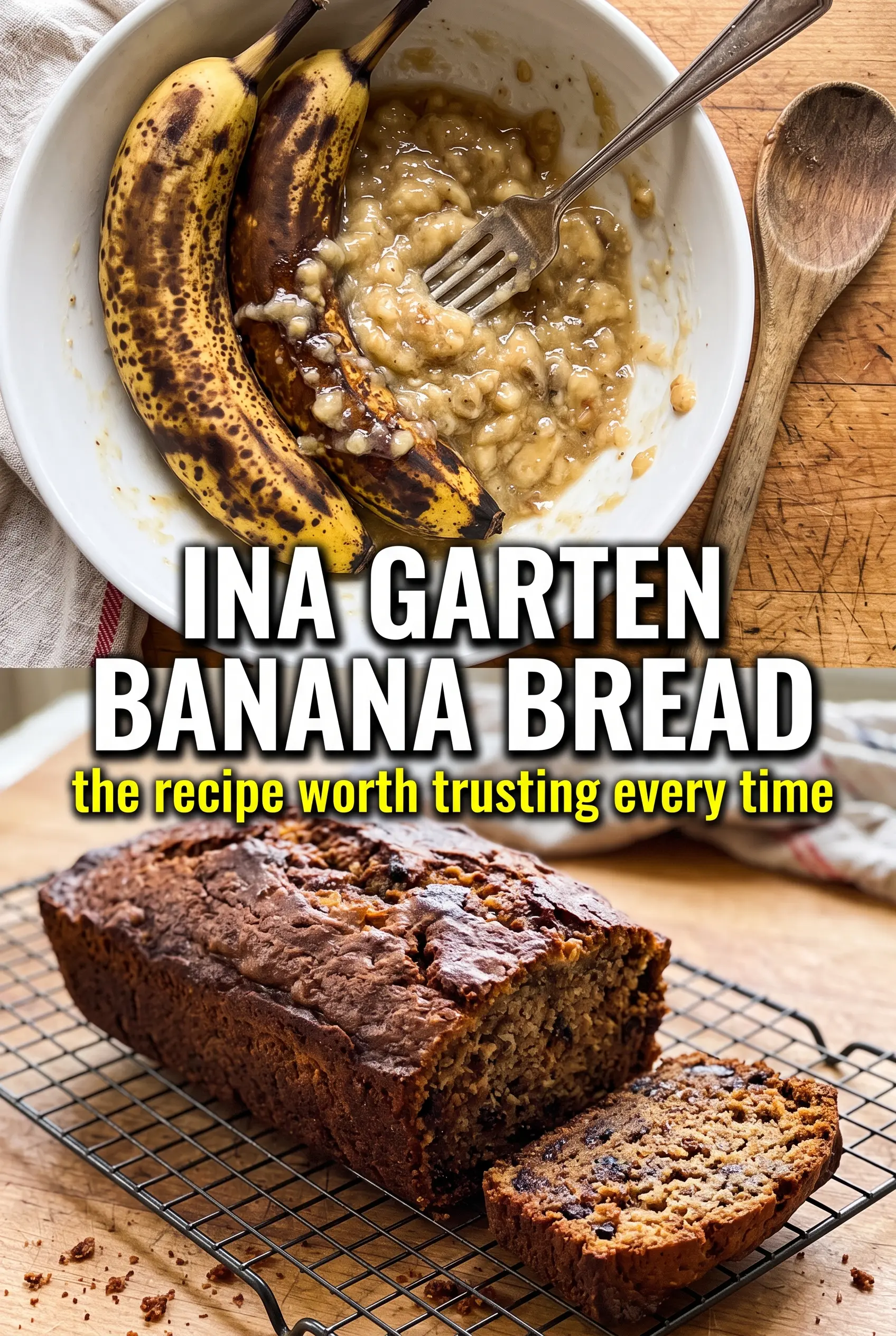
Ina Garten’s banana bread lands in that sweet spot between homey and polished: a tender, moist crumb, a deep golden crust, and just enough walnut crunch to keep every slice interesting. It tastes like the banana bread you hope for when the loaf pan comes out of the oven, not the dense, gummy version that so often happens when the batter is rushed or overmixed.
The sour cream is doing a lot of quiet work here. It adds moisture without making the loaf heavy, and it keeps the crumb soft for days. Creaming the butter and sugar until light and fluffy gives the bread a better lift than a quick stir ever could, and folding the flour in at the end keeps the texture from turning tough.
Below, I’ve included the small details that make this loaf bake up with that bakery-style finish, plus the best way to keep it from sinking in the middle. The walnut topping isn’t just for looks either — it gives the top a little extra texture and makes the loaf feel special enough for guests, but still easy enough for an ordinary morning.
The sour cream made the crumb incredibly moist, and the walnuts on top gave it that bakery look. I baked it just under 70 minutes and the center came out perfectly set.
Save this sour cream banana bread for the days when you want a tender loaf with a caramelized crust and walnut topping.
The Sour Cream Is Why This Loaf Stays Tender Instead of Heavy
The biggest mistake in banana bread is treating it like quick-mix batter from start to finish. If you skip the creaming step or overwork the flour, the loaf turns tight and bready instead of soft and sliceable. This version gets its lift from properly aerated butter and sugar, then keeps that structure gentle with sour cream and ripe bananas.
The other detail that matters is the bake time. Banana bread often looks done before the center actually sets, and cutting it too early gives you a gummy middle. You want a deep golden top, a crack down the center, and a toothpick that comes out clean or with a few moist crumbs, not wet batter.
- Creme de la crème? No — room temperature butter. Soft butter traps air when beaten with sugar, which gives the loaf a lighter crumb. Cold butter won’t cream properly and the texture suffers.
- Ripe bananas. The darker and spottier, the better. They mash smoothly and bring more natural sweetness, which means the loaf tastes fuller without needing extra sugar.
- Sour cream. This is the ingredient that keeps the bread moist for days. Plain Greek yogurt can work in a pinch, but the texture is a little tangier and not quite as plush.
- Toasted walnuts. Toasting wakes up the flavor and keeps the nuts from tasting flat. If you skip the toasting, the bread still works, but you lose some of that warm, nutty finish.
Building the Batter Without Losing the Tender Crumb
Creaming the Butter and Sugar
Beat the butter and sugar together until the mixture looks pale and fluffy, not greasy and dense. That usually takes 3 to 4 minutes with a hand or stand mixer. If the butter is too cold, it will look clumpy instead of whipped; if it is melted, you lose the air that helps the loaf rise.
Adding the Eggs and Dairy
Add the eggs one at a time so the batter stays smooth and emulsified. Once the vanilla and sour cream go in, the mixture may look a little loose, and that’s fine. The sour cream should be fully blended before the bananas go in, or you’ll end up chasing streaks through the batter later.
Folding in the Dry Ingredients
Stir in the flour, baking soda, and salt just until the streaks disappear. A few visible flour traces are better than overmixing, because too much stirring builds gluten and makes the loaf tough. Fold in the chopped walnuts at the end so they stay evenly distributed instead of sinking into one corner.
Baking to the Right Center Set
Pour the batter into the prepared loaf pan and press the walnut halves into the top before it goes into the oven. Bake until the top is deeply golden and the center springs back lightly when touched. If the top browns too quickly before the middle is done, lay a piece of foil loosely over the loaf for the last 15 minutes.
Swap the Walnuts for Pecans
Pecans give the loaf a softer, sweeter nuttiness and fit the same decorative topping idea. Use them the same way — chopped inside, halves on top — but expect a slightly more buttery finish.
Make It Dairy-Free
Use a plant-based butter that behaves like regular butter and swap the sour cream for unsweetened dairy-free yogurt. The loaf will still be moist, but the crumb may be a touch less rich and the flavor a little less rounded.
Gluten-Free Adaptation
A 1:1 gluten-free baking flour can work here, but the loaf will be a little more delicate. Let it cool fully before slicing so the crumb has time to set, since gluten-free quick breads often seem underdone if cut too early.
Storage and Reheating
- Refrigerator: Store covered for up to 5 days. The crumb stays moist, but the crust softens a bit after day one.
- Freezer: Banana bread freezes well. Wrap the cooled loaf or individual slices tightly, then freeze for up to 3 months.
- Reheating: Thaw at room temperature, then warm slices in a toaster oven or low oven. Microwaving too long makes the crumb rubbery, so use short bursts if that’s your only option.
Answers to the Questions Worth Asking
Ina Garten Banana Bread
Ingredients
Equipment
Method
- Preheat oven to 350°F and grease a 9x5 loaf pan, then dust with flour to prevent sticking.
- Beat butter and sugar together until light and fluffy, about 3–4 minutes, so the loaf bakes evenly.
- Add eggs one at a time, beating after each, then mix in vanilla and sour cream until smooth and combined.
- Stir in mashed bananas until combined, scraping the bowl so no dry pockets remain.
- Fold in all-purpose flour, baking soda, and kosher salt until just combined, then fold in chopped walnuts without overmixing.
- Pour batter into the pan, press whole walnut halves down the center, and bake for 65–70 minutes until deep golden and a toothpick comes out clean.
- Cool for 15 minutes before turning out, so the loaf sets with a clean slice.