Beef stew earns its place when the broth turns dark and glossy, the beef goes fork-tender, and the vegetables hold their shape instead of dissolving into the pot. This version has that restaurant-level depth that makes a bowl feel like a full meal, with wine, broth, and tomato paste building a sauce that tastes like it simmered all afternoon even though most of the work happens in the oven. The carrots stay sweet, the potatoes soak up the broth, and the peas go in at the end so the stew finishes bright instead of heavy.
The key is browning the beef in batches and then using the wine to lift every browned bit off the bottom of the pot. That fond is the backbone of the sauce, and it matters more than any single seasoning. Oven braising keeps the heat steady, which means the beef softens gradually instead of tightening up on the stove. If you rush that part, the meat stays chewy no matter how long you cook it.
Below, I’m walking through the parts that make the biggest difference: how to get a proper sear, why the potatoes go in early, and what to do if you want to make this ahead for an even better dinner the next day.
The stew thickened into a rich, silky broth and the beef was fall-apart tender after two hours. I loved that the carrots and potatoes held their shape, and the peas at the end kept it from tasting too heavy.
Save this red wine beef stew for a Dutch oven dinner with tender beef, thyme, potatoes, and a rich broth that tastes even better the next day.
The Secret to Beef Stew That Tastes Rich Instead of Watery
The biggest mistake in beef stew is treating it like soup. If the beef goes into a pale liquid and the pot never gets enough heat at the start, the finished broth tastes flat and the meat stays dull. Browning the cubes in batches changes everything. You want deep brown edges, not gray steam, because those caramelized bits dissolve into the wine and broth and turn the whole pot savory.
The other thing that matters is steady oven heat. Once the pot is covered and braising, the liquid should move with the faintest simmer, not a rolling boil. Too much heat tightens the beef before the connective tissue has time to soften. The low oven gives you tenderness and a broth that stays clean and glossy instead of reducing into something harsh.
What Each Ingredient Is Actually Doing in This Stew
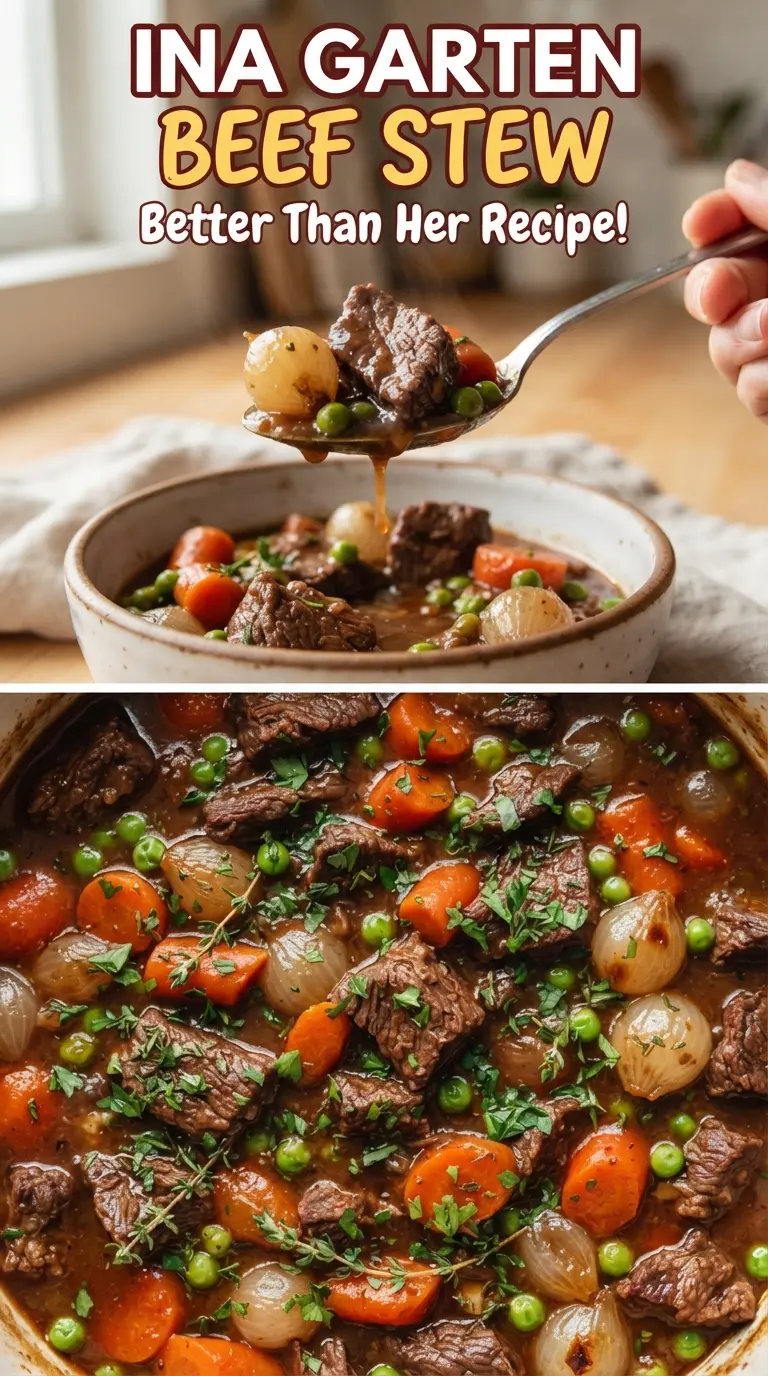
- Beef chuck — This is the cut that earns its keep here. It has enough connective tissue to turn tender during a long braise, which is why it beats lean stew meat every time. Cut it into even pieces so it cooks at the same pace.
- Dry red wine — The wine adds depth and a little acidity that keeps the broth from tasting one-note. Use a wine you’d actually drink, but it doesn’t need to be expensive. Skip anything overly sweet.
- Tomato paste — This gives the stew body and a slow-cooked backbone. Cooking it into the hot liquid helps it lose the raw edge. A tablespoon doesn’t sound like much, but it makes the broth taste fuller.
- Worcestershire sauce — Think of this as quiet seasoning in the background. It adds savoriness without making the stew taste like Worcestershire. If you’re out, a small splash of soy sauce works in a pinch, though the flavor will lean slightly different.
- Potatoes, carrots, and onions — These are the structure of the stew, not just filler. The onions melt into the broth, the carrots keep a little sweetness, and the small potatoes hold their shape better than large baking potatoes. Cut the carrots into chunks that match the potatoes so nothing turns mushy early.
- Fresh rosemary and thyme — Dried herbs can work, but fresh herbs keep the stew tasting bright and woodsy instead of dusty. Pull the rosemary sprig out before serving so no one gets a sharp, piney bite.
Building the Stew So the Beef Turns Tender
Coating and Browning the Beef
Toss the beef with flour, salt, and pepper until every piece is lightly coated, then brown it in batches in hot oil. The flour helps thicken the stew later, but the real goal here is a dark crust on the meat itself. If you crowd the pot, the beef steams and the crust never forms, which means less flavor in the finished broth. Let each batch sit long enough to release cleanly before turning it.
Deglazing the Pot
When the beef is out, pour in the wine and scrape the bottom while it’s still hot. Those browned bits should lift easily into the liquid and tint it deep brown. If they look stuck and scorched instead of caramelized, the heat was too high during browning, but a quick deglaze still pulls plenty of flavor into the sauce. Stir in the broth, tomato paste, Worcestershire, and garlic until the liquid looks evenly combined.
Braising in the Oven
Return the beef to the pot with the onions, carrots, potatoes, rosemary, and thyme, then cover and bake until the meat gives easily when pierced. The vegetables should be tender but still intact, not collapsing at the edges. If the stew seems thin at the end, simmer it uncovered on the stove for a few minutes. If the beef is still tough, it needs more time; there’s no shortcut for that part.
Finishing with Peas
Stir in the peas after the rosemary comes out and simmer just long enough to heat them through. They should stay bright green and a little sweet. If they go in too early, they lose color and taste starchy instead of fresh. Taste the broth at the end and adjust the seasoning only after the peas are in, since they change the balance a bit.
How to Adapt This Beef Stew Without Losing the Good Part
Make It Gluten-Free
Skip the all-purpose flour and coat the beef with cornstarch or a gluten-free flour blend instead. The stew will still thicken, though the sauce may look a little silkier and less rustic. If you use cornstarch, brown the beef first and thicken the liquid near the end rather than before braising.
Go Dairy-Free Without Changing Anything
This stew is already dairy-free as written, which is one reason it’s such a dependable winter dinner. The richness comes from the beef, wine, and slow braise, not butter or cream. That means the flavor stays deep without any extra work.
Use Mushrooms for a More Earthy Stew
Add sliced cremini mushrooms with the onions or swap out part of the beef for mushrooms if you want a deeper, earthier bowl. They won’t taste like beef, but they do add a savory note that plays well with the wine and thyme. Brown them first so they don’t water down the pot.
Storage and Reheating
- Refrigerator: Store in an airtight container for up to 4 days. The flavor deepens overnight, and the broth usually thickens as it chills.
- Freezer: Freezes well for up to 3 months. Cool it completely first, then freeze in portions; the potatoes may soften a little after thawing, but the stew still reheats well.
- Reheating: Warm it gently on the stove over low heat with the lid on, stirring occasionally. A hard boil can make the beef tight and the potatoes break apart, so keep the heat low and add a splash of broth if the stew looks too thick.
Answers to the Questions Worth Asking
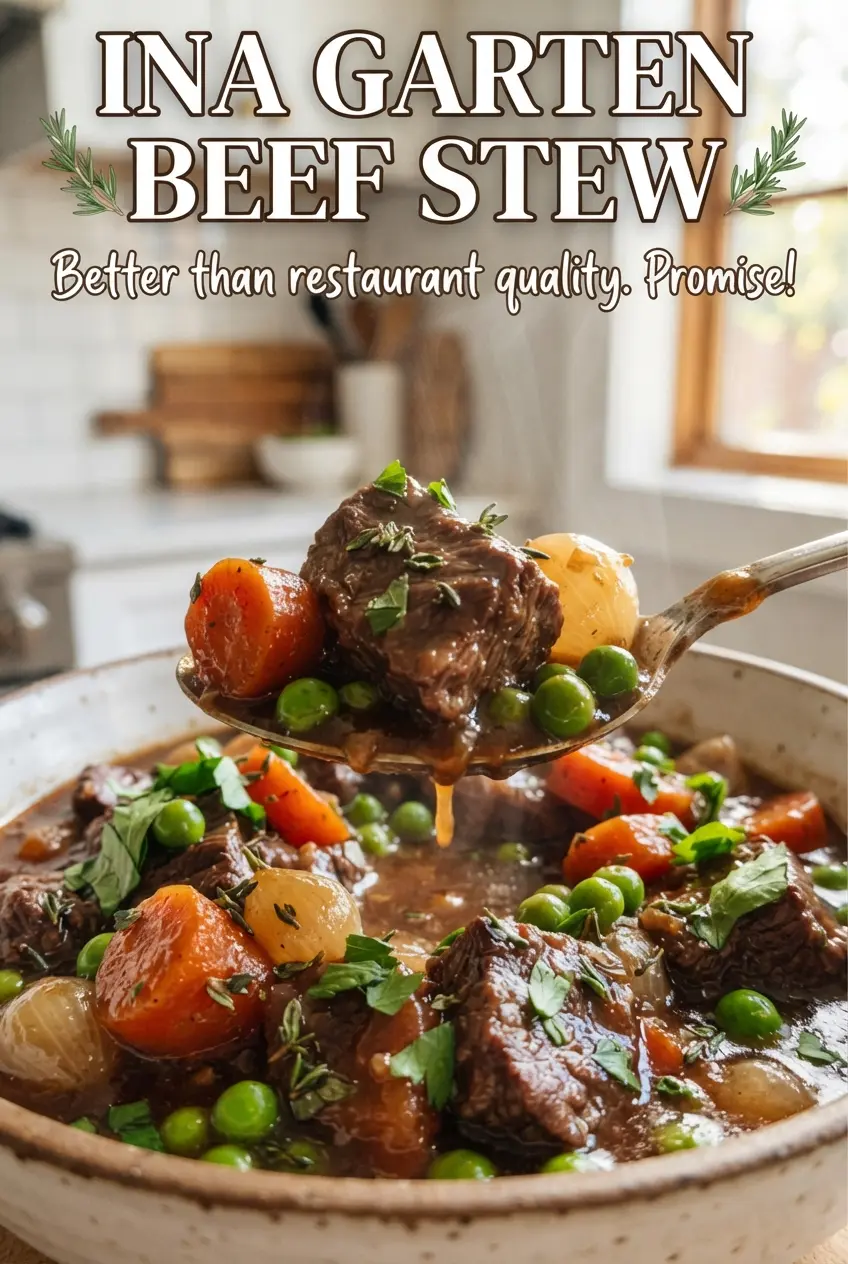
Ina Garten Beef Stew
Ingredients
Equipment
Method
- Preheat the oven to 300F. Toss the beef with flour, kosher salt, and black pepper, then brown it in batches in olive oil in a Dutch oven.
- Keep the pieces mostly undisturbed while browning so they develop a deep golden crust; transfer browned beef to a plate while you repeat with the remaining batches.
- Add the dry red wine to the pot and scrape up the browned bits. Stir in the beef broth, tomato paste, Worcestershire sauce, and minced garlic, until the mixture looks evenly combined and glossy.
- Return the beef to the pot, then add the chopped onions, carrots, halved small potatoes, rosemary sprig, and thyme leaves. Bring the mixture to a simmer, cover, and bake at 300F for 1 3/4-2 hours, until the beef and vegetables are tender.
- Check partway through only if needed: the liquid should be gently bubbling under the lid, with the stew thickening as the meat breaks down.
- Remove the rosemary sprig and stir in the frozen peas. Simmer on the stove for 5 minutes until the peas are hot and bright green.
- Season to taste right before serving so the flavors are balanced after baking; the surface should look thick and lightly saucy.