Sticky, bronzed chicken thighs with crisp edges and a sweet-salty glaze are the whole point here. The marinade turns into a glossy sauce in the oven, and the skin picks up deep caramelized spots that taste like they came off a grill, even though the oven does most of the work. It’s the kind of dinner that looks a little fancy on the platter but asks for nothing complicated from you.
What makes this version work is the balance in the marinade. Soy sauce brings salt and depth, honey gives the lacquered finish, vinegar keeps the sweetness from flattening out, and enough ginger, garlic, and sambal keep the flavor sharp. The long marinate time matters here because the chicken thighs need time to pick up that seasoning all the way through the meat, not just on the surface.
Below I’ll walk through the small details that keep the skin from going soggy, plus the easiest way to get that last bit of color under the broiler without drying out the chicken. I’ve also included a few smart swaps for when you need to adjust the heat or make it work with what’s already in your pantry.
The marinade turned into this glossy, caramelized sauce and the chicken stayed juicy even with the broiler finish. My pan juices got darker than I expected, but they were perfect spooned over rice.
Love that caramelized soy-honey glaze? Save this Ina Garten Indonesian Chicken for the nights when you want sticky, oven-roasted chicken with almost no cleanup.
The Marinade Has to Do More Than Flavor the Chicken
This dish lives or dies on the marinade doing double duty: it seasons the meat and then turns into the glaze in the pan. If the mixture is too thin or too sweet, it won’t cling to the chicken and you end up with a bland roast and watery drippings. The honey and soy need the help of vinegar and ginger to stay lively after 30 minutes in the oven.
The biggest mistake is treating the marinade like a simple soak instead of the base of the sauce. Bone-in, skin-on thighs are the right cut because they stay juicy long enough for the sugars to caramelize without the meat drying out. If you use boneless thighs, the timing drops fast and the sauce can over-reduce before the chicken is cooked through.
What the Pantry Ingredients Are Really Doing Here
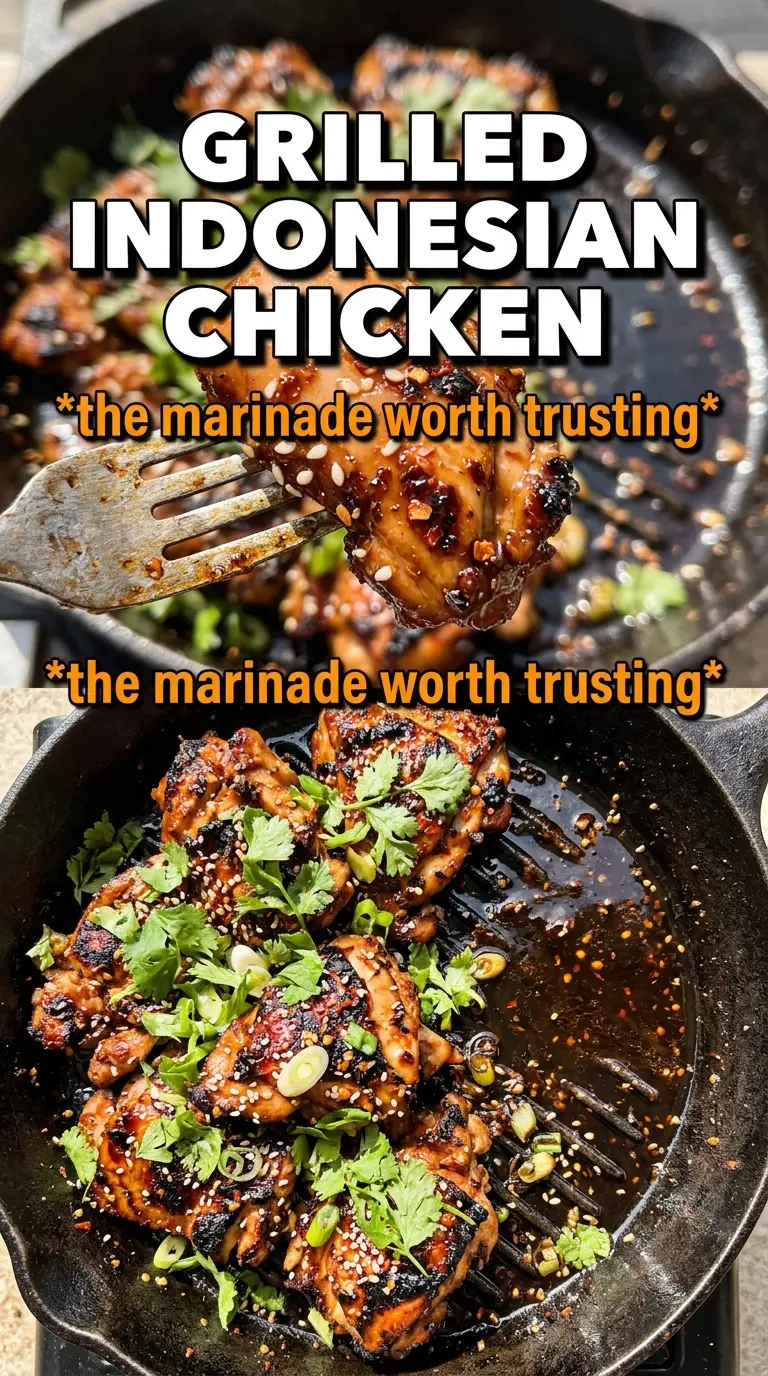
- Bone-in, skin-on chicken thighs — These give you the best chance at juicy meat and browned, crackling skin. The bones slow down the cooking just enough for the sugars in the marinade to caramelize instead of burn.
- Soy sauce — This is the backbone of the dish. Use a standard grocery-store soy sauce and keep a light hand with extra salt elsewhere, because the soy already carries plenty of seasoning.
- Honey — Honey is what gives the chicken that lacquered finish. A substitute like brown sugar works in a pinch, but honey melts into the marinade more cleanly and makes the pan juices glossy.
- White wine vinegar — The vinegar keeps the marinade from tasting heavy. If you swap in rice vinegar, the dish gets a little softer and rounder; if you use plain white vinegar, use a touch less because it reads sharper.
- Fresh ginger and garlic — Fresh is worth it here. Powdered versions won’t give you the same bright edge, and they don’t perfume the pan juices the way grated ginger and minced garlic do.
- Sambal oelek or red pepper flakes — This is where the dish gets its quiet heat. Sambal gives a smoother, deeper spice, while flakes add sharper little bursts of heat.
Roasting It So the Skin Turns Sticky, Not Pale
Marinate Until the Chicken Picks Up the Flavor
Whisk the marinade until the honey disappears into the soy and vinegar, then pour it over the chicken and turn the thighs so every side gets coated. Four hours is the floor here; overnight gives you the best depth. If you rush this step, the outside tastes seasoned but the meat underneath still reads plain. Keep it refrigerated while it marinates, and don’t let the bowl sit on the counter to warm up.
Start Skin-Side Up and Leave the Pan Juices Alone
Set the thighs skin-side up in the roasting pan with all the marinade. The chicken needs direct exposure to heat on top so the skin can render and brown, and the liquid in the pan should stay around the meat instead of flooding over the skin. Baste twice during cooking with the pan juices, but don’t do it every few minutes or you’ll keep cooling the surface and slow the caramelization.
Finish Under the Broiler for the Last Bit of Color
Once the thighs are cooked through and the skin is deep golden, move the pan under the broiler for 3 to 4 minutes. Stay close, because the honey can go from glossy to burnt in a short window. You’re looking for darker spots on the skin and edges, not a blackened crust. Let the chicken rest briefly before garnishing so the juices settle back into the meat.
How to Adapt This Chicken When You Need a Swap
Make It Less Spicy Without Losing the Edge
Use half the sambal oelek or swap it for a pinch of red pepper flakes. You’ll still get a little heat in the background, but the soy-honey glaze stays front and center instead of turning fiery.
Gluten-Free Without Changing the Method
Use a certified gluten-free soy sauce or tamari. The chicken will still caramelize the same way because the browning comes from the honey and oven heat, not from the gluten in the sauce.
Boneless Thighs for a Faster Dinner
Boneless thighs work, but they cook much faster and won’t give you quite the same juicy, self-basting result. Start checking them early, and pull them as soon as they’re cooked through so the honey doesn’t overdarken.
Storage and Reheating
- Refrigerator: Store leftovers in an airtight container for up to 4 days. The skin softens, but the flavor gets even deeper the next day.
- Freezer: The cooked chicken freezes well for up to 2 months. Freeze it with a little of the pan juice so the meat stays from drying out.
- Reheating: Reheat covered in a 325F oven until hot. The common mistake is using the microwave, which turns the skin rubbery and pushes the glaze toward burnt-sweet instead of glossy.
Answers to the Questions Worth Asking
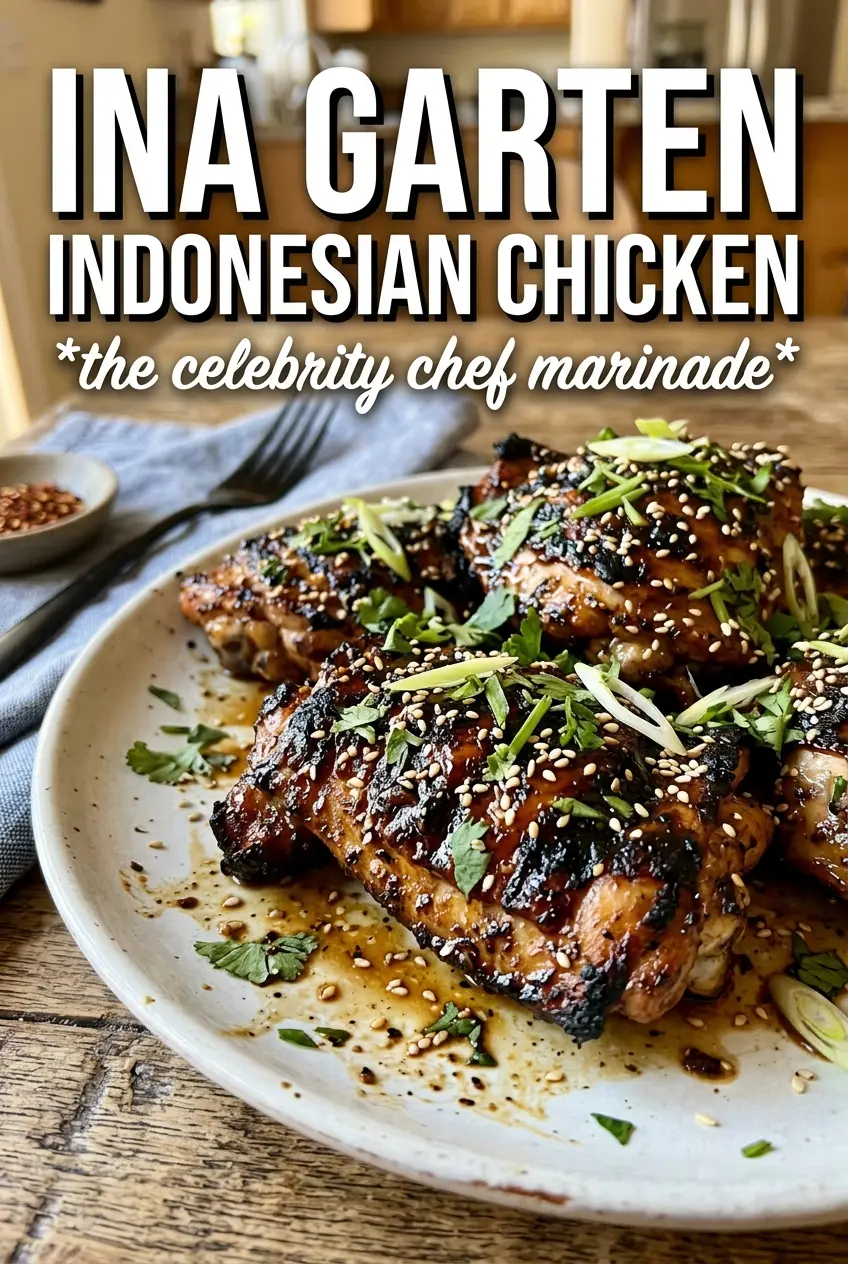
Ina Garten Indonesian Chicken
Ingredients
Equipment
Method
- Whisk soy sauce, peanut oil, honey, white wine vinegar, ginger, garlic, black pepper, and sambal oelek together until smooth and glossy.
- Place chicken thighs in a large dish and pour the marinade over; refrigerate at least 4 hours or overnight (up to overnight) until the chicken is well coated.
- Preheat oven to 375F and arrange the chicken skin-side up in a roasting pan with all the marinade.
- Roast for 30-35 minutes until the skin is deeply golden and caramelized with visible char marks.
- Baste twice during cooking with the pan juices, brushing the skin to keep it glossy as it roasts.
- Finish under the broiler for 3-4 minutes until the top looks extra caramelized, watching closely to avoid burning.
- Garnish with sliced green onions and sesame seeds just before serving.