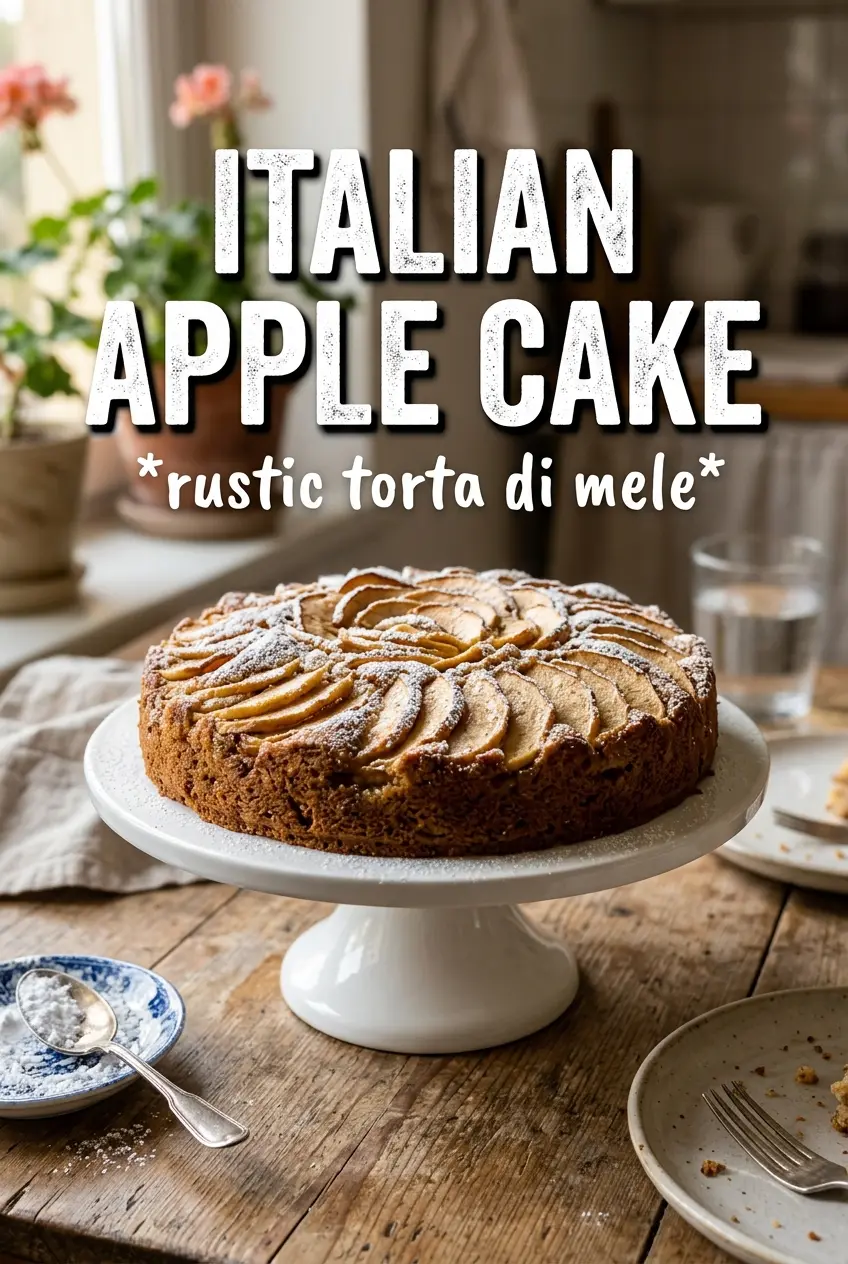
Italian apple cake bakes up tender and moist with a soft crumb that holds little pockets of apple in every slice. The top settles into a pale golden dome, then gets buried under powdered sugar so each cut looks rustic, almost like it came straight from a neighborhood bakery. It’s the kind of cake that tastes even better the next day, when the apples have had time to blend into the batter and the crumb turns even more mellow.
What makes this version work is the balance: enough fruit to keep the cake juicy, but not so much that it turns heavy or wet. The oil keeps the texture soft without the need for butter, and the lemon zest lifts the sweetness so the cake doesn’t taste flat. A quick whisk of the dry ingredients and a separate aeration of the eggs and sugar give the batter just enough structure to stay light while still feeling homey and substantial.
Below, I’ll walk through the small details that matter most, including how to keep the apples from sinking and why the cake needs to cool fully before you dust it. If you’ve made apple cakes that came out dense in the middle or dry at the edges, this one fixes both problems.
The cake came out incredibly moist and the apples stayed tender without turning mushy. I loved that the powdered sugar on top made it feel special even though the batter came together fast.
Save this Italian Apple Cake for a tender, lemon-scented crumb and a snowy powdered sugar finish.
The Secret to a Tender Apple Cake That Never Turns Heavy
The biggest mistake with apple cake is treating it like a quick bread and stirring until the batter looks perfectly smooth. That pushes too much air out after the eggs have been whipped, and it encourages the flour to toughen. This cake stays soft because the eggs and sugar are beaten until pale first, the oil goes in slowly, and the flour is folded in only until the last streak disappears.
The other thing that matters is the apple size. Dice them small enough to soften in the oven, but not so small that they melt into the batter and leave it wet in the center. If your apples are very juicy, toss the diced fruit with a spoonful of the flour mixture before folding them in. That light coating helps keep them suspended instead of sinking to the bottom.
What Each Ingredient Is Actually Doing in This Cake
- Apples — Use firm, flavorful apples that keep some shape after baking. Softer apples can work, but they disappear into the crumb faster and make the center wetter. If yours are very sweet, choose a tart variety to keep the cake balanced.
- Oil — This is what keeps the cake moist for days. Butter gives a richer flavor, but oil makes the crumb lighter and more forgiving, which is why this style of cake stays tender even after chilling.
- Eggs and sugar — Beating these together until pale and thick gives the cake its lift. Skipping that step leaves you with a denser texture, because the batter has less structure before the flour goes in.
- Lemon zest — Don’t skip it. The zest doesn’t make the cake taste lemony; it brightens the apples and keeps the sweetness from feeling dull. Fresh zest matters here, not bottled flavoring.
- Milk — A little milk loosens the batter just enough so it spreads evenly in the pan. Whole milk gives the best softness, but 2% will work if that’s what you have.
How to Build the Batter Without Losing the Lift
Mix the dry ingredients first
Whisk the flour, baking powder, cinnamon, and salt together before they touch the wet ingredients. That keeps the leavener and spice evenly distributed, which matters because you don’t want one bite tasting flat while another gets all the cinnamon. A quick whisk is enough; you’re not trying to aerate the flour, just break up any clumps.
Whip the eggs and sugar until they change color
Beat the eggs and sugar for about three minutes, until the mixture looks thicker, paler, and a little ribbon-like when it falls from the beaters. That change is what helps the cake rise without needing a creaming step. If you stop too soon, the cake can bake up tighter and less airy.
Fold in the apples at the end
Once the flour is almost incorporated, stop mixing and switch to folding by hand. The batter should look rough but even, with no dry patches hiding at the bottom. Add the apples last so they stay intact and don’t leak too much juice into the batter while you’re still working it.
Bake until the center is set, not dry
The top should be golden and the cake should spring back lightly when touched. A toothpick in the center should come out clean or with a few moist crumbs, not wet batter. If the top browns too fast before the middle is done, lay a loose piece of foil over it for the last 10 minutes.
Ways to Adjust This Italian Apple Cake Without Losing the Texture
Make it dairy-free
Swap the milk for an unsweetened non-dairy milk like almond or oat. The cake stays tender, but whole oat milk gives the closest texture because it has a little more body. Avoid strongly flavored milks that might compete with the apples and lemon zest.
Use a different fruit mix
You can replace up to half the apples with firm pears for a softer, slightly floral cake. Keep the dice small and use fruit that still holds its shape, or the center can turn too moist. The flavor shifts gentler and sweeter, so the lemon zest becomes even more important.
Make it gluten-free
A 1:1 gluten-free baking blend can work here, especially one with xanthan gum already included. The texture will be a little more delicate and the cake may need a few extra minutes in the oven. Let it cool fully before slicing so the crumb has time to set.
Storage and Reheating
- Refrigerator: Keep covered for up to 4 days. The crumb stays moist, though the powdered sugar will dissolve into the top after the first day.
- Freezer: It freezes well without the powdered sugar. Wrap slices tightly and freeze for up to 2 months, then thaw at room temperature.
- Reheating: Warm individual slices for 10 to 15 seconds in the microwave, just enough to take the chill off. Don’t heat it long enough to dry out the apples, or the cake loses the soft texture that makes it special.
Questions I Get Asked About This Recipe
Italian Apple Cake
Ingredients
Equipment
Method
- Preheat the oven to 350F, then grease a 9-inch round cake pan and line with parchment so the cake releases cleanly.
- In a bowl, whisk together all-purpose flour, baking powder, cinnamon, and salt until evenly combined and no streaks remain.
- Beat the eggs and granulated sugar with an electric mixer until pale and thick, about 3 minutes, until the mixture looks lighter and slightly foamy.
- Stream in the vegetable or sunflower oil slowly while mixing, then add the whole milk, vanilla extract, and lemon zest until smooth and glossy.
- Fold the flour mixture into the wet ingredients until just combined, then fold in the diced apples so you don’t overmix.
- Pour the batter into the prepared pan and bake for 40-45 minutes at 350F, until a toothpick comes out clean and the top is golden.
- Cool completely before serving, then dust generously with powdered sugar for a snowy finish.