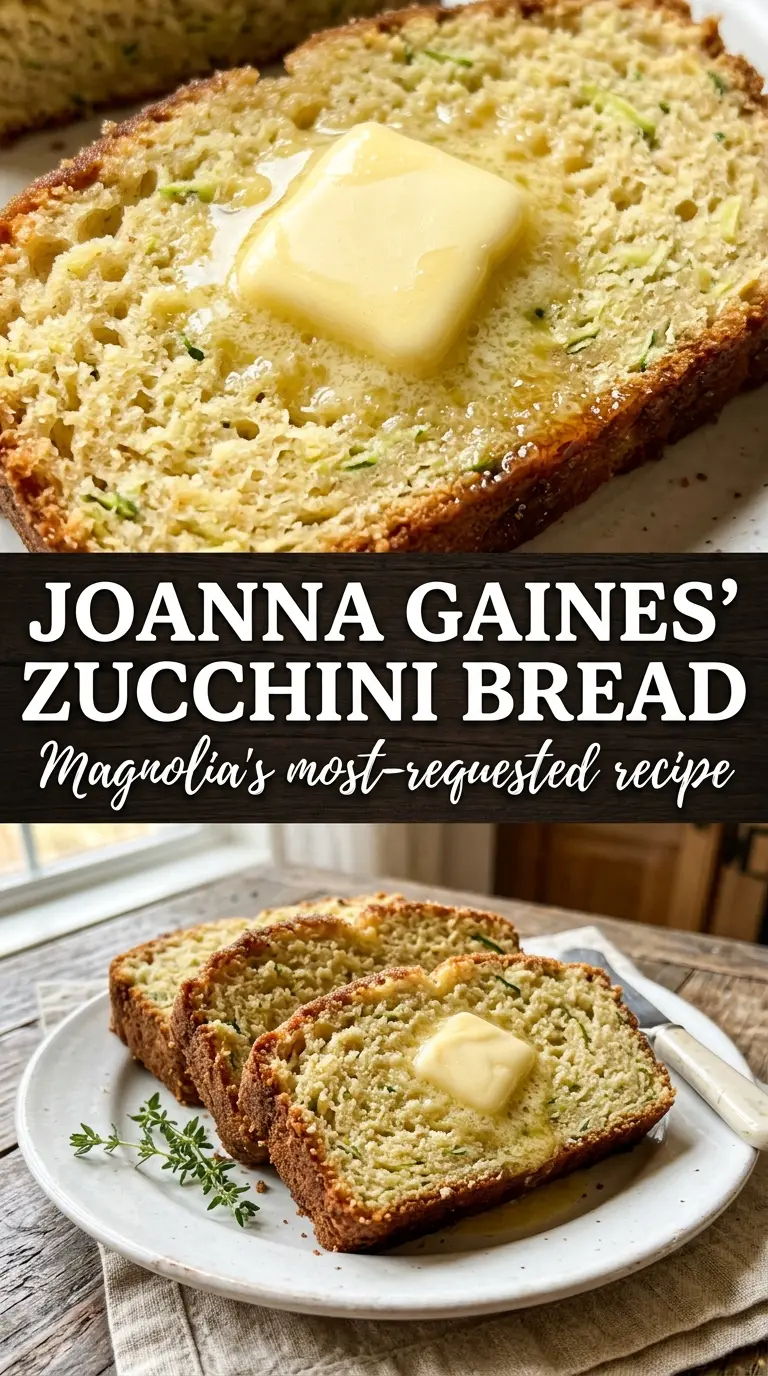
Joanna Gaines’ zucchini bread bakes up with a domed top, a tender crumb, and that deep cinnamon warmth people notice before the pan has even cooled. The crust turns golden and just a little crisp from the turbinado sugar, while the inside stays moist without crossing into heavy or soggy. It slices cleanly once it rests, which is part of why it disappears so fast at the counter.
What makes this version work is the balance of structure and moisture. The zucchini goes in unsqueezed, which sounds backward if you’re used to wringing vegetables dry, but that extra liquid is what keeps the loaf soft for days. The oil also helps the crumb stay plush, and the spice mix leans classic rather than fussy, so the zucchini stays in the background instead of fighting with the cinnamon and nutmeg.
You’ll find the trick to getting that split, bakery-style top below, along with a few swaps that still keep the loaf in Joanna Gaines territory. If you’ve had zucchini bread that baked up gummy in the center or flat on top, the details here will help you avoid both.
The loaf rose beautifully and that little sugar crust on top gave it the best crunch. Mine baked in right at 60 minutes and the center was moist, not gummy at all.
Love that split-top Joanna Gaines zucchini bread? Save it to Pinterest for the days when you want a moist, cinnamon-spiced loaf with a crackly sugar finish.
The Split Top Happens in the Oven, Not the Batter
The domed crack down the center is one of the best parts of this loaf, and it comes from heat, batter thickness, and pan choice working together. A thick batter rises up before it sets, then bursts in the middle as the oven does its work. If your loaf bakes up flat, the batter was likely too loose, the oven too cool, or the pan too wide for the amount of batter.
Two loaf pans give you better height and more of that bakery-style rise. A single large pan will work, but the loaf will bake longer and the center has a better chance of staying underdone while the edges dry out. The turbinado sugar on top matters too. It doesn’t just look pretty; it helps form that crisp, golden shell that contrasts with the soft crumb underneath.
- Flour — All-purpose flour gives the loaf enough structure to hold the grated zucchini without turning cakey. Cake flour is too soft here and won’t support that taller rise.
- Vegetable oil — Oil keeps the crumb moist for days and gives you a softer slice than butter would. Neutral oil is best because you want the cinnamon and zucchini to lead.
- Zucchini — Grating it fine helps it disappear into the batter while still adding moisture. Don’t squeeze it dry; that liquid is part of what keeps the loaf tender.
- Turbinado sugar — This is the finishing touch that gives the top a light crunch. Regular granulated sugar will work in a pinch, but it won’t bake into the same crackly crust.
- Walnuts — Optional, but they add a little bitterness and texture that works well against the sweet loaf. Toast them first if you want the flavor to stand out more.
What Each Ingredient Is Actually Doing in This Zucchini Bread
- Zucchini (the moisture keeper) — Grate finely and squeeze out excess moisture. The remaining moisture adds tenderness without making it soggy.
- Flour (the structure base) — Don’t overmix or the bread becomes tough. Mix just until dry ingredients are incorporated.
- Sugar (the sweetness and browning) — This tenderizes the bread and helps create browning. Adjust based on other ingredients.
- Oil or butter (the richness) — This creates tender crumb. Oil makes moister breads; butter makes them richer.
- Eggs (the binder) — These hold everything together and add structure. Use room temperature eggs for better incorporation.
- Leavening (baking powder or soda) — This creates rise and light crumb. Too much makes it taste bitter.
- Spices (cinnamon, nutmeg, or allspice) — These warm up the zucchini flavor. Layer spices so no single one overpowers.
- Optional mix-ins (nuts, chocolate, or dried fruit) — These add texture and flavor. Don’t overfill or the batter becomes dense.
How to Keep the Batter Thick Enough for a Good Rise
Mix the Dry Ingredients First
Whisk the flour, leaveners, salt, cinnamon, and nutmeg together before anything else. That keeps the baking soda and baking powder evenly distributed, which matters because uneven leavening can leave you with tunneling or a loaf that rises lopsided. You want the spice scent to hit as soon as you whisk; that tells you everything is blended.
Build the Wet Base Until It Looks Emulsified
Whisk the sugar, eggs, oil, and vanilla until the mixture looks glossy and thickened slightly. It won’t turn fluffy like cake batter, and that’s fine. If the oil still looks separated in streaks, keep whisking a little longer so the batter bakes evenly instead of leaving greasy pockets.
Fold in the Zucchini Before the Flour
Stir the grated zucchini into the wet mixture before adding the dry ingredients. That helps coat the shreds and keeps them from clumping, which is what gives you wet pockets in the finished loaf. Once the flour goes in, switch to a light hand and stop as soon as the last streak disappears.
Bake Until the Center Springs Back
Divide the batter between the pans, sprinkle the tops with turbinado sugar, and bake until a toothpick comes out clean or with a few dry crumbs. The top should be deeply golden and the crack across the center should look set, not shiny. If the edges brown too fast before the center is done, lay a loose piece of foil over the top for the last 10 to 15 minutes.
Make it with walnuts or skip them entirely
The walnuts add crunch and a little savory depth, but the loaf still bakes beautifully without them. Leaving them out gives you a cleaner, softer slice that leans more classic. If you add them, chop them fairly small so they don’t tear the crumb when you slice the bread.
Turn it into a dairy-free breakfast loaf
This recipe already skips butter and milk, which makes it naturally dairy-free as written. That means you don’t need a special substitute to keep the texture right. The oil and eggs do the work that dairy often does in other quick breads.
Use grated carrot for part of the zucchini
You can replace up to 1 cup of the zucchini with finely grated carrot for a slightly sweeter loaf and a deeper color. The texture stays close, but the carrot brings a firmer shred, so the crumb feels a little more structured. Keep the total amount of grated vegetables the same so the batter doesn’t get too wet.
Storage and Reheating
- Refrigerator: Store wrapped or in an airtight container for up to 4 days. The crumb stays moist, but the top loses a little of its crispness after day one.
- Freezer: This loaf freezes well. Wrap slices or whole loaves tightly, then freeze for up to 3 months so the surface doesn’t pick up freezer flavor.
- Reheating: Warm slices in a 300°F oven for about 8 minutes or toast individual pieces lightly. Microwaving works, but it softens the crust and makes the crumb denser than it should be.
Answers to the Questions Worth Asking
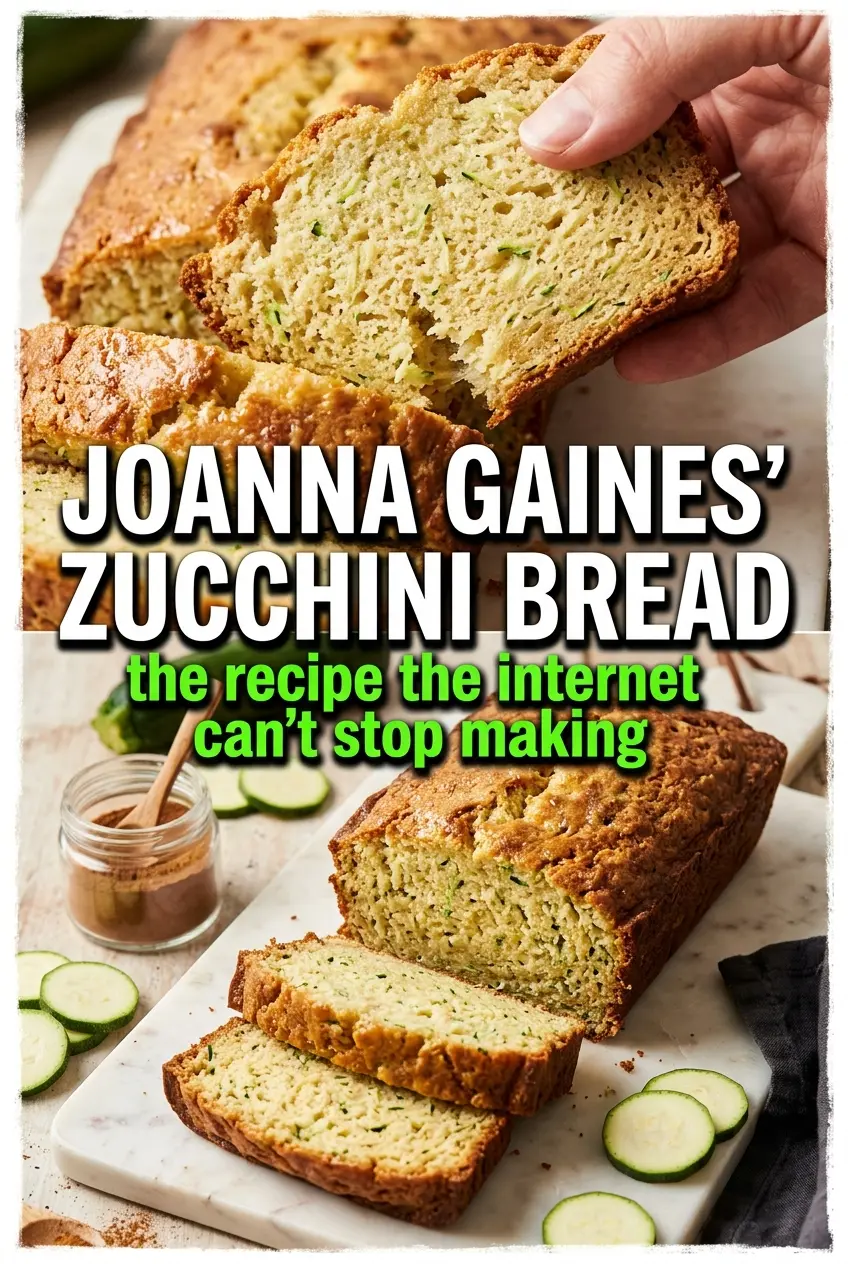
Joanna Gaines' Zucchini Bread
Ingredients
Equipment
Method
- Preheat the oven to 350°F and grease two 9x5 loaf pans (or line up one large pan) so the batter releases easily after baking.
- Set the pans on a sheet pan for stability and to catch any overflow while baking.
- Whisk all-purpose flour, baking soda, baking powder, salt, cinnamon, and nutmeg together until the color looks evenly speckled.
- Whisk granulated sugar, eggs, vegetable oil, and vanilla extract in a large bowl until the mixture looks smooth and glossy.
- Stir in grated zucchini (do not squeeze) so the batter thickens slightly and looks moist, with visible zucchini flecks.
- Add the dry ingredients and stir until just combined; stop when no dry streaks remain so the loaf doesn’t get tough, then fold in walnuts if using.
- Divide the batter between the prepared pans, sprinkle turbinado sugar on top, and bake for 55–65 minutes until a toothpick inserted in the center comes out clean.
- Cool the loaves for 20 minutes before removing from the pans so the domed top sets and slices cleanly.