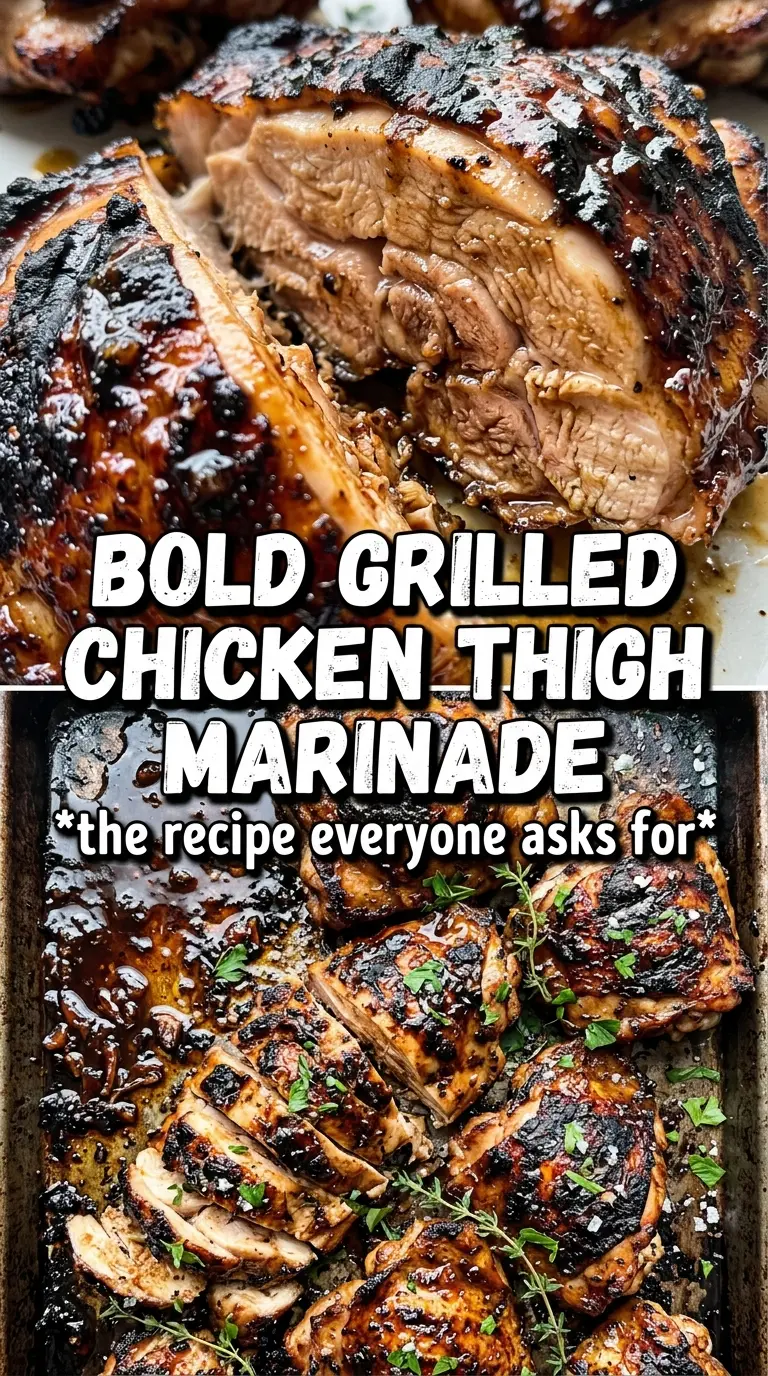
Juicy chicken thighs with a deeply caramelized crust are what this marinade is built for. The soy, balsamic, and Worcestershire bring salt, tang, and umami in one shot, while the brown sugar and Dijon help the surface brown into that sticky, charred finish people go back for. Boneless thighs are the right cut here because they stay tender through high heat and soak up flavor fast.
The key is balance. Too much acid and the chicken starts tasting flat and almost cured; too little and you miss the punch that makes the crust stand out. This version leans on olive oil for even coverage, garlic and smoked paprika for warmth, and just enough sugar to help the edges darken without burning before the meat is done. A long marination does the heavy lifting, but the real payoff comes from cooking hot enough to sear the outside while keeping the center juicy.
Below you’ll find the timing that gives the best texture, the ingredient swaps that still keep the marinade bold, and the small detail that keeps the sauce from tasting harsh after it hits the heat.
The marinade clung to the chicken beautifully and the balsamic really turned sticky on the grill. I baked mine at 425 and the thighs came out caramelized on the outside and still juicy in the middle.
Save these sticky, caramelized chicken thighs for the night you want bold marinade flavor and a deeply golden crust.
The Part That Makes the Marinade Stick and Brown Instead of Sliding Off
Chicken thighs can take a bold marinade, but they need enough oil and enough time for the seasoning to cling instead of pooling in the bottom of the bowl. The brown sugar and Worcestershire do more than add flavor; they help create that lacquered surface once the thighs hit hot grill grates or a hot oven. If the chicken goes in wet and comes straight out of the fridge, the exterior steams before it browns, and that is how you lose the crust.
The other mistake is overcomplicating the marinade. This one works because every ingredient has a job. The soy sauce seasons the meat from the outside in, the balsamic brings a dark tang, and the mustard helps everything emulsify so the coating stays even. Letting it sit for at least 4 hours gives the salt time to move through the meat, which is why the chicken tastes seasoned all the way through instead of just on the surface.
- Chicken thighs — Boneless, skinless thighs stay tender on high heat and don’t dry out the way breasts can. If you only have bone-in thighs, add a few minutes to the cook time and keep an eye on the thickest part near the bone.
- Olive oil — This carries the marinade and helps the spices coat the chicken evenly. A neutral oil works in a pinch, but olive oil adds a roundness that fits the balsamic and garlic.
- Soy sauce, Worcestershire, and balsamic vinegar — These three build the salty, savory backbone. Soy sauce is the easiest one to swap for tamari if you need gluten-free; Worcestershire usually needs a gluten-free version too.
- Brown sugar and Dijon — The sugar helps the chicken caramelize, while Dijon holds the marinade together and sharpens the flavor. Don’t skip the mustard; it keeps the marinade from tasting flat.
- Garlic and smoked paprika — Fresh garlic gives bite, and smoked paprika gives the surface a deeper, grill-like flavor even if you bake the chicken.
What Each Ingredient Is Actually Doing in This Recipe
- Primary ingredient (the star) — Quality matters most. Choose the best you can find.
- Cooking medium (oil, butter, or broth) — This carries flavors and prevents dryness.
- Seasonings (salt, pepper, spices, herbs) — Layer flavors so nothing overpowers. Build depth gradually.
- Aromatics (garlic, onion, herbs) — Cook with fat to bloom flavors. Become the foundation.
- Supporting ingredients — Complement the main ingredient without overpowering it.
- Sauce or liquid (if applicable) — Brings flavors together. Balance richness with acid.
- Acid (lemon, vinegar, wine, or other) — Brightens and prevents flat-tasting results.
- Final finish (garnish, glaze, or sauce) — Prevents one-dimensional taste and adds visual appeal.
Getting the Chicken Thighs Caramelized Without Burning the Marinade
Whisking the Marinade Smooth
Start by whisking the marinade until the brown sugar disappears and the mixture looks glossy instead of grainy. That matters because undissolved sugar can cling in patches and scorch in the pan before the chicken has time to cook through. If you’re mixing ahead, give it another stir right before adding the chicken because the spices settle fast.
Marinating for Deep Flavor
Coat the chicken completely and let it sit for at least 4 hours. Overnight gives the best flavor, but don’t push it much past 24 hours or the acid starts to make the texture a little soft around the edges. If the chicken is packed tightly in a bowl, turn it once or twice so every piece gets equal contact with the marinade.
Cooking Over High Enough Heat
For grilling, use medium-high heat and leave the chicken alone long enough to get those dark grill marks. If you move it too early, the sugars stick and tear instead of releasing cleanly. For baking, 425F gives you enough heat to brown the surface instead of just steaming the chicken, and the thighs are done when the thickest part reaches 165F and the juices run clear.
Letting the Juices Settle
Rest the chicken for 5 minutes before slicing. That short pause keeps the juices in the meat instead of spilling onto the cutting board. If you cut too soon, even perfectly cooked thighs can seem dry because all the moisture ends up outside the chicken instead of inside it.
How to Adapt This Marinade for Grilling, Baking, or Gluten-Free Cooking
Grill for the deepest char
Grilling gives the best contrast between the sticky exterior and the juicy center. Keep the heat at medium-high and oil the grates if they tend to grab food, because the sugar in the marinade can stick fast. A little char is the goal; blackened spots mean the fire was too hot or the chicken sat in one place too long.
Bake when you want hands-off cooking
Baking at 425F keeps this weeknight-friendly and still gives you good color. Line the pan with foil or parchment for easier cleanup, but don’t crowd the thighs or they’ll steam instead of brown. If the tops need more color at the end, a quick broil for 1 to 2 minutes finishes the job.
Make it gluten-free without losing the bold sauce
Use tamari or a certified gluten-free soy sauce, and swap in a gluten-free Worcestershire. The flavor stays close to the original because the tang, salt, and caramelization all come from the same places. This is the cleanest swap in the recipe and it doesn’t change the texture at all.
Reduce the sugar for a less sticky finish
Cut the brown sugar to 1 teaspoon if you want a drier, less glossy coating. You’ll lose some of the caramelized edge, but the chicken will still be savory, garlicky, and bold. This works better for baking than grilling, where less sugar means less risk of scorching.
Storage and Reheating
- Refrigerator: Store cooked chicken in an airtight container for up to 4 days. The coating softens a bit in the fridge, but the flavor stays strong.
- Freezer: Freeze cooked thighs for up to 2 months. Wrap them tightly and thaw in the fridge so the meat reheats evenly instead of drying out.
- Reheating: Warm in a 325F oven covered with foil until heated through, or reheat gently in a skillet with a splash of water. The biggest mistake is blasting them in the microwave, which turns the edges rubbery before the center warms up.
Questions I Get Asked About This Recipe
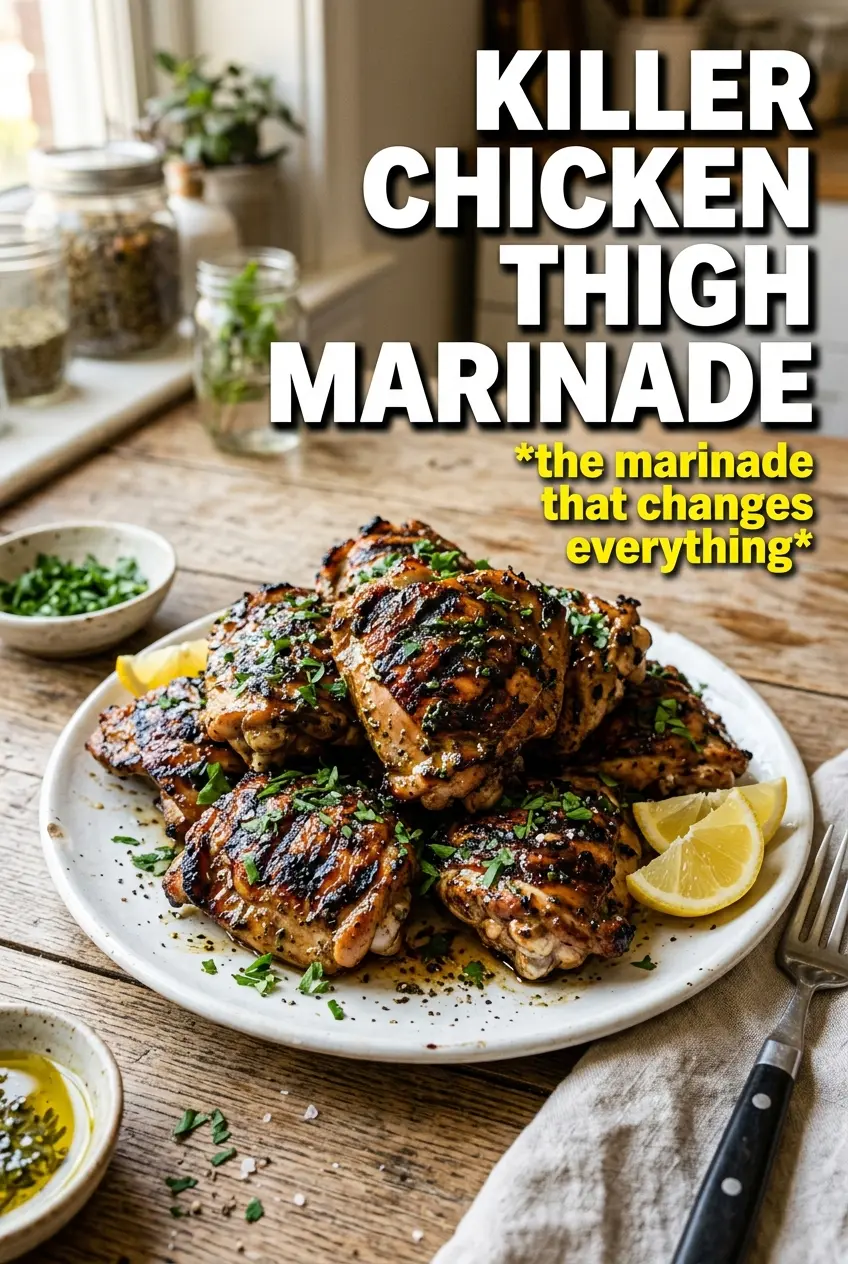
Killer Chicken Thigh Marinade
Ingredients
Method
- Whisk olive oil, soy sauce, balsamic vinegar, Worcestershire sauce, Dijon mustard, and brown sugar until the sugar dissolves and the mixture looks smooth.
- Stir in minced garlic, smoked paprika, dried Italian herbs, garlic powder, onion powder, salt, black pepper, and red pepper flakes until evenly combined with no visible spice clumps.
- Coat boneless skinless chicken thighs completely in the marinade, turning to cover all sides so each piece is glossy.
- Cover and refrigerate for at least 4 hours or up to overnight for deepest flavor; the chicken should look darker and more infused after marinating.
- Grill on medium-high heat for 6-7 minutes per side, until the exterior is caramelized with char marks and the thickest part reaches 165°F.
- Alternatively, bake at 425°F for 20-25 minutes until deeply golden and cooked through, with edges looking caramel-brown.
- Rest the chicken thighs for 5 minutes before serving so juices settle and the crust stays crisp.