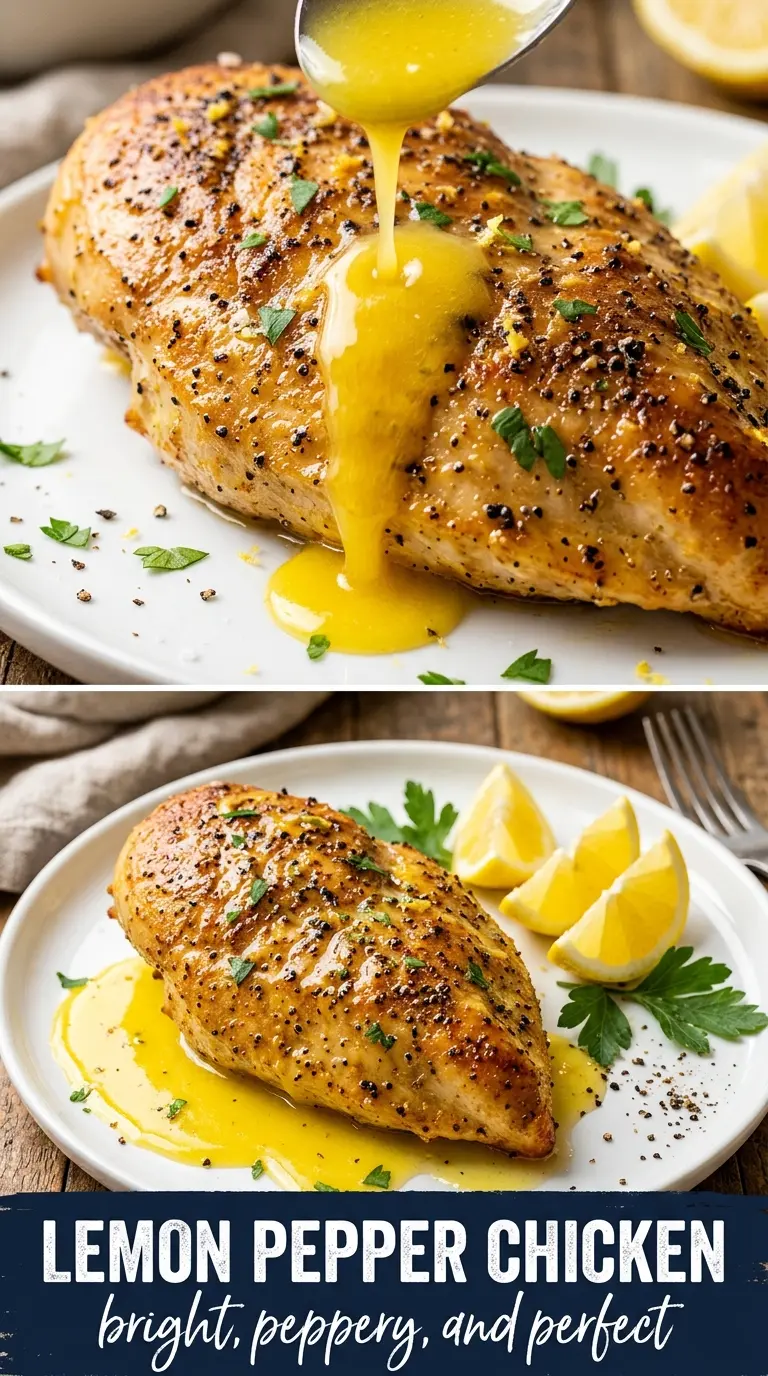
Golden lemon pepper chicken earns its place on the weeknight rotation because the crust stays sharp and fragrant while the sauce adds just enough richness to carry the whole dish. The chicken sears into a deep, seasoned exterior before the lemon butter gets a chance to soften it, so every bite gives you contrast instead of one-note citrus.
The trick here is building flavor in layers. Lemon zest goes onto the chicken before it hits the pan, which gives you a punch of citrus oil right on the surface, and the cracked black pepper needs that direct heat to bloom and smell peppery instead of dusty. Then the sauce gets made in the same skillet, so the browned bits left behind turn into the backbone of the pan sauce instead of getting washed away.
Below, you’ll find the specific heat cues that keep the chicken juicy, the reason fresh lemon juice matters more than bottled here, and a few useful ways to adjust the recipe without losing that bright, savory balance.
The chicken got that gorgeous peppery crust, and the lemon butter sauce came together right in the skillet without turning greasy. I followed the timing exactly and the breasts stayed juicy instead of drying out.
Save this lemon pepper chicken for a fast skillet dinner with a golden crust and bright lemon butter sauce.
The Crust Gets Watery When the Pan Isn’t Hot Enough
Chicken breasts can go pale and soft fast if the skillet is only half ready. The surface needs enough heat to set the spice paste and start browning right away, or the lemon zest mixture steams instead of searing. That’s when you lose the peppery crust and end up with seasoning sliding around in the pan.
Space matters too. If the breasts crowd each other, the skillet drops in temperature and the chicken releases moisture before it gets color. Work in a large pan and leave room around each piece so the surface can caramelize cleanly. Once the first side releases easily and has real color, flip it and let the second side finish the job without moving the chicken around too much.
What the Lemon Zest and Butter Are Each Doing Here
- Chicken breasts — Boneless, skinless breasts cook quickly and give you that clean, lean bite the sauce is designed to complement. If yours are thick on one end and thin on the other, pound them to even thickness so the thinner side doesn’t dry out before the center reaches temperature.
- Lemon zest — This is the big flavor move. Zest carries the citrus oils that make the seasoning smell bright before the sauce even hits the pan, and fresh zest is far stronger than bottled juice for this job.
- Cracked black pepper — Use cracked pepper, not fine powder, if you want that sharp little crunch on the crust. Fine pepper disappears into the seasoning blend and tastes flatter after searing.
- Butter and lemon juice — Butter gives the sauce body, while the lemon juice cuts through the richness so it doesn’t taste heavy. Fresh juice matters here because bottled juice can taste dull or metallic once it’s reduced in the pan.
- Garlic — A single minced clove is enough to round out the sauce without turning it into garlic chicken. Cook it for just a minute; any longer and it can turn bitter in the hot butter.
How to Keep the Sauce Bright After the Chicken Comes Out
Seasoning the Chicken Evenly
Mix the zest, pepper, garlic powder, onion powder, and salt before rubbing it onto the chicken so every breast gets the same hit of seasoning. Press it in firmly with your hands. If the surface looks wet and clumpy, the chicken will steam before it browns, so pat the breasts dry first and let the seasoning cling to the meat instead of dissolving on contact.
Searing Without Rushing the Color
Heat the oil until it shimmers, then lay the chicken in and leave it alone. You want a solid golden crust and a few darker freckles from the pepper before you flip. If the chicken sticks hard when you try to move it, it usually needs another minute; once the crust forms, it releases more cleanly.
Making the Lemon Butter Pan Sauce
Pull the chicken out once it reaches 165°F, then lower the heat before you add the butter and garlic. That lower temperature keeps the butter from scorching and keeps the lemon juice tasting fresh instead of cooked-flat. Stir the lemon juice and zest in at the end, then spoon the sauce over the chicken right away so the crust stays bright and the sauce doesn’t separate.
How to Adapt the Skillet Without Losing the Punch
Gluten-Free and Naturally There
This recipe is already gluten-free as written, which is one reason it’s such an easy dinner to keep in rotation. Just check your spice blends if you’re using pre-mixed garlic powder or onion powder, since a few brands add anti-caking agents or fillers that can muddy the seasoning.
Dairy-Free Version
Swap the butter for a good dairy-free butter with a clean melt, not a tub spread. You’ll lose a little of the sauce’s roundness, but the lemon and pepper still carry the dish, especially if you finish with an extra teaspoon of zest at the end.
Chicken Thighs Instead of Breasts
Boneless thighs work well if you want a juicier result and don’t mind a slightly richer bite. They need a few extra minutes in the pan, and the skinless surface won’t brown quite as sharply, but the sauce balances that with plenty of brightness.
What to Do If Your Lemons Are Small or Mild
If your lemons don’t taste very sharp, use a little extra zest before reaching for more juice. Zest adds intensity without thinning the sauce, while too much juice can make the butter taste thin and overly tart.
Storage and Reheating
- Refrigerator: Store leftovers in an airtight container for up to 3 days. The crust softens a bit, but the flavor holds.
- Freezer: It freezes okay, though the sauce loses some of its fresh lemon edge. Freeze the chicken and sauce together for up to 2 months, then thaw overnight in the fridge.
- Reheating: Rewarm gently in a covered skillet over low heat with a splash of water or chicken broth. High heat will tighten the chicken and make the butter sauce separate.
Answers to the Questions Worth Asking

Lemon Pepper Chicken
Ingredients
Equipment
Method
- Mix lemon zest, cracked black pepper, garlic powder, onion powder, and salt, then rub the mixture generously over both sides of each chicken breast.
- Let the seasoned chicken sit at room temperature for 5 minutes to help the spices adhere while you heat the pan.
- Heat olive oil in a large skillet over medium-high heat and sear chicken for 5-6 minutes per side until deep golden and the center reaches 165°F.
- Remove the chicken to a plate and loosely cover to keep warm.
- Melt butter in the same pan over medium heat, then add minced garlic and cook for 1 minute, stirring, until fragrant.
- Stir in lemon juice and lemon zest, and cook just until the sauce looks glossy and slightly reduced, 1-2 minutes.
- Return chicken to the pan and spoon the lemon butter sauce over each breast so it coats the surface.
- Garnish with fresh parsley and lemon slices, then serve immediately while the crust is crisp.