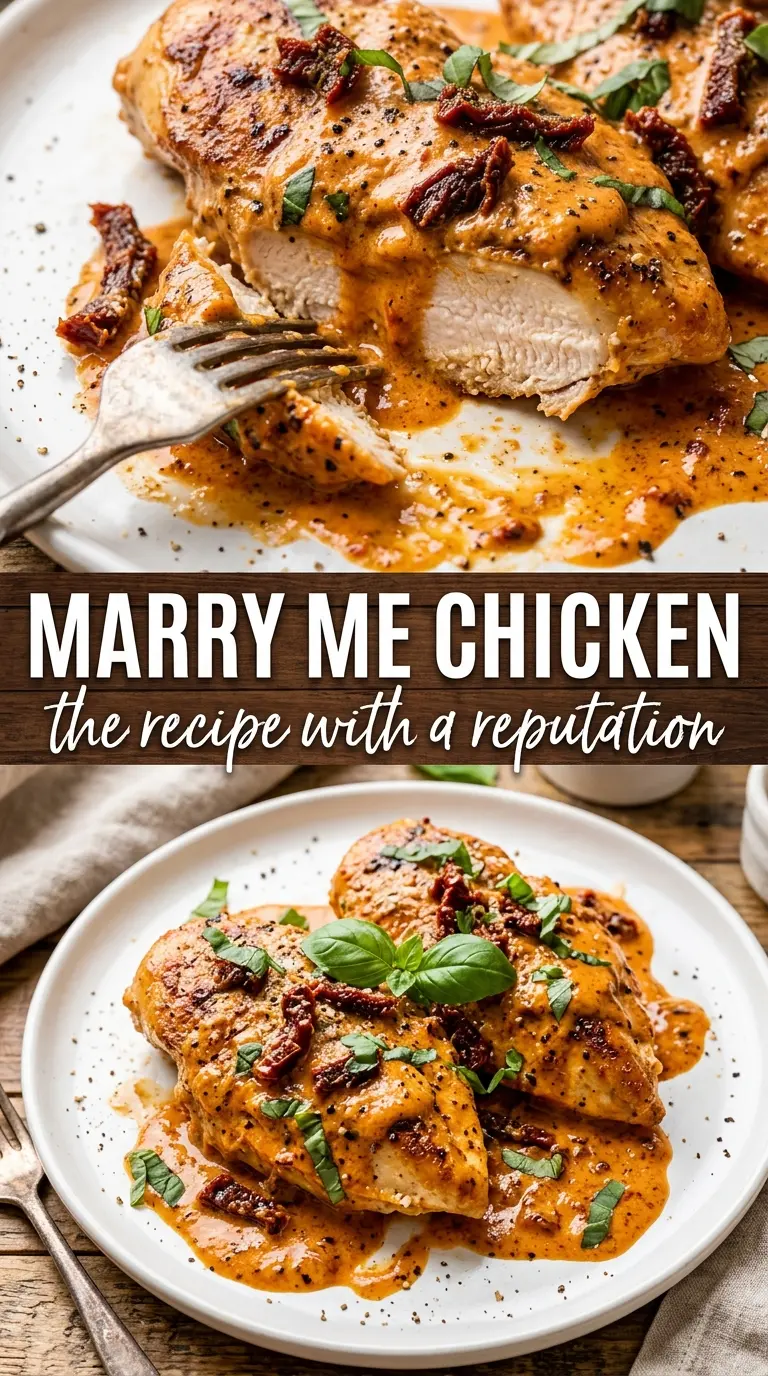
Golden seared chicken breasts tucked into a sun-dried tomato cream sauce have a way of disappearing fast, and this version earns its keep because the sauce stays glossy instead of turning greasy or grainy. The chicken gets a hard sear first, which builds the deep savory base the sauce needs, and then the cream, Parmesan, and broth come together into something rich without feeling heavy.
What makes this dish work is timing. The garlic and sun-dried tomatoes only need a short turn in the pan before the broth goes in, because long cooking can dull both their punch and their sweetness. The Parmesan goes into the cream over a gentle simmer, not a rolling boil, so it melts smoothly and thickens the sauce instead of clumping at the bottom of the skillet.
Below you’ll find the little details that matter most: how to keep the chicken juicy, how to judge the sauce before it’s fully finished, and a few ways to adapt it without losing that restaurant-style finish.
The sauce thickened up beautifully and coated the chicken instead of sliding off, and the sun-dried tomatoes gave it this deep, savory sweetness that tasted like it came from a restaurant.
Like this Marry Me Chicken? Save it to Pinterest for the nights when you want a glossy sun-dried tomato cream sauce and juicy seared chicken with almost no cleanup.
The Part That Stops the Sauce From Turning Grainy
The biggest mistake with Marry Me Chicken is rushing the cream and cheese. If the pan is too hot when the Parmesan goes in, the sauce can turn sandy instead of silky. Pull the heat down before adding the cream, then let it settle into a slow simmer so the sauce thickens on its own.
The other thing that matters is not overcrowding the skillet. If the chicken is packed in too tightly, it steams instead of sears, and you lose the browned bits that give the sauce its backbone. A good sear should leave a deep golden crust that releases cleanly from the pan once it’s ready to turn.
- Chicken breasts — Even thickness matters more than size here. If one side is much thicker, pound it lightly so the chicken cooks at the same pace and stays juicy instead of drying out while you wait for the center to finish.
- Sun-dried tomatoes in oil — The oil-packed kind brings more flavor and a softer texture than dry-packed tomatoes. Drain them before slicing, but don’t rinse them; that concentrated tomato richness is part of what makes the sauce taste complete.
- Heavy cream — This is what gives the sauce its body. Half-and-half can work in a pinch, but the sauce will be thinner and a little less stable when it simmers with the cheese.
- Parmesan — Grate it fresh if you can. Pre-grated cheese often contains anti-caking agents that can make the sauce less smooth, especially if the heat is too high.
- Chicken broth — Use a broth you’d actually drink. It loosens the pan drippings into a sauce and keeps the cream from tasting flat.
What Each Ingredient Is Actually Doing in This Chicken Recipe
- Chicken (the protein foundation) — Choose the right cut for the method. Thighs stay moister; breasts cook faster.
- Sauce or cooking liquid (the moisture keeper) — This prevents the chicken from drying out. Balance richness with acid.
- Aromatics (garlic, onion, ginger, herbs) — These add depth. Cook them with fat so they become part of the sauce rather than separate.
- Seasonings (salt, pepper, spices) — Don’t underseason. The chicken carries the entire flavor profile.
- Acid (lemon, vinegar, wine, tomato) — This brightens and balances heavy sauces. Add timing matters for flavor preservation.
- Fat (oil, butter, cream) — This keeps chicken moist and carries flavors. It’s also what makes the dish taste delicious.
- Fresh herbs or garnish (the finish) — These keep the dish from tasting one-dimensional. Add at the end so they stay fresh.
- Proper doneness (165°F internal temperature) — Use a thermometer. Overcooked chicken is dry; undercooked is unsafe.
Building the Sauce Over the Chicken’s Best Browning
Searing the Chicken First
Season the chicken generously, then sear it in olive oil over medium-high heat until the outside is deeply golden and the center reaches 165°F. Don’t move the chicken too early or it’ll stick; once a crust forms, it should release on its own. This first step is what gives the sauce its savory depth later, so take the time to get color on both sides.
Using the Same Pan for the Sauce
After the chicken comes out, add the garlic and sun-dried tomatoes to the same skillet and cook them just until fragrant. Pour in the broth and scrape up every browned bit from the bottom of the pan, because that’s where the flavor is hiding. If the garlic starts to brown hard, the sauce will taste bitter, so keep this stage short.
Letting the Cream Thicken Gently
Stir in the cream, Parmesan, Italian seasoning, and red pepper flakes, then let the sauce simmer until it coats the back of a spoon. You want small bubbles around the edge, not a hard boil. If the sauce seems thin at first, give it another minute or two; it thickens as the liquid reduces and the cheese fully melts.
Finishing the Chicken in the Sauce
Return the chicken to the pan and spoon the sauce over the top so every piece gets coated. A couple of minutes in the sauce lets the chicken absorb flavor without overcooking. Add the basil right at the end so it stays bright and doesn’t disappear into the cream.
How to Adapt Marry Me Chicken Without Losing the Creamy Finish
Dairy-Free Version
Use full-fat coconut cream in place of the heavy cream and skip the Parmesan, then add a little extra salt and a spoonful of nutritional yeast if you want more savory depth. The sauce will be a touch sweeter and less sharp, but it still turns lush and spoonable.
Gluten-Free Serving Ideas
The chicken and sauce are naturally gluten-free, so the main job is choosing the right side. Serve it over mashed potatoes, rice, or gluten-free pasta, and watch the sauce closely if you use a packaged broth to confirm it’s certified gluten-free.
More Heat, Less Heat
The red pepper flakes are easy to adjust. Keep the full amount for a noticeable warmth, cut it in half for a gentler sauce, or leave it out if you want the tomato and cream to stay front and center. The dish still tastes complete without the heat.
Storage and Reheating
- Refrigerator: Store leftovers in an airtight container for up to 3 days. The sauce will thicken as it chills, which is normal.
- Freezer: It can be frozen, but the cream sauce may separate a bit when thawed. If you do freeze it, cool it completely first and reheat gently.
- Reheating: Warm it over low heat on the stove with a splash of broth or cream, stirring often. High heat is what makes the sauce split, so keep the flame low and patient.
Questions I Get Asked About This Recipe

Marry Me Chicken
Ingredients
Equipment
Method
- Season the chicken breasts generously on both sides with salt, pepper, garlic powder, Italian seasoning, and smoked paprika.
- Heat olive oil in a large cast iron skillet over medium-high heat, then sear chicken for 5-6 minutes per side until golden and the internal temperature reaches 165°F; remove to a plate.
- In the same pan, cook the minced garlic and sliced sun-dried tomatoes for 1 minute.
- Pour in the chicken broth and deglaze, scraping up browned bits from the pan.
- Stir in the heavy cream, grated Parmesan, dried Italian seasoning, and red pepper flakes, then simmer 4-5 minutes until the sauce thickens.
- Return the chicken to the pan and spoon the sauce over each breast, then simmer for 2 more minutes.
- Garnish with fresh basil and serve over pasta or mashed potatoes.