Golden rice, tender chicken, and a blanket of melted queso make this the kind of skillet dinner that disappears fast. The rice soaks up salsa and broth as it cooks, so every bite carries a little heat, a little savoriness, and just enough creaminess from the queso to keep it from feeling heavy. It lands right in that sweet spot between comforting and practical, with one pan doing almost all the work.
What makes this version worth keeping is the order of operations. The chicken gets browned first, which builds flavor in the pan before the rice ever goes in, and then the rice is toasted for a couple of minutes so it keeps some structure instead of turning soft and muddy. The queso goes in near the end, off the hardest heat, so it melts into the rice instead of tightening up or separating.
Below, you’ll find the small details that keep the rice fluffy, the queso smooth, and the whole skillet balanced. There are also a few useful swaps if you’re working with what’s already in the fridge.
The rice cooked up fluffy and the queso melted right into the skillet without turning greasy. I liked that the chicken stayed juicy and the bell pepper still had a little bite.
Save this Mexican Chicken and Rice with Queso for a skillet dinner with fluffy rice, browned chicken, and that creamy queso finish.
The Mistake That Makes One-Pot Rice Go Soft Instead of Fluffy
The biggest problem with skillet rice dishes is rushing the liquid stage. If the pan is too hot when the broth goes in, the rice can cook unevenly on the bottom while staying underdone on top. If the heat is too high after it comes to a boil, the liquid evaporates before the grains have time to soften, and you end up with a dry, uneven skillet instead of a cohesive one.
Brown the chicken first and toast the rice before the broth goes in. Those two steps create a base that tastes cooked, not just assembled. Once the liquid is added, the lid needs to stay on and the heat needs to stay low enough that the rice simmers gently. That steady steam is what cooks the grains through without turning the bottom to mush.
- Toasting the rice gives the grains a light coating of oil and a little nuttiness, which helps them stay separate after cooking.
- Broth carries more flavor than water here. If you use water, the dish tastes flatter and the salsa has to do all the heavy lifting.
- Salsa adds seasoning, acidity, and moisture at once. A thicker salsa keeps the rice from getting soupy.
- Queso belongs at the end. Add it too early and it can scorch or turn grainy while the rice is still finishing.
What Each Ingredient Is Actually Doing in This Skillet
- Long-grain white rice is the right choice because it cooks up fluffy and separate. Short-grain rice turns stickier, and brown rice needs a different liquid ratio and much longer cook time.
- White queso dip gives you that creamy finish without needing a separate sauce. A jarred or deli queso dip works better than shredded cheese here because it melts smoothly into the rice.
- Chicken breast stays lean and cooks fast, but it needs to be cut into even pieces so the cubes finish at the same time. Chicken thighs work too if you want a richer result and don’t mind a little extra fat.
- Red bell pepper and corn add sweetness and texture so the dish doesn’t feel one-note. Frozen corn is fine; just stir it in straight from the freezer.
- Salsa is where a lot of the flavor comes from, so use one you’d actually eat on chips. A mild salsa keeps this family-friendly, while a medium salsa gives it more backbone.
Building the Skillet So the Queso Stays Smooth
Browning the Chicken First
Heat the oil until it shimmers, then add the seasoned chicken in a single layer. Let it sit long enough to get color before stirring, because pale chicken leaves you with a flat-tasting pan. You’re not cooking it through at this point; you’re building the browned bits that will season the rice later. If the chicken starts steaming instead of browning, the pan is crowded or not hot enough.
Toasting the Rice in the Pan
When the onion and garlic smell fragrant, stir in the rice and let it toast for about two minutes. It should look glossy and smell a little nutty, not deeply browned. This step helps the grains hold their shape and keeps the finished dish from turning gluey. If the rice sticks hard to the pan, the heat is too high; lower it and keep stirring.
Simmering Under the Lid
Once the broth, salsa, cumin, and chili powder go in, bring the pot to a boil just long enough to get things moving, then drop the heat low and cover it. The surface should barely ripple. That quiet simmer is what cooks the rice evenly and lets the chicken finish without drying out. Lifting the lid too often steals steam, which is exactly what the rice needs.
Melting in the Queso at the End
Stir in the queso, corn, and bell pepper only after the rice has absorbed most of the liquid. The pan should still be hot, but not angrily bubbling. That keeps the queso silky instead of greasy or separated. If it looks tight, splash in a spoonful of broth and stir until the sauce loosens around the grains.
Make It Spicier Without Changing the Texture
Add diced jalapeño with the onion or stir in a pinch of cayenne with the spices. That gives you more heat without changing the rice-to-liquid balance. Hot sauce at the end works too, but it sharpens the flavor instead of building it into the dish.
Make It Dairy-Free
Use a dairy-free queso-style sauce that melts smoothly, not a thick cheese substitute that clumps. The finished skillet will be a little less rich, but the rice still gets the same creamy finish if the substitute is pourable.
Use Chicken Thighs for a Richer Result
Boneless thighs bring a little more moisture and flavor, and they stay tender even if the skillet runs a minute long. Cut them to the same size as the breasts and brown them the same way. The dish will taste a little deeper and less lean.
Storage and Reheating
- Refrigerator: Store leftovers in an airtight container for up to 4 days. The rice will firm up as it chills, and the queso will thicken.
- Freezer: It freezes okay, though the queso can separate a little after thawing. Freeze in portions for up to 2 months if you want a backup meal.
- Reheating: Reheat gently on the stove or in the microwave with a splash of broth or water to loosen the rice. High heat is the fastest way to make the queso turn oily and the chicken dry.
The Questions That Come Up With This Queso Chicken Skillet
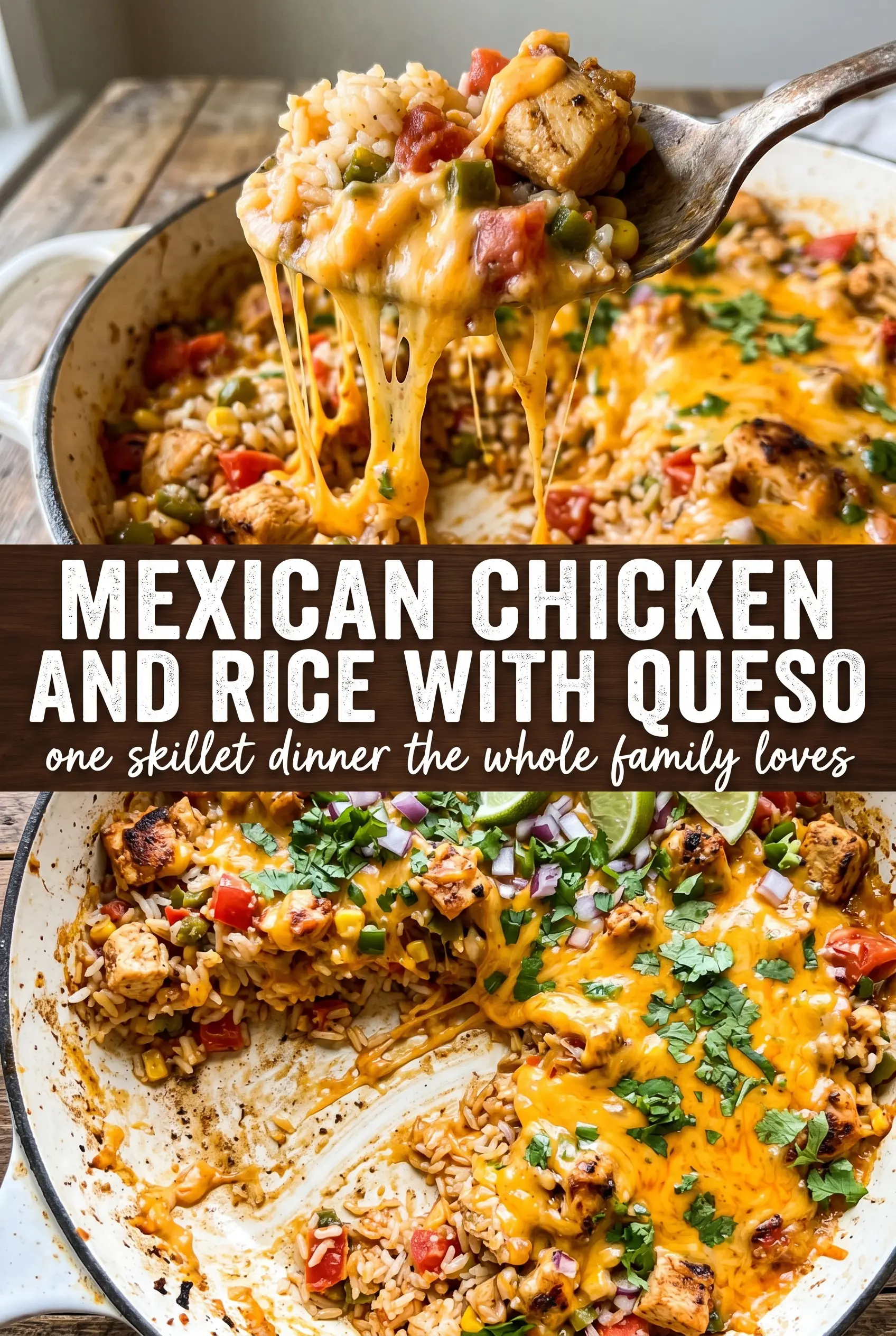
Mexican Chicken and Rice with Queso
Ingredients
Equipment
Method
- Heat olive oil in a large skillet over medium-high heat. Season boneless skinless chicken breasts, cubed with salt and pepper to taste, then brown on all sides for about 5 minutes, until golden and cooked through.
- Add medium onion, diced and cloves garlic, minced to the skillet and cook for 2 minutes until fragrant. Stir in long-grain white rice and toast for 2 minutes, until the grains look slightly dry and glossy.
- Pour in chicken broth, salsa, cumin, and chili powder, then bring everything to a boil. Reduce heat to low, cover, and simmer for 15 minutes until the rice is mostly tender and the liquid is absorbed.
- Stir in white queso dip, corn, and red bell pepper, diced. Cook uncovered for 3-5 minutes until the queso is melted and the rice is tender, creating a creamy sauce that clings to the grains.
- Garnish with fresh cilantro for garnish and serve hot. Let the skillet sit for 1 minute so the sauce thickens slightly before eating.