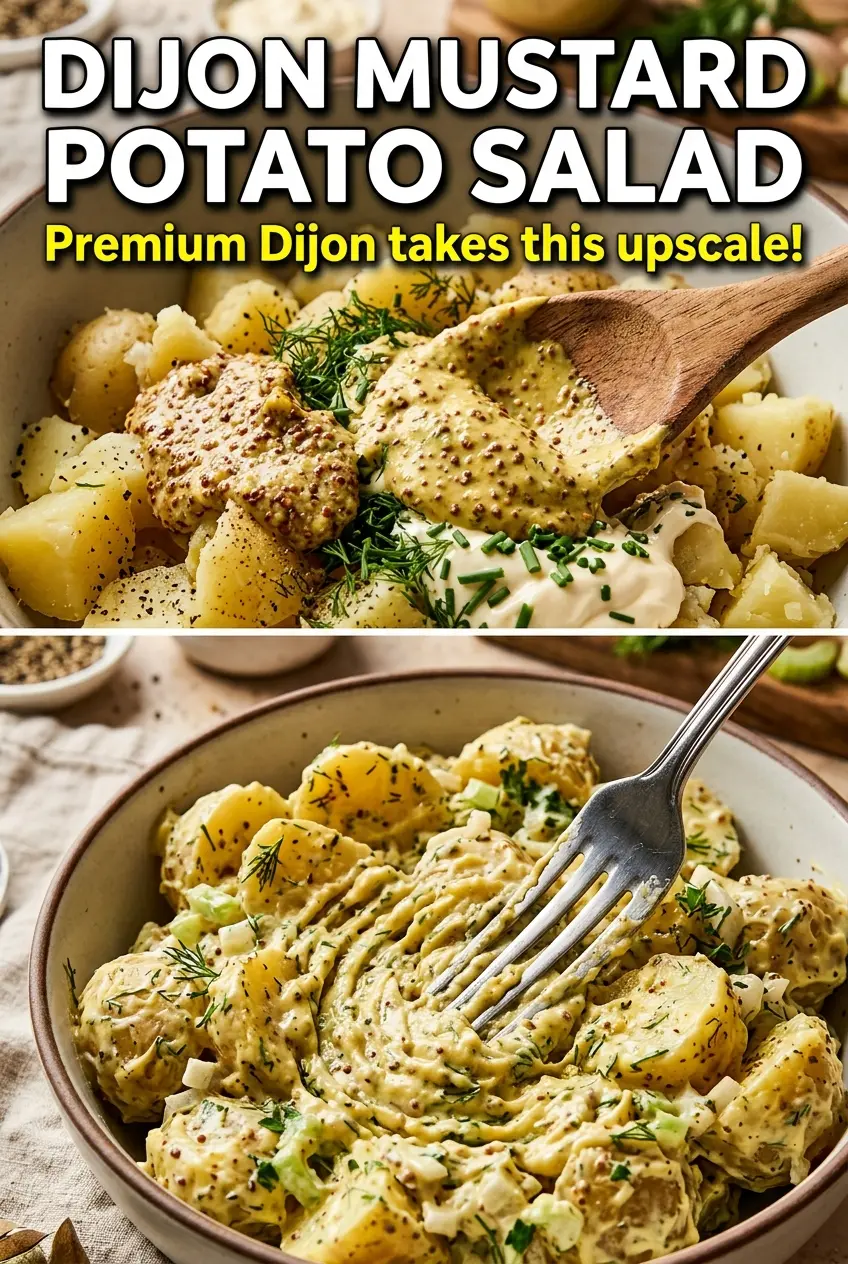
Mustard potato salad lands on the table with a creamy, tangy dressing that clings to every warm cube of potato, and that sharp yellow mustard bite keeps it from tasting heavy. The potatoes stay soft but intact, the celery adds a clean crunch, and the eggs round everything out without making the bowl feel fussy. It’s the kind of side dish that disappears early because it tastes familiar in the best possible way.
The part that makes this version work is the balance. Mayo gives the dressing body, but yellow mustard and Dijon keep it bright and assertive, while a little vinegar sharpens the whole bowl so it tastes finished after chilling. Yukon gold potatoes are the right choice here because they hold their shape and turn creamy instead of mealy, which matters a lot once you toss them with dressing.
Below, I’ve included the one step that keeps the salad from turning bland after chilling, plus a few swaps that actually make sense if you need to adjust the recipe for what’s in your kitchen.
The dressing soaked into the potatoes perfectly after chilling, and the mustard flavor stayed bright instead of getting lost. I’ve made a lot of potato salads, but this one had the best texture after two hours in the fridge.
Creamy mustard potato salad with that bright yellow tang is one to pin for picnics, barbecues, and make-ahead lunches.
The Chill Time Is Where the Mustard Flavor Gets Better
Potato salad tastes flat when it’s served straight from the bowl right after mixing. The mustard and vinegar need time to settle into the potatoes, and that rest also gives the dressing a chance to thicken slightly as it cools. After about two hours in the fridge, the salad tastes more cohesive and less like separate ingredients tossed together at the last minute.
The other mistake people make is overdressing hot potatoes with a heavy hand and then serving immediately. Warm potatoes absorb flavor, but they also loosen the dressing if the bowl is too hot. Let the potatoes cool just enough that they’re no longer steaming hard, then mix, chill, and taste again before serving. A pinch more salt or a small splash of vinegar at the end can wake the whole bowl back up if it needs it.
What Each Ingredient Is Actually Doing in This Salad

- Yukon gold potatoes — These are the best fit because they stay tender without collapsing. Russets can get too soft and fall apart once you mix the salad.
- Mayonnaise — This gives the dressing its body and helps the mustard coat the potatoes evenly. Use a full-fat mayo if you want the creamiest result; light versions tend to taste thinner after chilling.
- Yellow mustard and Dijon — Yellow mustard gives the classic color and that familiar tang, while Dijon adds depth and a little more edge. If you only have yellow mustard, the salad still works, but it will taste a little simpler.
- White vinegar — This keeps the dressing from tasting heavy and helps the mustard read brighter after refrigeration. Apple cider vinegar works in a pinch, but it brings a softer, sweeter note.
- Celery and onion — These are there for crunch and bite. Dice them finely so they blend into the salad instead of stealing every forkful.
- Hard-boiled eggs — The yolks add richness and the whites give the salad a more classic, picnic-style feel. Chop them after they’re fully cool so they stay neat in the bowl.
Building the Salad So It Stays Creamy After Chilling
Cooking the Potatoes Just to Tender
Start the potatoes in cold salted water and bring them up together. That helps the cubes cook evenly instead of going mushy on the outside while the center stays firm. Pull them when a knife slides in with little resistance but the pieces still hold their edges. If you overcook them, the dressing will turn thick and pasty instead of creamy.
Mixing the Dressing First
Whisk the mayonnaise, both mustards, vinegar, sugar, salt, and pepper before the potatoes go in. That gives you a smooth base and keeps the mustard from clumping in one spot. The sugar doesn’t make the salad sweet; it softens the vinegar and rounds out the sharpness. Taste it now, because once it’s on the potatoes, the flavor will mellow after chilling.
Folding Everything Together
Add the potatoes, celery, onion, and eggs while the potatoes are still just warm, not hot. Warm potatoes absorb seasoning better, which is why the finished salad tastes fuller after chilling. Toss gently so the cubes stay intact and the eggs don’t disappear into the dressing. If the bowl looks a little loose at first, that’s normal; the potatoes will tighten everything as they cool.
Letting It Rest Before Serving
Cover the salad and refrigerate it for at least two hours. That rest is what turns it from a dressed potato bowl into proper potato salad. Give it a stir before serving and taste again, because cold food always needs a final seasoning check. If it feels a little stiff, a spoonful of mayo or a splash of vinegar brings it back.
Three Ways to Adjust It Without Losing the Point
Make it dairy-free without changing the texture
This recipe is already dairy-free as written, which is one reason it works so well for potlucks. Just check your mayonnaise label if you’re serving someone with an allergy, since some brands use different oils or processing methods. The creamy texture stays the same, and you don’t lose any of the mustard bite.
Swap in dill pickles for extra tang
If you want a sharper, more picnic-style salad, replace some of the celery with finely chopped dill pickles or a spoonful of pickle relish. That adds acidity and crunch, but it also pushes the salad away from the cleaner mustard flavor, so start small and taste as you go.
Skip the eggs for a lighter side dish
You can leave out the eggs if you want a cleaner potato-and-mustard salad. The dish will still be creamy, but it will taste a little brighter and less rich. If you do this, add a touch more mayo or a little extra mustard so the dressing still coats the potatoes well.
Storage and Reheating
- Refrigerator: Keep covered for up to 4 days. The flavor gets a little stronger on day two, and the potatoes may soften slightly but should still hold up well.
- Freezer: Don’t freeze it. The mayonnaise separates and the potatoes turn grainy after thawing.
- Reheating: This salad is meant to be served cold, not reheated. If it comes out of the fridge too firm, let it sit at room temperature for 15 to 20 minutes and stir before serving.
Questions I Get Asked About This Recipe
Mustard Potato Salad
Ingredients
Equipment
Method
- Bring a large pot of water to a boil in a Dutch oven over high heat, then add the cubed Yukon gold potatoes and boil until tender, about 15–20 minutes, with visible fork-tender pieces. Drain and cool until the potatoes are no longer steaming.
- In a bowl, mix mayonnaise, yellow mustard, Dijon mustard, and white vinegar until smooth, then stir in sugar and season with salt and pepper. Keep mixing until the dressing looks creamy and evenly yellow-tinted.
- Add the cooled potatoes, diced celery, finely diced onion, and chopped hard-boiled eggs to the serving bowl and gently toss so everything is evenly distributed. Pour the mustard dressing over the top and toss well until the potatoes are fully coated.
- Cover and refrigerate for 2 hours, so the potato salad firms slightly and the flavors meld, with the dressing looking set and clinging to the cubes.