Deep, brick-red Nigerian chicken stew is the kind of pot that changes a dinner table the minute it lands. The sauce cooks down until it loses that sharp raw-tomato edge and turns rich, glossy, and concentrated, clinging to each piece of chicken instead of sliding off the spoon. Served over steamed rice, it brings heat, sweetness, and a slow-building savoriness that keeps people going back for one more scoop.
What makes this version work is the patience in the pepper base. The blended tomatoes, red bell peppers, onions, and scotch bonnet need time in the oil until the color darkens and the oil begins to separate on top. That step is what turns a fresh blend into a proper stew. Browning the chicken first matters too, because it gives the meat better flavor and keeps it from going bland in the sauce.
Below, I’ve laid out the part that matters most: how to cook the pepper sauce long enough without scorching it, plus a few useful swaps and fixes if you want to adjust the heat or make the stew ahead.
The sauce cooked down exactly the way you described, and once I saw that oil float on top, I knew it was ready. The chicken stayed juicy and the stew tasted even better the next day over rice.
Save this Nigerian Chicken Stew for the days when you want a deeply cooked pepper sauce and golden chicken over rice.
The Part Most People Rush: Cooking the Pepper Base Until It Darkens
If the pepper mixture goes into the pot and comes out tasting sharp, watery, or half-raw, the stew never quite settles into itself. The fix is time in oil, not extra seasoning. You want the sauce to sizzle at first, then slow down as moisture cooks off. By the end, it should look darker, thicker, and slightly glossy, with the oil rising away from the tomato-pepper mash.
That separation matters. It tells you the tomatoes have cooked long enough to lose their bright acidity and the peppers have mellowed into something rounder and deeper. Stir often enough to keep the bottom from catching, but don’t keep it at a hard boil the whole time. A strong simmer is enough once the steam starts dropping and the sauce begins to hold its shape on the spoon.
What Each Ingredient Is Doing in the Pot
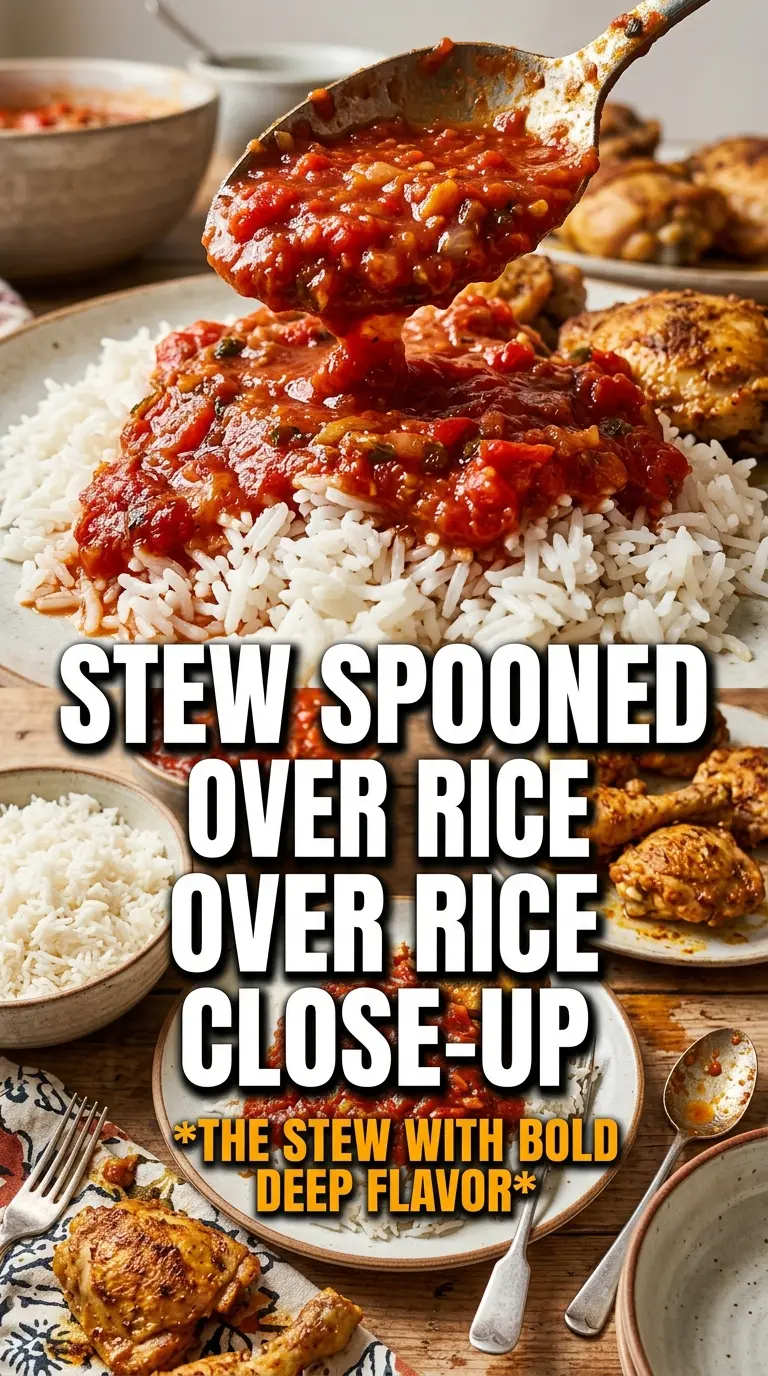
- Plum tomatoes — These give the stew body without making it too thin. Plum tomatoes are better than watery salad tomatoes here because they break down into a thicker sauce with less cooking time.
- Red bell peppers — They add sweetness and help create that deep red color. Don’t replace all of them with hotter peppers or the stew can turn harsh instead of balanced.
- Scotch bonnet or habanero — This is the heat source, and it also brings a fruity, almost floral note underneath the burn. Start with one if you’re cautious; you can always add more heat at the table, but you can’t take it back once it’s blended in.
- Bone-in chicken pieces — They hold up to the long simmer and keep the stew tasting like chicken, not just pepper sauce. Boneless pieces work in a pinch, but they lose some of the depth and can dry out faster.
- Vegetable oil — This gives the sauce enough fat to fry properly and helps the stew develop that signature sheen. If you cut the oil too much, the pepper base can stew in its own liquid instead of frying, and the flavor stays flat.
- Bouillon — It boosts the savory backbone, especially if your tomatoes are a little mild. Use stock powder if that’s what you keep around, but don’t overdo it or the stew starts tasting overly salty and one-note.
How to Cook the Chicken So It Stays Juicy in the Stew
Marinating the meat first
Mix the chicken with the grated onion, thyme, curry powder, bouillon, salt, and pepper, then let it sit for about 30 minutes. That short marination gives the seasoning time to settle into the meat before it hits the heat. If the chicken tastes bland later, it usually means the seasoning stayed on the surface and never had time to work in.
Frying or baking for color
Brown the chicken until the outside is golden and the pieces are mostly cooked through. That first layer of color gives the stew a fuller taste and keeps the chicken from going pale in the sauce. If you skip this step and drop raw chicken into the pot, the stew can turn greasy while the meat goes soft instead of staying pleasantly firm.
Letting the stew finish the job
Once the pepper sauce has cooked down, add the chicken back in and simmer it gently for 15 to 20 minutes. The sauce should coat the pieces and cling to the skin, not flood the pot. If the stew looks too loose at this stage, keep simmering uncovered for a few minutes; if it looks too thick, add a splash of water and stir until it loosens just enough to coat the back of a spoon.
Make it milder without losing the stew’s character
Use one scotch bonnet instead of two, or remove the seeds before blending for a softer burn. The stew will still taste like Nigerian chicken stew, but the heat will sit lower in the background instead of building aggressively.
Make it dairy-free and gluten-free with no extra work
This recipe already fits both of those needs as written, as long as your bouillon and stock powder are gluten-free. Serve it with steamed rice, and you’ve got a naturally dairy-free, gluten-free main dish that still feels complete and satisfying.
Use boneless chicken thighs for a faster dinner
Boneless thighs cook faster and are easier to eat, but they won’t give the stew the same deep flavor that bone-in pieces bring. If you use them, shorten the simmer and watch the texture closely so the meat stays tender instead of stringy.
Stretch the stew for a bigger crowd
Add a little water only after the pepper base has properly fried down, never at the start. That keeps the flavor concentrated while giving you more sauce to serve over rice.
Storage and Reheating
- Refrigerator: Store for up to 4 days. The flavor deepens overnight, and the sauce thickens as it chills.
- Freezer: It freezes well for up to 3 months. Cool it completely first, then pack it in airtight containers with a little room at the top.
- Reheating: Warm it gently on the stove over medium-low heat until hot through. Add a splash of water if needed, but don’t blast it on high heat or the sauce can scorch before the center warms up.
Questions I Get Asked About This Recipe

Nigerian Chicken Stew
Ingredients
Equipment
Method
- Season chicken pieces with half the grated onion, thyme, curry powder, bouillon, salt, and pepper, then coat evenly. Marinate for 30 minutes for the flavors to soak in.
- Fry or oven-bake the marinated chicken until golden and mostly cooked through, then set aside. Aim for a visibly browned exterior to help the chicken hold up in the stew.
- Blend plum tomatoes, red bell peppers, scotch bonnet or habanero peppers, and the remaining onion until smooth. Blend until the mixture looks uniform without large pepper chunks.
- Heat 1/2 cup oil in a large pot over medium-high heat, then carefully fry the blended pepper sauce. Stir frequently for 30-40 minutes until oil floats on top and the sauce is deeply cooked and darkened.
- Add the fried chicken to the pot and coat it thoroughly in the sauce. Simmer for 15-20 minutes until the chicken is tender and the sauce clings to the pieces.
- Taste and adjust seasoning with salt and pepper as needed, then serve hot. Garnish with fresh parsley and serve over steamed rice.