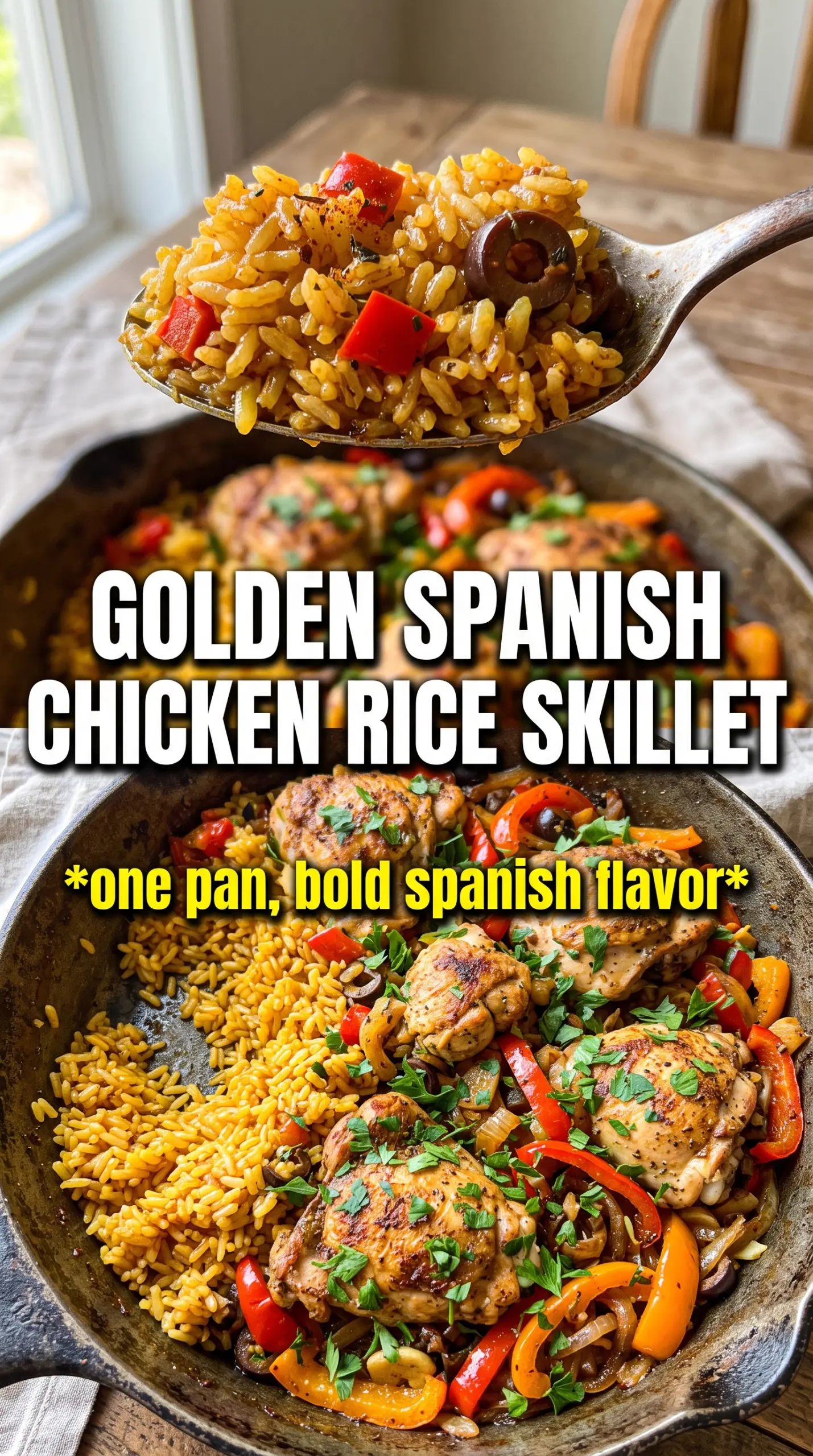
Golden chicken thighs over saffron-tinged rice is the kind of dinner that earns its place fast. The chicken stays juicy while the rice underneath catches every bit of paprika, tomato, wine, and pan drippings, so each spoonful tastes deeper than you’d expect from such a simple skillet meal. The peas and roasted peppers keep it from feeling heavy, and the lemon at the end wakes up all that rich, savory flavor.
The part that makes this version work is the order. Searing the chicken first gives you that crisp, seasoned skin and the browned bits that flavor the rice, while toasting the rice for a minute keeps the grains from turning soft and sticky. Saffron doesn’t need much to stand out here, but blooming it in warm liquid matters — it spreads color and aroma through the whole pan instead of staying trapped in a few threads.
Below, I’ve added the small things that matter most: how to keep the rice tender without overcooking the chicken, what to do if your pan runs a little hot, and the best swaps when you need to work with what’s in the kitchen.
The rice came out fluffy, not mushy, and the chicken skin stayed crisp enough that my husband kept picking at it before dinner was even served.
Save this one pan Spanish chicken and rice for the nights when you want saffron rice, crisp chicken, and one skillet to clean.
The Saffron Step That Keeps the Rice From Tasting Flat
Rice dishes like this live or die on layering. If the pan starts with raw rice and plain broth alone, it tastes acceptable but dull. Here, the chicken sears first, the onion and pepper soften in the rendered fat, and the rice gets toasted before any liquid goes in, which gives the finished dish a nutty edge and keeps the grains separate.
Saffron also needs a little help to show up. Blooming it in warm liquid pulls the color and aroma out fast, and that liquid gets dispersed through the whole pan instead of sitting in one spot. The other detail that matters is the simmer: once the lid is on, keep the heat low enough that the rice absorbs liquid steadily. A hard boil can leave you with mush at the edges and firmness in the middle.
- Chicken thighs — Bone-in thighs stay juicy through the longer rice cook and give the pan enough fat and flavor to season the grains. Boneless thighs work in a pinch, but they cook faster and can go dry if you don’t shorten the covered simmer.
- Long grain rice — This is the right choice for fluffy grains that hold their shape. Short grain rice will turn softer and more risotto-like, while brown rice needs a different liquid ratio and a much longer cook.
- Saffron — Even a small amount makes a difference here. Bloom it in warm water or broth, not cold, so it colors the rice evenly and doesn’t disappear into the background.
- Smoked paprika — This gives the dish its backbone. Regular paprika won’t bring the same depth, so if you swap it, add a pinch of smoked salt or a little extra browned flavor elsewhere.
What Each Ingredient Is Actually Doing in This Recipe
- Primary ingredient (the star) — Quality matters most. Choose the best you can find.
- Cooking medium (oil, butter, or broth) — This carries flavors and prevents dryness.
- Seasonings (salt, pepper, spices, herbs) — Layer flavors so nothing overpowers. Build depth gradually.
- Aromatics (garlic, onion, herbs) — Cook with fat to bloom flavors. Become the foundation.
- Supporting ingredients — Complement the main ingredient without overpowering it.
- Sauce or liquid (if applicable) — Brings flavors together. Balance richness with acid.
- Acid (lemon, vinegar, wine, or other) — Brightens and prevents flat-tasting results.
- Final finish (garnish, glaze, or sauce) — Prevents one-dimensional taste and adds visual appeal.
Building the Pan So the Rice Cooks Evenly
Getting Color on the Chicken
Season the chicken well, then lay it skin-side down in hot olive oil and leave it alone until the skin turns deep golden. If you move it too early, it sticks and tears, and you lose the browned flavor that seasons the whole dish. That color on the bottom of the pan is not a cleanup problem; it’s the base of the sauce. Pull the chicken out once the skin has real color, not just a pale tan.
Cooking the Vegetables in the Chicken Fat
The onion and bell pepper should soften and take on a little edge color before the garlic goes in. Garlic burns fast, so it only needs about a minute after the other vegetables are moving in the pan. If the heat is too high here, the garlic turns bitter and the whole skillet tastes sharp instead of rounded.
Letting the Rice Absorb Everything
Toast the rice briefly in the oil and vegetables, then add the wine, tomatoes, broth, saffron liquid, and turmeric. Scrape up the browned bits as you stir; that’s where the flavor is hiding. Once the chicken goes back in, keep the skin above the liquid and cover the pan at a low simmer. If the rice is still a little firm when the liquid is gone, add a splash of hot broth and keep cooking in short bursts rather than turning the heat up hard.
The Finish That Keeps It from Turning Heavy
Scatter the peas over the top near the end and let them warm through under the lid. They should stay bright and sweet, not grey and broken down. Resting the pan for five minutes matters more than it sounds like it should; the rice settles, the moisture evens out, and the dish serves cleaner. Finish with parsley and lemon so the richness doesn’t bury the saffron.
How to Adapt This One Pan Spanish Chicken and Rice Without Losing the Point
Use boneless chicken thighs for a faster cook
Boneless thighs work if that’s what you have, but they don’t give the rice quite the same richness. Sear them well, then cut the covered simmer a few minutes shorter so they stay tender. The rice still picks up the paprika and tomato flavor, just with a slightly leaner finish.
Make it dairy-free and gluten-free without changing a thing
This recipe already fits both of those needs as written. Keep an eye on the broth label if you’re strict about gluten, and use a wine you’d actually drink. The texture and flavor stay exactly where they should.
Skip the wine and build the same depth another way
If you don’t cook with wine, replace it with extra chicken broth plus a small squeeze of lemon at the end. You lose a little of the rounded acidity, but the tomatoes, saffron, and browned chicken still carry the dish. Don’t replace it with water or the pan will taste flatter.
Add chorizo for a smokier version
A little sliced chorizo cooked before the onion changes the dish in a good way, giving the rice extra paprika heat and a deeper red color. Use less salt if you go this route, because chorizo and broth can push the pan toward salty fast. It becomes richer and more assertive, but still keeps the same one-pan structure.
Storage and Reheating
- Refrigerator: Keeps for 3 to 4 days in a sealed container. The rice will tighten up as it sits, but the flavor gets even deeper overnight.
- Freezer: Freezes well for up to 2 months, though the rice softens a little after thawing. Cool it fully first and portion it into containers so it reheats more evenly.
- Reheating: Reheat covered with a splash of broth or water over low heat on the stove, or in the microwave at medium power. The common mistake is blasting it on high, which dries out the chicken and makes the rice tough before the center is hot.
Questions I Get Asked About This Recipe
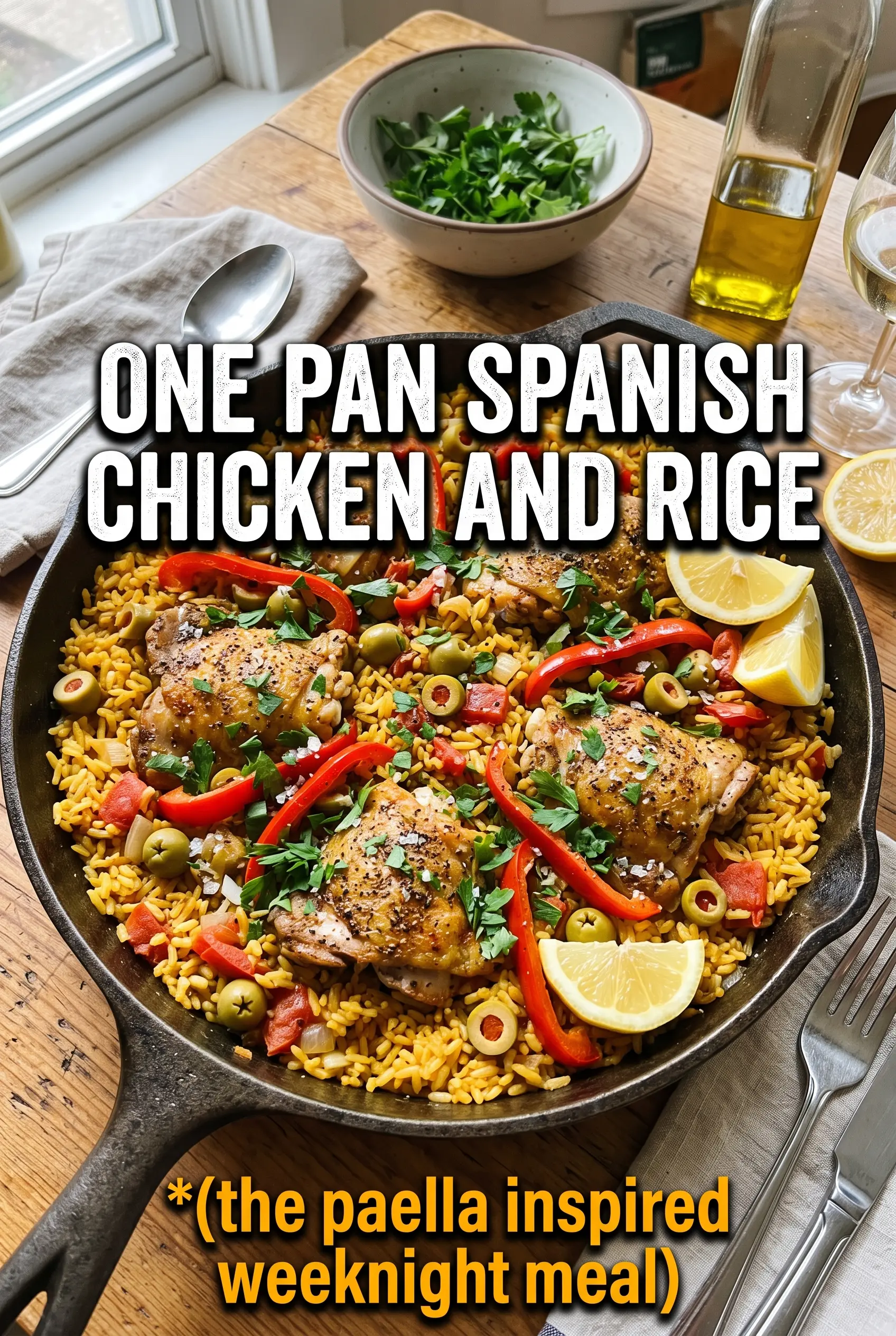
One Pan Spanish Chicken And Rice
Ingredients
Equipment
Method
- Season bone-in chicken thighs with smoked paprika, salt, and pepper. Heat olive oil in a wide paella pan and sear skin-side down for 6 minutes until deep golden, then remove to a plate.
- Add onion and red bell pepper to the pan and sauté for 4 minutes until softened. Stir in garlic and cook for 1 minute, just until fragrant.
- Add long grain rice and toast briefly so it smells nutty. Pour in white wine, diced tomatoes, chicken broth, saffron liquid, and turmeric, then bring everything to a simmer.
- Nestle the chicken skin-side up into the simmering rice and cover the pan. Cook on medium-low for 25-30 minutes until the rice is tender and the liquid is absorbed, with the chicken tucked into the grains.
- Scatter frozen peas over the top of the rice and cover again. Cook until the peas are bright green and tender, about 0-3 minutes as the pan holds heat.
- Turn off the heat and rest the covered pan for 5 minutes. The rice should look settled and slightly glossy while the chicken juiciness redistributes.
- Garnish with fresh parsley and squeeze lemon over right before serving. Serve with the chicken resting atop the deeply colored saffron rice and peas.