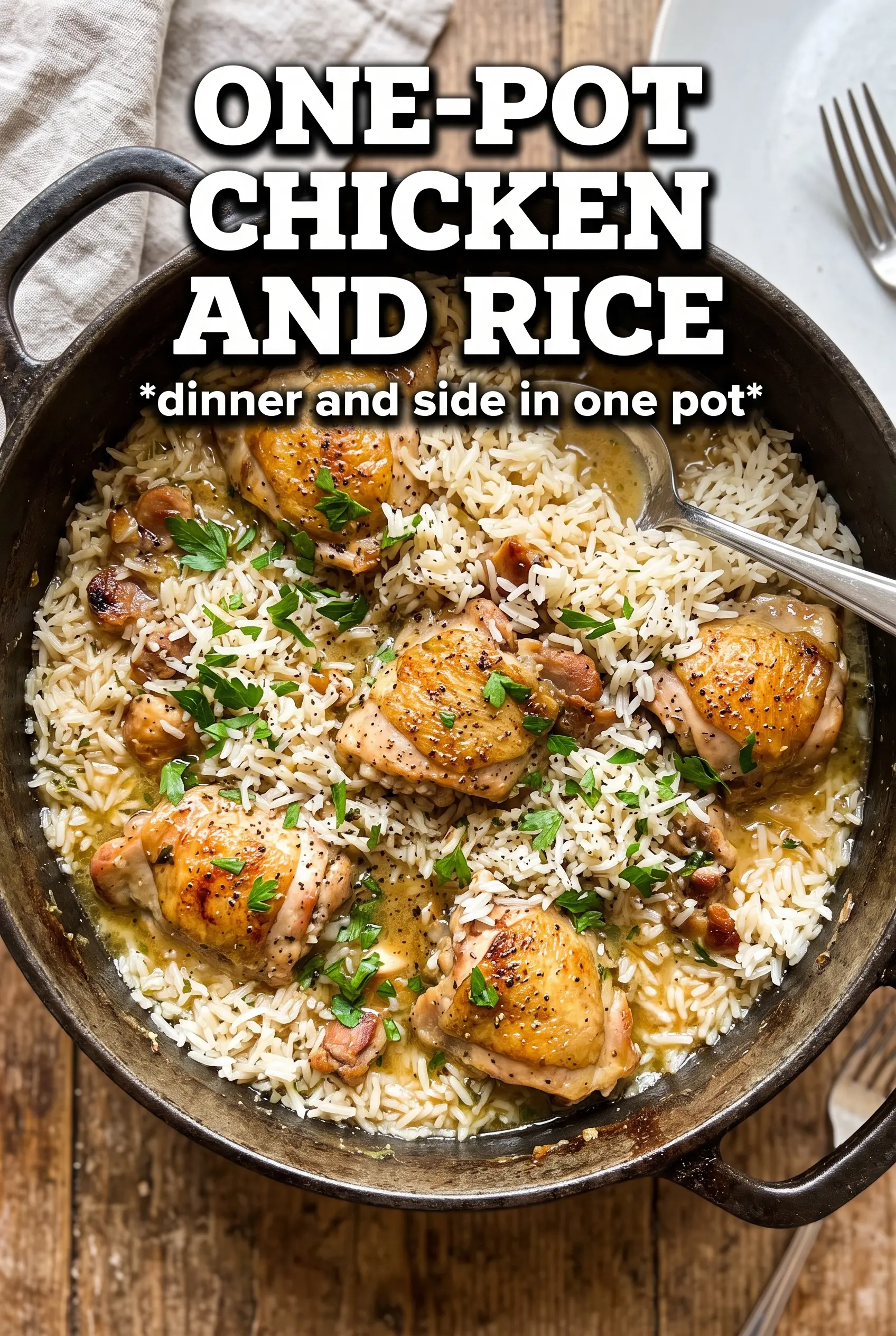
Golden chicken thighs sitting over fluffy rice is one of those dinners that disappears fast because every spoonful tastes like it came from a much more complicated pot. The chicken gives the rice its best flavor while it cooks, and the rice catches all those drippings instead of tasting plain or one-note. What you end up with is tender meat, separate grains, and a pan that feels bigger than the effort it took to make it.
The key is getting a real sear on the chicken before anything else goes into the pot. That browned skin leaves behind the base of the whole dish, and the rice picks up those caramelized bits as soon as the broth goes in. Rinsing the rice matters too, because it keeps the finished texture light instead of sticky. The turmeric adds color and a mild earthiness, while the peas go in at the end so they stay bright and sweet instead of dull and mushy.
The rice came out fluffy and separate, and the chicken skin stayed golden even after simmering. I loved that the peas were stirred in at the end so they kept their color.
Save this one-pot chicken and rice for the nights when you want golden thighs, fluffy herb rice, and only one pot to wash.
The Trick to Rice That Stays Fluffy Under Chicken Thighs
The failure point in a one-pot chicken and rice dinner is usually the rice, not the chicken. If the pot is too hot, the rice on the bottom grabs before the liquid has a chance to move through the whole dish. If the lid doesn’t fit tightly, the broth evaporates too fast and you end up with uneven grains — some undercooked, some mushy.
This version avoids that by building the flavor in layers, then keeping the simmer gentle and sealed. The chicken goes back in skin-side up, which keeps the top exposed while the rice cooks underneath. That keeps the skin from turning rubbery and lets the grains absorb the broth evenly instead of boiling around in it.
What Each Ingredient Is Actually Doing in This Recipe
- Primary ingredient (the star) — Quality matters most. Choose the best you can find.
- Cooking medium (oil, butter, or broth) — This carries flavors and prevents dryness.
- Seasonings (salt, pepper, spices, herbs) — Layer flavors so nothing overpowers. Build depth gradually.
- Aromatics (garlic, onion, herbs) — Cook with fat to bloom flavors. Become the foundation.
- Supporting ingredients — Complement the main ingredient without overpowering it.
- Sauce or liquid (if applicable) — Brings flavors together. Balance richness with acid.
- Acid (lemon, vinegar, wine, or other) — Brightens and prevents flat-tasting results.
- Final finish (garnish, glaze, or sauce) — Prevents one-dimensional taste and adds visual appeal.
What Each Ingredient Is Doing in the Pot
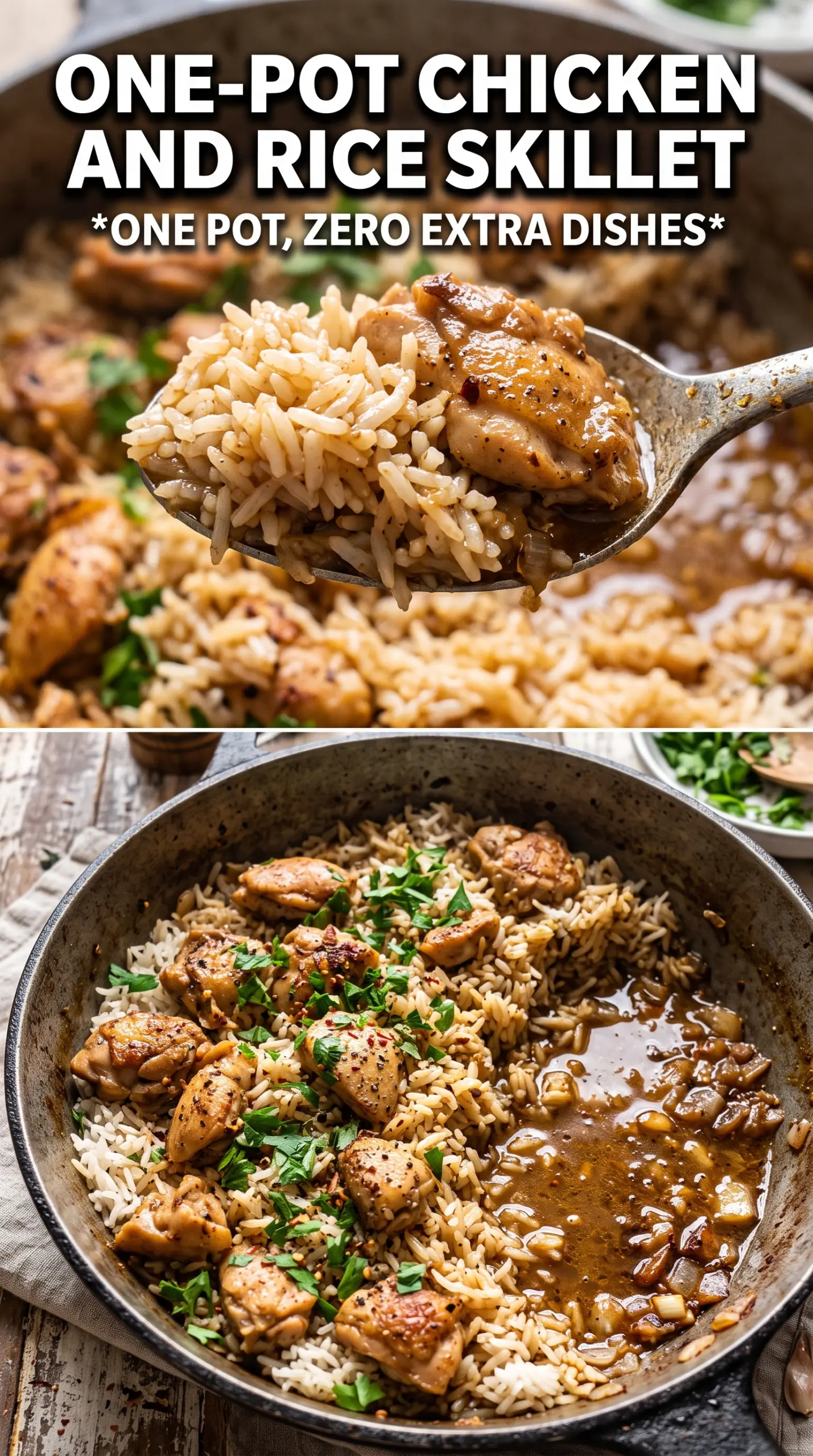
- Bone-in chicken thighs — These hold up to the full cook time and stay juicy while the rice finishes. Boneless thighs work in a pinch, but they cook faster and don’t give you the same drippings, so the rice loses some depth.
- Long grain white rice — This is the right rice for separate, fluffy grains. Rinse it until the water runs mostly clear; that washes off excess starch and keeps the pot from turning gummy.
- Chicken broth — This does the heavy lifting for flavor. Homemade or boxed both work, but use one you’d drink on its own, because the rice absorbs every bit of it.
- Turmeric, paprika, and cumin — Turmeric gives the rice its warm color, paprika supports the browned chicken, and cumin adds a quiet savory note. Don’t overdo the cumin or it starts to take over the whole dish.
- Frozen peas and carrot — The carrot softens along with the rice, and the peas stay bright if they go in at the end. Fresh peas can work, but they need almost the same treatment; toss them in just long enough to warm through.
Building the Pot So Nothing Cooks at the Wrong Speed
Getting the Chicken Skin Deeply Browned
Season the thighs before they hit the pot, then lay them skin-side down in hot olive oil and leave them alone until the skin releases and turns a deep golden color. If you move them too soon, the skin sticks and tears, and you lose the best flavor base in the dish. The chicken doesn’t need to cook through here; it just needs enough color to carry the whole pot.
Softening the Vegetables Without Draining the Pan
After the chicken comes out, the onion, carrot, and garlic go into the same pot with all those browned bits still stuck to the bottom. Stir them just until the onion starts to look glossy and the garlic smells sweet, not sharp. If the garlic browns too fast, lower the heat right away, because burnt garlic will make the rice taste bitter.
Toasting the Rice Before the Broth Goes In
Stir the rinsed rice with the turmeric and cumin for a short minute before adding liquid. That quick toast helps the grains stay separate and lets the spices bloom in the oil instead of floating around flat in the broth. The rice should look shiny and smell nutty before you pour in the stock.
Finishing Under a Tight Lid
Once the broth is in and the chicken is tucked back on top, bring the pot to a boil, then drop it to low immediately and cover it tightly. You want a quiet simmer, not a bubbling boil. If the heat stays too high, the bottom layer of rice will scorch before the center is done.
Make It Dairy-Free and Still Keep the Same Comfort
This recipe is already dairy-free as written, which is part of why it works so well for a weeknight dinner. The richness comes from the chicken skin, broth, and olive oil, not from cream or butter, so you don’t lose anything by keeping it this way.
Swap the Chicken for Boneless Thighs
Boneless thighs will still give you tender meat, but they cook faster and don’t leave as much flavor in the pot. Start checking them a few minutes early, and keep the lid tight so the rice doesn’t dry out while the chicken finishes.
Use Brown Rice When You Want More Bite
Brown rice needs more liquid and a longer cook time, so it won’t work as a straight swap here. If you want that nuttier texture, pre-cook the chicken, add extra broth, and plan on a longer covered simmer so the grains soften all the way through.
Storage and Reheating
- Refrigerator: Store leftovers in an airtight container for up to 4 days. The rice will firm up a little as it chills, but the flavor gets even better by the next day.
- Freezer: This freezes well for up to 2 months. Pack it in portioned containers so the rice and chicken thaw evenly, and expect the rice to soften slightly after freezing.
- Reheating: Reheat covered with a splash of broth or water over low heat on the stove, or in the microwave in short bursts. The common mistake is blasting it on high, which dries out the chicken and turns the rice hard before the center is hot.
Questions I Get Asked About This Recipe
One-Pot Chicken And Rice
Ingredients
Equipment
Method
- Season the chicken thighs with paprika, garlic powder, salt, and pepper.
- Heat olive oil in a large heavy-bottomed pot or Dutch oven, then sear the chicken skin-side down for 5-6 minutes until golden; remove to a plate.
- Sauté the onion, carrot, and garlic in the same pot for 3-4 minutes until fragrant and slightly softened.
- Stir in the rinsed long grain white rice, turmeric, and cumin, then toast briefly until the rice looks evenly coated.
- Pour in the chicken broth, then nestle the chicken skin-side up into the rice and bring to a boil.
- Cover tightly, reduce to low heat, and cook for 20-25 minutes until the rice is tender and the liquid is absorbed.
- Stir in the frozen peas, cover again, and rest for 5 minutes while the peas warm through and the rice finishes absorbing moisture.
- Fluff the rice and garnish with fresh parsley to serve, with the chicken resting over the herb-infused rice.