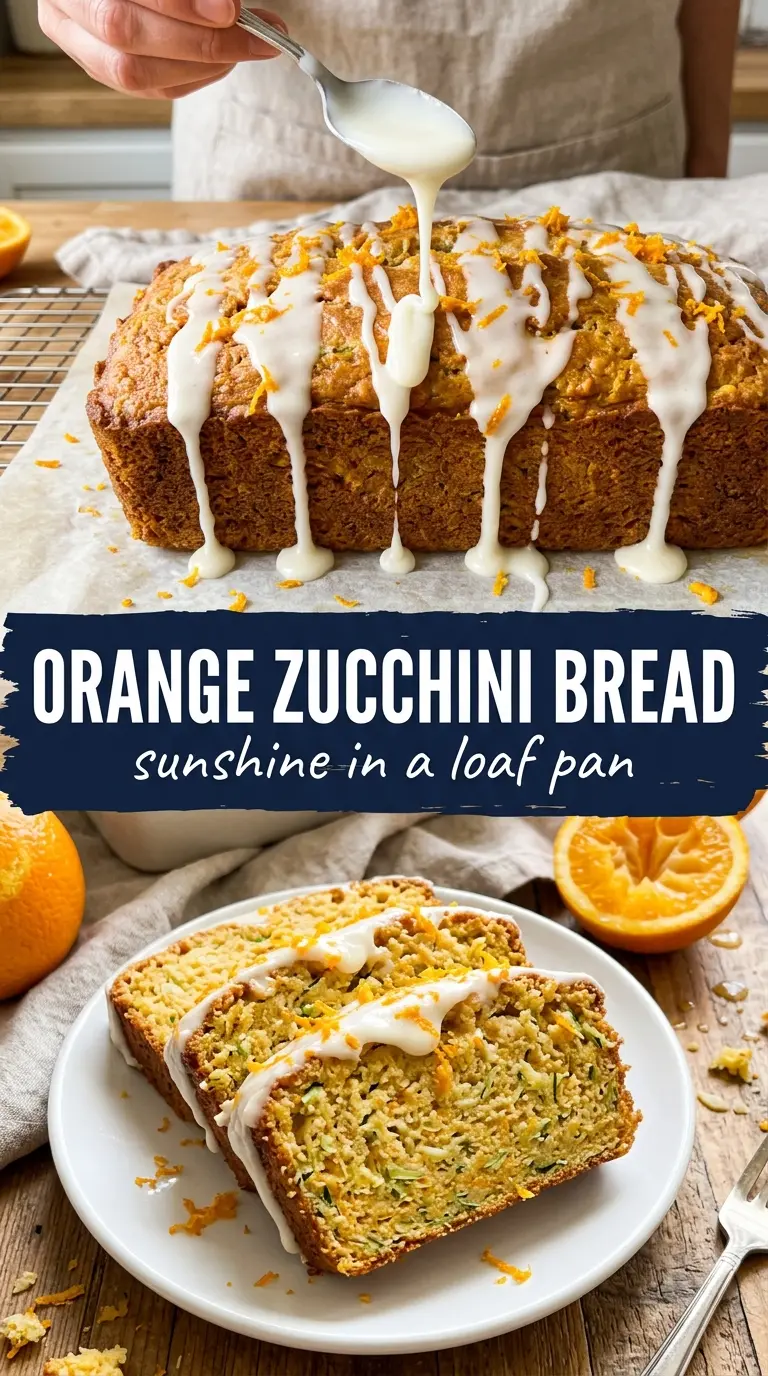
Orange zucchini bread bakes up with a tender, close crumb and a bright citrus finish that keeps it from tasting heavy. The zucchini disappears into the batter, leaving behind moisture and softness without turning the loaf dense, while the orange zest and juice lift every slice with a clean, fragrant sweetness. The glaze on top seals the deal with a thin, shiny layer that drips into the cracks and adds just enough extra punch.
What makes this version work is balance. Zucchini brings moisture, but it has to be squeezed dry or the loaf turns gummy in the middle. Orange juice adds flavor, yet the real citrus impact comes from the zest, which carries the oils that survive baking. Sour cream gives the crumb a gentle richness and keeps the loaf soft for days, so you get a bread that slices cleanly and still feels fresh the next morning.
Below, I’ve included the details that matter most: how dry the zucchini should be, when to stop mixing, and why the glaze goes on while the bread is still warm. Those small choices are what turn a decent quick bread into one you’ll want to bake again.
The crumb stayed so moist without being soggy, and the orange glaze soaked in just enough to make every slice taste fresh and bright. I squeezed the zucchini well like you said and the loaf baked up perfectly in 55 minutes.
Save this orange zucchini bread for the days when you want a bright, tender loaf with a citrus glaze and a soft crumb that stays moist.
The Reason This Loaf Stays Moist Without Turning Heavy
Zucchini bread goes wrong when the batter carries too much water or gets mixed until the gluten tightens up. This loaf avoids both problems. Squeezing the zucchini dry keeps the crumb tender instead of damp, and folding the flour in just until the streaks disappear keeps the texture soft. The batter should look thick and spoonable, not loose or pourable.
The other trap is overbaking. Quick bread keeps cooking after it leaves the oven, so pull it when the top is golden and a toothpick comes out clean or with a few moist crumbs. If the center looks wet or the loaf sinks in the middle, it needed either more bake time or less moisture from the zucchini. A properly baked loaf slices cleanly after its short rest and holds together without crumbling.
What Each Ingredient Is Doing in This Citrus Loaf
- All-purpose flour — This gives the loaf its structure without making it stiff. Bread flour would make the crumb too chewy, and cake flour would be too delicate for the weight of the zucchini.
- Baking soda and baking powder — The baking soda reacts with the orange juice and sour cream for lift, while the baking powder adds a little insurance so the loaf rises evenly. You need both here because the batter is rich and moist.
- Fresh orange zest — This is the strongest orange flavor in the loaf. Juice adds brightness, but zest adds the aromatic oils that still taste vivid after baking, so don’t skip it or reduce it.
- Sour cream — This keeps the crumb plush and gives the bread a subtle tang that balances the sugar. Plain Greek yogurt works in the same amount if that’s what you have, though the loaf will be a little less rich.
- Zucchini — Grate it finely and squeeze it until it feels damp, not wet. If you leave too much water in it, the loaf turns gummy and the center takes forever to set.
- Orange glaze — The powdered sugar gives you the right drizzling texture, while the juice and zest keep it from tasting flat. Add the juice slowly so the glaze stays thick enough to cling to the loaf instead of running off.
Building the Batter and Baking It to a Clean Slice
Mix the Dry Ingredients First
Whisk the flour, baking soda, baking powder, and salt together before anything else goes in. That keeps the leavening even, which matters in a quick bread because you don’t get a second chance to fix clumps later. A few seconds of whisking now saves you from uneven tunnels or a bitter bite of baking soda in the finished loaf.
Whip the Wet Ingredients Until Smooth
Beat the sugar, eggs, oil, orange juice, orange zest, sour cream, and vanilla until the mixture looks glossy and unified. It should smell strongly of orange before the flour even goes in. If the sour cream looks streaky at this point, keep mixing a little longer so the batter bakes evenly and doesn’t leave little pockets of dairy in the crumb.
Fold in the Zucchini, Then Stop Early
Stir the grated zucchini into the wet mixture, then add the dry ingredients and fold just until no dry flour remains. The batter will look thick, and that’s exactly what you want. If you keep stirring after the flour disappears, the loaf tightens up and loses the soft texture that makes this bread worth baking.
Bake for the Crumb, Not the Clock Alone
Scrape the batter into a greased 9×5 loaf pan and bake at 350°F until the top is deeply golden and a tester comes out clean, usually around 50 to 58 minutes. If the top is browning too fast, tent it loosely with foil for the last stretch. Let the loaf sit in the pan for 15 minutes before turning it out, or it can break while it’s still too soft to hold its shape.
Glaze the Warm Loaf
Whisk the powdered sugar, orange juice, and zest together until smooth, then drizzle it over the loaf while it’s still warm. The warmth helps the glaze settle into the surface instead of sitting on top like icing. If the glaze seems too thin, add a spoonful more powdered sugar; if it’s too thick to drizzle, loosen it with a few drops of juice.
How to Adapt This Loaf for Different Kitchens and Diets
Dairy-Free Version With the Same Tender Crumb
Swap the sour cream for plain dairy-free yogurt with a thick texture, not a pourable one. The loaf will still stay moist, though the flavor will be a little less rich and tangy. Use an unsweetened version so the sugar level stays balanced.
Make It More Orange Without Making It Wet
Add an extra half teaspoon of orange zest to the batter and another pinch to the glaze. That increases the citrus aroma without thinning the batter the way extra juice would. More juice sounds like more flavor, but in quick bread it usually just softens the structure too much.
Gluten-Free Adjustment That Still Slices Well
Use a 1:1 gluten-free baking flour that includes xanthan gum. The loaf will be a touch more delicate, so let it cool fully before slicing or it may crumble at the center. Don’t use almond flour alone here; it won’t give the loaf enough structure to rise and set properly.
Storage and Reheating
- Refrigerator: Store tightly wrapped for up to 5 days. The glaze will soften a little, but the crumb stays moist.
- Freezer: Freeze the unglazed loaf or individual slices for up to 3 months. Wrap well in plastic and foil so it doesn’t pick up freezer odors.
- Reheating: Thaw at room temperature, then warm slices briefly in the microwave or toaster oven. If you glaze before freezing, the topping can get sticky, so it’s cleaner to freeze the loaf plain and glaze after thawing.
Answers to the Questions Worth Asking

Orange Zucchini Bread
Ingredients
Equipment
Method
- Preheat the oven to 350°F and grease a 9x5 loaf pan.
- Whisk all-purpose flour, baking soda, baking powder, and salt together in a bowl.
- Beat granulated sugar, eggs, vegetable oil, fresh orange juice, oranges (zest), sour cream, and vanilla extract until smooth.
- Stir in zucchini (grated and squeezed dry) until evenly distributed.
- Fold the dry ingredients into the wet ingredients until just combined, leaving a few dry streaks is okay.
- Pour the batter into the greased loaf pan and bake for 50–58 minutes, until a toothpick comes out clean and the top is golden.
- Cool the loaf for 15 minutes in the pan before glazing.
- Whisk powdered sugar, fresh orange juice, and orange zest, then drizzle generously over the warm loaf so the glaze sets with a light sheen.