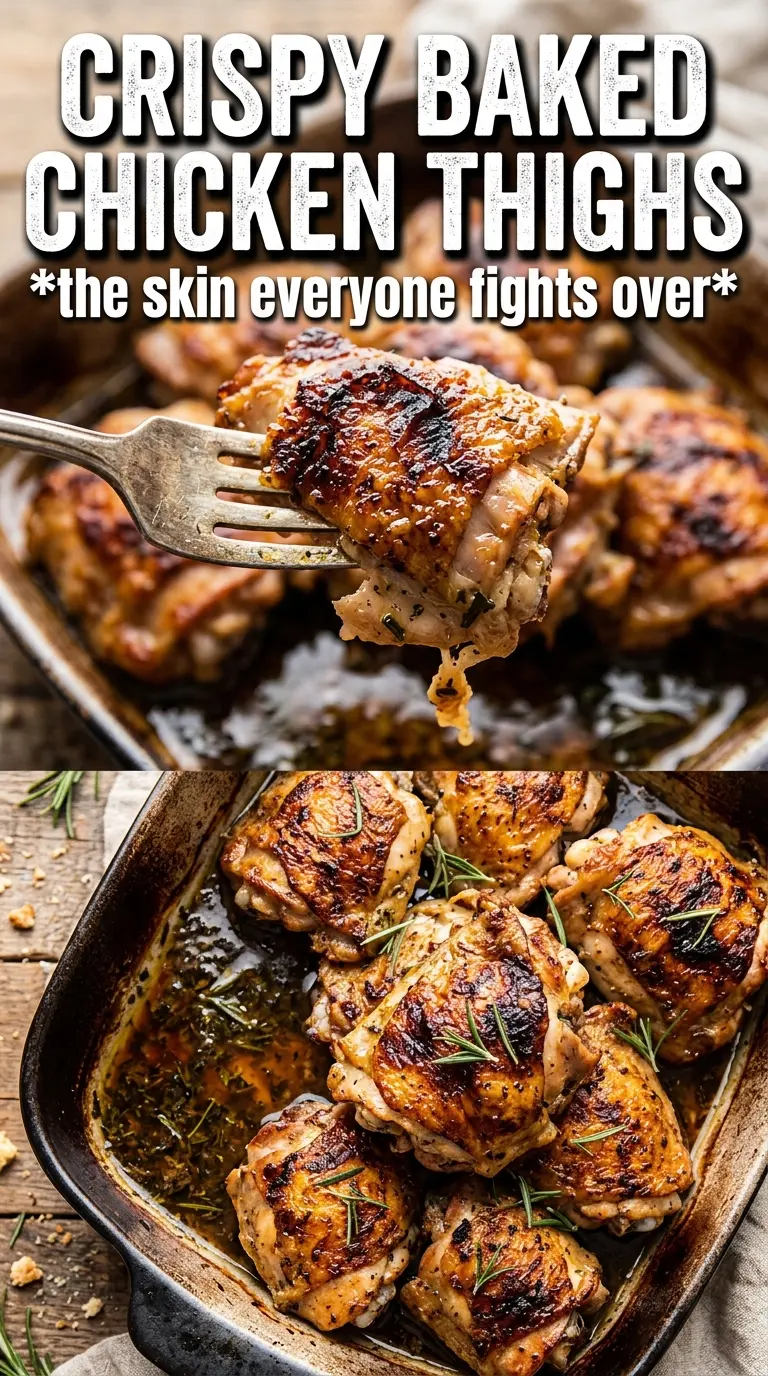
Oven baked chicken thighs earn their place in the dinner rotation because they give you crackly skin, juicy meat, and a pan full of flavor without much fuss. When they’re done right, the skin turns deeply golden and shatters at the first bite while the meat underneath stays tender and rich. That contrast is the whole reason I keep coming back to this method.
The trick is treating the skin like it matters. Drying the thighs well, baking them hot, and setting them on a rack all help the fat render instead of trapping steam underneath. The seasoning mix is straightforward on purpose: garlic, onion, paprika, and Italian seasoning bring enough depth to taste like dinner, but they still let the chicken taste like chicken.
Below, I’m walking through the one step that makes the biggest difference, what each seasoning is doing, and how to avoid the two mistakes that usually leave baked chicken thighs soft instead of crisp.
The skin came out crackly and browned all over, and the chicken stayed juicy even after 40 minutes. I used the wire rack like you said, and there wasn’t a soggy spot on any of the thighs.
Like these oven baked chicken thighs? Save them to Pinterest for a fast dinner with crispy skin and juicy meat every time.
The Skin Stays Crisp When You Stop Steaming It
Most baked chicken thighs go soft for one simple reason: they sit in their own moisture while they cook. Skin-on thighs release a lot of fat, and if that fat has nowhere to go, it pools under the chicken and turns the skin limp. A wire rack fixes that by lifting the thighs above the pan so air can move around them and the drippings can fall away.
The other piece that matters is heat. At 425°F, the skin has enough direct oven heat to brown and render before the meat dries out. If you bake them too low, the skin spends too long in the danger zone between rubbery and pale, and you lose that crackly finish before it ever has a chance to happen.
- Patting the chicken dry matters more than almost anything else here. Surface moisture is the enemy of browning.
- Bone-in, skin-on thighs give you the best balance of juiciness and crisp skin. Boneless thighs cook faster, but they won’t give the same texture.
- The rack keeps the bottoms from braising in rendered fat. If you don’t have one, the thighs can go directly on foil-lined parchment, but the underside won’t be as crisp.
- High heat is what sets the skin. Don’t lower the oven because the thighs look dark early; the skin needs that time to fully render.
What Each Seasoning Is Doing in the Pan
- Olive oil helps the seasoning cling and encourages even browning. You don’t need much, just enough to coat the skin without making it greasy.
- Garlic powder and onion powder bring savory depth without burning the way fresh garlic can at this temperature. They’re the backbone of the seasoning rub.
- Smoked paprika adds color and a subtle smoky edge. Use regular paprika if that’s what you have, but you’ll lose some of that deep roasted taste.
- Italian seasoning gives the chicken a herbal lift that keeps the flavor from tasting flat. Dried thyme, oregano, and basil all work in the same direction here.
- Salt seasons the meat all the way through, not just the skin. If your thighs are especially large, the full 1/2 teaspoon may feel light, but the rest of the seasoning rounds it out.
Getting the Thighs Browned Without Drying Them Out
Dry the skin first
Pat the thighs completely dry with paper towels before anything else touches them. If there’s moisture on the skin, the first part of the bake is spent evaporating water instead of crisping fat, and that steals the texture you want. This is the step people skip when they’re in a hurry, and it’s the step that changes the result the most.
Season all the way around
Brush the chicken with olive oil, then rub the seasoning over every side, including under the skin if you can lift it gently. The oil helps the spices stay put and encourages the surface to brown evenly. If the rub looks clumpy in one spot and bare in another, the chicken will cook unevenly, too.
Bake until the skin looks lacquered
Set the thighs skin-side up on the rack and bake them until the skin is deep golden and the juices run clear, about 35 to 40 minutes. The best cue is visual: the skin should look taut, crisp, and a little blistered at the edges. If you use a thermometer, aim for 165°F in the thickest part without touching the bone, then let them rest for 5 minutes so the juices settle back into the meat.
Make It Smokier
Swap half the Italian seasoning for extra smoked paprika and a pinch of thyme. The chicken will taste deeper and more campfire-like, but the herb notes will be a little less bright.
Make It Gluten-Free and Dairy-Free
The recipe is already naturally gluten-free and dairy-free as written, so there’s nothing to change. Just check your seasoning blends if you use a store-bought Italian mix, since some add anti-caking agents or hidden fillers.
Use Boneless Thighs Instead
Boneless thighs will cook faster, usually in about 20 to 25 minutes. They stay juicy, but you’ll lose some of the crispy-skinned drama and the baking time becomes less forgiving, so start checking early.
Storage and Reheating
- Refrigerator: Store leftovers in an airtight container for up to 4 days. The skin softens in the fridge, but the meat stays juicy.
- Freezer: Freeze cooked thighs for up to 2 months. Wrap them tightly and thaw in the fridge overnight so the texture doesn’t turn stringy.
- Reheating: Reheat in a 375°F oven on a rack or sheet pan until hot, about 12 to 15 minutes. The mistake most people make is using the microwave, which makes the skin rubbery and the chicken unevenly hot.
The Questions That Come Up Once People Try This Once

Oven Baked Chicken Thighs
Ingredients
Equipment
Method
- Preheat the oven to 425°F, then pat the chicken thighs completely dry with paper towels (this is key for crispy skin).
- Brush both sides of the chicken with olive oil so the seasoning and skin crisp properly.
- Mix the garlic powder, onion powder, smoked paprika, Italian seasoning, salt, and black pepper, then rub all over the chicken including under the skin.
- Place the chicken skin-side up on a wire rack set inside a rimmed baking sheet so hot air can circulate for crisping.
- Bake for 35-40 minutes at 425°F until the skin is deeply golden and crispy and the internal temperature reaches 165°F.
- Rest the chicken for 5 minutes so juices settle, then serve with fresh parsley and lemon wedges.