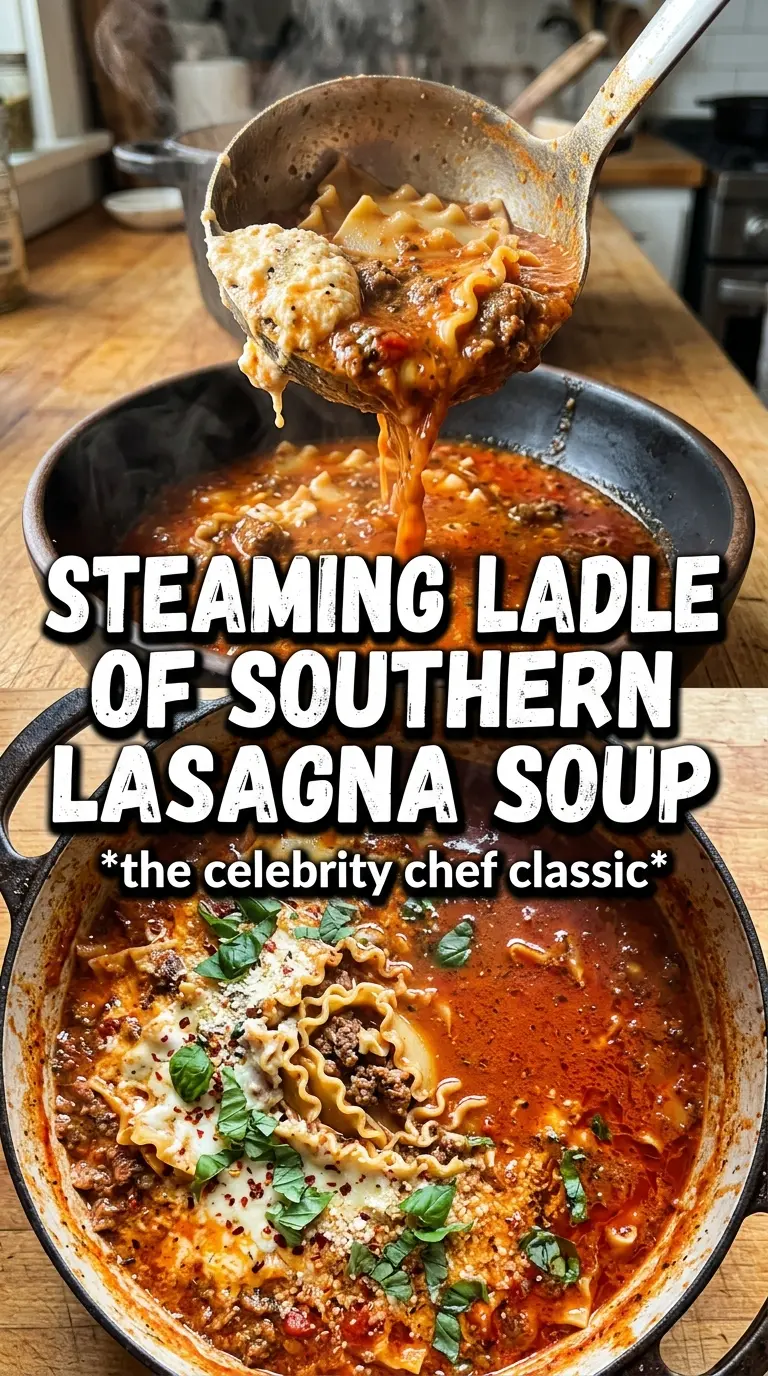
Paula Deen lasagna soup brings all the comfort of a baked pasta dinner into one pot, with a rich tomato broth, hearty sausage and beef, and those soft ribbons of broken lasagna noodles that soak up every bit of flavor. The best part is the topping: a big spoonful of ricotta, mozzarella, and parmesan melts into the hot soup and turns each bowl into something creamy, cheesy, and deeply satisfying.
What makes this version work is the balance of fat, acid, and texture. The butter and browned meat build a savory base, while tomato paste gets cooked long enough to lose that raw edge before the broth goes in. Broken lasagna noodles give you the right shape without the fuss of layering, and they cook directly in the pot so they pick up the flavor of the broth instead of tasting plain.
Below, I’ll walk through the details that keep the soup from tasting flat or turning gummy, plus a few smart variations if you want to change the meat, lighten it up, or make it ahead for an easy dinner later in the week.
The broth tasted like lasagna filling in soup form, and the noodles stayed tender without falling apart. I loved how the ricotta and mozzarella melted into the bowl instead of disappearing into the pot.
Save this Paula Deen lasagna soup for the nights when you want a buttery tomato broth, tender noodles, and a big ricotta-mozzarella topping in one bowl.
The Secret to Keeping the Broth Rich Instead of Watery
A good lasagna soup should taste bold before the cheese topping ever hits the bowl. The trick is building enough flavor in the pot that the broth holds its own against the noodles and dairy. That starts with browning the sausage and beef together, then giving the tomato paste a full minute or two in the hot fat so it darkens and smells sweet instead of tinny.
If the soup tastes thin, it usually means one of two things: the meat wasn’t browned enough, or the seasoning went in too late. The tomatoes and broth need time to simmer together so the base tastes unified, not like separate ingredients floating in liquid. Broken noodles also thicken the soup as they cook, which is a plus here, but they should still simmer at a gentle boil so they soften without turning mushy.
What Each Ingredient Is Doing in the Pot
- Italian sausage — This brings the seasoning and enough fat to carry the broth. Mild or hot both work; hot sausage gives the finished bowl more backbone.
- Ground beef — Beef adds that classic lasagna flavor and makes the soup feel hearty. Use 85/15 if you can, since it browns well without turning greasy.
- Butter — It’s part of the Paula Deen-style richness here, and it helps soften the onion while carrying the tomato paste. If you cut it back, the soup will still work, but it won’t taste as plush.
- Tomato paste — This is the deep, concentrated flavor in the broth. Let it cook with the onion and garlic before the liquids go in or it can taste sharp.
- Ricotta, mozzarella, and parmesan — This topping is what makes the soup feel like lasagna instead of just tomato pasta soup. Whole milk ricotta gives the best creamy texture, and pre-shredded mozzarella won’t melt quite as smoothly as freshly shredded.
- Broken lasagna noodles — These keep the dish familiar without requiring assembly. Break them into uneven pieces so the bowl looks rustic and the texture stays interesting.
How to Build the Soup So the Noodles Stay Tender
Brown the Meat Until the Pan Tells You It’s Ready
Cook the sausage and beef in the butter until the meat has real color on it, not just a gray, crumbly look. That browned fond on the bottom of the pot is part of the flavor, so don’t rush past it. If the pot looks dry before the meat is fully browned, the butter is doing its job; if it looks flooded with grease, spoon off the excess before moving on.
Cook the Tomato Paste Before the Broth Goes In
Once the onion softens, stir in the garlic and tomato paste and let them cook for a couple of minutes. The paste should darken a shade and smell sweeter. If you add the broth too soon, the tomato paste stays blunt and the soup tastes flatter than it should.
Simmer the Noodles in the Soup, Not Separately
Add the broken lasagna noodles straight to the pot and let them cook in the broth until just tender. Stir a few times so they don’t clump together or stick to the bottom. If you walk away and let the soup boil hard, the noodles will break down and the broth will turn pasty instead of silky.
Finish with a Bowl, Not the Whole Pot, of Cheese
Mix the ricotta, mozzarella, parmesan, and basil separately, then spoon it over each serving. That keeps the topping thick and creamy, and it gives you those pockets of melted cheese instead of a stringy layer disappearing into the soup. If you stir all the cheese into the pot, the texture gets muddy and the broth loses its contrast.
Ways to Adjust It Without Losing the Lasagna Feel
Make it lighter with turkey and less butter
Swap the sausage and beef for ground turkey, then use just 1 to 2 tablespoons of butter. You’ll lose some richness, so lean on the tomato paste and parmesan to keep the soup tasting full and savory.
Make it gluten-free with sturdy GF pasta
Use a gluten-free lasagna noodle or a sturdy short pasta that can hold up in broth. Gluten-free pasta can soften fast, so check it a few minutes early and serve it as soon as it turns tender.
Make it dairy-free with a thick topping alternative
Skip the ricotta and cheese topping and finish the soup with a spoonful of dairy-free cashew cream or a sprinkle of vegan mozzarella. The soup itself stays rich from the meat and tomatoes, but you’ll lose the classic creamy lasagna finish.
Storage and Reheating
- Refrigerator: Store for up to 4 days. The noodles will keep absorbing broth, so expect the soup to thicken.
- Freezer: Freeze the broth and meat base without the noodles or cheese topping for best results. Pasta turns soft after freezing, and the dairy topping doesn’t thaw well.
- Reheating: Warm gently on the stove over medium-low heat and add a splash of broth if needed. Don’t boil it hard or the noodles can go from tender to bloated and the cheese topping will lose its texture.
Answers to the Questions Worth Asking

Paula Deen Lasagna Soup
Ingredients
Equipment
Method
- In a large pot, brown the Italian sausage and ground beef together in the unsalted butter over medium-high heat. Cook until no pink remains and the surface looks browned, then drain excess fat.
- Sauté the onion in the meats for 4 minutes, stirring until softened and lightly translucent. Add the garlic and tomato paste and cook 2 minutes, until fragrant and darker in color.
- Add the crushed tomatoes, diced tomatoes, chicken broth, Italian seasoning, and dried basil to the pot, then bring to a boil. Look for active bubbling across the surface before continuing.
- Add the broken lasagna noodles and simmer for 10-12 minutes, stirring occasionally. Cook until tender with no hard center visible in a noodle piece.
- Season the soup generously with salt and pepper. Taste and adjust so the broth is clearly seasoned, not bland.
- In a bowl, mix the whole milk ricotta, shredded mozzarella, parmesan, and fresh basil into a thick, scoopable cheese mixture. Keep mixing until evenly combined with flecks of basil.
- Ladle the soup into bowls and top each serving with a very large, heaping spoonful of the cheese mixture. Serve immediately so the cheese starts melting into the hot broth.