Bright peas and crisp pancetta are a combination that earns its place on the table fast. The peas stay sweet and tender, the pancetta brings salt and crunch, and the lemon zest at the end keeps the whole dish from feeling heavy. It tastes like much more effort than it takes, which is exactly why it ends up beside roast chicken, fish, or a simple bowl of pasta again and again.
The trick is to build the flavor in layers. Render the pancetta first so it leaves enough fat in the pan to cook the shallot, then add the garlic for just a short burst before it can burn. Frozen peas work beautifully here because they hold their color and texture, but they need only a few minutes with the broth. Overcooking turns them dull and mealy, so the goal is hot, bright, and just barely cooked through.
Below, you’ll find the small details that keep the peas vivid and the pancetta crisp, plus a few easy swaps if you want to make it fit what’s already in your kitchen.
The peas stayed bright green and the pancetta stayed crisp even after I tossed everything with the butter. I served it with roast chicken and my husband went back for seconds before the main dish was gone.
Save these peas with pancetta for a fast Italian side with crisp pancetta, sweet peas, and a bright lemon-mint finish.
The Reason the Pancetta Stays Crisp Instead of Going Soft
Peas with pancetta sounds simple, but the texture balance depends on not rushing the pan. Pancetta needs enough time in the olive oil to render some fat and brown properly before anything else goes in. If you add the shallot too early, the pancetta steams instead of crisping, and you lose the salty crunch that makes the dish worth making.
The other place people go wrong is with the peas. Frozen peas are already blanched, so they only need enough heat to thaw, warm through, and soak up the pan juices. Letting them simmer too long with the broth turns them drab and soft. Stop cooking when they’re bright green and glossy, then finish with butter and lemon zest off the hottest part of the heat so the flavor stays fresh.
What Each Ingredient Is Doing in the Pan
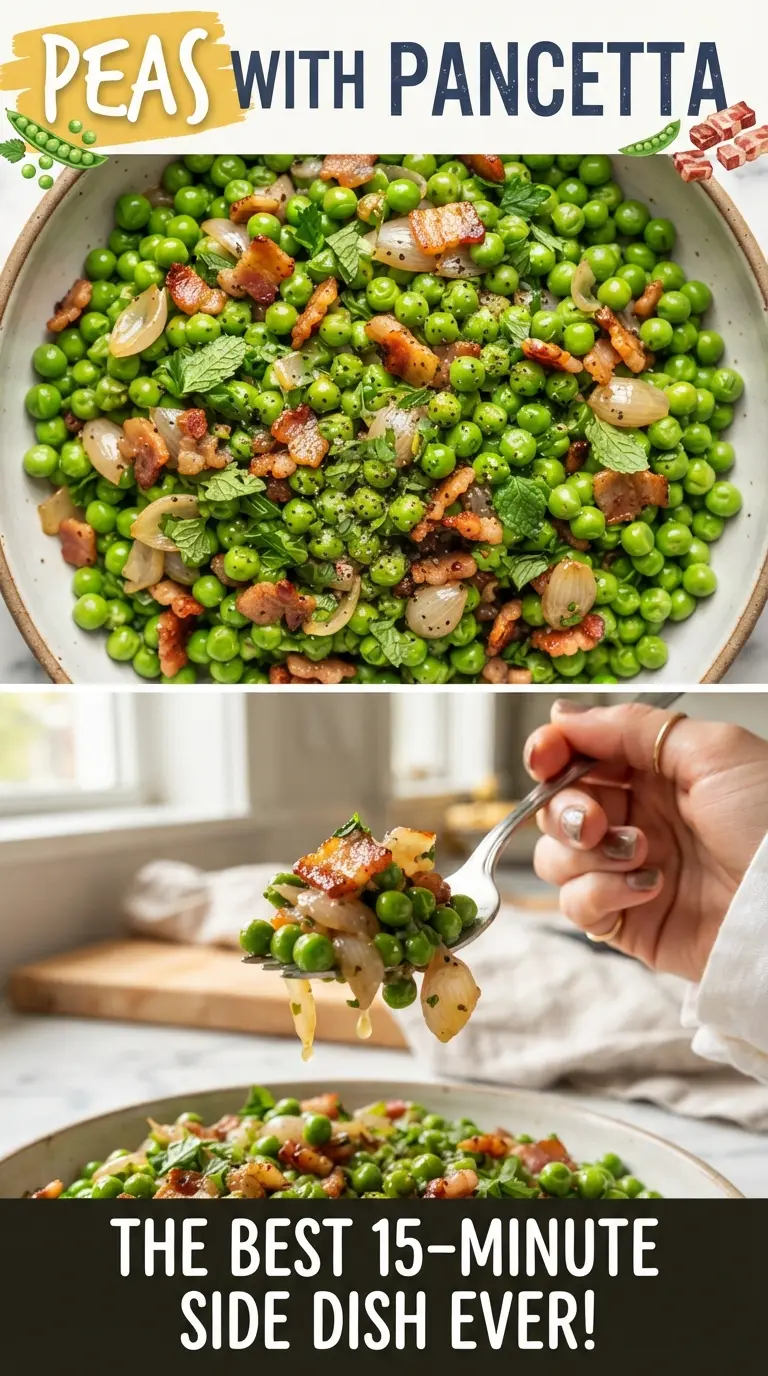
- Pancetta — This is the backbone of the dish. It brings salt, fat, and a cured pork flavor that bacon can mimic in a pinch, though bacon is smokier and a little louder. Dice it small so it crisps evenly and don’t drain off all the fat unless the pan looks greasy.
- Shallot — Shallot gives a gentler allium sweetness than onion and melts into the peas instead of standing apart from them. If you swap in onion, mince it fine and cook a minute longer so it softens fully before the garlic goes in.
- Frozen sweet peas — Frozen peas are the right choice here. Fresh peas are lovely when you have them, but frozen peas are picked at peak sweetness and keep their color better than fresh peas that have been sitting around. Add them straight from the freezer.
- Chicken broth — The broth loosens the pan drippings and creates just enough steam to warm the peas without drowning them. Water works in a pinch, but the dish tastes flatter. Use low-sodium broth if your pancetta is especially salty.
- Butter and lemon zest — Butter rounds out the saltiness, while lemon zest keeps the finish clean and bright. Don’t skip the zest; it’s the difference between a good side and one that tastes finished.
- Mint or parsley — Mint makes the dish taste especially fresh and springlike, while parsley keeps it more neutral. Add the herb at the end so it stays fragrant instead of fading into the heat.
How to Build the Finish So the Peas Stay Bright
Rendering the Pancetta First
Set the pancetta and olive oil in a large skillet over medium heat and let the fat slowly come out before you touch it. You want the cubes deep golden and crisp at the edges, not pale and rubbery. If the heat is too high, the outside will brown before the fat has a chance to render, and the pan won’t have the flavor base you need.
Softening the Shallot and Garlic
Remove half the pancetta for topping, then cook the shallot in the rendered fat until it turns translucent and soft. Stir in the garlic for about 30 seconds, just until it smells fragrant. Garlic goes bitter fast, so if the pan is very hot, pull it off the burner for a moment before adding it.
Warming the Peas Without Overcooking Them
Add the peas and broth and cook just until the peas are hot and bright green. The broth should mostly reduce and leave a light sheen, not a puddle. If you keep cooking after that point, the peas lose their snap and the color dulls, which is the fastest way to make this dish taste tired.
Finishing with Butter, Zest, and Herbs
Stir in the butter and lemon zest off the strongest heat so the butter melts into a glossy coating instead of separating. Taste for salt only after the pancetta has been added back, because it seasons the whole pan more than you think. Finish with mint or parsley right before serving so the herbs stay fresh and the pancetta stays crisp on top.
How to Adapt This for a Bigger Table or a Different Pantry
Make It with Bacon Instead of Pancetta
Bacon works when pancetta isn’t available, but the flavor will be smokier and a little more familiar. Use the same amount, and taste before adding extra salt because bacon can be saltier than pancetta. If the bacon renders a lot of fat, spoon off a little so the peas don’t turn greasy.
Dairy-Free Version
Skip the butter and finish with another small drizzle of olive oil instead. You’ll lose a little richness, but the pancetta fat still carries the dish well, and the lemon zest keeps it lively. This version tastes lighter and works well alongside richer mains.
Vegetarian Peas with Herbs
Leave out the pancetta and start with olive oil, then add a pinch of red pepper flakes and a little extra lemon zest for interest. The dish won’t have the same savory depth, so a spoonful of grated Parmesan at the end helps if vegetarian dairy is on the table. It becomes more of a bright side than a salty one.
Storage and Reheating
- Refrigerator: Store leftovers in an airtight container for up to 3 days. The peas will soften a little, but the flavor stays good.
- Freezer: I don’t recommend freezing this dish. The peas lose their pleasant bite and turn a little mushy after thawing.
- Reheating: Warm gently in a skillet over low heat with a splash of broth or water. High heat makes the peas wrinkly and can harden the pancetta instead of reviving it.
Questions I Get Asked About This Recipe
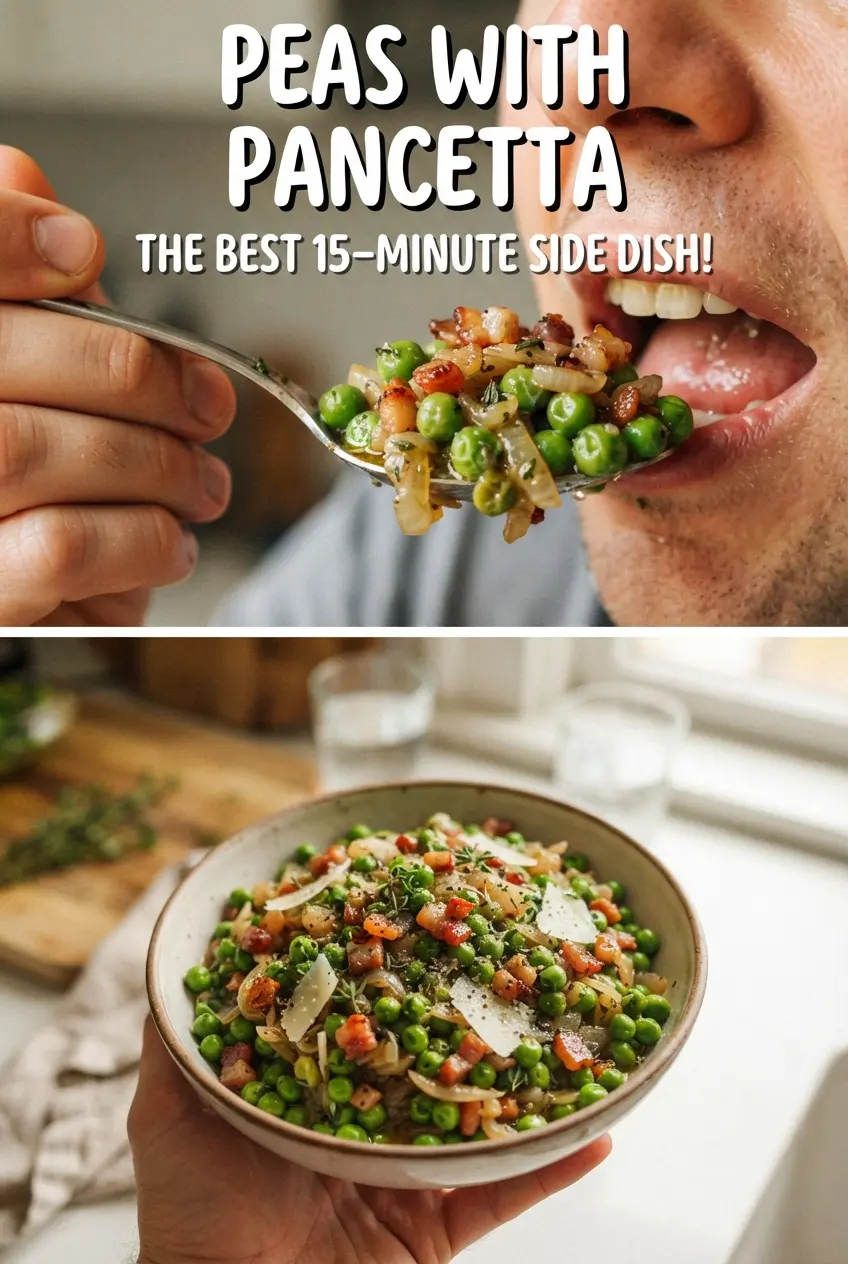
Peas with Pancetta
Ingredients
Equipment
Method
- Cook the pancetta in olive oil over medium heat for 6-8 minutes, stirring until crisp and golden. Remove half of the pancetta to a small bowl for topping.
- Add the shallot to the skillet and cook for 2 minutes until softened. Stir in the garlic and cook for 30 seconds until fragrant.
- Add the frozen sweet peas and chicken broth, then cook for 4-5 minutes until the peas are bright green and hot. Stir occasionally so the peas heat evenly.
- Stir in the butter and lemon zest, then season with salt and pepper to taste. Toss until the butter melts and lightly coats the peas.
- Top the peas with the reserved pancetta and the chopped fresh mint (or parsley), then serve immediately. Add any extra lemon zest if desired.