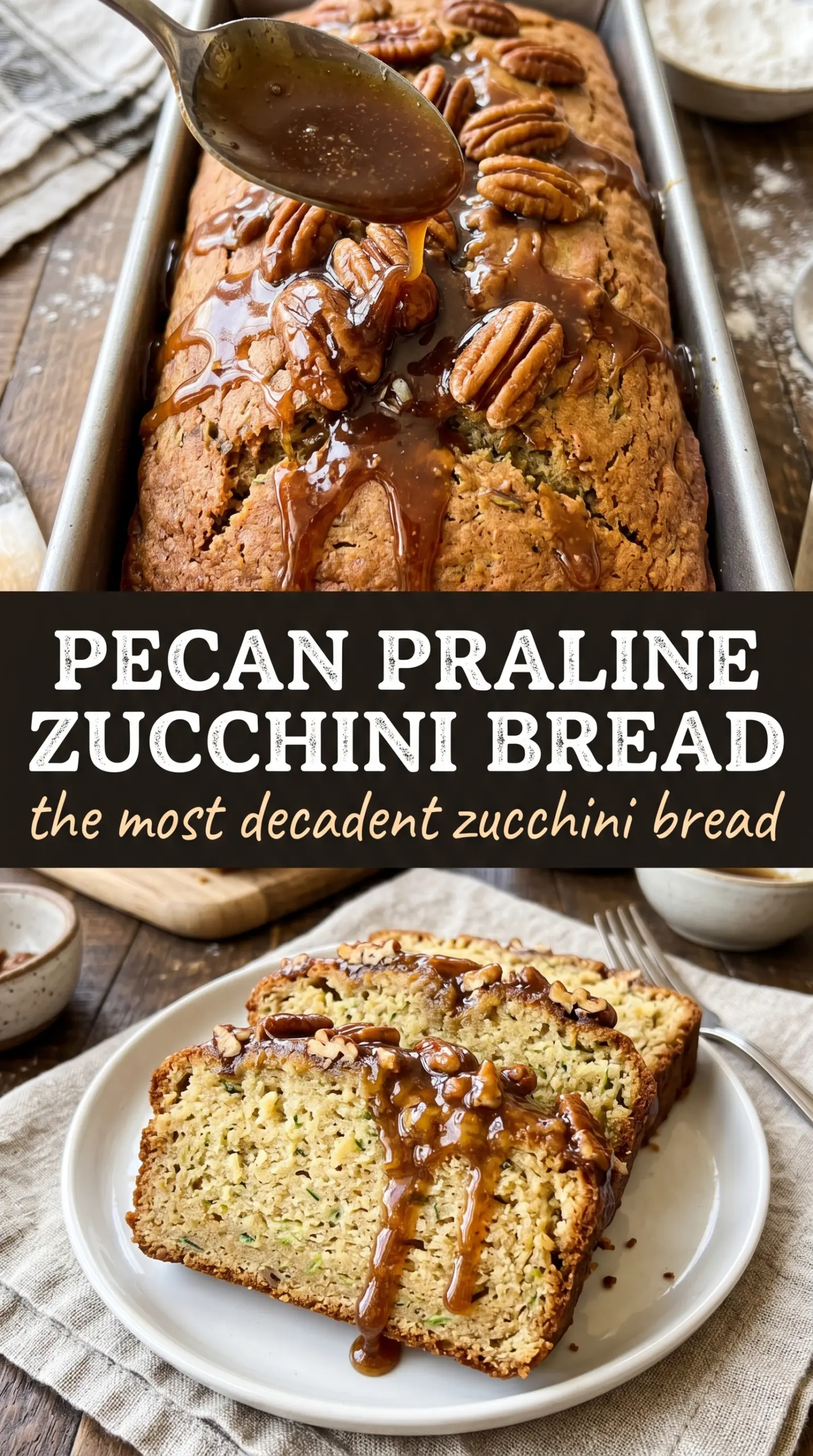
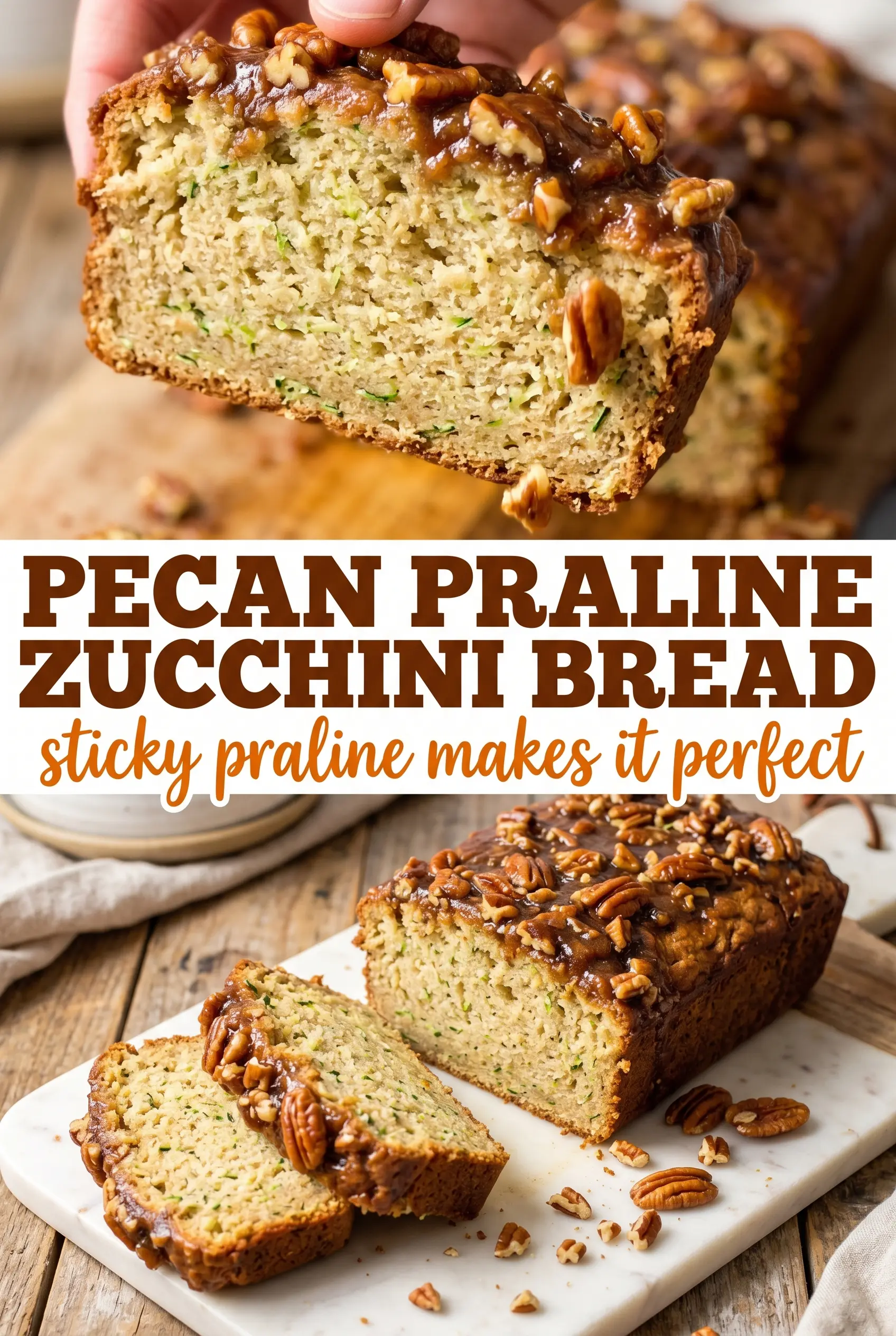
Pecan praline zucchini bread bakes up tender and rich, with a soft crumb under a sticky, glassy crown of caramelized pecans. The zucchini keeps the loaf moist without turning it heavy, and the praline topping gives every slice that crackly, candy-like finish that makes people reach for a second piece before the first one is gone.
What makes this version work is timing. The loaf gets most of the way baked before the praline goes on, so the topping has time to bubble and set without sinking into the batter. The zucchini needs to be squeezed dry, too, or the crumb turns damp instead of plush. Brown sugar in both the bread and the topping adds depth, while the buttermilk keeps the texture soft and the cinnamon gives the whole loaf a warm Southern bakery feel.
Below you’ll find the exact moment to add the praline, how to keep the bread from turning gummy, and a few useful swaps if you need to work with what’s already in your kitchen.
The topping set up into that crunchy praline layer just like you said, and the loaf stayed moist for days. I used a serrated knife to cut it once it cooled, and the slices came out clean without crushing the crown.
Save this pecan praline zucchini bread for the mornings when you want a tender loaf with a crackly caramel pecan top.
The Praline Topping Belongs on a Nearly-Baked Loaf, Not a Raw One
The biggest mistake with praline-topped quick breads is adding the topping too early. If you pour that sugar, butter, and cream mixture over raw batter, it sinks, loosens the top layer, and can bake into a sticky seam instead of a true candy shell. The loaf needs to be mostly set first so the praline can sit on top and finish into a glossy, crunchy layer.
You also want the topping hot and syrupy, not cooked down into a thick caramel. It only needs a few minutes on the stove before the pecans go in. That short cook keeps it fluid enough to spread, then the oven finishes the job and helps it set into that glassy crust.
- Zucchini — Grate it fine and squeeze it dry in a clean towel. Too much moisture is the main reason zucchini bread turns dense or gummy.
- Buttermilk — This keeps the crumb tender and gives the brown sugar a little tang to balance the praline. Plain milk will work in a pinch, but the loaf loses some depth.
- Brown sugar — It does double duty here: moisture in the bread and caramel flavor in the topping. Light or dark both work, though dark brown sugar gives a deeper molasses note.
- Pecans — Use fresh ones if you can. Stale pecans taste flat fast, and because the topping is so simple, their flavor stands out.
What Each Ingredient Is Actually Doing in This Zucchini Bread
- Zucchini (the moisture keeper) — Grate finely and squeeze out excess moisture. The remaining moisture adds tenderness without making it soggy.
- Flour (the structure base) — Don’t overmix or the bread becomes tough. Mix just until dry ingredients are incorporated.
- Sugar (the sweetness and browning) — This tenderizes the bread and helps create browning. Adjust based on other ingredients.
- Oil or butter (the richness) — This creates tender crumb. Oil makes moister breads; butter makes them richer.
- Eggs (the binder) — These hold everything together and add structure. Use room temperature eggs for better incorporation.
- Leavening (baking powder or soda) — This creates rise and light crumb. Too much makes it taste bitter.
- Spices (cinnamon, nutmeg, or allspice) — These warm up the zucchini flavor. Layer spices so no single one overpowers.
- Optional mix-ins (nuts, chocolate, or dried fruit) — These add texture and flavor. Don’t overfill or the batter becomes dense.
Building the Loaf So the Crumb Stays Tender and the Top Stays Crisp
Mix the wet base until smooth
Beat the brown sugar, eggs, oil, buttermilk, and vanilla until the mixture looks silky and the sugar starts to dissolve. Stir in the squeezed zucchini after that so it gets evenly distributed without turning watery. If the batter looks separated at this stage, keep mixing briefly; it should come together before the dry ingredients go in.
Fold the dry ingredients just until the flour disappears
Add the flour, baking soda, baking powder, salt, cinnamon, and chopped pecans, then fold gently with a spatula. Stop as soon as you no longer see dry streaks. Overmixing builds structure in a quick bread, and that gives you a tougher, tunnel-filled loaf instead of a tender one.
Bake the loaf before the praline goes on
Pour the batter into the pan and bake it until the center is nearly set, about 50 to 55 minutes. The top should look domed and dry, but a toothpick in the middle can still come out with a few moist crumbs. If the loaf is fully baked before the topping goes on, the praline has less time to fuse with the surface, so pull it when it still has a little give.
Finish with bubbling praline and a short rest
While the loaf bakes, melt the butter, brown sugar, and cream together until the mixture turns syrupy, then stir in the pecan halves. Pour it over the partially baked bread and return the pan to the oven just long enough for the topping to bubble and set. Let the loaf cool for 15 minutes before lifting it from the pan; that short rest helps the praline firm up so it doesn’t slide off in sheets.
What to Change When You Need a Different Version
Dairy-Free Version
Swap the buttermilk for an unsweetened dairy-free milk mixed with 1 teaspoon of lemon juice or vinegar, and use a plant-based butter in the praline. The bread will still stay tender, though the topping won’t have quite the same rich caramel finish as it does with real butter and cream.
Make It Nut-Free
Skip the pecans in the batter and topping and replace the praline layer with a simple cinnamon-brown sugar glaze after baking. You lose the crunchy candy shell, but you keep the soft zucchini loaf and the warm brown sugar flavor.
Extra Southern Bakery Feel
Add a pinch of nutmeg or swap half the vanilla for maple extract. That pushes the loaf a little closer to a praline cake flavor, but keep the spice light so the pecans and brown sugar still lead.
Storage and Reheating
- Refrigerator: Store covered for up to 4 days. The praline top softens a little, but the loaf stays moist.
- Freezer: Freeze slices without the best-looking topping if possible, wrapped tightly and stored up to 2 months. Thaw at room temperature; the praline layer won’t stay fully crunchy after freezing.
- Reheating: Warm individual slices in a 300°F oven for 8 to 10 minutes. The microwave softens the topping too much and makes the bread taste steamy instead of fresh.
Answers to the Questions Worth Asking
Pecan Praline Zucchini Bread
Ingredients
Equipment
Method
- Preheat oven to 350°F and grease a 9x5 loaf pan. Set the pan aside for quick filling.
- Whisk all-purpose flour, baking soda, baking powder, salt, and cinnamon together. Whisk until the dry mix looks uniform in color.
- Beat brown sugar, eggs, vegetable oil, buttermilk, and vanilla extract until smooth. Stir in zucchini until evenly distributed.
- Fold the dry ingredients and chopped pecans into the wet mixture until just combined. Stop mixing as soon as no dry streaks remain for a tender loaf.
- Pour the batter into the prepared loaf pan. Tap the pan lightly to level the top.
- Bake at 350°F for 50–55 minutes until nearly done. Look for edges that are set while the center is still slightly soft.
- Melt butter, brown sugar, and heavy cream in a saucepan over medium heat for 2–3 minutes until syrupy, stirring constantly. The mixture should look glossy and slightly thickened.
- Stir in pecan halves to coat them in the syrup. The pecans should glisten before you spread the topping.
- Pour the praline topping over the partially baked loaf and return to the oven for 10–12 minutes at 350°F. Watch until the topping is set and bubbling.
- Cool the loaf for 15 minutes before carefully removing. The crown should harden and feel firm to the touch.