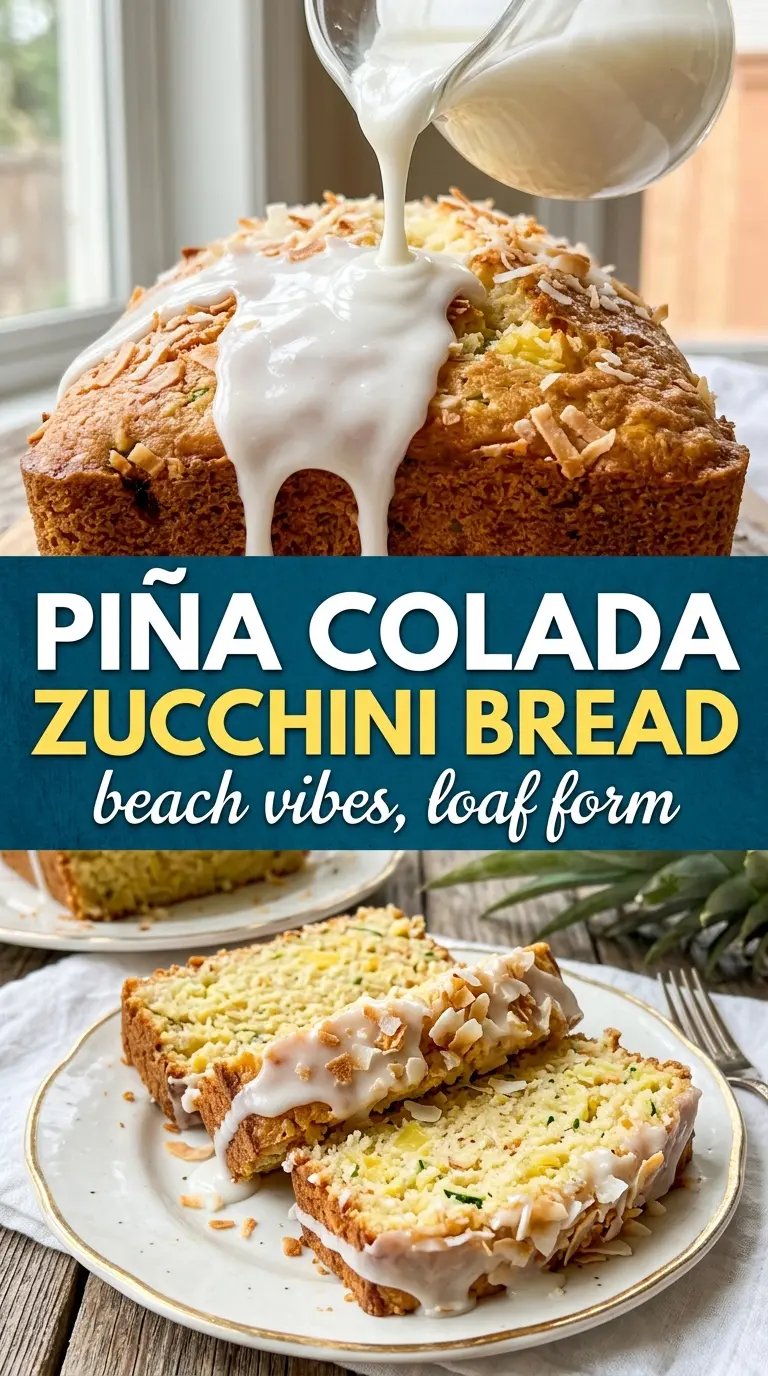
Piña colada zucchini bread bakes into a tender loaf with a golden crust, a moist crumb, and just enough tropical sweetness to make plain zucchini bread feel a little dull by comparison. The pineapple keeps every slice soft without turning it heavy, while coconut shows up in three places — oil, cream, and shredded coconut — so the flavor reads clearly even after baking.
The trick is managing the moisture. Zucchini needs to be squeezed dry, and the pineapple needs to be drained well, or the loaf gets gummy in the center and sinks after it comes out of the oven. Coconut cream gives the batter a richer body than regular milk would, and a small amount of coconut extract pushes the flavor where you want it without making the loaf taste artificial.
Below, you’ll find the part that matters most: how to keep this bread from turning wet, how to know when it’s baked all the way through, and how to finish it with a glaze that sets up instead of sliding off the top.
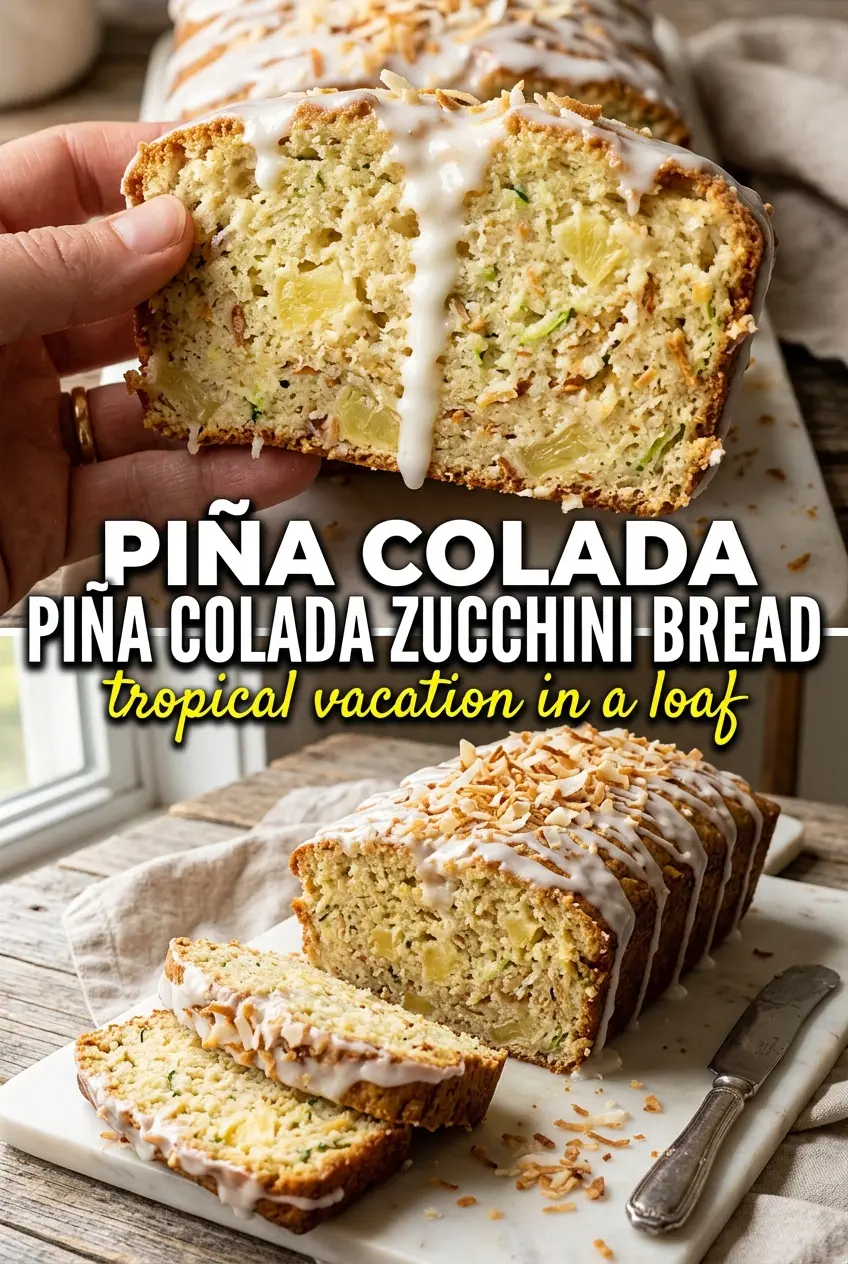
The loaf stayed incredibly moist without getting dense, and the coconut glaze soaked into the top just enough to make each slice taste like pineapple-coconut cake for breakfast.
Like this piña colada zucchini bread? Save it to Pinterest for the breakfast loaf with coconut glaze, juicy pineapple, and that tropical crumb.
The Moisture Trap That Ruins Tropical Quick Breads
Most zucchini breads fail for the same reason: there’s too much liquid in the batter before it even hits the oven. Add crushed pineapple and coconut cream to the mix, and you’ve got two ingredients that can turn a good loaf dense or gummy if they aren’t handled with care. The fix isn’t complicated, but it matters. Dry the zucchini thoroughly, drain the pineapple until it stops dripping, and mix just until the flour disappears.
That last part is where people get into trouble. Overmixing after the dry ingredients go in builds structure you don’t want in a quick bread, and it can make the crumb tight instead of soft and sliceable. You’re looking for a thick batter with visible flecks of coconut and pineapple, not a perfectly smooth one.
- Drain the pineapple well — Press it in a fine mesh strainer or squeeze it lightly in a clean towel. Too much juice adds weight without flavor.
- Squeeze the zucchini dry — Grated zucchini can hold a lot of water. After squeezing, it should feel damp, not wet.
- Fold, don’t beat — Once the flour goes in, gentle mixing keeps the loaf tender.
- Use the toothpick test carefully — This bread is done when the center tests clean and the top springs back lightly.
What Each Ingredient Is Actually Doing in This Loaf
All-purpose flour gives the loaf enough structure to hold the pineapple and zucchini without collapsing. Bread flour is too strong here and can make the crumb tougher than you want.
Coconut oil brings flavor and a soft texture once the loaf cools. If you swap in melted butter, the bread will still work, but the coconut flavor will be quieter and the crumb a little less plush.
Coconut cream matters more than regular coconut milk because it’s thicker and richer. If you only have coconut milk, use the full-fat canned kind and shake it well, but expect a lighter coconut note.
Crushed pineapple is there for moisture and sweetness, but only if it’s well drained. Fresh pineapple can work if it’s chopped small and patted dry, though canned pineapple gives a more consistent texture in this loaf.
Zucchini disappears into the crumb while keeping the bread tender. There’s no need to peel it; the skin melts right in and adds little green flecks that look right at home in a quick bread like this.
Sweetened shredded coconut gives tiny chewy bits throughout the loaf. Unsweetened coconut works too, but the bread tastes a little less like the piña colada idea it’s going for.
Building the Batter So the Center Bakes Through
Mix the Dry Ingredients First
Whisk the flour, baking soda, baking powder, and salt together before anything else goes in. That gives the leaveners a chance to distribute evenly, which matters in a loaf this moist. If you skip this, you can get salty bites or uneven pockets that rise faster than the rest of the bread.
Beat the Wet Ingredients Until Smooth
Whisk the sugar, eggs, coconut oil, coconut cream, vanilla, and coconut extract until the mixture looks glossy and unified. The sugar should start dissolving into the eggs and fat, which helps the finished loaf bake up with a finer crumb. If the coconut oil has cooled and turned cloudy, warm it just enough to stay liquid before mixing.
Fold in the Fruit and Vegetables Last
Stir in the pineapple and squeezed zucchini, then fold in the dry ingredients and shredded coconut until the flour streaks disappear. Stop as soon as the batter comes together. Overmixing at this point tightens the loaf, and with all the moisture already in the bowl, you don’t need extra agitation to finish the job.
Bake Until the Middle Sets, Not Just the Top
Scrape the batter into a greased 9×5-inch loaf pan and bake until a toothpick comes out clean from the center, usually 55 to 65 minutes. The top should be deeply golden and the loaf should feel set when you press it lightly in the middle. If the top browns too fast, tent it loosely with foil for the last 15 minutes so the center can finish without scorching.
Glaze While the Loaf Is Warm
Let the bread cool for 15 minutes, then whisk the powdered sugar, coconut cream, and coconut extract into a smooth glaze and drizzle it over the top. Warm bread helps the glaze cling and soak in just a little, which gives you a soft, glossy finish instead of a hard shell. Scatter toasted coconut over the glaze while it’s still tacky so it sticks.
How to Adapt This for Different Diets and Bakeries
Dairy-Free Without Losing the Coconut Notes
This loaf is already close to dairy-free, so the main thing is checking the glaze ingredients and using coconut cream rather than anything milk-based. That keeps the texture rich and the flavor consistent from batter to topping. You won’t lose any of the tropical character by keeping it coconut all the way through.
Make It Gluten-Free With a 1:1 Baking Blend
A good cup-for-cup gluten-free flour blend works here, especially one that already includes xanthan gum. The loaf will be a little more delicate when warm, so let it cool fully before slicing. That rest time lets the crumb set instead of crumbling apart.
Turn It Into Muffins Instead of a Loaf
Portion the batter into lined muffin cups and start checking them around 20 to 24 minutes. Muffins bake faster and give you more of the glazed top in each portion, but they won’t have the same soft, sliceable center as the loaf. That tradeoff is worth it if you want grab-and-go breakfast portions.
Storage and Reheating
- Refrigerator: Store covered for up to 5 days. The glaze may soften a little, but the crumb stays moist.
- Freezer: This bread freezes well, sliced or whole, for up to 3 months. Wrap it tightly before freezing so the coconut flavor doesn’t pick up freezer odors.
- Reheating: Warm slices in the microwave for 10 to 15 seconds or toast them lightly. Don’t blast it too long, or the glaze can melt off and the crumb can turn rubbery.
Answers to the Questions Worth Asking
Piña Colada Zucchini Bread
Ingredients
Equipment
Method
- Preheat oven to 350°F and grease a 9x5 loaf pan.
- Whisk all-purpose flour, baking soda, baking powder, and salt together.
- Beat granulated sugar, eggs, coconut oil, coconut cream, vanilla extract, and coconut extract until smooth.
- Stir in well-drained crushed pineapple and grated squeezed zucchini.
- Fold the dry ingredients into the wet ingredients just until combined, then fold in sweetened shredded coconut.
- Pour batter into the loaf pan and bake for 55–65 minutes, until a toothpick comes out clean.
- Cool the loaf for 15 minutes.
- Mix powdered sugar, coconut cream, and coconut extract into a smooth glaze and drizzle over the warm loaf.
- Scatter toasted coconut on top as a final topping.