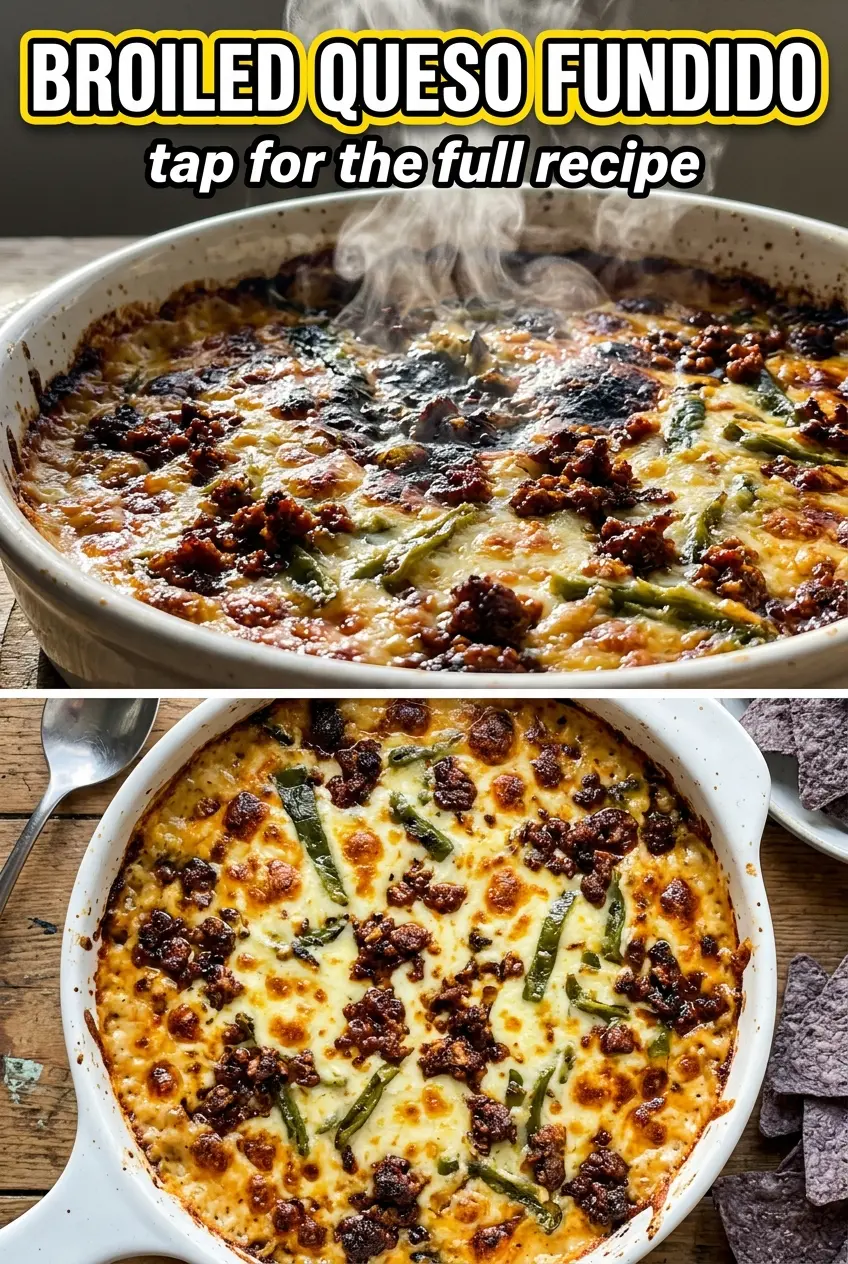
Queso fundido is at its best when the cheese stays stretchy, the chorizo brings enough salt and spice to keep each bite interesting, and the top still looks a little blistered when it hits the table. The whole point is that contrast: molten cheese underneath, browned chorizo and sharp onion on top, and tortilla chips that can actually scoop without cracking under the weight.
This version uses a blend of cheeses instead of relying on one block to do everything. Oaxaca gives you that long, dramatic pull, Chihuahua or asadero melts into a smoother base, and Cotija adds the salty finish that keeps the dip from tasting flat. A little heavy cream helps the whole skillet come together without turning greasy, and cooking the garlic and jalapeños in the chorizo drippings gives the whole thing a deeper, more rounded flavor.
Below, I’ll walk you through the one step that matters most if you want a silky skillet instead of an oily mess, plus a few swaps that still keep the cheese pull intact.
The cheese melted into a smooth, stretchy dip and never turned greasy, even after it sat on the table for a few minutes. I used chorizo with jalapeños like written, and the skillet was scraped clean before the chips were gone.
Love this chorizo queso fundido? Save it to Pinterest for the nights when you want a bubbling skillet of stretchy cheese with almost no prep.
The Difference Between a Silky Skillet and Oily Cheese
Queso fundido can go wrong in one of two ways: it separates into an oily puddle, or it turns stringy and stiff before anyone gets a good scoop. Both problems usually come from heat. Cheese that gets blasted over high heat loses its emulsion and the fat runs off, while cheese that sits too long after melting tightens up and stops stretching the way it should.
The answer is a little less heat than people expect and a little more timing. The chorizo needs to be cooked first so it can render enough fat to season the skillet, but once the cheese goes in, the burner should stay low. That gentle heat keeps the cheeses soft and unified without breaking them. Serve it the moment the top turns glossy and the edges start to bubble.
- Oaxaca or mozzarella — This is the stretch factor. Oaxaca is the classic choice if you can find it, but low-moisture mozzarella will still give you the pull you want. Skip pre-shredded bags if possible; the anti-caking coating can make the melt less smooth.
- Chihuahua or asadero — These melt into a creamier base than mozzarella alone. They soften the texture so the dip feels lush instead of rubbery. If you can’t find either, Monterey Jack is the closest practical swap.
- Cotija — This doesn’t melt into the dip the way the others do, and that’s the point. It stays salty and crumbly, which keeps the finished skillet from tasting one-note. Save some for the top so you get little sharp bites in the melted cheese.
- Chorizo — The seasoned fat from the chorizo carries most of the flavor here. If you use a very lean version, you may want a small spoonful of oil in the pan, because the garlic and jalapeños need enough fat to bloom properly.
How to Build the Skillet Without Breaking the Cheese
Render the Chorizo First
Start with a cast iron skillet or other heavy pan over medium heat and break the chorizo into small pieces as it cooks. You want it browned and a little crisp at the edges, not steamed and pale, because those browned bits are what season the cheese. If there’s a lot of excess grease in the pan, spoon off a little, but don’t wipe it clean. That fat is carrying the flavor of the whole dish.
Wake Up the Garlic and Jalapeños
Add the garlic and jalapeños to the chorizo and cook just until fragrant, about a minute. Garlic burns fast, especially in hot pork fat, so this stage goes by quickly. The jalapeños should soften slightly and take on the savory smell of the chorizo. If the garlic turns dark, pull the pan off the heat and keep going; burnt garlic will dominate the whole skillet.
Melt Low and Slow
Scatter the cheeses evenly over the chorizo mixture and drizzle in the heavy cream. Keep the heat low and stir frequently as the cheese softens, then stops looking shredded and starts looking like a single molten mass. If the mixture looks greasy before it looks smooth, the heat is too high. Lower it immediately and keep stirring until the cheese pulls together again.
Finish Fast and Serve Right Away
Once the queso looks glossy and smooth, turn off the heat and top it with diced onion and cilantro. The raw onion gives crunch and bite, and the cilantro adds a fresh finish that cuts through the richness. Serve it straight from the skillet with warm tortilla chips. If it sits too long, it will still taste good, but the texture changes from stretchy and spoonable to firm and pull-resistant.
How to Adapt This for Different Tables
Make It Vegetarian Without Losing the Character
Swap the chorizo for sautéed mushrooms, roasted poblanos, or a plant-based chorizo that browns well. You’ll lose the pork fat that seasons the pan, so add a tablespoon of oil and let the vegetables take on a little color before the cheese goes in. The result is lighter, but it still gives you the same molten, scoopable texture.
Dairy-Free Is a Different Dish Here
This recipe depends on real melting cheese, so a true dairy-free version won’t taste or behave the same. The closest substitute is a high-quality vegan melting cheese blend, but it usually won’t stretch as well and may set up faster. If you go that route, keep the heat very low and serve immediately for the best texture.
Use What You Can Find at the Store
If Oaxaca, Chihuahua, or asadero aren’t available, use mozzarella and Monterey Jack in their place. That combination still melts smoothly, though it won’t have quite the same buttery richness or subtle tang. The Cotija on top helps bring some of that missing salt back into the final bite.
Keep It Warm for a Crowd
For a party, transfer the finished queso to a small slow cooker on warm once it’s fully melted. Stir every so often so the edges don’t dry out, and don’t leave it on high heat or the cheese can separate. A cast iron skillet works beautifully for the first serve, then the slow cooker buys you time for second helpings.
Storage and Reheating
- Refrigerator: Store leftovers in an airtight container for up to 3 days. The texture firms up a lot once chilled, and the cheese may separate a little as it sits.
- Freezer: I don’t recommend freezing queso fundido. The cheese changes texture after thawing and usually turns grainy instead of creamy.
- Reheating: Rewarm it slowly over low heat on the stove with a splash of cream or a teaspoon of water if needed. High heat is the mistake that makes the fat split out, so keep the burner low and stir often until it loosens back into a dip.
Questions I Get Asked About This Recipe
Queso Fundido
Ingredients
Equipment
Method
- Heat a cast iron skillet over medium-high heat, then cook the chorizo, breaking it apart as it cooks, until browned.
- Add the minced garlic and diced jalapeños and cook for 1 minute, stirring, until fragrant.
- Reduce heat to medium-low and add the Oaxaca, Chihuahua, and Cotija cheeses along with the heavy cream, stirring frequently.
- Continue cooking until the cheese is completely melted and smooth, about 5-7 minutes, with visible bubbling at the edges.
- Sprinkle in the diced onion and chopped cilantro, stirring just until evenly distributed.
- Serve immediately in the cast iron skillet with warm tortilla chips for dipping, keeping it gently bubbling over low heat so it stretches when scooped.