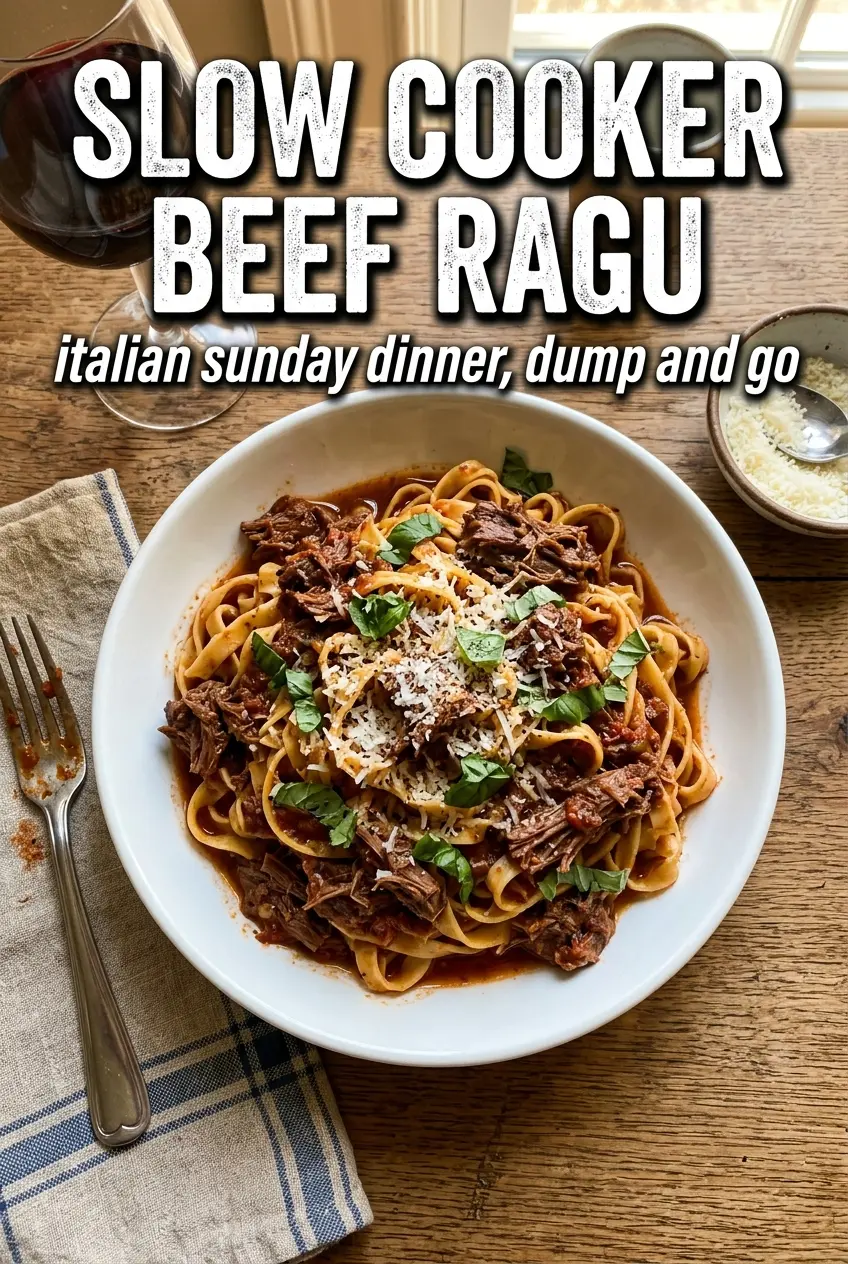
Slow cooker beef ragu turns a tough chuck roast into a sauce that tastes like it simmered all day on a back burner, because it did the hard work without asking you to stand over it. The beef cooks until it falls apart in thick, tender strands, then folds back into a tomato-rich sauce that clings to every ribbon of pasta instead of slipping off the plate. It’s the kind of meal that feels grounded and generous, with deep tomato flavor, sweet vegetables, and just enough wine to give the sauce some edge.
The trick is building the base before the slow cooker does its job. Tomatoes, wine, tomato paste, onion, celery, and carrot need to go in together so the sauce starts with real depth, not just canned tomatoes and a hunk of meat. Chuck roast is the right cut here because the connective tissue melts into the sauce over time; leaner beef turns dry and stringy before the flavors have a chance to marry.
Below, I’ll walk through the small choices that matter, including how to keep the sauce from tasting flat, why the wine doesn’t need to be expensive, and what to do if you want to make this ahead for an even better dinner the next day.
The beef shredded beautifully and the sauce thickened up into that clingy, restaurant-style ragu everyone wants. I served it over pappardelle and my husband went back for seconds before I even sat down.
Like this slow cooker beef ragu? Save it to Pinterest for the nights when you want a rich, tender pasta sauce with almost no hands-on work.
The Step That Keeps Slow Cooker Ragu From Tasting Thin
Slow cooker ragu can go flat fast if you treat the pot like a dumping ground. The flavor needs an early boost from tomato paste, wine, and aromatics before the long cook starts, because the slow cooker softens everything without creating new depth on its own. That’s why the vegetables are diced fine here; they melt into the sauce instead of staying chunky and watery.
Chuck roast brings the texture you want because it has enough fat and connective tissue to break down into tender shreds. If you use a lean cut, the meat will dry out before the sauce finishes developing. The bay leaves matter too, even though they’re easy to forget, because they add a quiet herbal note that keeps the finished sauce from tasting one-note.
- Beef chuck roast — This is the cut that gives you that shreddable, silky texture. Anything leaner won’t hold up as well over 8 hours, and the sauce needs the beef fat to taste rich.
- Crushed San Marzano tomatoes — Good canned tomatoes make a difference here. San Marzano tomatoes taste sweeter and less sharp, which helps the sauce stay balanced after the long cook.
- Dry red wine — Chianti or Cabernet Sauvignon both work because they bring structure and acidity. If you want to skip the wine, replace it with beef broth plus 1 tablespoon balsamic vinegar, but the sauce will lose some of that deep, rounded edge.
- Tomato paste — This is concentrated tomato flavor, not just a thickener. Stir it in with the vegetables so it has a chance to lose that raw canned taste.
What Each Ingredient Is Actually Doing in This Recipe
- Primary ingredient (the star) — Quality matters most. Choose the best you can find.
- Cooking medium (oil, butter, or broth) — This carries flavors and prevents dryness.
- Seasonings (salt, pepper, spices, herbs) — Layer flavors so nothing overpowers. Build depth gradually.
- Aromatics (garlic, onion, herbs) — Cook with fat to bloom flavors. Become the foundation.
- Supporting ingredients — Complement the main ingredient without overpowering it.
- Sauce or liquid (if applicable) — Brings flavors together. Balance richness with acid.
- Acid (lemon, vinegar, wine, or other) — Brightens and prevents flat-tasting results.
- Final finish (garnish, glaze, or sauce) — Prevents one-dimensional taste and adds visual appeal.
How to Build the Sauce So It Cooks Into Something Worth Serving
Season the Beef First
Salt and pepper the chuck roast well before it goes into the slow cooker. That seasoning penetrates the meat as it cooks and keeps the finished ragu from tasting seasoned only on the surface. If you underseason now, the sauce can taste dull even after hours of simmering because the meat never gets a proper base.
Mix the Sauce Before It Hits the Pot
Whisk the tomatoes, wine, tomato paste, garlic, onion, celery, carrots, herbs, and sugar together in a bowl before pouring it over the beef. This helps the tomato paste dissolve evenly and keeps the spices from clumping in one corner of the pot. The mixture should look loose and well combined, not streaky or patchy.
Cook Low and Let the Meat Collapse
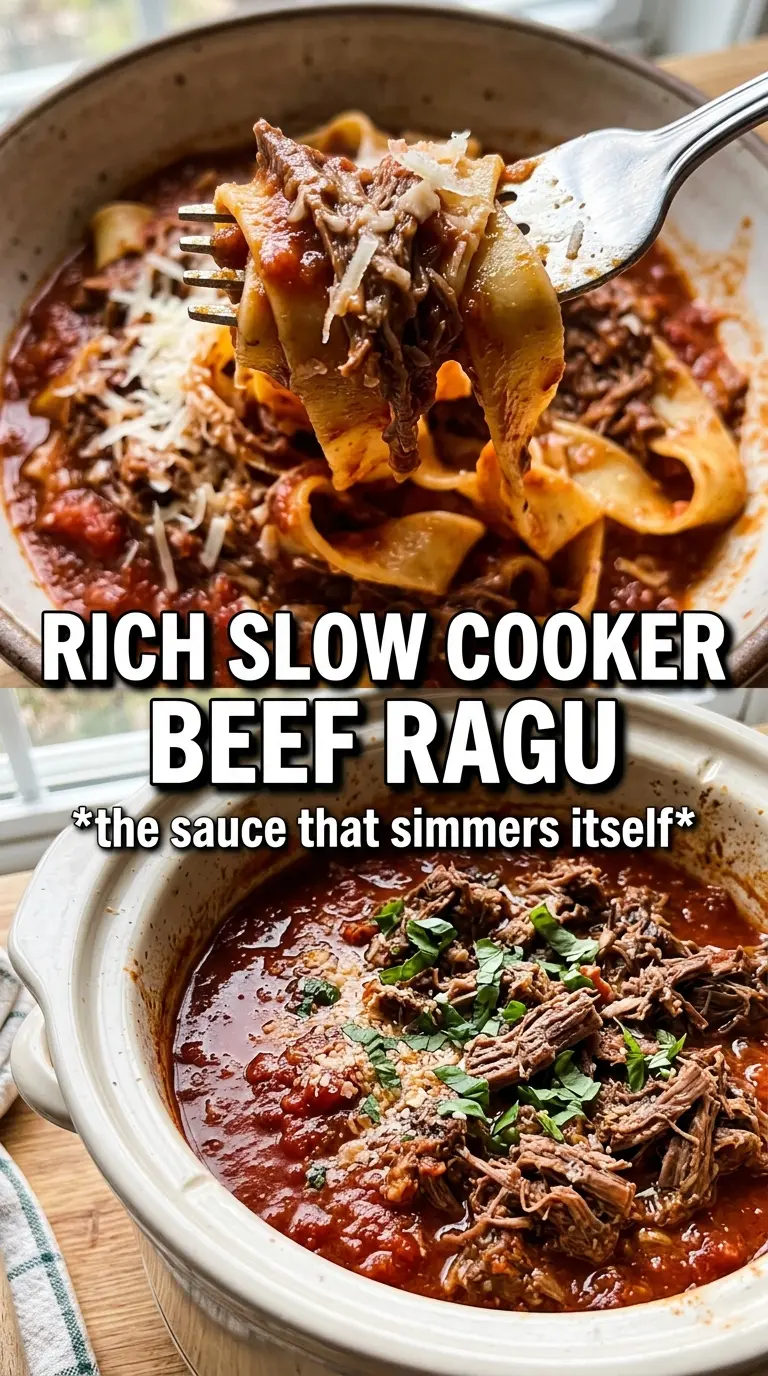
Set the slow cooker to low and leave it alone for 8 to 10 hours. The beef is ready when it pulls apart with almost no resistance and the center loses all chew. If it still feels tight, it needs more time; rushing this stage gives you shredded meat that stays stringy instead of melting into the sauce.
Shred, Return, and Stir
Lift the beef out, shred it into large pieces, and drop it back into the sauce. Don’t shred it too finely or it disappears; a few bigger strands give the ragu body and make the pasta cling better. Discard the bay leaves before serving so the final texture stays clean.
Ways to Tweak This Ragu Without Losing What Makes It Good
Make it dairy-free without changing the sauce
The sauce is naturally dairy-free as written. Serve it with pasta and skip the Parmesan garnish, or use a dairy-free hard cheese if you want that salty finish. The flavor stays just as deep, because the richness here comes from the beef and slow-cooked tomatoes, not cream or butter.
Use a different pasta shape
Pappardelle is classic because the wide ribbons catch the ragù in every bite, but rigatoni works well too if that’s what you have. Short pasta gives you more trapped sauce inside the tubes, while pappardelle gives you those wide glossy folds. Thin pasta will get lost under this much meat sauce.
Make the sauce a little richer
If you want a deeper, more wine-forward sauce, use Cabernet Sauvignon. If you want a softer, more food-friendly finish, use Chianti. Both work, but Cabernet gives the ragu more structure while Chianti leans a little smoother and fruitier.
Storage and Reheating
- Refrigerator: Store leftovers for up to 4 days. The sauce thickens as it chills, and the flavor gets even better overnight.
- Freezer: This freezes well for up to 3 months. Cool it completely, portion it into airtight containers, and thaw it in the fridge before reheating.
- Reheating: Warm it gently on the stove over low heat with a splash of water or broth if needed. High heat can make the beef dry and can tighten the sauce too much before the pasta is ready.