Thick beef stew and fluffy dumplings make a slow cooker feel like it’s working a little miracle. The beef turns spoon-tender, the vegetables soak up the broth, and those Bisquick dumplings steam right on top until they’re light in the middle and golden where they catch the heat. It’s the kind of dinner that tastes like it took far more hands-on effort than it did.
The key is in the layering. Browning the flour-dusted beef first gives the stew a deeper, richer base than dumping everything in raw, and the tomato paste cooks briefly with the onion and garlic so it loses that sharp edge. When the dumplings go on at the end, the lid stays shut so they can puff in steady steam instead of turning dense and gummy.
Below, I’ve included the little timing detail that keeps the dumplings from sinking, plus a few substitutions that still keep the stew hearty and the topping tender. If you’ve ever had slow cooker dumplings come out heavy, the process section will help.
The beef got melt-in-your-mouth tender and the dumplings stayed fluffy instead of gummy. I followed the no-peeking rule and they cooked up perfectly in 35 minutes.
Like this slow cooker beef stew and dumplings recipe? Save it to Pinterest for a hands-off dinner with tender beef and fluffy herb dumplings.
The Browning Step That Keeps the Stew from Tasting Flat
Slow cookers are great at tenderness, but they’re not great at building flavor from scratch. That’s why the flour-coated beef gets browned first instead of going straight into the pot. You’re not just adding color; you’re creating those dark bits in the pan that melt into the broth later and give the stew its deeper, beefier taste.
The other place this can go sideways is the dumplings. If the stew is too cool when they go on, the dough sits there and gets heavy before it cooks through. The slow cooker needs to be on HIGH for that final stretch so the top gets enough steady heat to steam the dumplings all the way without turning the stew into a rolling boil.
What the Bisquick Dumplings Need to Stay Light
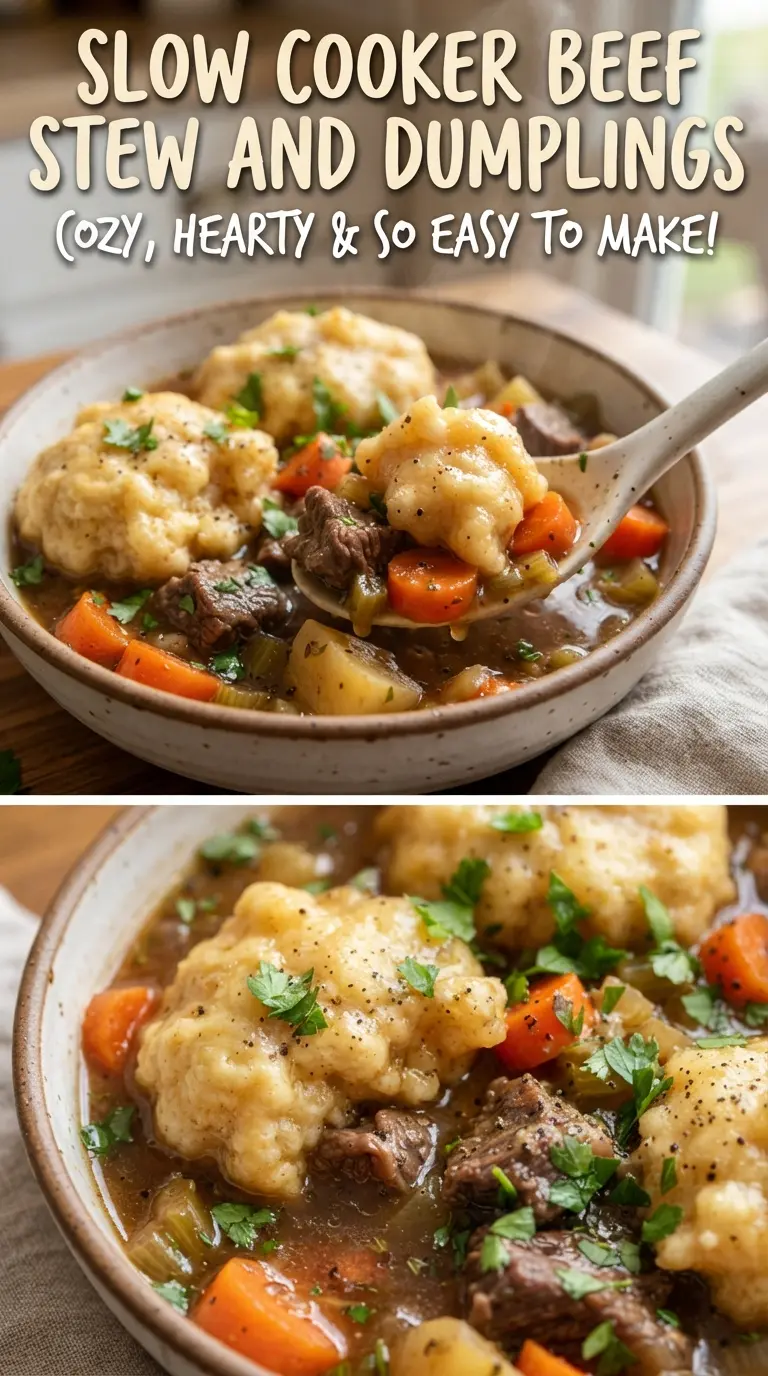
- Beef chuck — This cut has enough fat and connective tissue to turn tender during a long cook. Lean stew meat can work in a pinch, but it tends to dry out before it softens the way chuck does.
- Flour — The light coating helps the beef brown and gives the broth a little body. You don’t need a lot; even this small amount helps the stew feel thicker once it simmers.
- Tomato paste — This is the quiet flavor builder here. Cooking it with the onion and garlic takes away the raw taste and gives the broth a richer, rounder base.
- Bisquick baking mix — This is what makes the dumplings reliable. A homemade drop biscuit dough can work, but Bisquick keeps the texture light and consistent with less fuss.
- Milk and parsley — The milk hydrates the dough so it’s soft enough to scoop and steam properly, and the parsley keeps the topping from tasting bland. Don’t make the dough dry; stiff dumplings stay dense.
The Timing That Turns This into Stew and Dumplings, Not Just Beef Soup
Browning the Beef for a Deep Base
Toss the beef with the flour, salt, and pepper until every piece looks lightly coated. Brown it in hot oil in batches so the pan stays hot enough to color the meat instead of steaming it. You want a real crust on the edges, not pale gray cubes; that crust is what gives the stew depth later. If the pan starts to crowd, stop and do another batch.
Building the Slow Cooker Base
Add the onion, garlic, tomato paste, broth, Worcestershire, carrots, celery, potatoes, and thyme, then scrape in every browned bit from the pan. Those stuck-on bits dissolve into the broth and carry the flavor of the sear straight into the stew. The vegetables should be submerged as much as possible, but they don’t need to be completely covered at this stage because they’ll soften during the long cook. Put the lid on and leave it alone.
Knowing When the Stew Is Ready for Dumplings
After 8 hours on LOW, the beef should yield easily when pressed with a spoon and the potatoes should be tender at the center. If the meat still feels tight, let it go a little longer before adding the dumplings. Turning the slow cooker to HIGH here matters because the dumplings need enough heat at the top of the pot to steam properly. Stir the Bisquick, milk, and parsley just until a soft dough forms; overmixing makes them heavier.
Steaming the Dumplings Without Lifting the Lid
Drop tablespoons of dough over the hot stew in rough mounds. Don’t press them down; they need space and steam around them to expand. Cover the cooker and cook for 30 to 35 minutes without lifting the lid, because every peek lets out steam and steals heat from the dumplings. They’re done when they look set on top and a toothpick inserted into the center comes out without raw batter.
How to Adjust the Pot When You Need a Different Version
Gluten-Free Version
Use a gluten-free all-purpose flour blend for coating the beef and swap in a gluten-free baking mix for the dumplings. The stew itself holds up well to the change, but the dumplings may be a little more delicate, so keep them in larger spoonfuls and give them the full steaming time.
No Bisquick on Hand
A quick drop-biscuit dough made from flour, baking powder, cold butter, and milk will work, but it needs to be mixed just until combined. The texture will be a little more biscuit-like and less tender than Bisquick dumplings, though still a good match for the stew.
More Vegetables, Same Comfort
Mushrooms or parsnips fit in well if you want a deeper, earthier stew. Add them with the carrots and celery so they have time to soften and season the broth instead of staying firm.
Storage and Reheating
- Refrigerator: Store leftovers in an airtight container for up to 4 days. The dumplings will soften as they sit, which is normal.
- Freezer: The stew freezes well, but the dumplings lose their texture after thawing. For best results, freeze the stew without dumplings and make a fresh batch when reheating.
- Reheating: Warm gently on the stove over low heat or in the microwave at medium power. Hard boiling breaks the beef down too far and can make the dumplings fall apart, so use gentle heat and add a splash of broth if the stew has thickened too much.
Questions I Get Asked About This Recipe
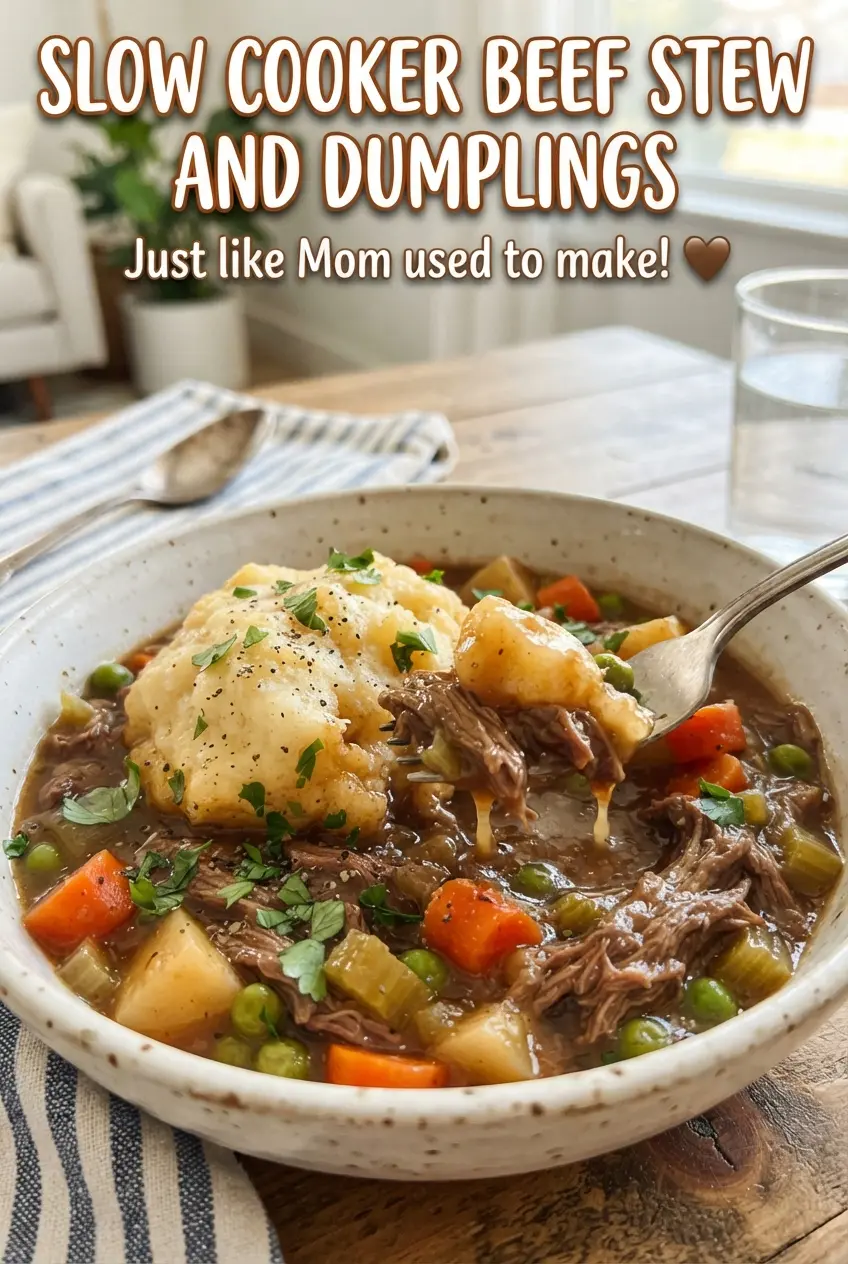
Slow Cooker Beef Stew and Dumplings
Ingredients
Equipment
Method
- Toss the beef with the flour, salt, and black pepper until evenly coated, then heat the olive oil in a hot cast iron skillet. Brown the beef for a few minutes until deep golden on the outside, then transfer it to the slow cooker.
- Add the onion, garlic, and tomato paste to the slow cooker, then pour in the beef broth and Worcestershire sauce. Stir in the carrots, celery, baby potatoes, and dried thyme, and spread everything into an even layer.
- Cover and cook on LOW for 8 hours, until the beef is tender and the vegetables have softened. Visual cue: the stew should look thick and bubbling gently around the edges.
- Turn the slow cooker to HIGH, then stir Bisquick baking mix, milk, and fresh parsley into a soft dough. Visual cue: it should be thick but spoonable.
- Drop tablespoons of the dough evenly over the hot stew, spacing them apart so they don’t merge. Cover and cook for 30-35 minutes on HIGH without lifting the lid, until the dumplings are cooked through and spring back when lightly pressed.