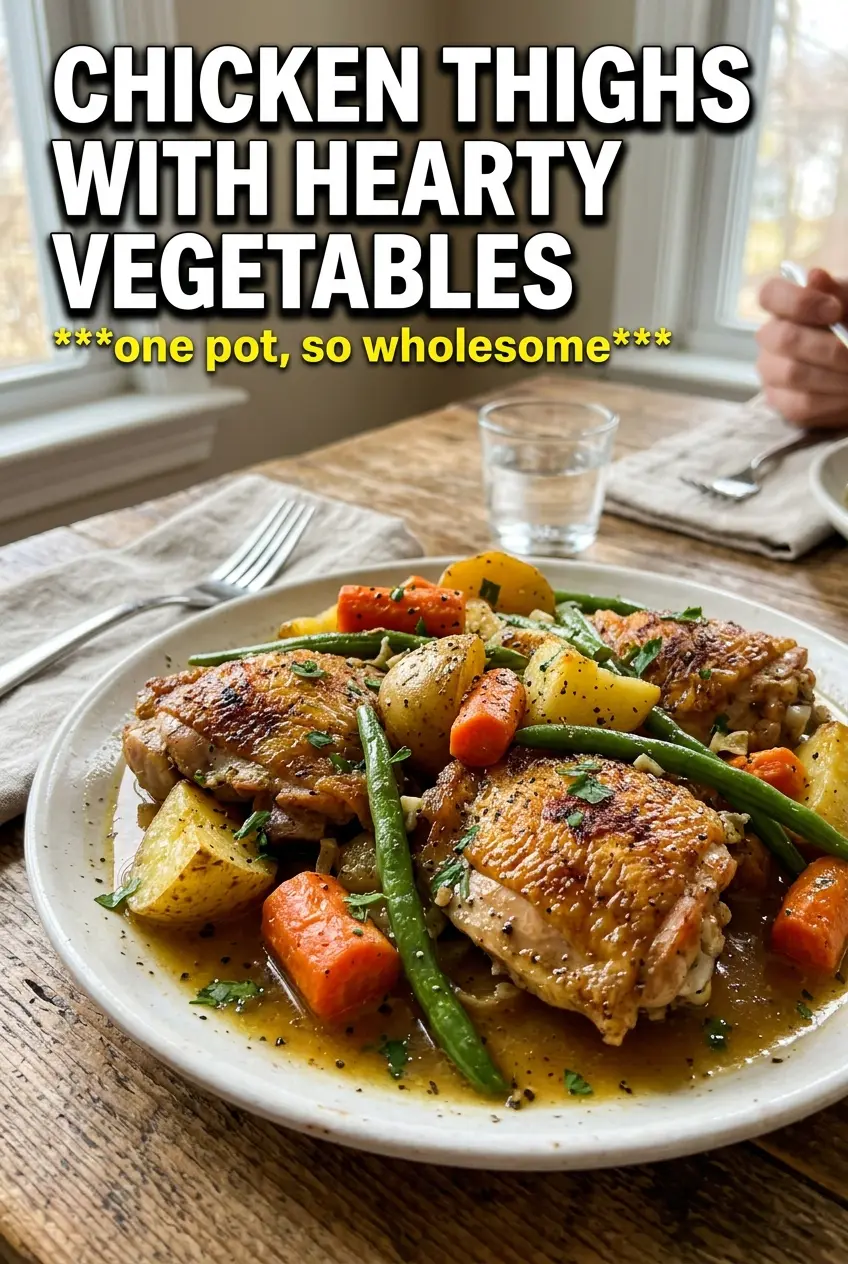
Slow cooker chicken thighs come out deeply savory when they’re layered over vegetables that can stand up to long cooking without turning bland. The chicken stays tender, the potatoes soak up the broth, and the carrots and celery hold enough shape to make the whole dish feel like dinner instead of a pile of soft texture. If you want a one-pot meal that tastes like it simmered all afternoon without any babysitting, this is the kind of recipe that earns repeat status.
The small details matter here. Browning isn’t required, but seasoning the thighs well and placing them skin-side up keeps the top of the chicken from disappearing into the broth. The vegetables go in first so they can catch the drippings and flavor from the meat, while the broth amount stays modest enough that the dish braises instead of boiling. That’s what gives you rich juices instead of a thin, watery slow cooker situation.
Below, I’ve included the one timing trick that keeps the vegetables from going mushy, plus the easiest way to crisp the chicken skin if you want that last little bit of texture before serving.
The vegetables held their shape and the chicken was fall-apart tender without drying out. I broiled the thighs at the end like you suggested, and the skin turned out crisp enough that my husband asked for this again the next night.
Save these slow cooker chicken thighs with hearty vegetables for a no-stress dinner with juicy chicken, tender potatoes, and a broiled finish.
The Reason the Chicken Stays Juicy Instead of Boiling Away
Slow cookers are great at making chicken tender, but they can also turn it flat and stringy if you drown it in liquid or bury it under vegetables that collapse too fast. The fix is simple: use just enough broth to create steam and braising liquid, not enough to submerge everything. That keeps the thighs moist while still letting the skin and spice rub do some work on the surface.
Placement matters too. The vegetables sit on the bottom where the heat is strongest, which helps them soften evenly, and the chicken stays on top where it can cook gently without breaking apart before the potatoes are ready. If you’ve had slow cooker chicken go bland before, it usually needed more seasoning up front and less liquid in the pot.
- Bone-in, skin-on thighs — These bring more flavor than boneless thighs and hold up better over a long cook. The skin won’t stay crisp in the slow cooker, but it protects the meat and adds richness.
- Yukon Gold potatoes — They keep their shape better than russets and turn creamy instead of mealy. Cut them into even chunks so they finish at the same time as the carrots.
- Chicken broth — A cup is enough here. More liquid turns this into soup territory and washes out the seasoning.
- Fresh herbs at the end — Thyme or parsley added after cooking keeps the dish from tasting tired and muddy.
What Each Layer Is Doing in the Crockpot

- Chicken thighs — The thighs are the main event, and bone-in pieces stay more forgiving over six hours than boneless cuts. If you only have boneless thighs, reduce the cook time and check them early so they don’t dry out.
- Potatoes, carrots, celery, and onion — This mix gives you built-in balance: potatoes for body, carrots for sweetness, celery and onion for that old-school braised base. Chop everything into similar sizes so nothing turns soft while something else is still firm.
- Garlic, thyme, rosemary, paprika, salt, and pepper — This is the seasoning backbone. Dried herbs work well in the slow cooker because they have time to bloom, and paprika adds warmth without making the broth heavy.
- Olive oil — Tossing the vegetables in oil helps the seasoning stick and gives the edges a little more substance. It also keeps the bottom layer from tasting flat after hours of cooking.
Building the Pot So Nothing Turns Mushy
Starting with the Vegetables
Toss the potatoes, carrots, celery, and onion with the olive oil, salt, and pepper before they go into the slow cooker. That first coat matters because it seasons the vegetables all the way through instead of leaving the flavor only in the broth. Spread them in an even layer so the chicken can sit on top without tipping over.
Seasoning the Chicken Well
Mix the garlic powder, paprika, thyme, rosemary, salt, and pepper and rub it all over the thighs. The seasoning needs to be on the meat, not just in the liquid, or the final dish tastes like broth with chicken on top. Place the thighs skin-side up so the skin gets as much direct heat as possible.
Cooking Low and Slow
Cook on low for 6 to 7 hours, or high for 3 to 4 hours if that’s the only window you’ve got. Low heat gives the vegetables a softer, more even finish and keeps the chicken from tightening up too early. If the carrots are still firm but the chicken is done, the chunks were probably cut too large, not undercooked.
Finishing with Crisp Skin
If you want better skin, move the thighs to a sheet pan and broil them for 3 to 4 minutes after they’re cooked. Watch them closely, because the line between crisp and burnt is short under the broiler. Spoon the broth over the chicken and vegetables right before serving so the top stays crisp while the rest stays juicy.
How to Make This Work with What’s in Your Kitchen
Make It Dairy-Free Without Changing the Texture
This recipe is naturally dairy-free as written. The broth, oil, and herbs give you all the richness you need, so there’s no need to add cream or butter unless you want a different finish.
Swap the Potatoes for Sweet Potatoes
Sweet potatoes work well if you want a slightly sweeter, softer result. Cut them into larger chunks than the Yukon Golds, since they break down faster and can turn too soft if they’re too small.
Use Boneless Thighs for a Faster Version
Boneless thighs cook faster and are easier to serve, but they lose a little of the deep, slow-cooked flavor you get from the bones. Check them early, because they can go from tender to dry if they stay in the crockpot too long.
Add Mushrooms or Parsnips for a Different Vegetable Mix
Mushrooms add a deeper savory note, while parsnips bring a little sweetness that plays nicely with the thyme and rosemary. Add either one in chunks similar to the potatoes so they cook at the same pace and don’t vanish into the broth.
Storage and Reheating
- Refrigerator: Store leftovers in an airtight container for up to 4 days. The vegetables soften a bit more as they sit, but the flavor gets even better.
- Freezer: This freezes well, though the potatoes will be softer after thawing. Freeze in portions with plenty of broth so the chicken stays moist.
- Reheating: Warm gently on the stove or in the microwave until hot. Don’t blast it on high heat, or the chicken will dry out before the vegetables heat through.