Coconut curry chicken turns silky and fragrant in the slow cooker, with chicken thighs that go tender without drying out and a sauce that tastes like it simmered all afternoon. The coconut milk mellows the curry paste, the ginger and garlic keep it bright, and the lime at the end keeps the whole dish from tasting heavy. Served over jasmine rice, it lands in that sweet spot between comforting and bold.
This version works because the sauce is built before it ever hits the slow cooker. Whisking the curry paste into the coconut milk and broth first helps it disperse evenly, so you don’t get pockets of paste or a thin broth at the bottom. Chicken thighs are the right cut here because they stay juicy during the long cook, and the peas go in near the end so they keep their color and snap instead of turning dull and mushy.
Below you’ll find the small details that make this taste like dinner from a place you want to order from again: how to keep the coconut sauce smooth, when to adjust the seasoning, and a few smart swaps if you’re working around what you have in the pantry.
The sauce came out silky, not watery, and the chicken was fall-apart tender after 6 hours on low. I added a little extra lime at the end and it tasted like takeout in the best way.
Save this slow cooker coconut curry chicken for the nights when you want a silky curry sauce and barely any hands-on time.
The Trick to Keeping Coconut Curry Sauce Smooth in a Slow Cooker
The biggest mistake with slow cooker curries is dumping everything in and hoping the coconut milk sorts itself out. It usually doesn’t. Curry paste needs help dispersing, and coconut milk can separate if it gets overheated for too long without enough liquid around it. Whisking the sauce together first gives you a head start on a smooth, cohesive curry instead of an oily layer on top and a bland broth underneath.
Chicken thighs are forgiving here because they stay tender through the long cook, but the cut still matters. Dice them into even chunks so they finish at the same time, and keep the lid on as much as possible. Every time you lift it, you lose heat and add time. The red bell pepper goes in early because it can handle the long cook better than peas, which would turn soft and tired if they sat in there from the start.
What Each Ingredient Is Doing in the Curry

- Chicken thighs — Thighs are the right choice because they stay juicy after hours of gentle cooking. Chicken breast will work in a pinch, but it dries out faster and won’t give you the same soft, pull-apart texture.
- Full-fat coconut milk — This is what makes the sauce rich and silky. Light coconut milk gives you a thinner, less satisfying curry, and it can taste a little flat after the long cook.
- Red curry paste — This carries most of the heat, depth, and aromatic backbone. Brands vary a lot, so taste your paste if you’re unsure; some are saltier or spicier than others, which affects how much fish sauce you need at the end.
- Fish sauce — It won’t make the curry taste fishy. It adds the savory base that makes the sauce taste full, especially against the sweetness of coconut milk and brown sugar.
- Lime juice — Add it before cooking for a little brightness, then finish with more after cooking if the sauce tastes heavy. That last hit of acid is what wakes everything up.
- Frozen peas — Stir them in near the end so they stay sweet and green. Fresh peas work too, but they don’t need a long cook either.
Building the Curry So the Sauce Stays Balanced
Whisk the Sauce Before It Goes In
Combine the coconut milk, broth, curry paste, garlic, ginger, fish sauce, brown sugar, lime juice, and turmeric until the paste is mostly dissolved. A few flecks are fine, but you don’t want a thick clump of paste sitting against the chicken. That first whisk is what gives the finished curry an even color and a smoother texture.
Let the Slow Cooker Do the Gentle Work
Add the chicken, onion, and bell pepper, then cook on low until the chicken is tender and easy to break apart with a spoon. Low heat gives the coconut milk time to meld instead of rushing it into a greasy split. If you’re using high, keep a close eye on the texture and stop as soon as the chicken is cooked through and tender.
Finish with the Fresh Stuff
Stir in the peas during the last 20 minutes so they stay bright. Taste the sauce before serving and adjust with more lime juice for lift, fish sauce for depth, or brown sugar if the curry tastes sharp. That final balance matters more than people think; a curry can be fully cooked and still taste unfinished until the last seasoning pass.
Ways to Adjust This Curry for Your Table
Make It Dairy-Free and Gluten-Free
It already is naturally dairy-free, and it can be gluten-free if your curry paste and fish sauce are labeled that way. Serve it with jasmine rice, and you’ve got a meal that fits both needs without losing the creamy texture.
Use Chicken Breast Instead
Chicken breast works if that’s what you have, but cut the cook time down and check it early. Breast turns stringy and dry if it hangs out too long in the slow cooker, so stop as soon as it’s cooked through and move straight to the peas and finishing seasoning.
Swap the Veggies Without Changing the Sauce
You can swap the bell pepper for sliced carrots or snap peas, but keep tender vegetables out of the pot until the end. Harder vegetables need the full cook; quick-cooking ones get added late so they keep their shape and don’t disappear into the sauce.
Turn Up the Heat
If you like more bite, add sliced fresh chili with the bell pepper or finish each bowl with chili crisp. That gives you heat on the front end instead of burying it in the sauce, which keeps the curry balanced for everyone else at the table.
Storage and Reheating
- Refrigerator: Store leftovers in an airtight container for up to 4 days. The sauce thickens a bit as it chills, and the flavors deepen overnight.
- Freezer: It freezes well for up to 2 months. Cool it completely, portion it into freezer-safe containers, and leave a little room for expansion.
- Reheating: Warm it gently on the stovetop over low heat or in the microwave in short bursts, stirring between each one. Don’t boil it hard, or the coconut sauce can separate and the chicken can tighten up.
Questions I Get Asked About This Recipe
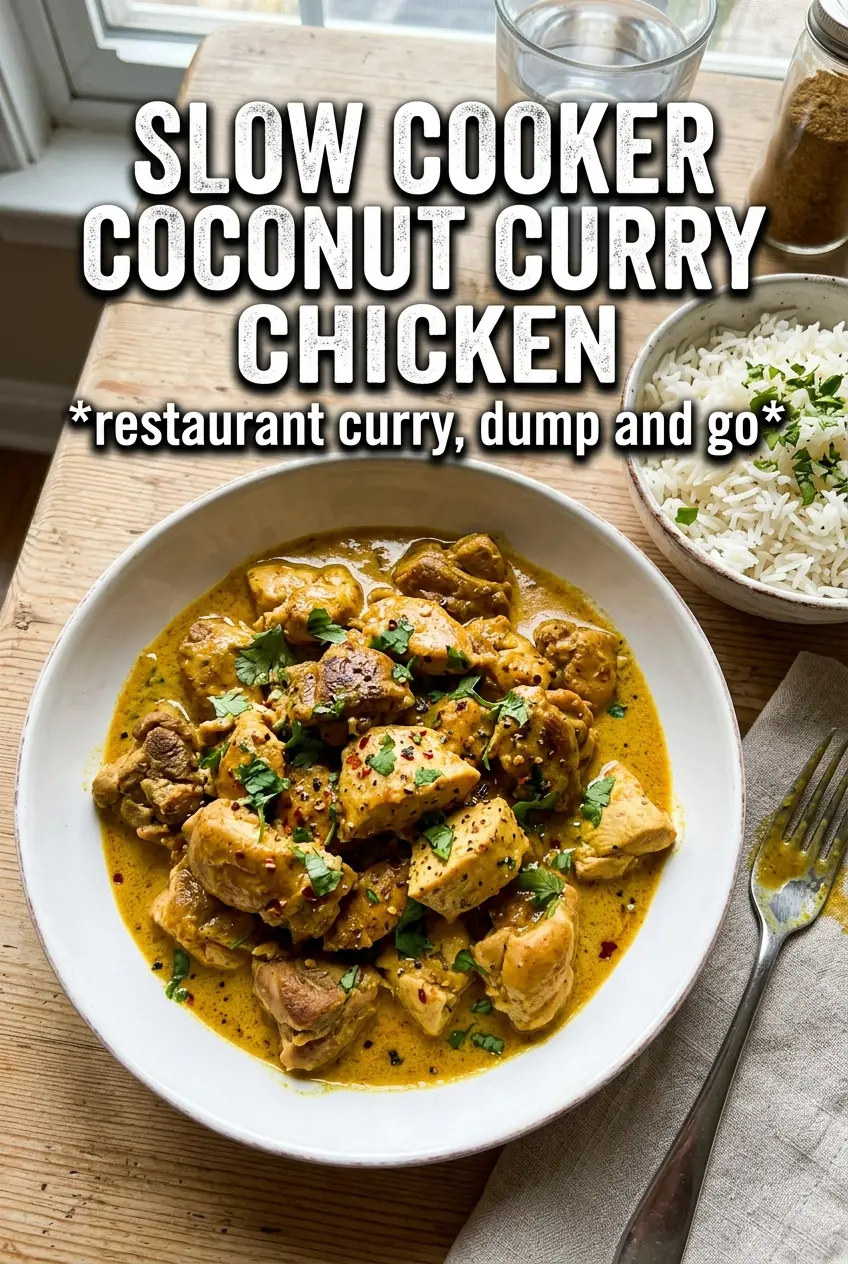
Slow Cooker Coconut Curry Chicken
Ingredients
Equipment
Method
- Place the chicken thigh chunks into the slow cooker so they sit in a single layer as much as possible.
- Whisk together the coconut milk, red curry paste, chicken broth, garlic, ginger, fish sauce, brown sugar, lime juice, and turmeric until fully blended.
- Pour the sauce over the chicken, then scatter in the diced onion and sliced red bell pepper.
- Cook on low for 6–7 hours or until the chicken is very tender and easily pulls apart with a fork.
- Alternatively cook on high for 3 hours until the chicken is very tender and the sauce looks thickened and cohesive around the chunks.
- Stir in the frozen peas during the last 20 minutes of cooking until they are bright green and just tender.
- Taste the curry and adjust seasoning with additional fish sauce, lime juice, or brown sugar as needed to balance salty, tangy, and sweet.
- Serve the coconut curry chicken over jasmine rice, then top with fresh Thai basil and add lime wedges on the side.