Layers of Yukon Gold potatoes, tender steak, and sharp cheddar turn into the kind of slow cooker casserole that disappears fast once it hits the table. The potatoes soften in the savory broth and mushroom sauce while the cheese melts into the spaces between every layer, so each spoonful comes out rich, hearty, and built for a fork. The steak stays tucked into the casserole instead of drying out on top, which is exactly why this version eats like a full meal instead of a side dish with extra steps.
The trick is slicing everything thin enough to cook evenly in the slow cooker. Yukon Golds hold their shape better than russets, and that matters here because you want distinct potato rounds, not a mushy base. The Worcestershire and smoked paprika do quiet work in the background, giving the sauce enough depth to stand up to the beef and cheddar without tasting heavy.
Below, I’ll walk through the layering order that keeps the potatoes cooking evenly, the ingredient swaps that still hold the casserole together, and the answers to the questions that usually come up when people make this for the first time.
The potatoes were perfectly tender and the sauce thickened around the steak instead of turning watery. I made it on a busy day and it held up beautifully until dinner.
Love the cheesy layers and tender steak? Save this slow cooker steak and cheddar potato casserole for an easy dinner that feels extra hearty.
The Layering Order That Keeps the Potatoes Tender
The biggest mistake with a casserole like this is stacking everything in a way that traps the potatoes in dry spots. Here, the soup mixture needs to be spread over each layer, not poured all at once at the top, so the moisture travels down through the potatoes while the slow cooker does its work. That’s what gives you soft, seasoned potato rounds instead of a top layer that cooks and a bottom layer that stays stubborn.
Thin slices matter more than almost anything else. If the potatoes are cut too thick, they won’t soften in time, and if the steak pieces are too bulky, they can turn chewy before the potatoes are done. Keep both sliced thin, and the casserole finishes as one cohesive dish instead of separate ingredients sharing a pot.
What the Cheese, Broth, and Soup Are Each Doing
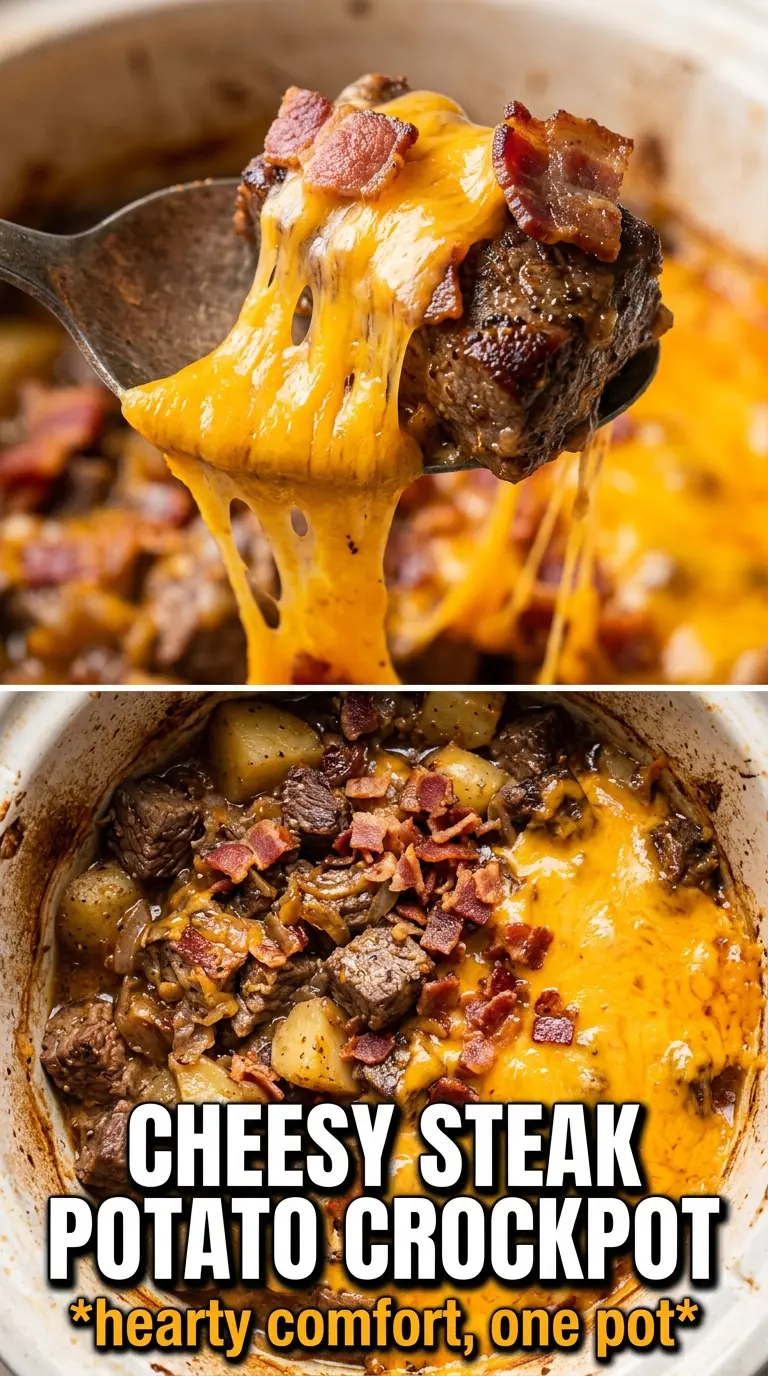
- Yukon Gold potatoes — These hold their shape better than russets and have a naturally buttery texture that works with the cheddar. If you swap in russets, expect a softer casserole and a little more risk of breaking down at the edges.
- Sirloin steak — Sirloin stays tender enough for long cooking when it’s sliced thin against the grain. Tougher cuts can work, but they need the full low-and-slow time and they’ll bring a more braised texture than the cleaner bite sirloin gives here.
- Cream of mushroom soup — This is the shortcut that builds body in the sauce and helps everything cling to the potatoes. A homemade white sauce can work, but it won’t taste quite as savory unless you season it well and give it enough thickness.
- Sharp cheddar — Sharp cheddar cuts through the richness of the steak and soup, so the casserole tastes balanced instead of flat. Mild cheddar melts fine, but it gives you less of that salty, tangy finish.
- Worcestershire sauce — This is the small amount that makes the beef taste deeper and more finished. There isn’t a great one-to-one substitute, but soy sauce plus a little vinegar can get you close in a pinch.
Building the Casserole So It Cooks Evenly From Top to Bottom
Seasoning the Steak First
Coat the sliced steak with garlic powder, onion powder, smoked paprika, salt, and pepper before it goes anywhere near the slow cooker. That seasoning needs to sit on the meat itself so the beef tastes seasoned all the way through, not just in the sauce around it. If the strips look too wet after slicing, pat them dry first so the spices actually cling.
Whisking the Sauce Until It’s Smooth
Stir the soup, beef broth, Worcestershire, and minced garlic together until the mixture looks even and pourable. If you leave clumps of soup behind, they won’t break down as cleanly during cooking and you can end up with pockets of thick sauce instead of a consistent casserole. The broth keeps the mixture loose enough to flow between the layers at the start, then it reduces into something richer by the end.
Layering for Steady Heat
Start with half the potatoes, then onion, steak, sauce, and cheese, and repeat the pattern once more. That order gives the potatoes direct contact with moisture on both layers, which is what keeps them from staying firm in the center. Resist the urge to stir once everything is assembled; stirring disrupts the layer structure and can leave you with uneven cooking.
Knowing When It’s Done
Cook until the potatoes are fork-tender and the steak gives easily when pressed with a spoon. On low, that usually means 6 to 7 hours; on high, 3 to 4 hours. If the potatoes are done but the top still looks a little loose, let it sit uncovered for 10 to 15 minutes before serving so the sauce settles and thickens slightly.
How to Adapt This for a Lighter, Dairy-Free, or Bigger-Batch Dinner
Make It Dairy-Free Without Losing the Creamy Finish
Use a dairy-free condensed cream-style soup and swap the cheddar for a plant-based melting cheese that works well in casseroles. The texture will still be rich, but the flavor will be a little less sharp, so a pinch more salt and a little extra smoked paprika help keep it rounded.
Use a Different Cut of Beef
Chuck steak or stew meat can stand in for sirloin if that’s what you have, but the bite will be more braised and less tender-sliced. Keep the cook time on the full end of the range and slice anything you can as thinly as possible so the meat softens along with the potatoes.
Stretch It for a Bigger Crowd
You can double this in a large slow cooker if you keep the layers even and don’t overfill the pot. Add extra cook time only if the center still feels firm, because a crowded slow cooker usually needs longer for heat to move through the middle.
Storage and Reheating
- Refrigerator: Keep leftovers covered for up to 4 days. The potatoes soften a little more after chilling, but the casserole still reheats well.
- Freezer: It freezes, but the potatoes will be softer after thawing. Freeze in portions, wrap tightly, and thaw in the refrigerator before reheating.
- Reheating: Warm gently in the oven at 325°F or in the microwave at medium power. High heat can tighten the steak and make the cheese separate, so low and slow is the better move here too.
The Questions That Come Up With This Casserole
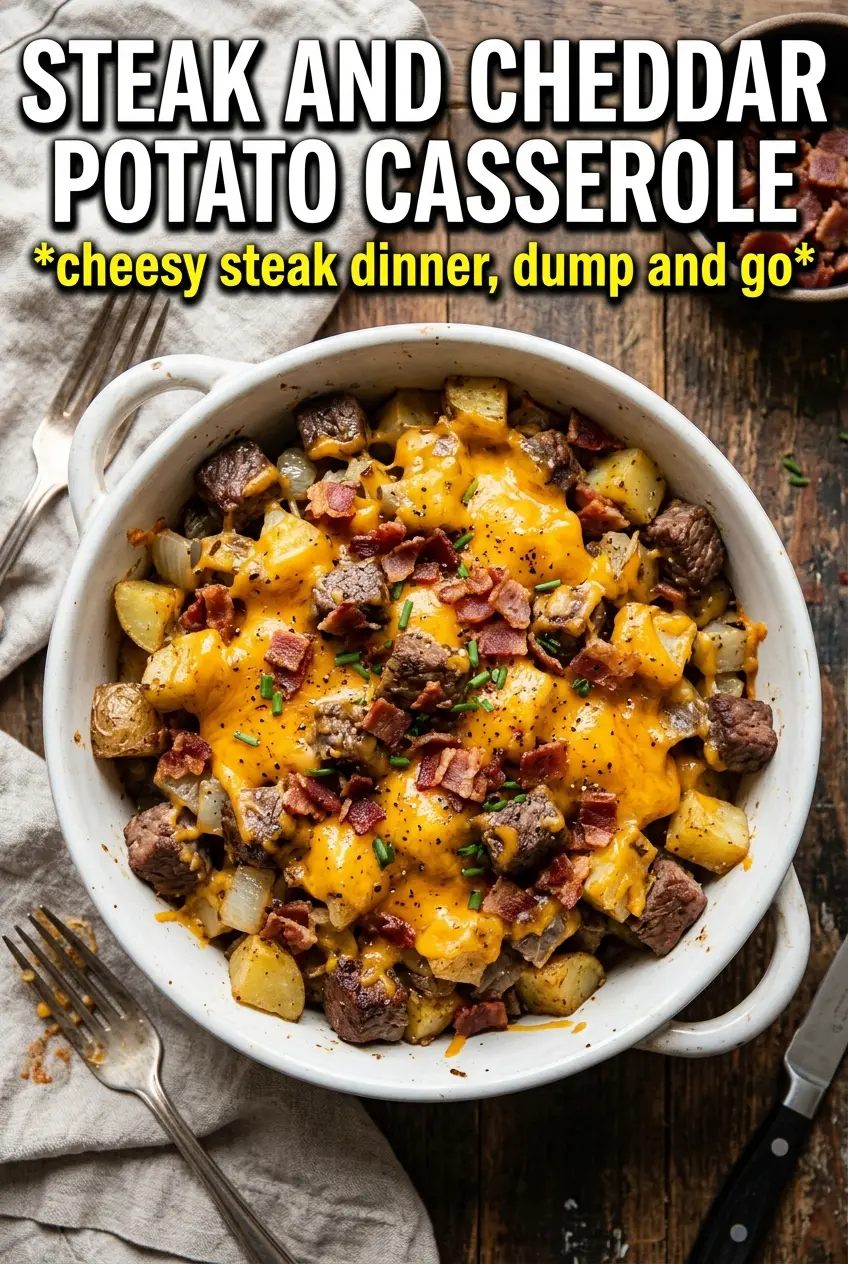
Slow Cooker Steak and Cheddar Potato Casserole
Ingredients
Equipment
Method
- Season the steak slices with garlic powder, onion powder, smoked paprika, salt, and black pepper.
- Spread the seasoned steak in an even layer so every strip is coated with spices.
- Whisk together cream of mushroom soup, beef broth, Worcestershire sauce, and minced garlic until smooth and pourable.
- Layer half the potato slices in the bottom of the slow cooker in an even, flat layer.
- Top with half the onion slices, then half the steak strips.
- Pour over half the soup mixture and sprinkle with 1 cup of cheddar cheese.
- Repeat the layers with the remaining potatoes, onion, steak, soup mixture, and the remaining cheddar cheese.
- Cook on low for 6–7 hours, or until potatoes are fork-tender and the steak is cooked through.
- For faster cooking, cook on high for 3–4 hours, then check that potatoes pierce easily with a fork and steak is no longer pink.
- Let the casserole sit briefly, then serve hot and garnish each portion with fresh chives.