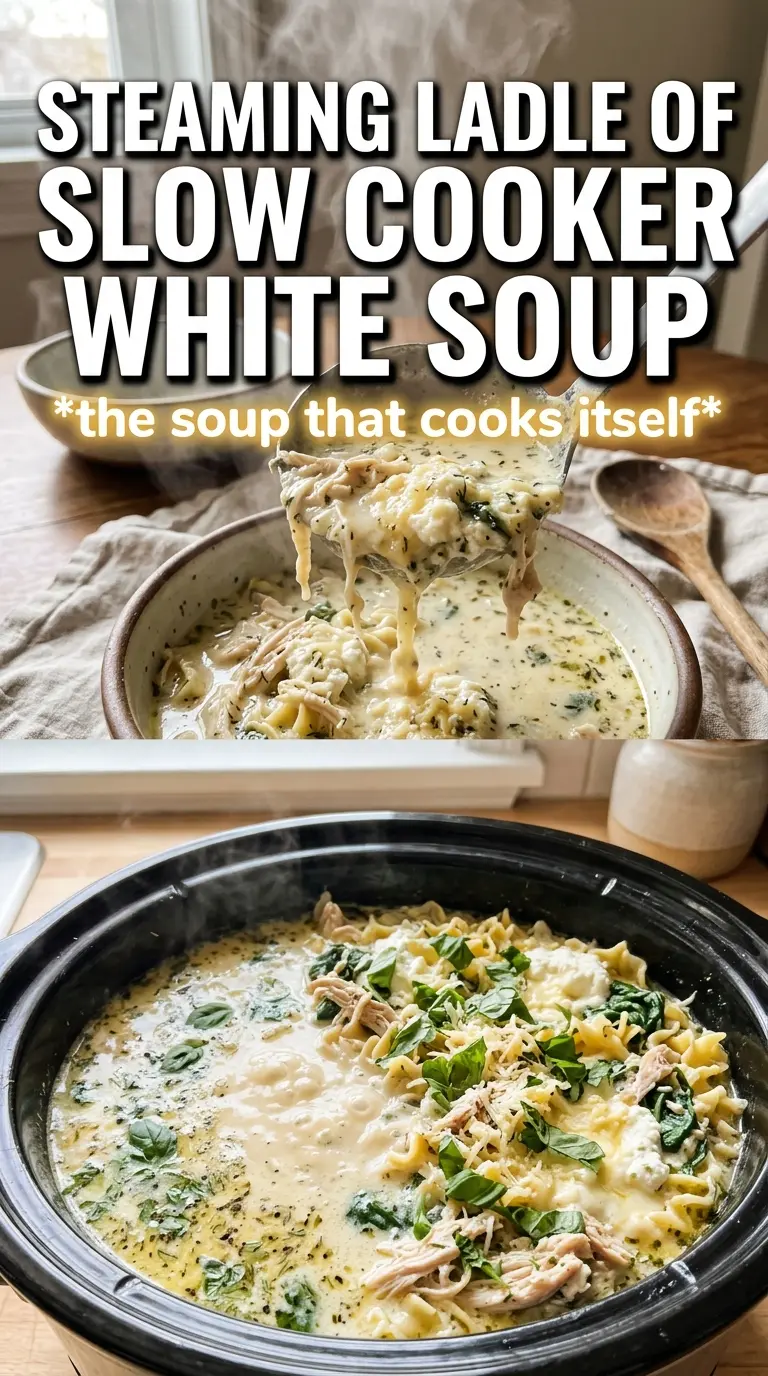
Slow Cooker White Lasagna Soup lands with all the comfort of a baked lasagna, but in a bowl with a creamy broth that clings to every noodle. The chicken turns tender enough to shred with a spoon, the spinach softens at the end without going dull, and that ricotta-parmesan dollop melts into the soup just enough to give each bite a rich, cheesy finish.
What makes this version work is the order. The chicken cooks gently in broth and cream of chicken soup first, which gives the base body before any noodles go in. The lasagna noodles are added near the end so they stay pleasantly chewy instead of bloating apart, and the heavy cream waits until the final minutes so the soup stays smooth instead of cooking down too far.
Below, I’m walking through the small timing choices that keep the broth creamy, not gluey, plus the easiest way to swap in what you already have without losing that white lasagna feel.
The noodles stayed tender without falling apart, and the ricotta-parmesan topping melted right into the bowl. I was worried the cream might separate, but it stayed smooth even after reheating the leftovers the next day.
Save this Slow Cooker White Lasagna Soup for a creamy, noodle-filled dinner with a ricotta-parmesan finish.
The Trick to Keeping the Broth Creamy Instead of Heavy
The biggest mistake with a soup like this is rushing the dairy and noodles together. If the cream goes in too early or the soup boils hard after the cream is added, the broth can turn greasy or look slightly split. The better move is to let the chicken, broth, onion, garlic, and canned soup build flavor first, then add the cream cheese to thicken the base before the final dairy goes in.
The noodles also need restraint. Broken lasagna noodles absorb liquid fast, and once they cross from tender to swollen, the soup starts eating like pasta stew. Keep them for the last 25 to 30 minutes on high, and stop when they’re just tender with a little bite in the center.
- Chicken thighs or breasts — Thighs give you a richer, softer shred and hold up a little better in long cooking. Breasts are leaner and work fine here as long as you don’t let the soup go much past tender.
- Cream of chicken soup — This adds body and a built-in savory base that plain broth can’t fully replace. If you want to use a homemade white sauce instead, you’ll need enough flour and fat to mimic that thickness.
- Cream cheese — This is what gives the broth that silky, almost velvety finish. Cube it so it melts faster and whisk it in while the soup is hot, not boiling.
- Heavy cream — This rounds out the broth at the end and keeps the soup from tasting flat. Half-and-half works in a pinch, but the soup will be a little less lush.
- Broken lasagna noodles — They bring the lasagna part of the dish without needing a separate pasta boil. Break them into rough pieces, not tiny shards, so they feel like real noodles in the bowl.
What Each Ingredient Is Actually Doing in This Recipe
- Primary ingredient (the star) — Quality matters most. Choose the best you can find.
- Cooking medium (oil, butter, or broth) — This carries flavors and prevents dryness.
- Seasonings (salt, pepper, spices, herbs) — Layer flavors so nothing overpowers. Build depth gradually.
- Aromatics (garlic, onion, herbs) — Cook with fat to bloom flavors. Become the foundation.
- Supporting ingredients — Complement the main ingredient without overpowering it.
- Sauce or liquid (if applicable) — Brings flavors together. Balance richness with acid.
- Acid (lemon, vinegar, wine, or other) — Brightens and prevents flat-tasting results.
- Final finish (garnish, glaze, or sauce) — Prevents one-dimensional taste and adds visual appeal.
When to Add the Noodles, and Why the Finish Matters
Building the Slow Cooker Base
Start with the chicken in the bottom of the slow cooker, then add the onion, garlic, broth, cream of chicken soup, Italian seasoning, and garlic powder. The soup should look loose and slightly cloudy at this stage. That’s good. The onion softens into the broth while the chicken poaches gently, which is what gives you a rich base without having to brown anything first.
Shredding for the Right Texture
Pull the chicken out when it shreds easily with two forks and doesn’t fight back in the center. If it’s still firm, give it more time; undercooked chicken won’t shred into those soft ribbons that make the soup feel complete. Return the shredded chicken to the pot so it soaks up the seasoned broth before the noodles go in.
Melting the Cream Cheese Before the Pasta
Stir in the cream cheese while the soup is hot, then keep stirring until it disappears into the broth. If you drop in cold cubes and immediately add noodles, you’ll chase little white lumps around the pot. Let the cream cheese melt first, and the broth will thicken just enough to coat the noodles instead of pooling around them.
Adding the Noodles at the Last Possible Minute
Turn the slow cooker to high, add the broken lasagna noodles, and cook just until they’re tender. Check them early if your noodles are thin or your slow cooker runs hot, because overcooked pasta turns this soup muddy fast. You want the noodles soft but still structured, with edges that hold together when you lift a spoonful.
Finishing with Cream and Spinach
Stir in the heavy cream and spinach at the very end, then cook only until the spinach wilts. This keeps the cream from breaking and keeps the greens bright instead of olive-colored. Season at the end with salt and pepper, because the canned soup and broth already bring salt to the pot.
How to Adapt This for Different Kitchens and Diets
Use chicken thighs for a richer bowl
Thighs stay tender through the long slow-cooker time and give the broth a deeper, fuller taste. Breasts work too, but they’re leaner and can dry out if they cook much longer than needed.
Make it gluten-free without losing the creamy body
Use a gluten-free cream soup if you have one you trust, and swap in gluten-free lasagna noodles. Cook the noodles carefully, because many gluten-free pastas soften faster and can go from tender to fragile in a short window.
Dairy-light version with a little less richness
Use half-and-half instead of heavy cream and skip the mozzarella in the topping if you want the bowl to feel lighter. The soup will still be creamy, but it won’t have the same lush finish or quite as much body.
Storage and Reheating
- Refrigerator: Store for up to 4 days. The noodles will keep absorbing broth, so expect a thicker soup the next day.
- Freezer: It freezes, but the cream and noodles both change texture. For best results, freeze the soup base without the pasta and add fresh noodles after reheating.
- Reheating: Warm gently on the stove or in the microwave with a splash of broth. Don’t boil it hard, or the dairy can separate and the noodles can turn mushy.
Questions I Get Asked About This Recipe

Slow Cooker White Lasagna Soup
Ingredients
Equipment
Method
- Place the chicken breasts in the slow cooker, then add the diced onion and minced garlic.
- Pour in the chicken broth and stir in the cream of chicken soup, Italian seasoning, and garlic powder.
- Cook on Low for 5-6 hours until the chicken is tender, or cook on High for 3 hours.
- Remove the chicken, shred it, then return the shredded chicken to the slow cooker.
- Stir in the cubed cream cheese until melted, then add the broken lasagna noodles and increase the slow cooker to High.
- Cook on High for 25-30 minutes until the noodles are tender.
- Stir in the heavy cream and add the fresh spinach, then cook for 5 minutes until the spinach wilts.
- Season with salt and pepper to taste, then serve with a generous cheese dollop.