Slow cooker wine braised beef stew turns tough chuck into spoon-tender pieces of beef in a glossy, deeply savory sauce that tastes like it took all day because it did. The wine softens the richness of the meat, the tomatoes and balsamic keep the broth from tasting flat, and the slow cooker does the long, gentle work that makes braised beef turn silky instead of stringy.
The trick is building flavor before the lid goes on. Browning the beef gives you a base that the slow cooker alone can’t create, and simmering the wine with the tomato paste for a few minutes takes the raw edge off both. That step matters. It keeps the finished stew from tasting thin and gives the sauce a rounded, almost velvety depth.
Below, I’ve included the small details that make this stew dependable, from the best way to layer the ingredients to the point where the beef is ready without turning dry. If you’ve ever had a braised stew come out watery or one-note, the notes here will help you fix that.
The sauce came out rich and glossy, and the beef was fall-apart tender after 8 hours on low. I served it over polenta and my husband went back for seconds before I even sat down.
Save this slow cooker wine braised beef stew for the kind of dinner that needs deep flavor, tender beef, and barely any hands-on time.
The Browning Step That Gives This Stew Its Depth
Slow cooker beef stew can taste flat when everything goes straight into the pot raw. The slow cooker is excellent at tenderness, but it doesn’t brown meat or concentrate flavors the way a hot pan does. That’s why the flour-dusted beef gets seared first, then the onion and tomato paste get cooked in the same pan before the wine goes in. Those browned bits on the bottom are the backbone of the stew.
That little extra stove-top work also controls the texture of the sauce. The flour on the beef helps the broth thicken later, but only if you brown the meat in batches instead of crowding the pan. If the pan gets overloaded, the beef steams and you lose the crust that gives the stew its savory edge. Take the time here and the finished pot will taste like a proper braise, not just beef in broth.
What Each Ingredient Is Actually Doing In This Stew
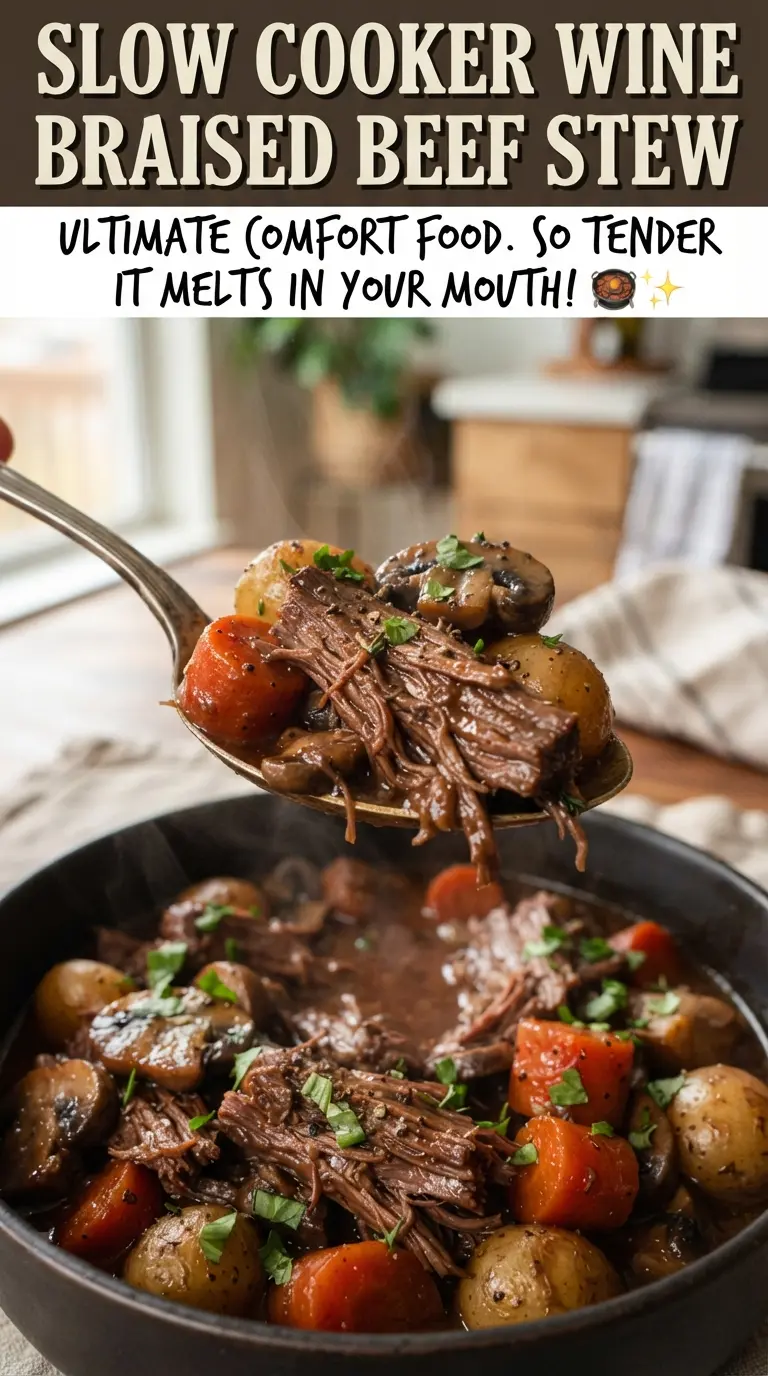
- Beef chuck — This is the cut that turns plush and spoon-tender after a long cook. Leaner stew meat can work, but it won’t give you the same silky bite or rich broth.
- Dry red wine — Use a wine you’d actually drink. It reduces into the sauce and brings acidity, depth, and a little fruitiness that keeps the stew from feeling heavy.
- Tomato paste — It adds body and a concentrated savory note. Cooking it in the pan for a few minutes before the liquid goes in takes away the tinny edge and makes the flavor rounder.
- Fresh rosemary and thyme — These herbs hold up to the long cook and give the stew its French-inspired backbone. Dried herbs can work in a pinch, but use less because they read louder and flatter.
- Carrots and pearl onions — The carrots soften without dissolving, while pearl onions give you little pockets of sweetness. Frozen pearl onions are a smart shortcut here because they stay intact better than a chopped onion would.
- Balsamic vinegar — Just a tablespoon wakes up the whole pot. It doesn’t make the stew taste sour; it sharpens the wine and beef so the sauce finishes with contrast.
Building The Stew So The Sauce Stays Rich, Not Watery
Coating and Browning the Beef
Toss the beef with flour, salt, and pepper until every surface looks lightly dusted. Brown it in batches over medium-high heat until you get a deep brown crust, then move it to the slow cooker. If the pan looks crowded or the beef starts releasing a lot of liquid, stop and work in smaller batches. That crust is what gives the finished stew its body and savory flavor.
Cooking the Base in the Same Pan
Add the onion and cook it in the beef drippings until it softens and picks up color, then stir in the garlic and tomato paste. Let the tomato paste cook for about 3 minutes; it should darken slightly and smell sweet rather than raw. That short cooking time is what keeps the sauce from tasting sharp. If the paste sticks, a splash of wine will loosen it right up.
Deglazing With Wine
Pour in the red wine and scrape the bottom of the pan well. Those browned bits dissolve into the wine and carry the flavor of the sear into the stew. Let the wine simmer for 3 minutes so the alcohol cooks off a little and the flavor settles down. Skip that simmer and the finished broth can taste harsh instead of rounded.
Slow Cooking to the Finish
After the wine mixture goes into the slow cooker, add the broth, balsamic, herbs, carrots, and pearl onions, then cook on low for 8 hours. The beef is done when it pulls apart easily with a fork and the carrots are tender but not mushy. Pull out the herb stems before serving. If the sauce looks thin at the end, give it 10 to 15 minutes uncovered on high in the slow cooker, or spoon the stew into a pot and simmer it briefly on the stove.
Three Ways To Put Your Own Spin On This Stew
Gluten-Free Version
Skip the all-purpose flour and dust the beef lightly with cornstarch instead, or brown the beef plain and stir 1 to 2 teaspoons of cornstarch mixed with cold water into the finished stew if you want more thickness. You’ll lose a little of the cling that flour gives during browning, but the stew still turns out rich and satisfying.
Alcohol-Free Option
Replace the wine with an equal amount of extra beef broth plus 1 tablespoon red wine vinegar or more balsamic for brightness. The stew will still be deep and savory, but it won’t have quite the same winey complexity, so the browning step matters even more.
Add Mushrooms For More Earthiness
Stir in 8 ounces of halved cremini mushrooms with the carrots if you want a deeper, woodsy note. They’ll soften as they cook and add another layer of savory flavor, though they do release extra moisture, so the sauce may need a short uncovered finish if you want it thicker.
Make It Ahead For Better Flavor
This stew tastes even better the next day. Chill it overnight, then reheat gently before serving; the sauce tightens up in the fridge and the wine, herbs, and beef taste more integrated after resting.
Storage and Reheating
- Refrigerator: Keep in an airtight container for up to 4 days. The sauce thickens as it chills, and the beef gets even more tender.
- Freezer: Freeze for up to 3 months. Cool it completely first, then freeze in portions so the sauce and meat reheat evenly.
- Reheating: Warm gently on the stove over low heat or in the microwave at medium power. Don’t boil it hard or the beef can dry out and the sauce can taste overly reduced.
Answers to The Questions Worth Asking
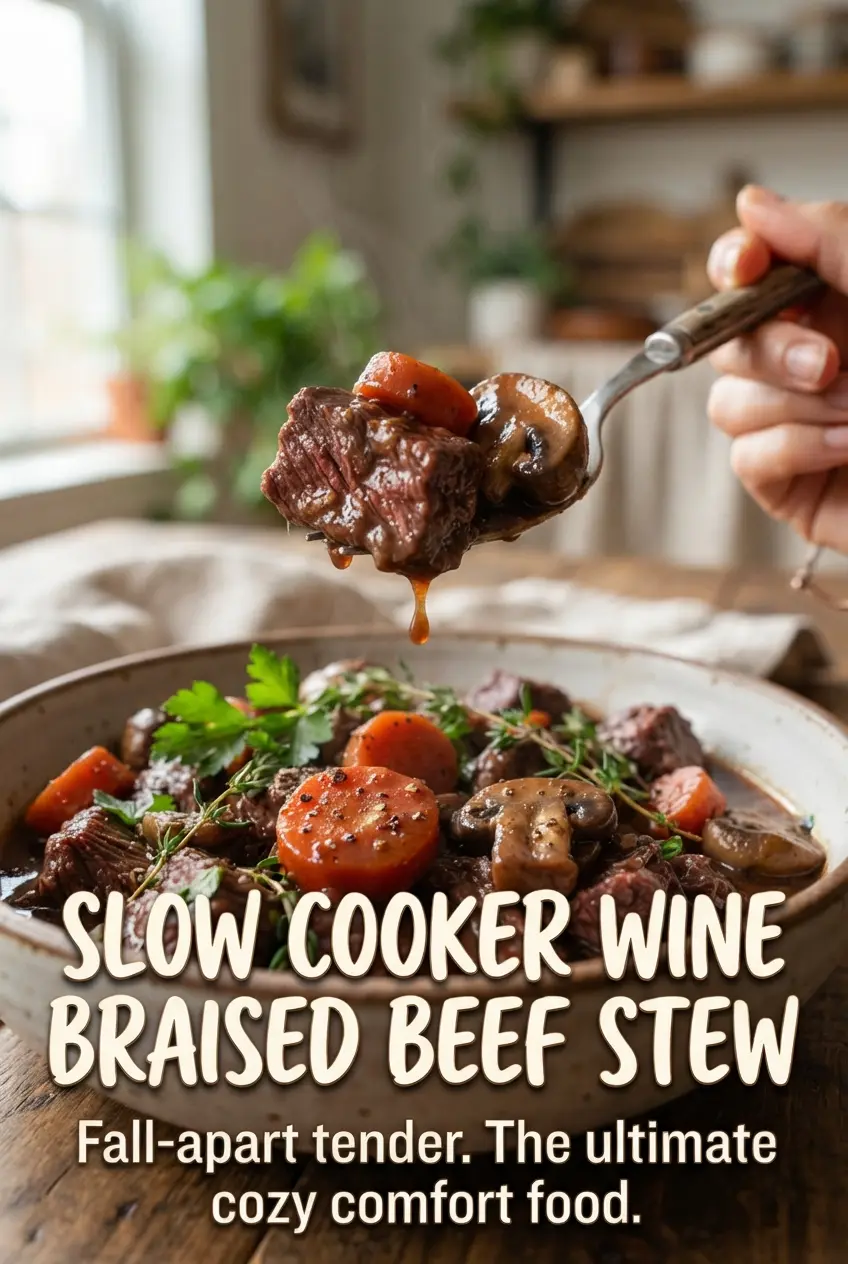
Slow Cooker Wine Braised Beef Stew
Ingredients
Equipment
Method
- Toss the beef with flour, salt, and black pepper. Brown in batches in hot olive oil until deeply browned on the outside, about 3-5 minutes per batch, using a sizzle/whisper of smoke as your cue.
- Transfer the browned beef to the slow cooker. Spread it in an even layer so it braises uniformly, with a visible gap-free coverage.
- In the same pan, cook the diced onion, minced garlic, and tomato paste over medium heat for 3 minutes. Stir until fragrant and the paste looks slightly darkened, about a gentle bubbling and softened onion cue.
- Pour in the dry red wine and scrape the bottom to loosen browned bits. Simmer for 3 minutes until the liquid reduces slightly, about a thin syrupy sheen forming at the edges, then pour into the slow cooker.
- Add the beef broth, balsamic vinegar, rosemary sprigs, thyme sprigs, carrot chunks, and frozen pearl onions to the slow cooker. Make sure the carrots are mostly submerged so the stew stays tender.
- Cover and cook on LOW for 8 hours until the beef falls apart. Look for fork-tender beef that breaks with light pressure and a glossy sauce coating the carrots.
- Remove the herb stems and discard them. Serve immediately over creamy polenta or mashed potatoes, with rosemary sprigs on top if desired for a fragrant finish.