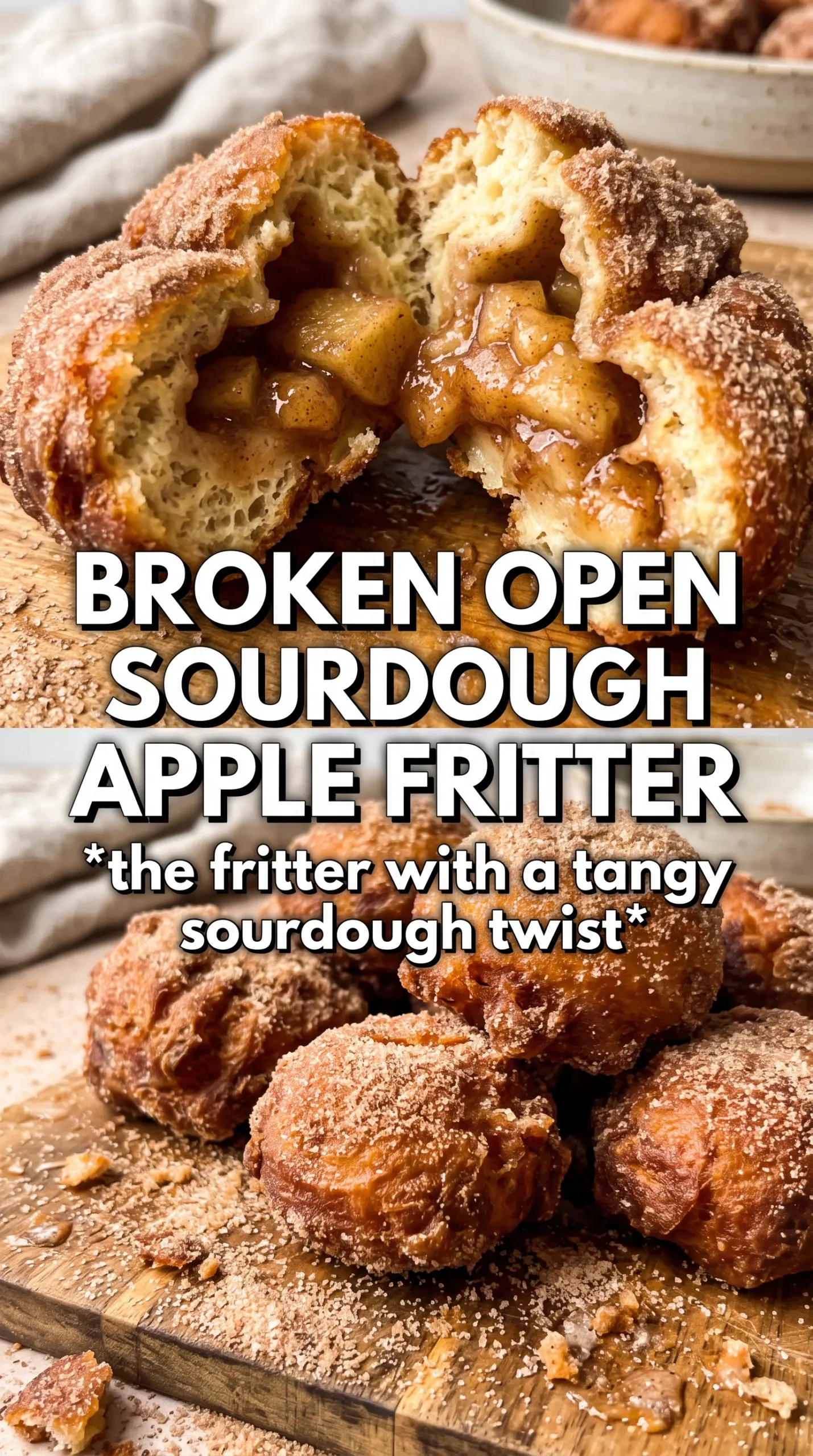
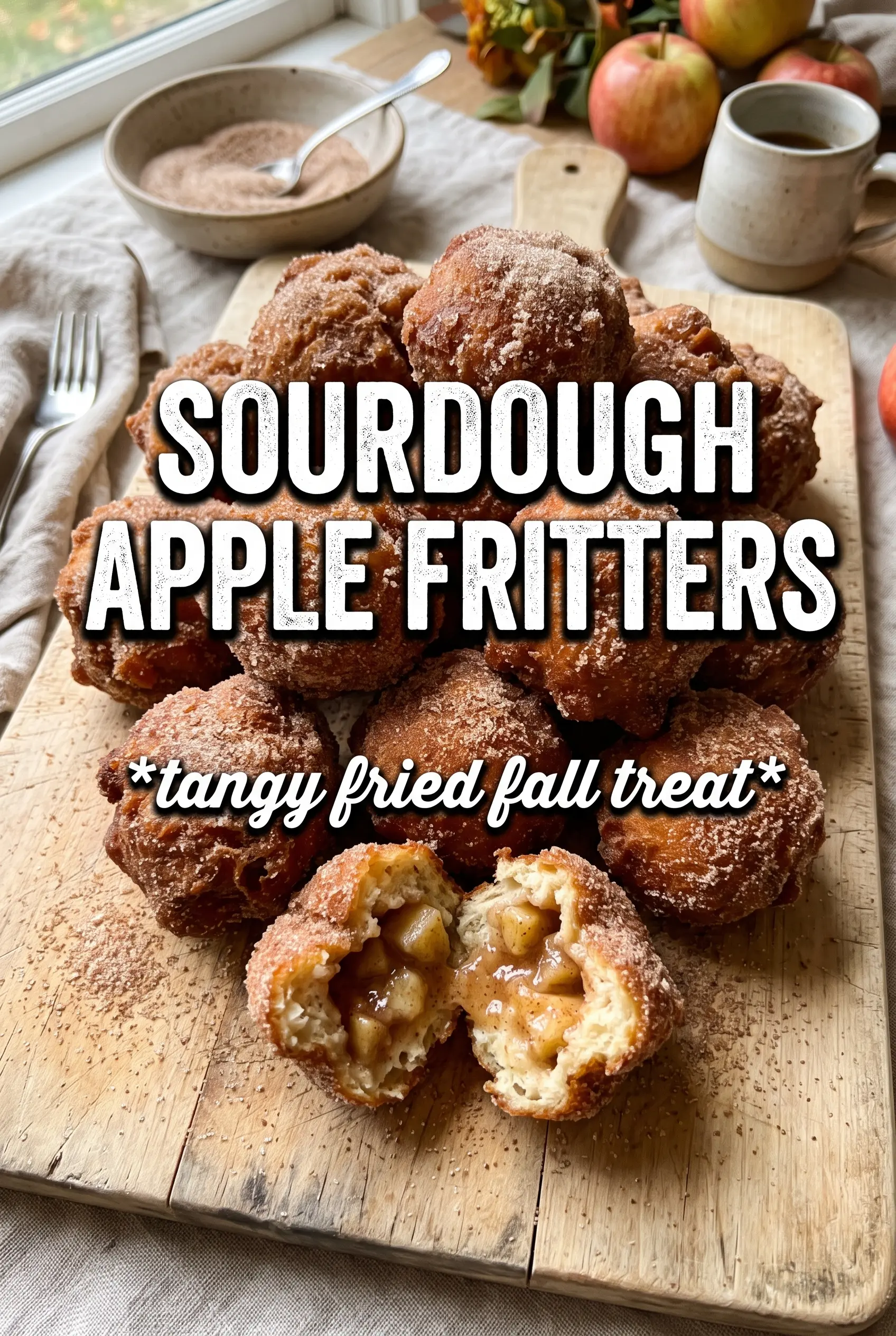
Golden sourdough apple fritters hit that sweet spot between crisp edges and a tender, cakey middle, with little pockets of apple that soften just enough in the fryer. The sourdough brings a gentle tang that keeps them from tasting flat, and the cinnamon-scented batter turns deeply browned without feeling heavy.
This version works because the batter stays thick enough to hold the apples in place, which means you get a fritter that fries up irregular and craggy instead of spreading into greasy little pancakes. Active starter gives a bit more lift, but discard works too as long as the baking powder is doing its job. The apples are diced small on purpose so they cook through before the outside gets too dark.
Below, I’ve included the little things that matter most: how hot the oil should feel, what the batter texture should look like, and when to choose powdered sugar over glaze. Those details are what keep these fritters crisp, not soggy.
The fritters came out with crisp edges and a soft middle, and the apple pieces stayed juicy instead of turning mushy. I used discard and the batter still puffed up beautifully at 350°F.
Sourdough Apple Fritters with crisp edges, tender centers, and a cinnamon-sugar finish you’ll want to make on repeat.
The Part That Keeps These Fritters Crisp Instead of Greasy
The mistake with apple fritters is usually heat, not batter. If the oil runs too cool, the outside soaks up fat before it can set, and if it runs too hot, the fritters brown before the center has time to cook through. 350°F is the sweet spot here. A heavy pot matters because it holds that temperature better when the batter goes in.
The other thing that makes a difference is keeping the batter thick and the apple dice small. Thin batter spreads and drinks oil; large apple chunks stay raw in the middle while the outside races ahead. You want a drop batter that holds its shape when it hits the oil, with little rough edges that fry up crisp.
- Sourdough starter — Active starter gives a little extra lift, but discard works fine here because baking powder does the heavy lifting. Use what you have, as long as it smells pleasantly tangy and not sharply acidic.
- Apples — Peel them and dice them finely so they soften in the short fry time. Firmer apples hold their shape best; softer apples can turn mushy and disappear into the batter.
- All-purpose flour — This gives the fritters enough structure without making them bready. Bread flour makes them tougher, and cake flour can make the batter too loose.
- Milk — Whole milk adds just enough richness to round out the sourdough tang. Lower-fat milk works, but the fritters won’t taste as full.
- Baking powder — This is what gives the fritters their puff in hot oil. Don’t skip it if you’re using discard starter, since the batter needs that extra lift.
What Each Ingredient Is Actually Doing in This Recipe
- Primary ingredient (the star) — Quality matters most. Choose the best you can find.
- Cooking medium (oil, butter, or broth) — This carries flavors and prevents dryness.
- Seasonings (salt, pepper, spices, herbs) — Layer flavors so nothing overpowers. Build depth gradually.
- Aromatics (garlic, onion, herbs) — Cook with fat to bloom flavors. Become the foundation.
- Supporting ingredients — Complement the main ingredient without overpowering it.
- Sauce or liquid (if applicable) — Brings flavors together. Balance richness with acid.
- Acid (lemon, vinegar, wine, or other) — Brightens and prevents flat-tasting results.
- Final finish (garnish, glaze, or sauce) — Prevents one-dimensional taste and adds visual appeal.
How to Mix and Fry Them So the Centers Cook Through
Building the Batter
Whisk the sourdough starter, eggs, milk, and sugar until smooth, then add the dry ingredients and stop as soon as the flour disappears. The batter should look thick and a little shaggy, not pourable. If you stir until it looks perfectly smooth, the flour can tighten up and the fritters turn dense. Fold in the apples at the end so they stay evenly distributed instead of sinking.
Holding the Oil at the Right Temperature
Heat about 2 inches of oil in a heavy pot until it reaches 350°F. If you don’t have a thermometer, a small drop of batter should sizzle right away and rise to the surface within a few seconds without turning dark instantly. The biggest failure point here is letting the oil drift too low after the first batch, so give it a minute between rounds if needed. Cold oil makes greasy fritters; scorching oil leaves raw centers.
Frying in Small Batches
Drop heaping tablespoons of batter into the oil and fry 2 to 3 minutes per side until deeply golden. The fritters should look craggy and puffed, with the edges turning crisp before the centers finish setting. Don’t crowd the pot or the temperature will drop fast, which leads to oily fritters and uneven color. Flip them once the bottom is a deep golden brown and the top looks slightly set around the edges.
Finishing While They’re Still Warm
Drain the fritters on paper towels, then dust with powdered sugar while they’re still hot so it clings in a fine layer. If you’re using the glaze, whisk it until smooth and drizzle it right before serving. The glaze sets quickly on warm fritters, so don’t wait too long or it will sit on top instead of melting in a little. These are best eaten the day they’re made, when the crust is crisp and the centers are still tender.
How to Adapt Sourdough Apple Fritters for the Way You Eat
Use sourdough discard for a tangier fritter
Discard gives a deeper sourdough note and works especially well if you like a more pronounced tang against the sweet apples. Because discard is usually less active, rely on the baking powder for lift and keep the batter thick so the fritters don’t spread.
Make them dairy-free without changing the texture much
Swap the whole milk for an unsweetened plant-based milk with some body, like oat milk. The fritters will still fry up crisp, though the flavor will be a little less rich than the version made with dairy milk.
Glaze them for a bakery-style finish
A simple cider glaze gives these a sweeter, softer finish than powdered sugar alone. Use just enough cider to make a thick drizzle so it clings instead of sliding off the warm fritters and pooling underneath.
Keep them gluten-free with a measure-for-measure blend
A good gluten-free all-purpose blend can work here, but the batter may need a minute to thicken after mixing. Let it sit briefly before frying so the starches hydrate, which helps the fritters hold together in the oil.
Storage and Reheating
- Refrigerator: Store leftovers in an airtight container for up to 2 days. They’ll soften as they sit, but the flavor stays good.
- Freezer: Freeze the fritters without sugar or glaze on a parchment-lined tray, then move them to a freezer bag. They keep well for about 1 month, though the texture is best fresh.
- Reheating: Warm them in a 350°F oven or air fryer until the outside crisps back up. Skip the microwave unless you don’t mind a soft, steamy crust.
Questions I Get Asked About This Recipe
Sourdough Apple Fritters
Ingredients
Equipment
Method
- Whisk the sourdough starter, eggs, whole milk, and sugar together until smooth.
- Stir in the all-purpose flour, cinnamon, nutmeg, salt, and baking powder until just combined; the batter should look thick.
- Fold in the finely diced apples until evenly distributed.
- Heat about 2 inches of vegetable oil in a heavy pot to 350°F.
- Drop heaping tablespoons of batter into the hot oil, then fry for 2–3 minutes per side until deeply golden.
- Fry in batches so you do not crowd the pot, keeping the oil at about 350°F.
- Drain the fritters on paper towels and dust with powdered sugar while hot, or glaze right away.
- Whisk 1 cup powdered sugar with 2 tablespoons cider until smooth, then drizzle over the warm fritters.