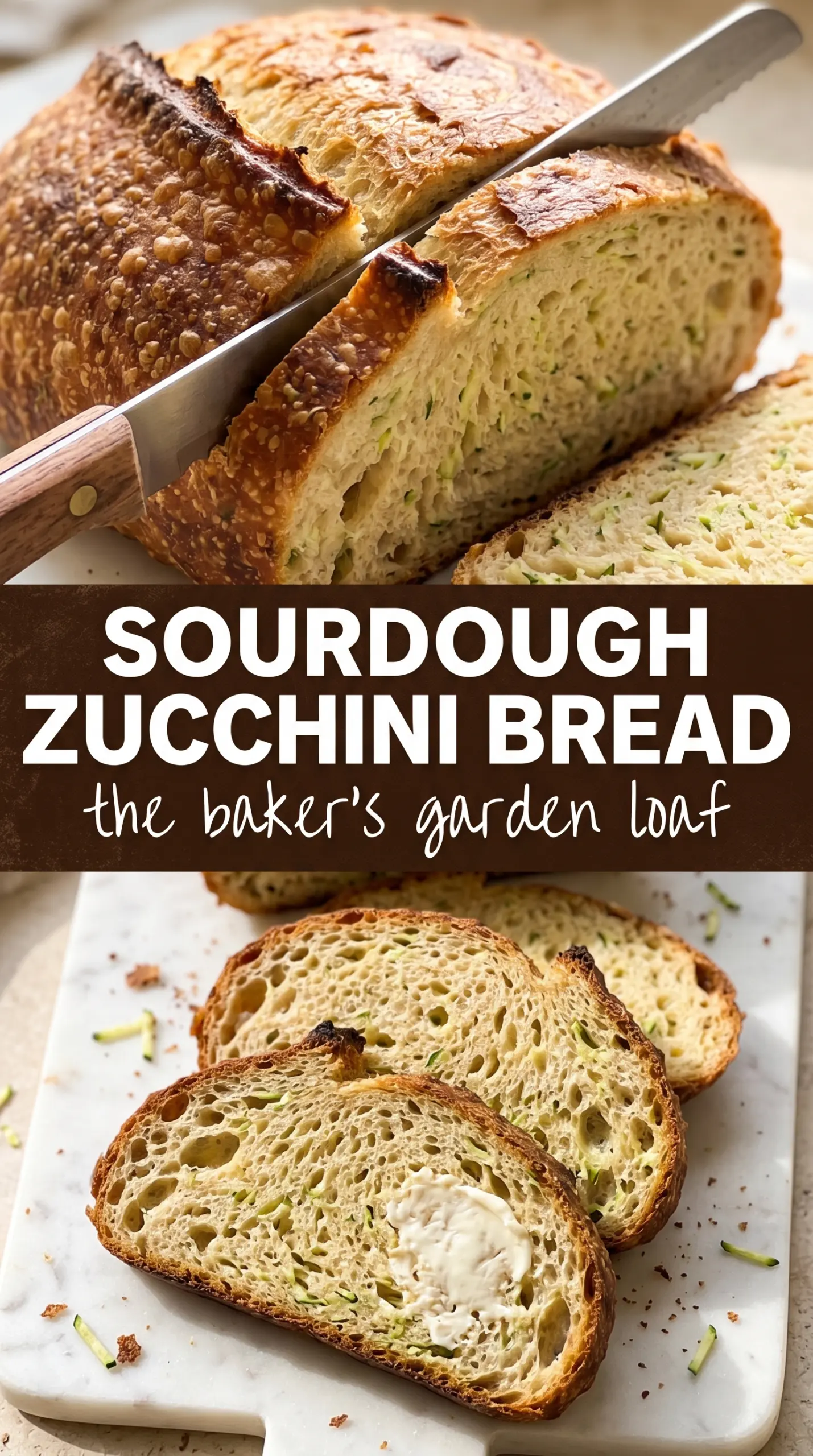
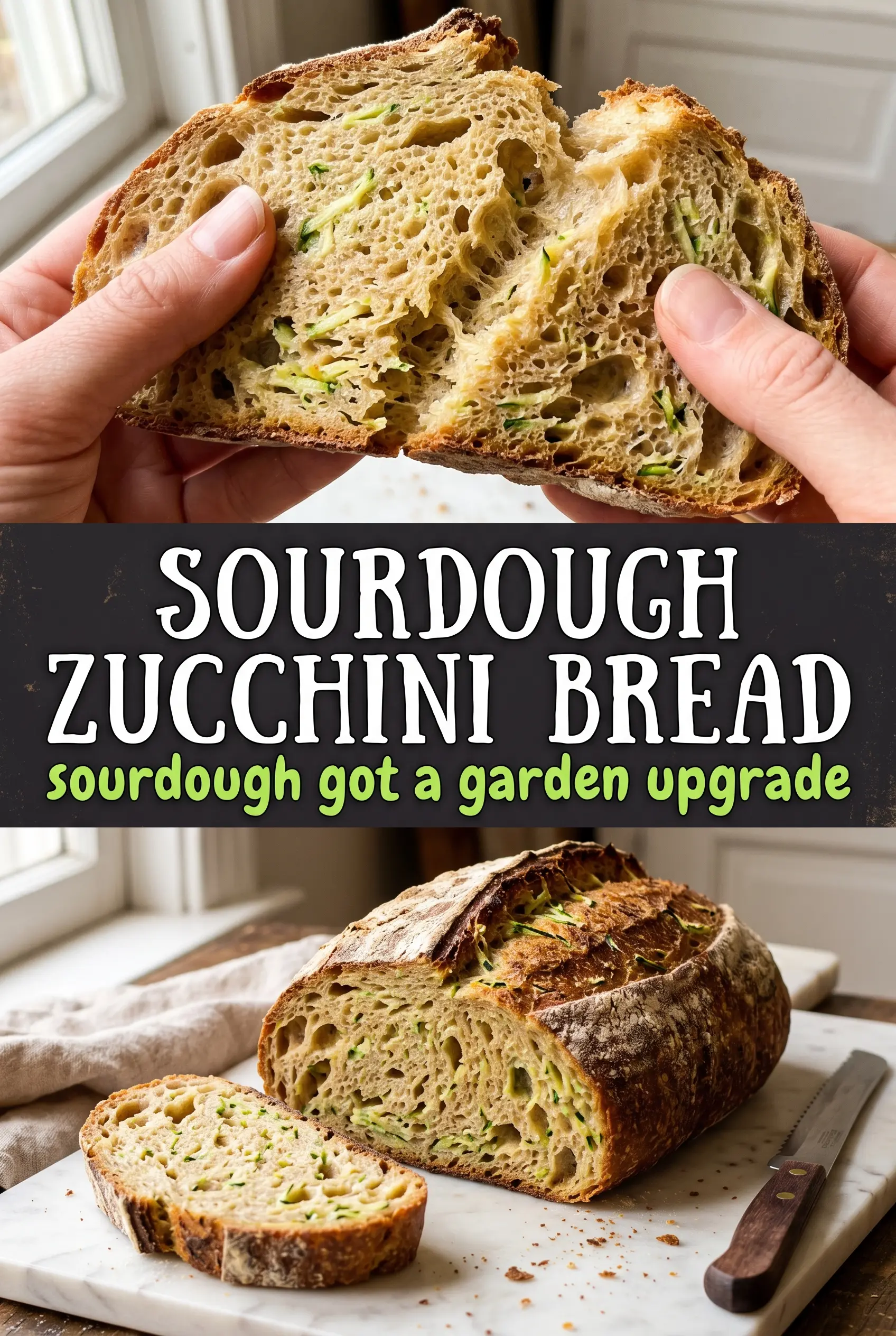
Golden, tender sourdough zucchini bread has a way of disappearing before it’s fully cooled. The crumb stays moist without turning heavy, the top bakes up with a light crackle, and the sourdough adds a gentle tang that keeps the loaf from tasting flat or overly sweet. It’s the kind of quick bread that feels familiar on the first bite, then a little more interesting on the second.
What makes this version work is the balance. Zucchini brings moisture, but it needs to be squeezed dry so it doesn’t flood the batter. The sourdough starter adds flavor and a touch of richness, while baking soda and baking powder carry the lift so the loaf still rises into a soft, even slice. A modest amount of cinnamon and vanilla rounds everything out without burying the tang.
Below, I’ll walk through the small details that matter most: how dry the zucchini should be, when to stop mixing, and how to tell when the center is baked through without drying out the edges. If you’ve got starter to use and zucchini on the counter, this loaf is one of the best ways to put both to work.
The loaf stayed incredibly moist for days, and squeezing the zucchini dry first made all the difference — no gummy middle at all. I used chocolate chips and the sourdough tang with the cinnamon was perfect.
Save this sourdough zucchini bread for the days when you want a moist quick bread with a tangy crumb and no fussy steps.
The Reason This Loaf Stays Moist Without Turning Gummy
Zucchini bread goes wrong when the batter has too much free water. Zucchini looks harmless, but once it bakes, that moisture has nowhere to go except into the crumb. If you skip the squeeze, the center can turn tight and damp instead of soft and sliceable.
The other thing that causes trouble is overmixing. Quick bread batter should look a little rough when the flour goes in. Stirring until it’s perfectly smooth develops too much structure, and that’s how you end up with a loaf that feels bouncy instead of tender. The sourdough starter adds flavor here, but it also brings more moisture, so the rest of the method has to stay disciplined.
- Squeezed zucchini — This is nonnegotiable. After grating, press it firmly in a clean towel until it no longer gives up liquid. You want it damp, not wet.
- Sourdough starter — Active starter or discard both work here. This isn’t a yeast bread, so you’re using the starter for flavor, not rise.
- Baking soda and baking powder — The baking soda reacts with the starter’s acidity, while the baking powder gives the loaf extra lift. Together they keep the bread from baking up dense.
- Oil — Oil keeps the crumb softer for longer than butter would. If you swap in melted butter, the loaf will taste a little richer but it won’t stay quite as moist on day two.
What Each Ingredient Is Doing in This Sourdough Quick Bread
- All-purpose flour — Standard all-purpose flour gives the loaf enough structure without making it tough. Bread flour isn’t necessary and can make the crumb chewier than you want.
- Sourdough starter — Use whatever you have on hand, active or discard. If your discard is very thin, the batter may loosen a bit; that’s fine as long as the zucchini is well squeezed.
- Granulated sugar — This does more than sweeten. It helps the loaf brown and keeps the crumb soft. You can reduce it slightly, but the bread will taste less round and the crust will be paler.
- Eggs — They give the loaf lift, richness, and structure. There isn’t a great direct substitute if you want the same sliceable texture.
- Vegetable oil — Neutral oil lets the tangy starter and cinnamon come through. Melted coconut oil can work, but it firms up a bit as it cools and changes the texture.
- Zucchini — Grate it on the small holes and squeeze it dry after measuring. If you pack in extra zucchini without adjusting anything else, the loaf turns heavy in the middle.
- Walnuts or chocolate chips — Both are optional, but each changes the loaf in a useful way. Walnuts add crunch and a little bitterness; chocolate chips make the tang taste softer and more dessert-like.
How to Build the Batter So the Loaf Bakes Evenly
Mix the Dry Ingredients First
Whisk the flour, baking soda, baking powder, salt, and cinnamon together until the mixture looks even. That step matters more than it sounds because the leaveners need to be distributed through the flour before the wet ingredients hit the bowl. If you dump everything in layers, you can end up with bitter pockets of baking soda or a loaf that rises unevenly.
Beat the Wet Ingredients Until Smooth
Combine the sugar, eggs, oil, sourdough starter, and vanilla until the mixture looks glossy and fully blended. You’re not whipping air into it; you’re dissolving the sugar and making sure the starter disappears into the base. If it still looks streaky, keep mixing before the zucchini goes in, because once the flour is added you want to stir as little as possible.
Fold, Don’t Whip
Stir in the squeezed zucchini, then add the dry ingredients and fold just until the flour disappears. A few streaks are better than overworking the batter. If you’re using walnuts or chocolate chips, fold them in at the end so they stay distributed instead of sinking.
Bake Until the Center Springs Back
Scrape the batter into a greased 9×5 loaf pan and bake until the top is deep golden and a toothpick comes out clean, usually 55 to 65 minutes. If the top browns too quickly before the center is done, lay a piece of foil loosely over the loaf for the last 10 to 15 minutes. Let it rest for 15 minutes before slicing; the crumb sets as it cools, and the sourdough flavor settles in even more by the next day.
How to Adapt This for Different Kitchens and Cravings
Make It Dairy-Free Without Changing the Texture
This loaf is already dairy-free as written, which is one reason it’s such an easy quick bread to keep in rotation. Just check your chocolate chips if you use them, since some brands contain milk. The texture stays soft because the oil does the work that butter would usually do.
Swap the Add-Ins Based on What You Want From the Slice
Walnuts give the loaf crunch and a more breakfast-style feel. Chocolate chips push it closer to dessert and make the tang of the sourdough a little gentler. You can leave both out if you want the cleanest zucchini flavor and the softest crumb.
Use Discard When You Don’t Want to Feed the Starter
Discard works just as well as active starter because this loaf doesn’t depend on fermentation for rise. It’s a good place to use older starter with a mild tang. If your discard smells overly sharp or acetone-like, use a fresher batch for a cleaner flavor.
Storage and Reheating
- Refrigerator: Store tightly wrapped for up to 5 days. The crumb stays moist, but the loaf can taste a little denser when chilled.
- Freezer: Freeze slices or the whole loaf for up to 3 months. Wrap well in plastic, then foil, and thaw at room temperature so the crumb doesn’t turn soggy.
- Reheating: Warm slices in a toaster oven or a skillet over low heat. Microwaving too long makes the zucchini bread rubbery, so use short bursts if that’s your only option.
Answers to the Questions Worth Asking
Sourdough Zucchini Bread
Ingredients
Equipment
Method
- Preheat the oven to 350°F and grease a 9x5 loaf pan for even release and a clean crust.
- Whisk all-purpose flour, baking soda, baking powder, salt, and cinnamon together until no dry streaks remain.
- Beat granulated sugar, eggs, vegetable oil, sourdough starter, and vanilla extract until smooth and glossy.
- Stir in grated zucchini that has been squeezed dry so the loaf bakes up moist instead of wet.
- Fold the dry ingredients into the wet mixture just until combined, then fold in walnuts or chocolate chips if using for even distribution without overmixing.
- Pour the batter into the greased loaf pan and bake at 350°F for 55–65 minutes, until a toothpick comes out clean and the top turns golden.
- Cool for 15 minutes before slicing so the loaf sets, and note that the sourdough tang develops more after one day.