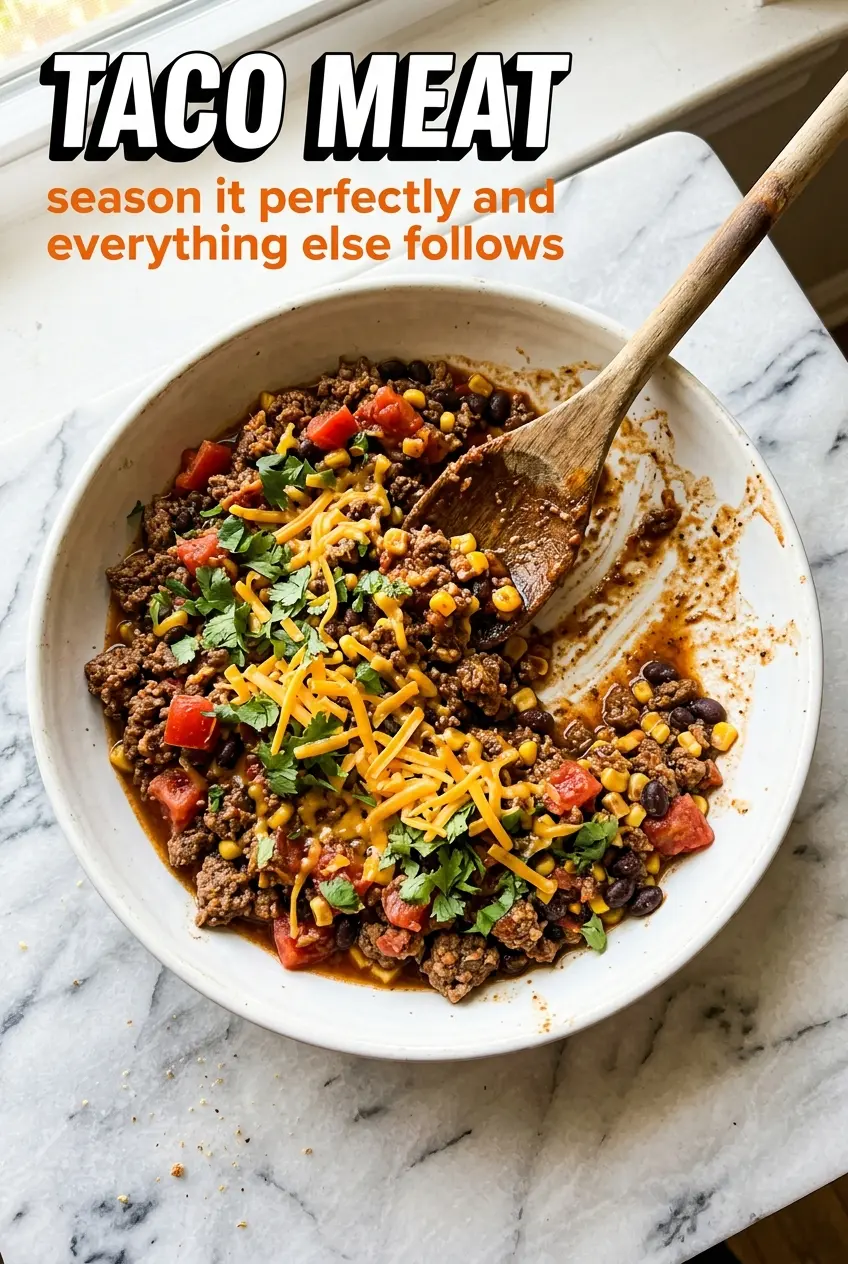
Browned taco meat should taste bold, juicy, and deeply seasoned, with every crumble coated in a savory sauce that clings instead of pooling in the pan. The difference between average and great taco meat comes down to building that coating while the beef still has enough fat left in the skillet to carry the spices.
This version uses tomato paste for body, cumin for warmth, and just enough cayenne to give the meat a little edge without overpowering the rest of the filling. Letting the seasoning simmer with water for a few minutes turns the spices from dusty to cohesive, which is what keeps the meat from tasting flat once it hits a tortilla.
Below, you’ll find the small timing details that keep the beef tender, plus a few smart swaps for when you want to stretch it into burritos, nachos, or a bigger batch for the freezer.
The sauce thickened up perfectly and coated every bit of beef, and the cumin made it taste like the taco filling from our favorite restaurant.
Love taco meat with a rich, saucy coating? Save this skillet version for quick tacos, burritos, and quesadillas.
Why the Beef Needs Room to Brown Before the Seasoning Goes In
The biggest mistake with taco meat is seasoning too early and steaming the beef before it develops color. Browning first gives you the savory base that keeps the filling from tasting one-note. Once the meat has cooked down and the excess fat is drained to a thin layer, the spices can bloom in that hot skillet instead of sitting on top of wet crumbles.
That extra minute or two of simmering matters more than most people think. The water and tomato paste work together to turn the seasoning into a light sauce, and that sauce is what makes the meat stay juicy inside a taco shell instead of feeling dry and sandy.
What Each Ingredient Is Actually Doing in This Skillet
- Ground beef — Use 80/20 if you want the best balance of flavor and moisture. Leaner beef works, but it can eat a little dry unless you leave a touch more fat in the pan.
- Taco seasoning — This is the backbone of the dish, bringing salt, chili, and earthy spices in one shot. Store-bought packets are fine here; the beef does the heavy lifting, and the seasoning just needs to be bold and well distributed.
- Tomato paste — This adds body and a subtle sweetness that helps the sauce cling to the meat. If you skip it, the filling tastes thinner and the spices don’t coat as evenly.
- Cumin — A small amount deepens the warm, smoky edge of the meat. Too much makes it taste dusty, so keep it measured.
- Water — It looks basic, but it gives the seasoning something to dissolve into so the sauce can tighten around the beef. Broth works in a pinch, though it can push the salt level higher.
- Cayenne pepper — This is where the gentle heat comes from. Leave it out for a milder filling, or add a pinch more if you want the meat to stand up inside burritos and nachos.
The Few Minutes That Turn Crumbles Into Taco Filling
Browning the Beef Properly
Set the skillet over medium-high heat and break the beef into small crumbles as it cooks. You’re looking for browned edges and no pink left in the center, not gray meat simmering in its own liquid. If the pan fills with grease, drain off most of it but keep about 1 to 2 tablespoons so the spices have something rich to cling to.
Turning Seasoning Into Sauce
Add the water, taco seasoning, tomato paste, cumin, garlic powder, and cayenne all at once. Stir until the tomato paste dissolves and the beef looks evenly coated. The pan should look loose at first; that liquid is supposed to reduce. If it seems dry right away, the heat is too high or too much fat was drained.
Letting the Coating Tighten
Let the mixture simmer for 3 to 5 minutes, stirring once or twice, until the liquid turns glossy and clings to the meat. The sound shifts from a wet sizzle to a thicker, softer bubbling when it’s close. Pull it off the heat as soon as the sauce coats the crumbles, because leaving it on too long will dry out the beef.
Final Salt Check
Taste before serving and add salt or pepper only if the filling needs it. Taco seasoning packets vary a lot, and this is where you correct for that instead of guessing up front. A little extra salt at the end wakes everything up, especially if the meat is going straight into tortillas with plain toppings.
How to Adjust This Taco Meat for Different Nights
Leaner, Lighter Taco Meat
Use 90/10 ground beef and keep the full amount of tomato paste and water. The filling will be a little less rich, so don’t drain it bone dry or the spices won’t coat the meat as well. This version works well for taco salads or stuffed peppers.
Dairy-Free and Gluten-Free Serving Style
The meat itself is naturally dairy-free and gluten-free as long as your taco seasoning packet is certified gluten-free. Serve it with corn tortillas, rice bowls, or lettuce wraps, and it still eats like a full meal without changing the cooking method.
Milder Family Version
Skip the cayenne and use a mild taco seasoning blend. You still get plenty of flavor from the cumin and tomato paste, but the heat stays low enough for picky eaters. This is the easiest way to keep the filling flexible for toppings with salsa or hot sauce on the side.
Storage and Reheating
- Refrigerator: Store in an airtight container for up to 4 days. The spices settle a little as it chills, so the flavor gets even better by day two.
- Freezer: Freezes well for up to 3 months. Cool it completely first, then pack it flat in freezer bags or a shallow container so it thaws evenly.
- Reheating: Reheat in a skillet over medium-low with a splash of water to loosen the sauce. The common mistake is blasting it over high heat, which dries out the beef and makes the seasoning taste sharp instead of rounded.
Questions I Get Asked About This Recipe
Taco Meat
Ingredients
Equipment
Method
- Heat a large skillet over medium-high heat and add the ground beef, breaking it into small crumbles as it cooks for about 5-7 minutes. You want the beef browned all over with no raw pink left.
- Drain excess fat, leaving about 1-2 tablespoons in the skillet for flavor and moisture. Stop when the surface looks less greasy but still glossy.
- Add water, taco seasoning, tomato paste, cumin, garlic powder, and cayenne pepper to the skillet. Stir until the tomato paste fully dissolves and the spices look evenly distributed.
- Simmer for 3-5 minutes, stirring occasionally, until the sauce thickens and coats the meat. Look for a glossy, clinging sauce that reduces noticeably on the beef.
- Season with additional salt and pepper to taste. Taste a small spoonful and adjust until the seasoning is balanced.
- Use the taco meat immediately in tacos, burritos, quesadillas, or other Mexican dishes. The texture should be saucy and hot when served.
- Let the taco meat cool, then store it in an airtight container in the refrigerator for up to 4 days. Reheat until steaming before using.