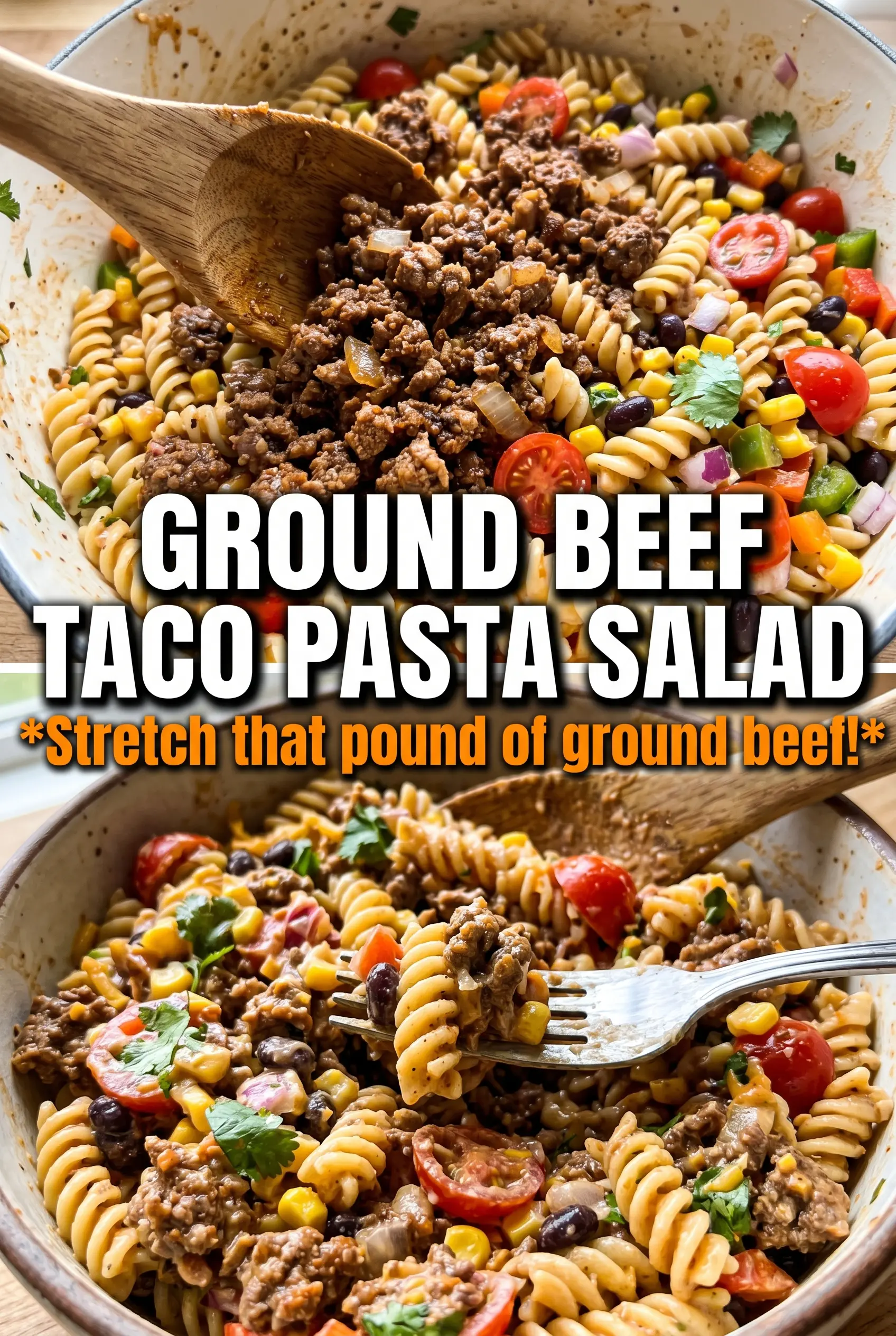
Taco pasta salad lands in that sweet spot between potluck side and full dinner. The cold pasta holds onto the creamy ranch-salsa dressing, the seasoned beef brings the taco flavor, and the crunchy chips on top keep every bite from going soft and flat. It eats like a chopped taco bowl crossed with a pasta salad, which is exactly why it disappears fast once it hits the table.
The trick is cooling the pasta and beef before they meet the dressing. Warm pasta soaks up too much sauce and dulls the texture, while warm beef can melt the cheese and make the whole bowl feel heavy. The ranch and salsa mixture does the job of a quick dressing without turning watery, and the chill time gives the flavors time to settle into the pasta instead of sitting on top of it.
Below, I’m walking through the details that matter most: how to keep the pasta from getting soggy, which topping should wait until the very end, and a few easy swaps for making this work with what you’ve got in the fridge.
The pasta held up overnight and the ranch-salsa dressing clung to everything instead of pooling at the bottom. I added the chips right before serving and they stayed crunchy, which made the whole salad taste fresh.
Like this Taco Pasta Salad? Save it to Pinterest for an easy make-ahead meal with creamy dressing, seasoned beef, and crunchy tortilla chips on top.
The Trick to Keeping Taco Pasta Salad Creamy, Not Heavy
The part that usually goes wrong here is heat. If the pasta or beef goes into the bowl warm, the dressing loosens up, the cheese starts to melt, and the salad turns from bright and tossable into something thick and greasy. Cooling both components before mixing keeps the dressing stable and lets the pasta absorb flavor without collapsing.
The other thing worth respecting is the rest time. Two hours in the fridge isn’t busywork. It gives the ranch and salsa time to settle into the shells or rotini, and it lets the taco seasoning spread through the beef instead of tasting like separate layers. If the salad tastes a little flat right after mixing, that usually means it just needs cold time, not more dressing.
What Each Ingredient Is Actually Doing in the Bowl
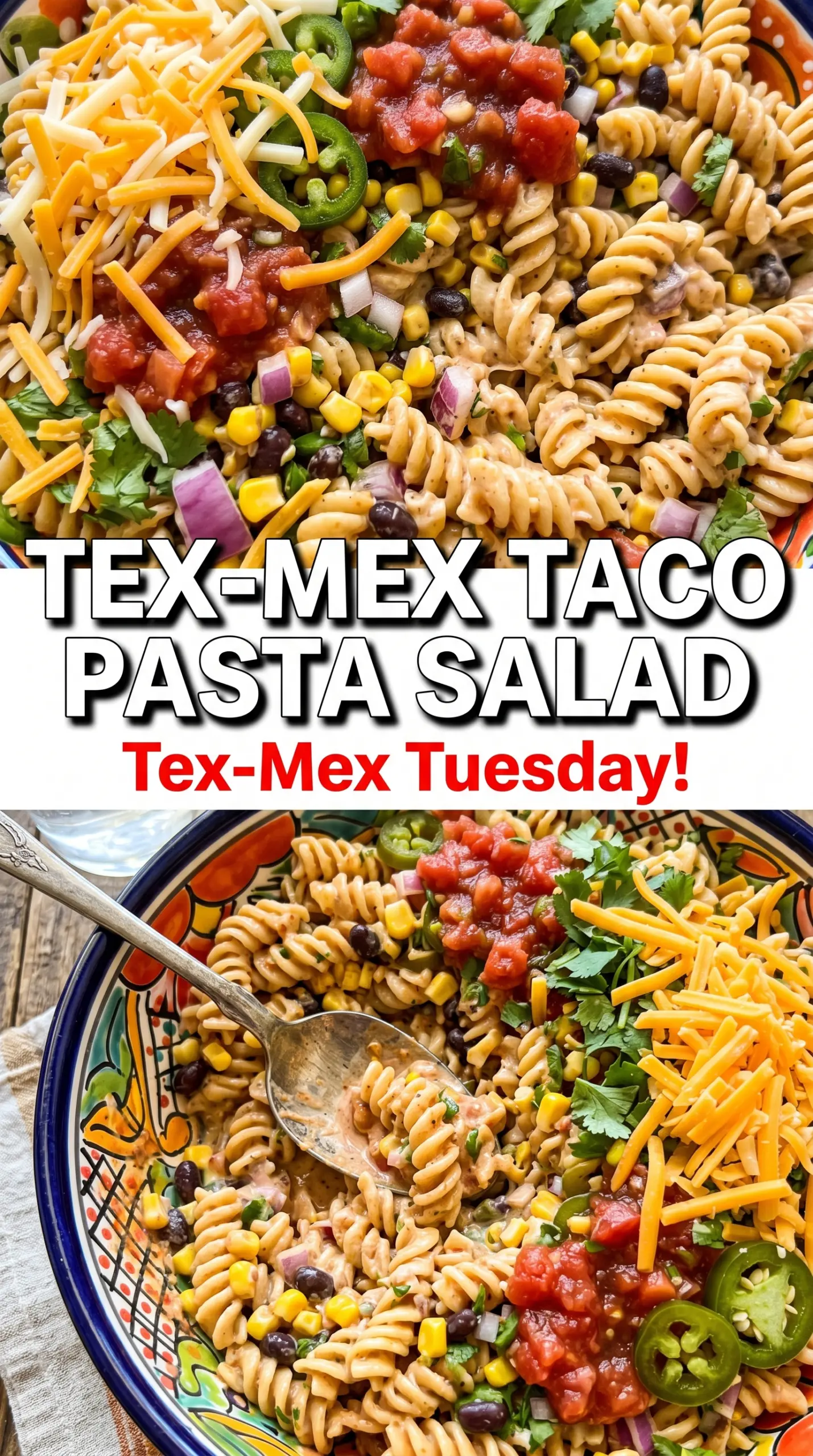
- Pasta shells or rotini — Both shapes hold the dressing in their curves and ridges. Shells give you little pockets of sauce, while rotini catches bits of beef and cheese in the spirals. Use a shape with texture; smooth pasta slips too much dressing off the surface.
- Ground beef — This is the savory anchor, and taco seasoning clings best to beef that’s browned in a hot pan with enough space to caramelize a little. Drain off excess fat if your beef is fatty, or the dressing can turn slick. Lean beef works well here and keeps the salad cleaner-tasting.
- Ranch dressing plus salsa — Ranch gives the creamy base, and salsa cuts it with acidity and spice. That combination is what makes the salad taste like taco night instead of plain pasta with beef. Use a thicker salsa if yours is very loose; watery salsa can thin the dressing more than you want.
- Cheddar cheese — Shredded cheddar adds sharpness and some body. Pre-shredded works fine, but freshly shredded melts into the salad a little better once it chills. Add it after the beef has cooled so it doesn’t clump.
- Corn, tomatoes, and red onion — These bring sweetness, freshness, and bite. Cherry tomatoes stay firmer than larger tomatoes, and red onion gives the salad the sharp edge it needs to cut through the creamy dressing. Dice the onion finely so it reads as flavor, not crunch overload.
- Tortilla chips — These should wait until the very end. If they go in early, they soften in the dressing and lose the whole point. Crushed chips on top give you the taco-salad finish and a crisp contrast against the cold pasta.
Building the Bowl So Nothing Turns Mushy
Cooking the Pasta Past the Bare Minimum
Cook the pasta in well-salted water until it’s just past al dente, then drain and rinse it under cold water right away. A pasta salad needs a little extra structure because it keeps absorbing moisture as it chills. If you leave the noodles hot or underdone, they tighten up and turn chewy once the dressing hits them.
Browning and Cooling the Beef
Brown the beef until it’s no longer pink and you see some browned bits in the pan. That color means more flavor, and taco seasoning sticks better to meat that has some surface texture. Spread the beef out on a plate or sheet pan to cool faster; piling it in a bowl traps steam and makes the whole salad wetter than it should be.
Mixing the Dressing Before Anything Else
Stir the ranch and salsa together until the color looks even and the mixture is smooth. If you add them separately to the bowl, they never coat the pasta as evenly. A thicker dressing is better here because the salad needs to cling, not pool.
Chilling, Then Finishing at the Last Minute
Toss everything except the chips, lettuce, sour cream, and cilantro, then chill the bowl for at least two hours. That’s the part that turns it from assembled ingredients into a real pasta salad. Right before serving, add the crunchy and fresh toppings so the texture stays lively instead of soft all the way through.
How to Adjust Taco Pasta Salad for the Pantry You Have
Ground turkey instead of beef
Ground turkey works if you want a lighter bowl, but it needs a little help because it doesn’t bring as much built-in richness as beef. Brown it well and season it generously so the salad still tastes bold. The result is a cleaner, leaner pasta salad with the same taco-style backbone.
Dairy-free version
Use a dairy-free ranch and a shredded non-dairy cheddar-style cheese that melts reasonably well after chilling. The texture won’t be exactly the same, but the salsa and seasoning still carry the flavor. Keep the chips for crunch, since they help replace some of the richness you lose from the cheese.
Gluten-free pasta salad
Use a sturdy gluten-free pasta shape and stop cooking it as soon as it’s tender, because GF pasta can go soft fast after chilling. Rinse it well and toss it with the dressing only after it has cooled completely. Check the tortilla chips and taco seasoning label too, since those can be the hidden gluten spots.
Make it ahead for a crowd
Mix the pasta, beef, cheese, vegetables, and dressing up to a day ahead, but hold back the lettuce and chips until serving. The salad gets better after it rests, but the fresh toppings need to stay separate or they’ll wilt and soften. If it looks a little dry after chilling, add a spoonful or two of ranch before serving.
Storage and Reheating
- Refrigerator: Store covered for up to 3 days. The pasta will absorb more dressing as it sits, so the salad gets thicker and a little less creamy by day two.
- Freezer: Don’t freeze this one. The dressing separates, the pasta softens, and the fresh vegetables lose their texture.
- Reheating: Serve it cold or let it sit at room temperature for about 15 minutes. Don’t microwave the finished salad, or the dressing will break and the lettuce, if added, will wilt fast.
Answers to the Questions Worth Asking
Taco Pasta Salad
Ingredients
Equipment
Method
- Cook the pasta shells or rotini according to package directions until tender, then drain and rinse under cold water to stop cooking. You want the pasta to feel cool and separate in appearance.
- Brown the ground beef in a hot skillet over medium-high heat until no longer pink, then add taco seasoning according to package directions and stir to coat. Spread on a sheet pan and cool until warm-to-room temperature, so it won’t melt the dressing.
- Mix ranch dressing with salsa until smooth and lightly speckled. It should look evenly blended, not streaky.
- Combine the pasta, ground beef, cheddar cheese, cherry tomatoes, corn kernels, and red onion in a large bowl, distributing the mix evenly. The salad should show all colors throughout.
- Pour the ranch-salsa dressing over the salad and toss thoroughly to coat every piece of pasta. Stop when the mixture looks glossy and evenly creamy.
- Refrigerate the salad for at least 2 hours so the pasta firms and the flavors meld. It should be cold throughout when you check it.
- Top with crushed tortilla chips, lettuce, sour cream, and cilantro right before serving. Use the chips last so they stay crisp-looking.