Glossy teriyaki chicken earns its place in the regular dinner rotation because it gives you sticky, caramelized edges and a sauce that clings instead of pooling at the bottom of the bowl. The chicken stays juicy, the glaze turns dark amber in the pan, and every bite tastes balanced: salty, sweet, and just sharp enough to keep you going back for another forkful.
The trick here is splitting the sauce before the chicken goes in. Half becomes the marinade, which seasons the meat from the outside in, and the other half stays clean so it can be simmered into a thick glaze later. That keeps the finished sauce safe to eat and gives you a better texture than trying to cook down a pan of raw marinade and expecting it to behave like a proper teriyaki sauce.
Below, I’ve included the timing cue that keeps the chicken from drying out, the one swap I use when I’m out of mirin, and the best way to reheat leftovers without losing that sticky finish.
The sauce thickened up fast and coated the chicken instead of turning watery like other teriyaki recipes I’ve tried. I added the green onions at the end and it tasted just like the takeout version my husband always orders.
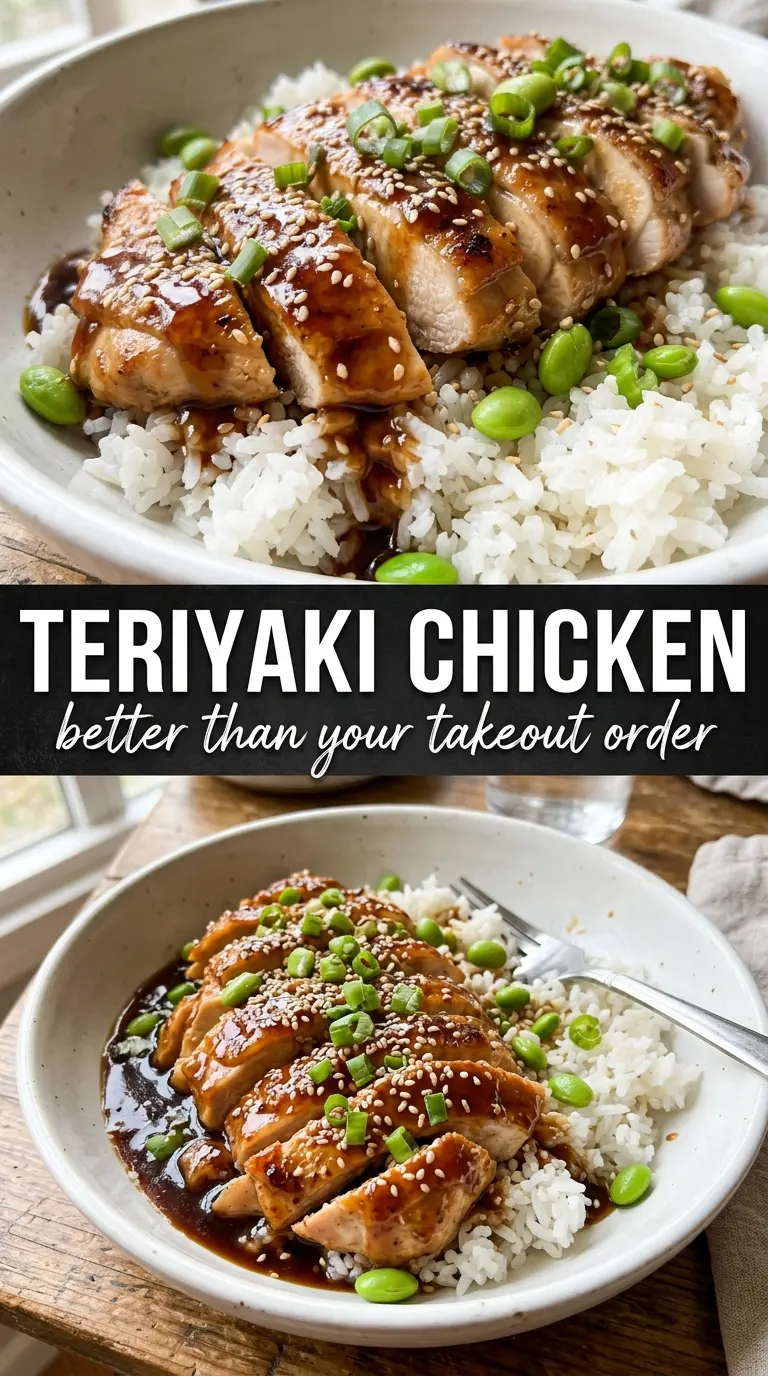
Sticky teriyaki chicken with caramelized edges and a glossy sesame finish makes an easy rice bowl night worth repeating.
The Reason the Glaze Sticks Instead of Sliding Off
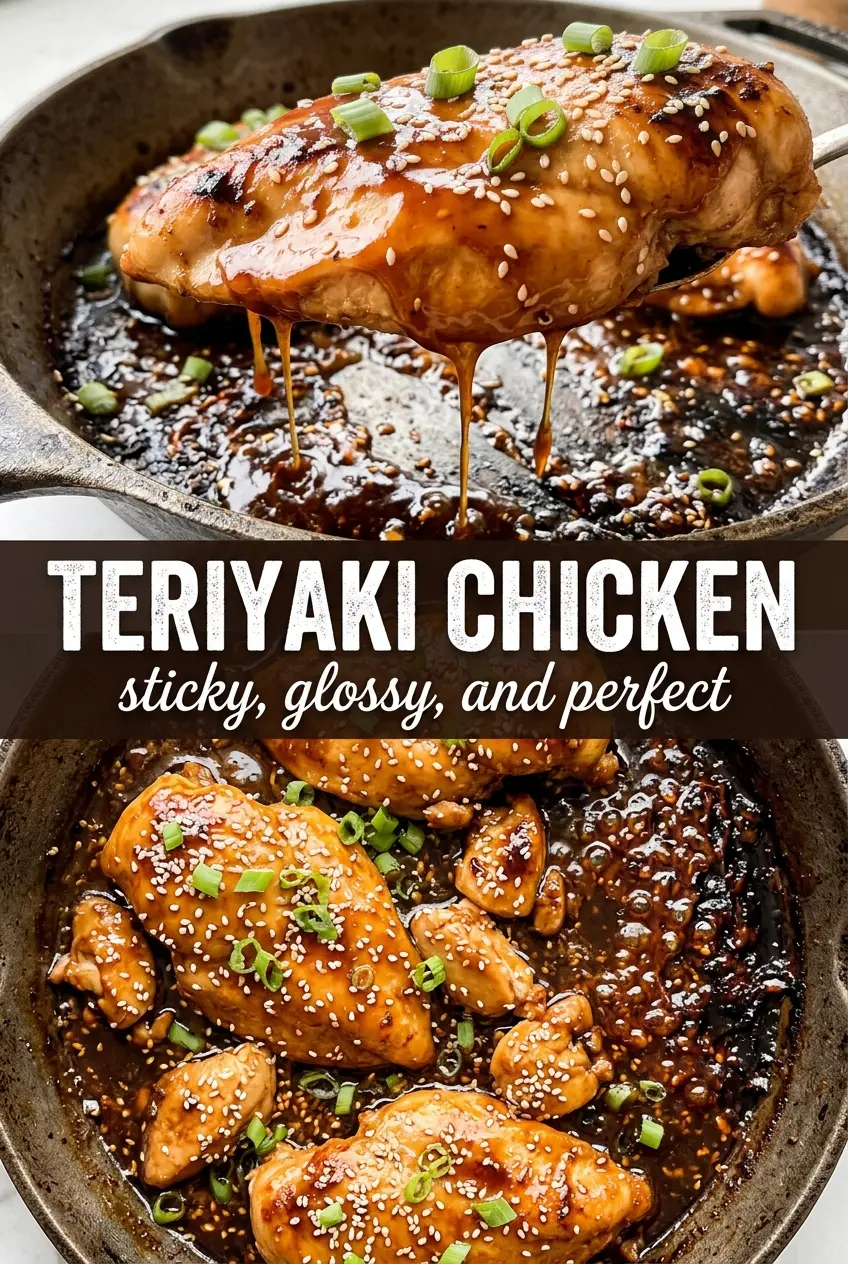
Teriyaki can go wrong fast if the sauce is too thin or the pan is too cool. In that case, the chicken cooks through, but the glaze never tightens into that lacquered coating people want. Here, the combination of sugar, honey, and a cornstarch slurry gives you a sauce that bubbles, thickens, and grabs onto the chicken instead of soaking into the rice.
Boneless skinless thighs are the right cut for this. They stay tender through the high-heat sear and don’t punish you for a minute or two of extra cooking the way chicken breast can. If you use breast, cut the pieces evenly and pull them as soon as they hit 165°F or they’ll go dry before the sauce finishes.
- Soy sauce — This is the base seasoning, not just salt. Use regular soy sauce for the most familiar flavor; low-sodium works if that’s what you keep, but the sauce will taste a little flatter unless you reduce it carefully after simmering.
- Brown sugar and honey — These build the sticky finish and help the chicken caramelize. Honey adds shine, while brown sugar brings a deeper molasses note, so don’t skip one without expecting the taste to shift.
- Mirin or rice vinegar — Mirin gives the sauce the rounded sweetness you expect in teriyaki. If you use rice vinegar instead, the sauce gets brighter and less mellow, which is still good but a little sharper.
- Sake or dry sherry — This is optional, but it adds a restaurant-style depth that plain water can’t replace. If you leave it out, nothing breaks; the sauce just tastes a touch more direct.
- Cornstarch slurry — This is what turns the reserved marinade into a glaze. Stir it in after the sauce comes to a simmer, not before, or you’ll get a chalky texture instead of a glossy finish.
What Each Ingredient Is Actually Doing in This Chicken Recipe
- Chicken (the protein foundation) — Choose the right cut for the method. Thighs stay moister; breasts cook faster.
- Sauce or cooking liquid (the moisture keeper) — This prevents the chicken from drying out. Balance richness with acid.
- Aromatics (garlic, onion, ginger, herbs) — These add depth. Cook them with fat so they become part of the sauce rather than separate.
- Seasonings (salt, pepper, spices) — Don’t underseason. The chicken carries the entire flavor profile.
- Acid (lemon, vinegar, wine, tomato) — This brightens and balances heavy sauces. Add timing matters for flavor preservation.
- Fat (oil, butter, cream) — This keeps chicken moist and carries flavors. It’s also what makes the dish taste delicious.
- Fresh herbs or garnish (the finish) — These keep the dish from tasting one-dimensional. Add at the end so they stay fresh.
- Proper doneness (165°F internal temperature) — Use a thermometer. Overcooked chicken is dry; undercooked is unsafe.
How to Get the Chicken Caramelized Before the Sauce Goes In
Whisking and Dividing the Sauce
Start by whisking the soy sauce, brown sugar, honey, mirin, sake, garlic, and ginger until the sugar looks mostly dissolved. Reserve half before the chicken touches it. That clean half is what becomes your sauce later; the portion used for marinating has been in contact with raw chicken, so it needs to be cooked fully before serving.
Marinating for Just Long Enough
Toss the chicken thighs in the marinade and let them sit for 20 minutes. That short rest seasons the surface without drawing out so much moisture that the chicken steams in the pan. If you let it go much longer, the sugar starts to work against you and the exterior can brown before the center is ready.
Searing Until the Edges Turn Dark
Heat the oil in a large skillet over medium-high heat, then lay the chicken in a single layer. You want to hear a steady sizzle as soon as it hits the pan. Cook for 5 to 6 minutes per side, leaving it alone until the underside is deeply golden and the edges take on a darker amber color; if the pan is crowded, the chicken will release water and lose that seared finish.
Turning the Reserved Marinade Into a Glossy Glaze
Move the chicken out of the skillet, then pour in the reserved sauce and bring it to a simmer. Stir in the cornstarch slurry and cook for 2 to 3 minutes until the liquid turns thick, shiny, and just starts to cling to the spoon. If it stays thin, give it another minute; if it turns pasty, the heat was too high and the slurry set too fast.
Coating and Serving
Return the chicken to the skillet and turn it in the sauce until every piece is lacquered. Spoon it over steamed rice, then finish with sesame seeds and green onions. The rice matters here because it catches the extra glaze, and that extra sauce is half the appeal.
How to Adapt This for What’s in Your Kitchen
Gluten-Free Teriyaki Chicken
Use a gluten-free soy sauce or tamari in place of standard soy sauce. The sauce will still thicken and caramelize the same way, but tamari usually tastes a little rounder and less sharp. Check that your mirin or rice vinegar is gluten-free as well if you’re cooking for someone sensitive.
No Mirin on Hand
Rice vinegar works in a pinch, but it brings more bite and less sweetness than mirin. If you use it, keep the honey as written and don’t add extra vinegar unless you want a brighter, less traditional glaze.
Chicken Breast Instead of Thighs
Chicken breast works, but it needs more attention because it dries out faster. Cut it into even pieces and start checking for doneness a little early; pull it the moment it reaches 165°F and let the sauce finish the job of coating, not cooking, the meat.
Lower-Sugar Version
You can cut the brown sugar back a little and still get a good glaze, but don’t remove all the sweetener or the sauce will taste flat and won’t lacquer the same way. If you reduce the sugar, simmer the sauce a touch longer so it thickens before the chicken goes back in.
Storage and Reheating
- Refrigerator: Store leftovers in an airtight container for up to 4 days. The sauce will thicken as it chills, which is normal.
- Freezer: It freezes well for up to 2 months. Freeze the chicken and sauce together in a sealed container, then thaw overnight in the refrigerator before reheating.
- Reheating: Warm it gently in a skillet over medium-low heat with a splash of water to loosen the glaze. High heat can tighten the sauce too much and dry out the chicken before the center is hot.
Answers to the Questions Worth Asking
Teriyaki Chicken
Ingredients
Equipment
Method
- Whisk together soy sauce, brown sugar, honey, mirin, sake, garlic, and ginger in a bowl until the sugar dissolves.
- Reserve half the mixture for the sauce and marinate the chicken in the other half for 20 minutes, refrigerated, until well coated.
- Heat vegetable oil in a large skillet over medium-high heat until shimmering.
- Add the marinated chicken and cook 5-6 minutes per side, until caramelized and the internal temperature reaches 165°F, then remove to a plate.
- Pour the reserved marinade into the pan and bring it to a simmer, scraping up the browned bits.
- Stir in the cornstarch slurry and cook 2-3 minutes until thick and glossy.
- Return the chicken to the pan and turn to coat in the teriyaki sauce until glazed.
- Serve the teriyaki chicken over steamed rice, drizzle with any extra sauce, and garnish with sesame seeds and green onions.