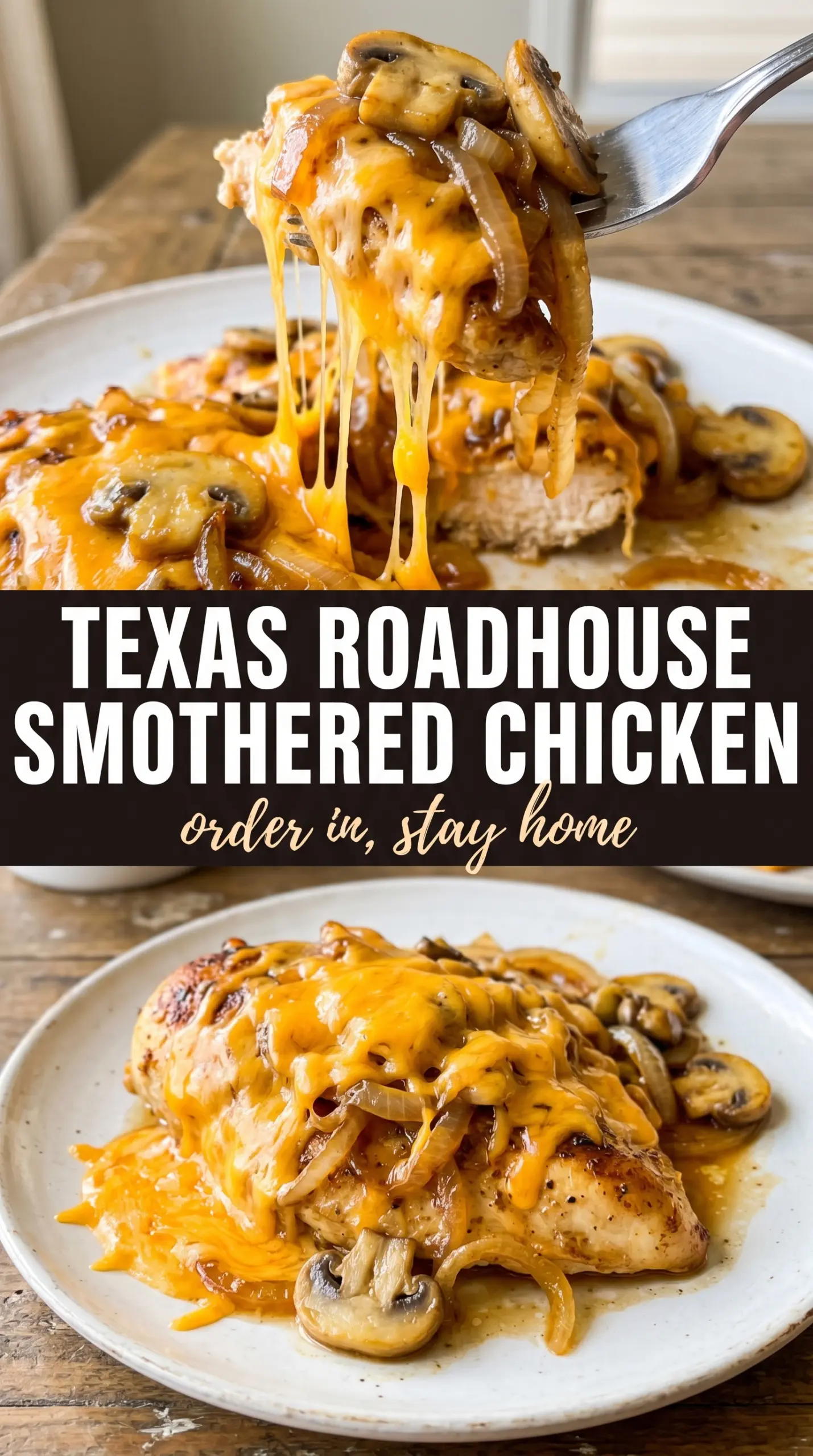
Golden seared chicken breasts under a pile of buttery mushrooms, sweet caramelized onions, and bubbling Monterey Jack cheese are the kind of dinner that looks like it came straight off a steakhouse plate. The chicken stays juicy because it gets a hard sear first, then finishes under the broiler just long enough for the cheese to melt without drying out the meat. Every bite has contrast: salty seasoning, browned edges, soft onions, and that stretchy, creamy finish on top.
What makes this copycat work is the order. The chicken is cooked first so it can build color in the pan, and the onions get time to deepen before the mushrooms go in. That means the topping tastes rich instead of watery, and the quick deglaze pulls every bit of flavor off the skillet bottom. Monterey Jack melts smoothly here, which matters more than it sounds; a drier cheese won’t give you that glossy, restaurant-style top.
Below, I’m walking through the one skillet trick that keeps the chicken tender, how to keep the mushrooms from steaming, and the swaps that still give you a proper smothered chicken dinner when you need to work with what’s in the fridge.
The chicken stayed juicy, the mushrooms browned instead of turning soggy, and that Jack cheese melted into the onions just like the restaurant version.
Save this Texas Roadhouse smothered chicken copycat for the nights when you want steakhouse-style chicken with caramelized onions, mushrooms, and melted Jack cheese.
The Sear That Keeps the Chicken Juicy Under the Broiler
The biggest mistake with smothered chicken is treating the broiler like the main cooking method. It isn’t. The broiler is only there to melt the cheese and finish the top. The chicken needs to be mostly cooked in the skillet first, where it can develop color and hold onto its juices before the toppings go on.
If the pan is crowded or the heat is too low, the chicken starts releasing moisture and turns pale instead of golden. A medium-high sear gives you the crust you want and sets the outside before the cheese ever enters the picture. Once the chicken comes off the heat, let the pan keep working for the onions and mushrooms; that fond on the bottom is where the deep savory flavor lives.
- Cajun or steak seasoning — This does more than season the surface. It builds the steakhouse-style crust that makes the chicken taste bold enough to stand up to the onions and cheese. If your blend is salty, skip heavy extra salt until the end.
- Boneless skinless chicken breasts — These cook fast and slice neatly under the topping. If one side is much thicker, pound the breasts lightly so they finish at the same time and don’t dry out while waiting for the center to hit 165°F.
- Monterey Jack — This is the cheese that gives you the soft, glossy melt the dish needs. Mozzarella works in a pinch, but it loses the restaurant-style flavor. Pre-sliced cheese is fine if it melts evenly.
- Jack Daniel’s whiskey or chicken broth — The whiskey adds a little caramel edge, but broth works well if you want to keep the sauce mellow or skip alcohol entirely. Use just enough to loosen the browned bits; you’re deglazing, not making a pan sauce.
What Each Ingredient Is Actually Doing in This Chicken Recipe
- Chicken (the protein foundation) — Choose the right cut for the method. Thighs stay moister; breasts cook faster.
- Sauce or cooking liquid (the moisture keeper) — This prevents the chicken from drying out. Balance richness with acid.
- Aromatics (garlic, onion, ginger, herbs) — These add depth. Cook them with fat so they become part of the sauce rather than separate.
- Seasonings (salt, pepper, spices) — Don’t underseason. The chicken carries the entire flavor profile.
- Acid (lemon, vinegar, wine, tomato) — This brightens and balances heavy sauces. Add timing matters for flavor preservation.
- Fat (oil, butter, cream) — This keeps chicken moist and carries flavors. It’s also what makes the dish taste delicious.
- Fresh herbs or garnish (the finish) — These keep the dish from tasting one-dimensional. Add at the end so they stay fresh.
- Proper doneness (165°F internal temperature) — Use a thermometer. Overcooked chicken is dry; undercooked is unsafe.
Building the Topping So It Stays Rich, Not Watery
Getting Color on the Chicken First
Heat the olive oil until it shimmers, then lay the seasoned chicken in without moving it right away. You want a deep golden crust before the first flip, which usually takes 5 to 6 minutes per side depending on thickness. If the chicken sticks hard when you try to turn it, it isn’t ready yet. When it releases cleanly, the sear is there.
Caramelizing the Onions the Right Way
Melt the butter in the same skillet and add the onions over medium heat. They need time to soften, brown, and turn sweet, not just wilt. If the heat is too high, they scorch before they collapse; if it’s too low, they go limp and pale. You’re looking for deep color and a soft, jammy texture.
Cooking the Mushrooms Until They Brown
Add the mushrooms after the onions have already taken on some color, then leave them alone long enough to lose their moisture. At first they’ll look crowded and wet, then the pan will dry out and they’ll start to sizzle in the butter. That second stage is where the flavor develops. Stir in the garlic near the end so it perfumes the pan without burning.
The Final Broil
Return the chicken to the skillet, spoon the onion-mushroom mixture over each piece, and layer on the cheese. Slide the pan under the broiler for 2 to 3 minutes and watch it closely. The cheese should melt, bubble at the edges, and pick up a few golden spots. Walk away for a minute too long and it goes from perfect to greasy fast.
How to Adapt This Smothered Chicken Without Losing the Steakhouse Feel
Dairy-Free Version
Swap the butter for olive oil and leave off the cheese, or use your favorite dairy-free melt if it browns well under the broiler. The dish will taste a little less rich, so lean harder on the onions and the browned pan bits for depth.
Gluten-Free Dinner
This recipe is naturally gluten-free as long as your Cajun or steak seasoning is certified gluten-free. Check the seasoning blend first, because that’s where hidden fillers usually show up.
Chicken Thigh Swap
Boneless skinless thighs work if you want a juicier result and don’t mind a little less neat slicing. They usually need a few extra minutes in the skillet before the broiler step, but they hold up well and stay tender.
Storage and Reheating
- Refrigerator: Store leftovers in an airtight container for up to 3 days. The cheese will firm up, but the flavor stays good.
- Freezer: It freezes best without the cheese topping. Freeze the cooked chicken and vegetable mixture for up to 2 months, then add fresh cheese when reheating.
- Reheating: Warm covered in a 325°F oven until hot, then uncover for the last few minutes so the topping doesn’t turn soggy. The microwave works in a pinch, but it softens the chicken and makes the mushrooms a little watery.
Questions I Get Asked About This Recipe
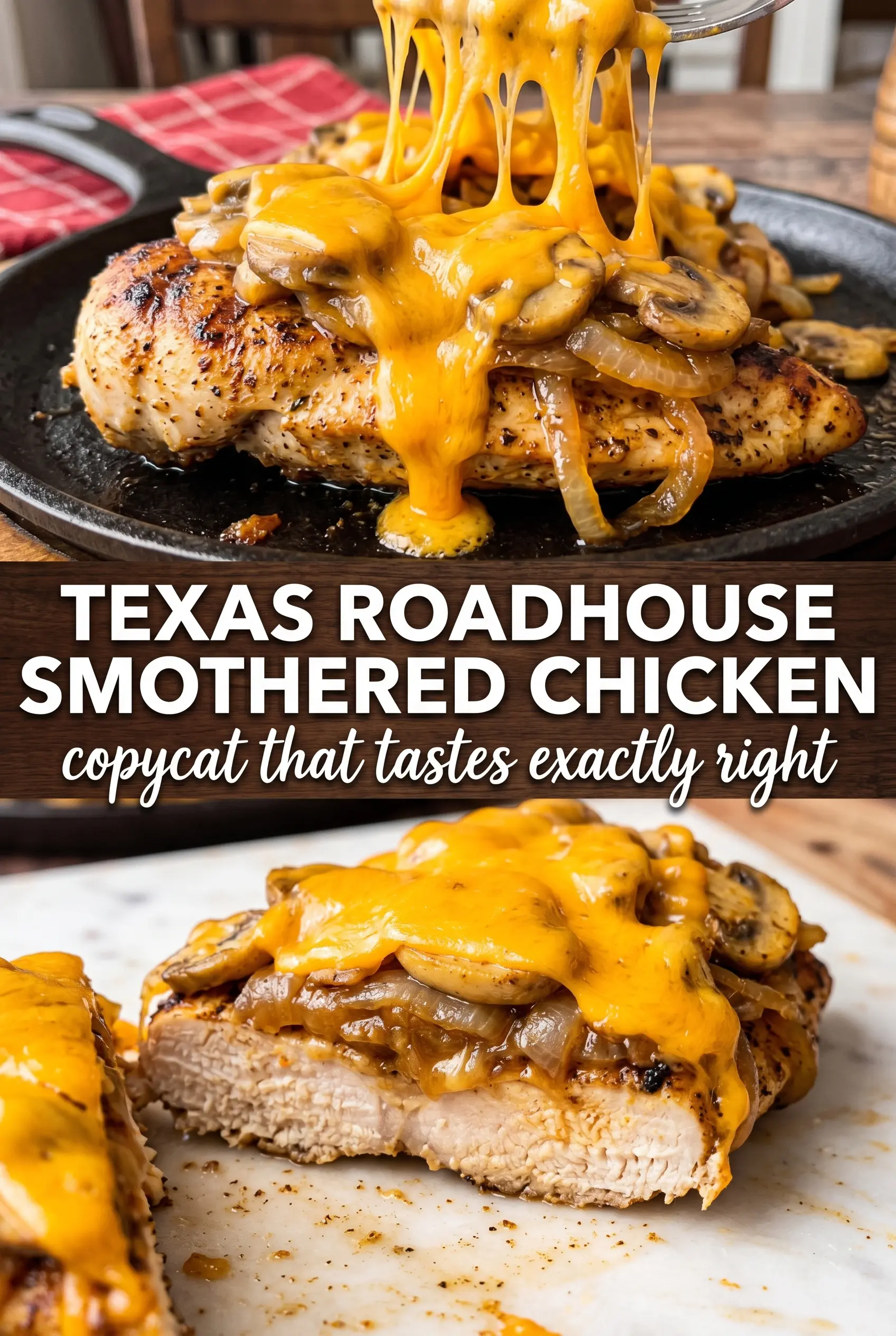
Texas Roadhouse Smothered Chicken Copycat
Ingredients
Equipment
Method
- Season the chicken breasts generously with Cajun seasoning. Sear in olive oil in an oven-safe skillet over medium-high heat for 5-6 minutes per side until golden and the internal temperature reaches 165°F, then remove.
- Melt the butter in the same pan. Cook the sliced onions over medium heat for 8-10 minutes until deeply caramelized.
- Add the mushrooms and garlic, then cook for 4-5 minutes until golden. Deglaze with Jack Daniel's whiskey or chicken broth, then season with salt and pepper.
- Return the chicken to the pan. Top each breast with the mushroom and onion mixture, then lay 2 slices of Monterey Jack over the top.
- Broil for 2-3 minutes until the cheese is melted, bubbly, and golden. Look for golden spots on the cheese and bubbling at the edges.
- Garnish with fresh parsley and serve. Plate the chicken so the mushrooms and onions show beneath the melted cheese.