Tuscan chickpea soup lands in that perfect middle ground between light and satisfying. The broth turns fragrant with rosemary and garlic, the chickpeas soften just enough to thicken the pot a little, and the kale gives each spoonful some heft without making the soup feel heavy. A final hit of lemon and olive oil keeps it bright instead of muddy, which is what makes a simple bowl taste finished.
The trick here is building flavor in layers, not dumping everything in at once and hoping the broth does the work. Onion needs enough time to turn sweet, garlic needs only a short cook so it stays mellow, and the parmesan rind, if you have one, quietly deepens the broth without screaming cheese. I also like mashing a portion of the chickpeas near the end because it gives the soup body without turning it into a puree.
Below, you’ll find the small details that matter most: how to keep the greens from going dull, when to season for the best balance, and the one swap I’d make if you want a dairy-free bowl that still tastes round and full.
I loved how the chickpeas got creamy after mashing a few of them, and the rosemary gave the broth such a good depth without overpowering the kale. I added the lemon at the end like you said and it made the whole pot taste brighter.
Save this Tuscan Chickpea Soup for a brothy, rosemary-scented dinner with creamy chickpeas and a bright lemon finish.
The Secret to Brothy Soup That Still Feels Substantial
The mistake with chickpea soup is treating it like a thin broth with a few beans floating in it. Chickpeas need a little roughening up if you want the soup to feel complete. When you mash or blend just a portion, the starches help thicken the pot naturally, and the broth clings to the greens and tomatoes instead of sliding past them.
Another thing that matters here is when you add the kale. It goes in near the end because it only needs a few minutes to soften and turn deep green. If it cooks too long, it loses its bite and the soup starts tasting tired. The rosemary should also come out on time; leave it in too long and the broth can turn woodsy instead of clean and savory.
What Each Ingredient Is Actually Doing in the Pot

- Chickpeas — These are the body of the soup. Canned chickpeas work well because they’re already tender, and that means you can focus on flavor instead of boiling beans from scratch. Mashing a third of them gives the broth a creamy feel without adding cream.
- Fire-roasted diced tomatoes — The roasted note gives the soup a little depth that regular diced tomatoes don’t quite have. If you only have plain diced tomatoes, use them, but the soup will taste brighter and less smoky.
- Rosemary — Fresh rosemary is worth using here because it perfumes the broth without making it taste like dried herbs from the pantry. If you need to swap, use half the amount of dried rosemary and remove it carefully so the needles don’t hang around in the bowl.
- Parmesan rind — This is the quiet upgrade. It melts just enough to add savory richness, but it doesn’t make the soup heavy. Skip it if you want a dairy-free pot; the soup will still work, though it will taste a little less rounded.
- Kale — Kale holds up better than softer greens, which is why it belongs in a soup like this. Strip the stems and chop it into bite-sized pieces so it wilts evenly and doesn’t leave tough ribs in the spoon.
Building the Broth Before the Greens Go In
Sweetening the onion first
Start the onion in olive oil and give it the full five minutes over medium heat. You want it soft, translucent, and just starting to pick up a little color at the edges. If the heat is too high, the onion will brown before it sweetens, and the whole soup will taste sharper than it should.
Waking up the garlic and red pepper flakes
Add the garlic and red pepper flakes next and cook them for about two minutes. The garlic should smell fragrant and mellow, not harsh or browned. If it starts to take on color, pull the pot off the heat for a moment; burned garlic will carry through the whole batch.
Letting the simmer do the work
Once the broth, tomatoes, chickpeas, rosemary, seasoning, and parmesan rind are in the pot, bring everything to a boil and then drop it to a steady simmer. That gentler heat gives the chickpeas time to soften and the broth time to pick up the rosemary and tomato flavor. Keep the lid slightly ajar so the soup reduces a bit; if you cover it tightly, the broth can stay thinner than you want.
Finishing with body and brightness
Remove the rosemary and parmesan rind before you mash or blend some of the chickpeas. This is where the texture changes from thin soup to something that feels dinner-worthy. Stir in the kale and cook just until it wilts, then season with salt, pepper, and lemon at the end. The lemon matters because it lifts the broth after all that simmering, and a drizzle of olive oil on top gives each bowl a glossy finish.
How to Adapt This Soup Without Losing Its Character
Dairy-Free Bowl
Skip the parmesan rind and finish with a little extra olive oil and lemon. You lose the gentle savory depth from the cheese, but the soup stays balanced if you season it well and let the rosemary work in the broth. If you want more richness, stir in a spoonful of white miso at the very end off the heat.
Thicker, More Filling Version
Blend or mash half the chickpeas instead of just a third, or let the soup simmer uncovered for a few extra minutes. The tradeoff is a less brothy texture, but you get a bowl that eats more like a stew and holds up well for lunch. Add a splash of broth if it gets too dense after standing.
Swap the Greens
Spinach works if that’s what you have, but add it in the last minute because it collapses fast. Swiss chard is the closest stand-in for kale and gives a slightly softer bite. Either way, keep the greens at the end so they stay fresh and green instead of drifting into the background.
Storage and Reheating
- Refrigerator: Store for up to 4 days. The broth will thicken as it sits because the chickpeas keep releasing starch.
- Freezer: Freezes well for up to 3 months. Cool it completely first, then freeze in portions and leave a little headspace in the container.
- Reheating: Warm it gently on the stove over medium-low heat and add a splash of broth or water if needed. Don’t boil it hard, or the kale can turn dull and the soup can taste flat.
Answers to the Questions Worth Asking
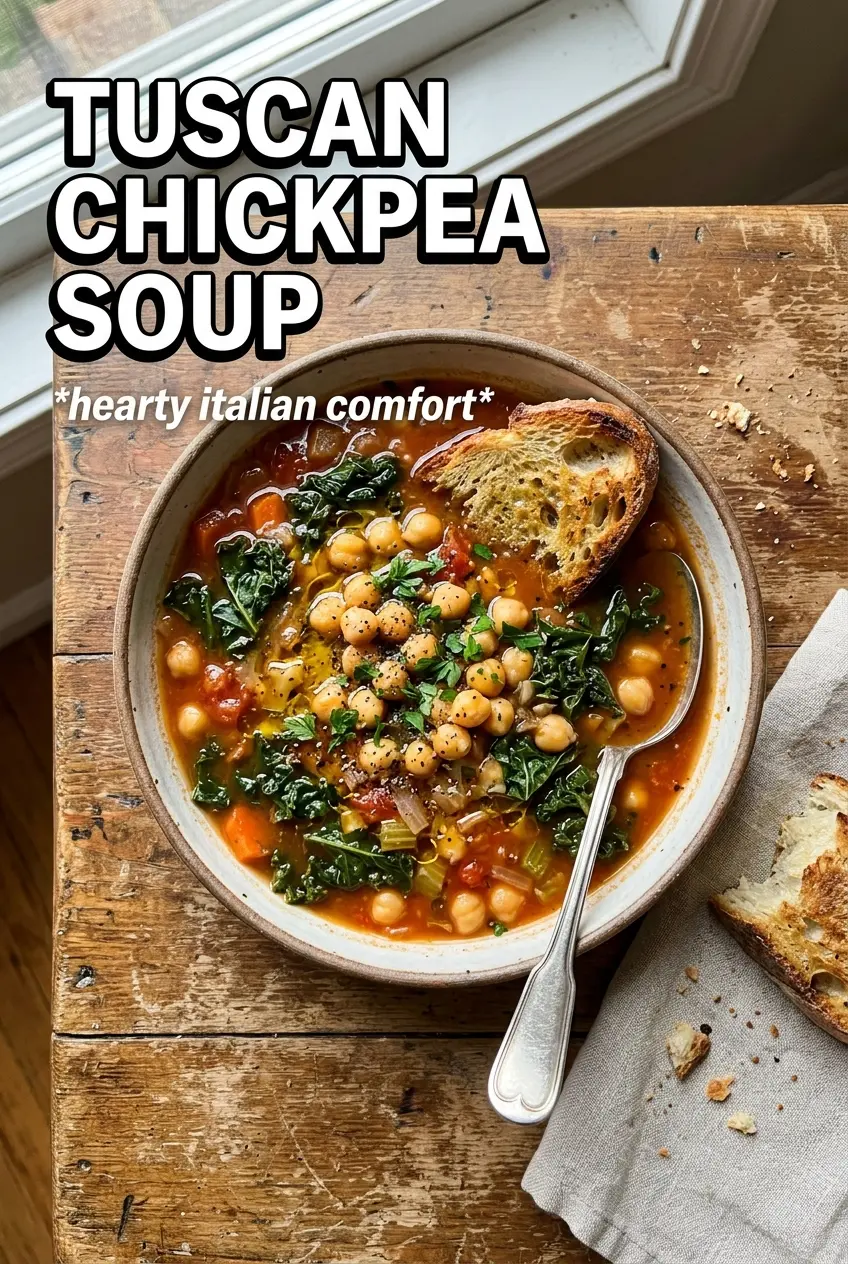
Tuscan Chickpea Soup
Ingredients
Equipment
Method
- Heat the olive oil in a large pot over medium heat, then sauté the onion for 5 minutes until softened and translucent.
- Add the garlic and red pepper flakes and cook for 2 minutes, stirring, until fragrant.
- Add chickpeas, fire-roasted diced tomatoes, vegetable broth, rosemary, Italian seasoning, and parmesan rind to the pot and bring to a boil.
- Reduce to a simmer for 20 minutes, then remove the rosemary and parmesan rind.
- Mash or blend about a third of the chickpeas for a thicker consistency, leaving the rest partially whole.
- Add the chopped kale and cook for 5 minutes, stirring, until wilted.
- Season with salt and pepper, then add lemon for brightness; drizzle with olive oil and top with parmesan before serving.