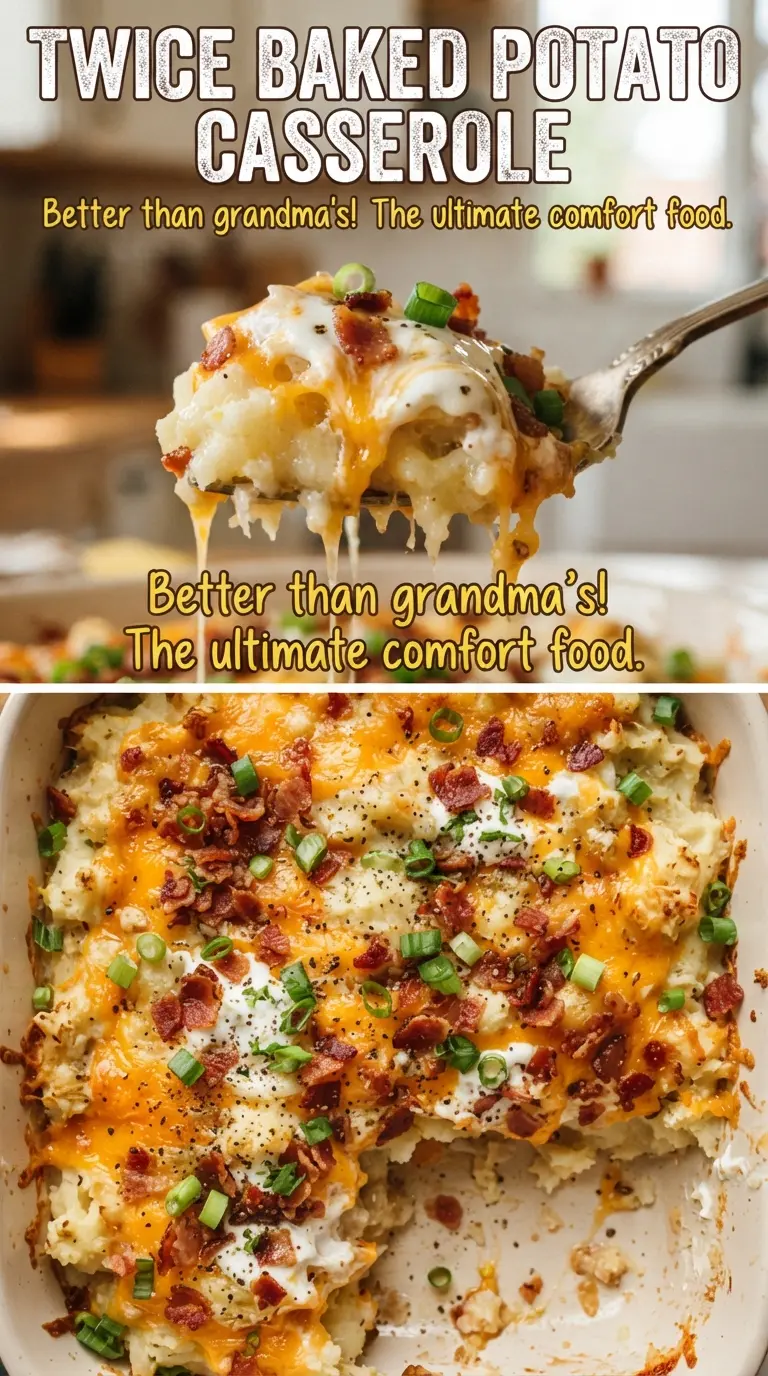
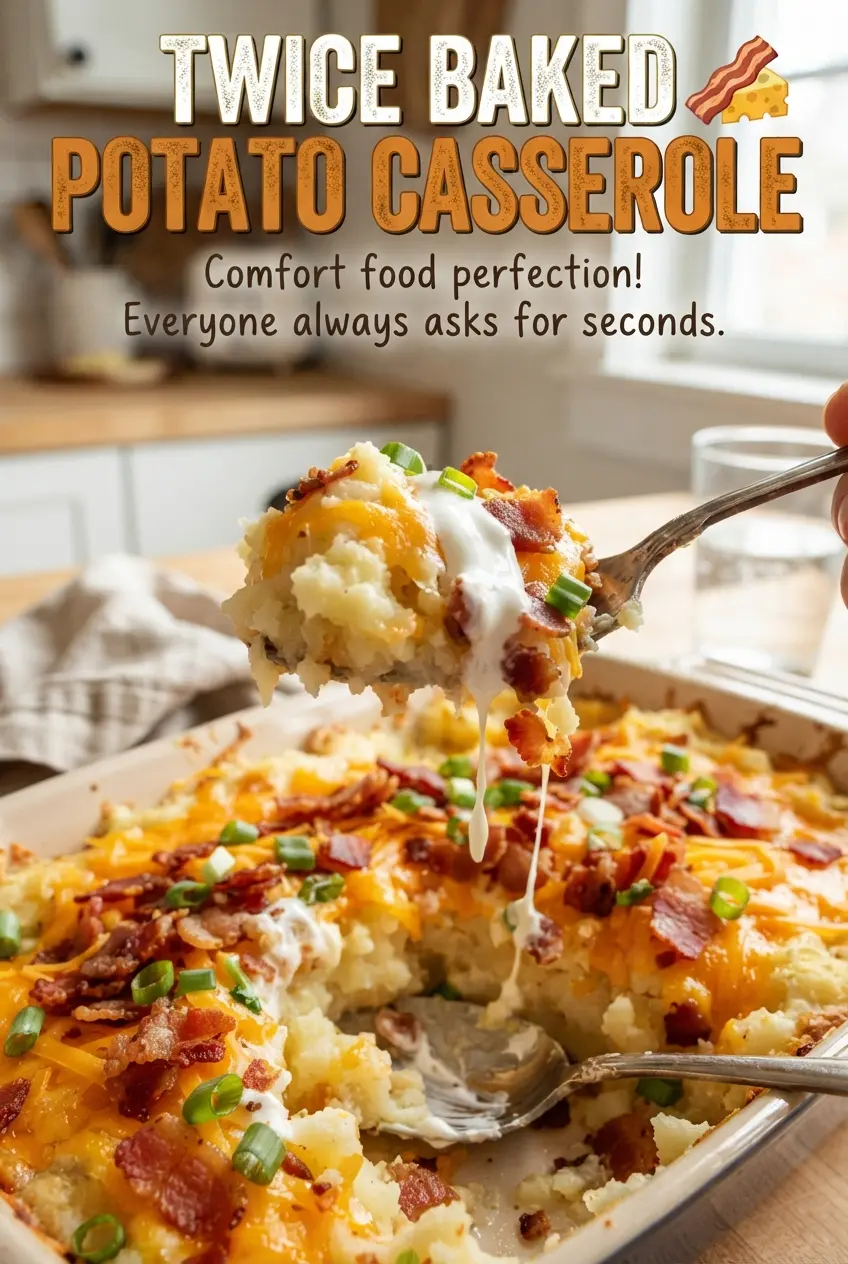
Twice baked potato casserole brings all the best parts of loaded baked potatoes into one pan: fluffy potato, a creamy middle, crisp bacon, sharp cheddar, and those fresh green onions on top. The texture is the draw here. You get a soft, spoonable base with enough structure to hold its shape, plus a bubbling, browned top that cracks a little when you scoop through it.
What makes this version work is the balance. Russet potatoes stay light and mash up dry enough to absorb butter, sour cream, and milk without turning gluey, while the oven finish melts the cheese into the bacon and keeps the edges from tasting flat. The potatoes also get baked before they’re mashed, which gives you that deeper, more potato-forward flavor you can’t fake with boiled spuds.
Below, I’ll walk through the part that matters most: how to keep the filling creamy instead of gummy, how to get the topping browned without drying out the casserole, and a few smart swaps if you want to make it fit what’s in your kitchen.
I loved how the potatoes stayed fluffy instead of heavy, and the cheddar on top got perfectly bubbly without the filling drying out. My husband went back for seconds before I even sat down.
Love this loaded twice baked potato casserole? Save it for the nights when you want creamy potatoes, crisp bacon, and a bubbling cheddar top in one pan.
The Potatoes Need Dry Heat, Not a Water Bath
The biggest mistake with potato casseroles is starting with potatoes that already taste watered down. Baking the russets instead of boiling them keeps the flesh fluffy and concentrated, which matters once you add dairy. Boiled potatoes pick up too much moisture and can turn the whole casserole dense or pasty.
Russets are the right choice because they break down into a light mash and still hold enough structure after baking. If you mash them while they’re steaming hot, they can go sticky, so let them cool just enough to handle before scooping. That little pause helps the steam escape and gives you a better texture in the final dish.
- Russet potatoes — Their dry, starchy texture is what keeps this casserole fluffy instead of heavy. Yukon Golds will work in a pinch, but the result will be creamier and a little less airy.
- Sour cream — This adds tang and body. Full-fat sour cream gives the best texture; light versions work, but the filling won’t taste as rich.
- Butter and milk — Butter brings flavor, milk loosens the mash. Warm milk blends in faster, but cold milk won’t ruin the dish if that’s what you have.
- Sharp cheddar — Sharp cheddar gives the casserole its backbone. Mild cheddar melts fine, but the flavor gets softer and less distinct.
- Bacon and green onions — Add these in layers, not all at the end, so the filling tastes seasoned all the way through instead of just on top.
What Happens in the Bowl Matters More Than the Bake
- Butter — Softened butter coats the potato flesh and gives the mash a silky base. If it’s cold, it won’t blend evenly and you’ll chase lumps longer than you need to.
- Sour cream — This is the ingredient that keeps the casserole tasting bright instead of flat. Greek yogurt can step in, but it adds a sharper tang and a slightly firmer finish.
- Whole milk — Whole milk gives enough richness to loosen the mash without thinning it out. Cream works too, but then the casserole gets heavier.
- Sharp cheddar — Use the full-fat shredded cheese and shred it yourself if possible. Pre-shredded cheese has anti-caking agents that can dull the melt and make the texture a little grainy.
- Bacon — Cook it until crisp enough to crumble cleanly. Soft bacon sinks into the potatoes instead of giving you those salty little bites that make the casserole worth serving.
- Green onions — Keep some for the end. The fresh finish cuts through all the fat and keeps each bite from tasting one-note.
Building the Casserole So It Stays Creamy After Baking
Baking the Potatoes Until They Collapse at the Squeeze
Start by baking the potatoes at 400°F until a fork slides in without resistance and the skins look a little wrinkled. That dry-heat bake gives you fluffy interiors and a stronger potato flavor than boiling ever will. If the centers still feel firm, they’ll mash unevenly and leave little hard bits in the casserole.
Mashing Without Turning It Gluey
Scoop the flesh into a bowl and mash it with the butter, sour cream, and milk until it’s smooth with a few small lumps left behind. Stop before it looks whipped. Overmixing releases too much starch and makes the casserole dense and sticky instead of light and scoopable.
Layering in the Good Stuff
Stir in one cup of cheddar, half the bacon, and half the green onions with the salt and pepper. That puts flavor all the way through the dish instead of concentrating it on top. Spread the mixture into a buttered 9×13-inch dish, then top with the remaining cheese and bacon so the surface bakes into a bubbling, browned crust.
Finishing at a Lower Heat
Drop the oven to 350°F for the final bake. That gentler heat melts the cheese without drying out the potatoes underneath. Pull it when the top is bubbling and the edges look set; if you wait for deep browning, the filling can lose its creamy texture.
How to Change It Without Losing the Point of the Dish
Make It Ahead for a Holiday Table
Assemble the casserole up to the point of baking, cover it tightly, and refrigerate it for up to 24 hours. Add 10 to 15 minutes to the second bake if it goes into the oven cold. The texture stays just as good because the potatoes are already baked and mashed, so you’re only reheating and melting the top.
Make It Gluten-Free Without Changing the Dish
This recipe is naturally gluten-free as written, as long as your bacon and shredded cheese don’t contain any hidden additives. That makes it an easy side for guests who need a simple swap-free option. Keep an eye on packaged bacon seasoning if you’re buying pre-cooked strips.
Make It Lighter Without Making It Watery
You can cut back the butter a little and swap part of the sour cream for plain Greek yogurt, but don’t chase low-fat dairy all the way down or the casserole loses its body. The potatoes need enough fat to stay creamy after baking. If you go this route, season a little more aggressively because leaner dairy tastes flatter.
Turn It Into a Vegetarian Side
Skip the bacon and add a little smoked paprika plus an extra handful of cheddar for depth. You’ll lose the salty crunch, so top the finished casserole with sliced chives or a little buttery toasted breadcrumb topping if you want more texture. It won’t taste like bacon, but it will still taste complete.
Storage and Reheating
- Refrigerator: Keep leftovers covered for up to 4 days. The potatoes will firm up as they chill, but the flavor holds well.
- Freezer: It freezes well in portions. Cool completely, wrap tightly, and freeze for up to 2 months; the texture is a little softer after thawing, but still works for a side dish.
- Reheating: Reheat covered at 325°F until hot through, then uncover for a few minutes if you want the top to crisp back up. Microwaving works for a single serving, but use short bursts so the potatoes don’t dry out around the edges.
Answers to the Questions Worth Asking
Twice Baked Potato Casserole
Ingredients
Equipment
Method
- Preheat oven to 400F, then bake the scrubbed russet potatoes for 50-60 minutes until fork-tender.
- Let the potatoes cool slightly, then scoop out the flesh and mash with butter, sour cream, and whole milk until smooth and creamy.
- Stir in 1 cup cheddar, half the bacon, half the green onions, salt, and black pepper until evenly combined.
- Spread the mixture into a buttered 9x13-inch baking dish and top with the remaining cheddar and bacon, keeping an even layer.
- Reduce oven to 350F and bake for 20-25 minutes until hot and the cheese is bubbly with light golden edges.
- Sprinkle with the remaining green onions and serve while warm.