Moist zucchini bread should slice cleanly, hold together without crumbling, and still feel soft and tender on day two. The best versions have enough structure for a thick slice, but they don’t eat like sweetened cake. This Greek yogurt zucchini bread lands right in that sweet spot: a golden crust on top, a plush crumb underneath, and just enough tang to keep each bite from tasting flat.
The trick is using Greek yogurt alongside the oil instead of leaning on oil alone. The yogurt brings moisture, but it also adds a little acidity, which helps the baking soda do its job and gives the loaf a lighter, more tender crumb. The other detail that matters is the zucchini itself — it needs to be grated, then squeezed dry. Skip that step and the loaf can turn dense and gummy in the center even when the top looks done.
Below, I’ll walk through the part that matters most: how to keep the zucchini bread from baking up heavy, plus the simple topping that gives the crust a little crunch and warmth.
The loaf came out incredibly moist without being heavy, and the cinnamon sugar top added just enough crunch. I followed the zucchini squeeze step and the center baked through perfectly in just under an hour.
This Greek yogurt zucchini bread stays moist for days, so it’s the one to bake when you want a breakfast loaf that slices beautifully all week.
The Moisture Trap Most Zucchini Breads Fall Into
Zucchini bread usually fails for one of two reasons: too much liquid from the zucchini, or too much mixing once the flour goes in. Both lead to a heavy loaf with a wet stripe down the middle. This recipe avoids that by treating the zucchini like an ingredient that needs prep, not just a vegetable that gets stirred in at the end.
When you squeeze the zucchini dry, you’re controlling how the loaf bakes. The batter can then hydrate the flour without turning sludgy. And when you stop mixing as soon as the flour disappears, you keep the crumb tender instead of tightening it into something chewy and dense.
- Too much moisture — grated zucchini carries a lot of water. Squeezing it dry keeps the batter balanced and helps the center bake through at the same rate as the edges.
- Overmixing — once flour is added, stir only until no dry streaks remain. More mixing develops gluten, which makes quick bread tough.
- Baking soda + baking powder — the combination gives lift and helps the loaf rise without depending on whipped eggs or aggressive mixing.
- Full-fat Greek yogurt — the fat gives the bread a softer crumb, while the tang keeps the flavor from tasting overly sweet or one-note.
What Each Ingredient Is Actually Doing in This Loaf
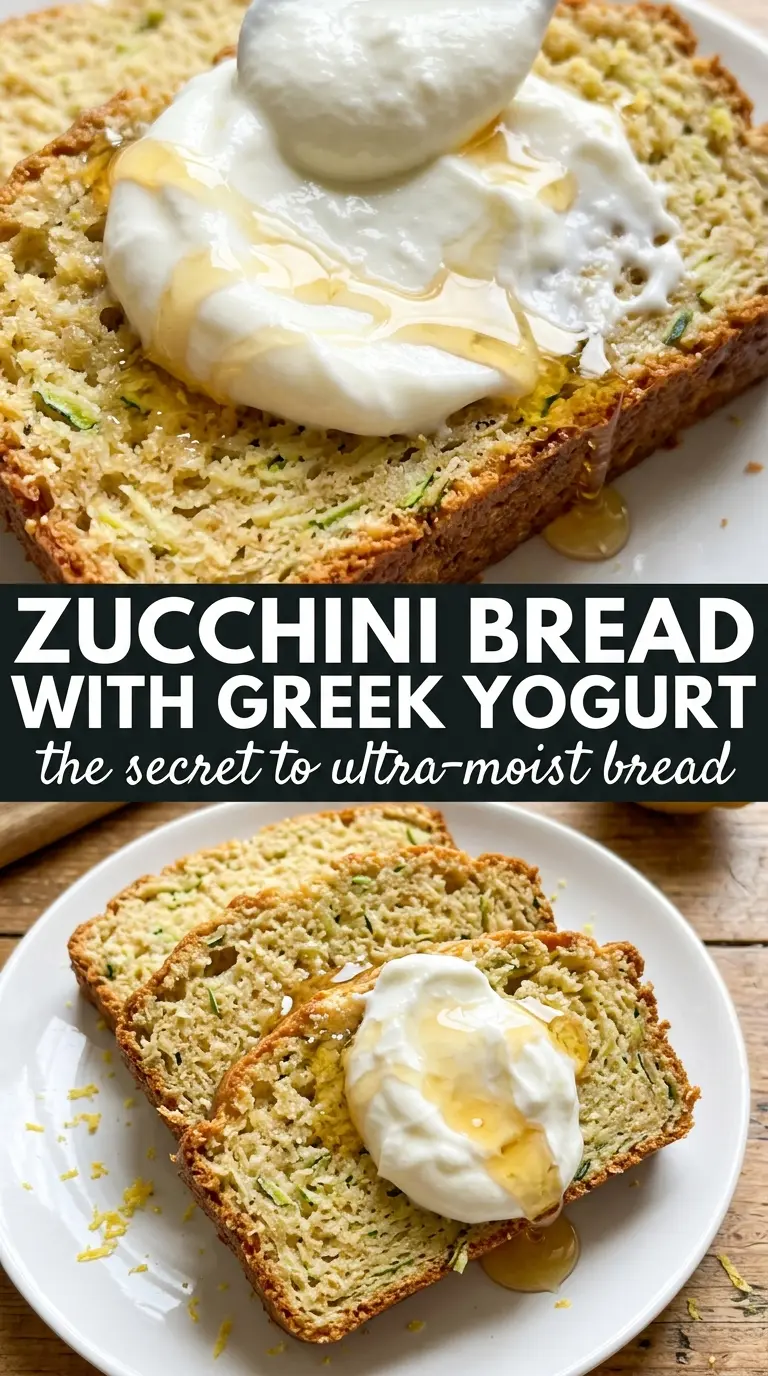
The ingredient list is short, which means each item has a job you can actually taste or see in the finished loaf.
- All-purpose flour — gives the bread enough structure to slice cleanly. Bread flour would make it tougher; cake flour would be too delicate for the moisture in the zucchini.
- Greek yogurt — this is the ingredient that changes the texture most. Full-fat yogurt is worth using here because it gives a softer crumb and richer taste than low-fat yogurt, which can bake up a little drier.
- Vegetable oil — keeps the loaf tender even after it cools. Butter can work, but the bread won’t stay as moist over several days.
- Zucchini — mild enough that it disappears into the loaf, but it adds moisture and a subtle green-vegetable freshness. Grate it on the small side so it blends in evenly.
- Cinnamon sugar topping — the turbinado sugar adds a crackly top that contrasts with the soft interior. If you skip it, the loaf is still good, but you lose that little bit of crunch.
How to Mix the Batter So the Center Bakes Through
Whisk the dry ingredients first
Start by whisking the flour, baking soda, baking powder, salt, and cinnamon together until the mixture looks evenly speckled. That step matters more than it sounds because baking soda and baking powder need to be dispersed well or the loaf can bake with uneven pockets. If you see clumps of cinnamon or streaks of leavener, keep whisking for another few seconds.
Build the wet base until it looks smooth
Beat the sugar, eggs, oil, Greek yogurt, and vanilla together until the mixture looks creamy and glossy. You’re not trying to whip in a lot of air here. The goal is a smooth base that can carry the zucchini evenly, not a foamy batter that bakes into a fragile loaf.
Fold in the zucchini, then stop
Stir the squeezed zucchini into the wet mixture until it’s evenly distributed, then add the dry ingredients and fold just until no flour streaks remain. The batter will look thick and a little bumpy, which is exactly what you want. If it turns pasty or elastic, it’s been mixed too long and the finished bread will be tighter than it should be.
Bake until the top springs back
Pour the batter into a greased 9×5 pan and sprinkle the cinnamon sugar over the top in an even layer. Bake at 350°F until the top is deeply golden and a toothpick comes out clean from the center, usually 50 to 60 minutes. If the top browns too quickly before the middle is done, lay a piece of foil loosely over the loaf for the last 10 to 15 minutes.
How to Adapt This for Different Needs Without Losing the Good Texture
Dairy-Free Version That Still Stays Tender
Swap the Greek yogurt for an unsweetened dairy-free yogurt with a thick texture, preferably coconut or almond-based. Thin plant yogurts can make the batter loose, so choose one that spoon-holds well. The loaf will still be moist, but it may lose a little of the tang that makes the original taste so balanced.
Lower-Sugar Loaf With a Less Sweet Top
Cut the granulated sugar down slightly if you want a more breakfast-friendly loaf, but don’t reduce it too far or the crumb can get drier. You can also skip the turbinado topping and dust the pan with a little flour instead. The texture stays close to the original, but the crust won’t have the same sweet crunch.
Gluten-Free Swap That Holds Together
Use a cup-for-cup gluten-free flour blend that already includes xanthan gum. The batter may need a minute or two to rest before baking so the flour can hydrate fully. The loaf will be a little more delicate when warm, but it should still slice neatly once fully cooled.
Storage and Reheating
- Refrigerator: Store wrapped or in an airtight container for up to 5 days. The crumb stays moist, but the topping softens a little after the first day.
- Freezer: This loaf freezes well. Wrap slices individually, then tuck them into a freezer bag for up to 3 months so you can pull out one piece at a time.
- Reheating: Warm slices in a toaster oven or microwave just until heated through. If you overheat them, the yogurt-based crumb can turn rubbery instead of soft.
Answers to the Questions Worth Asking
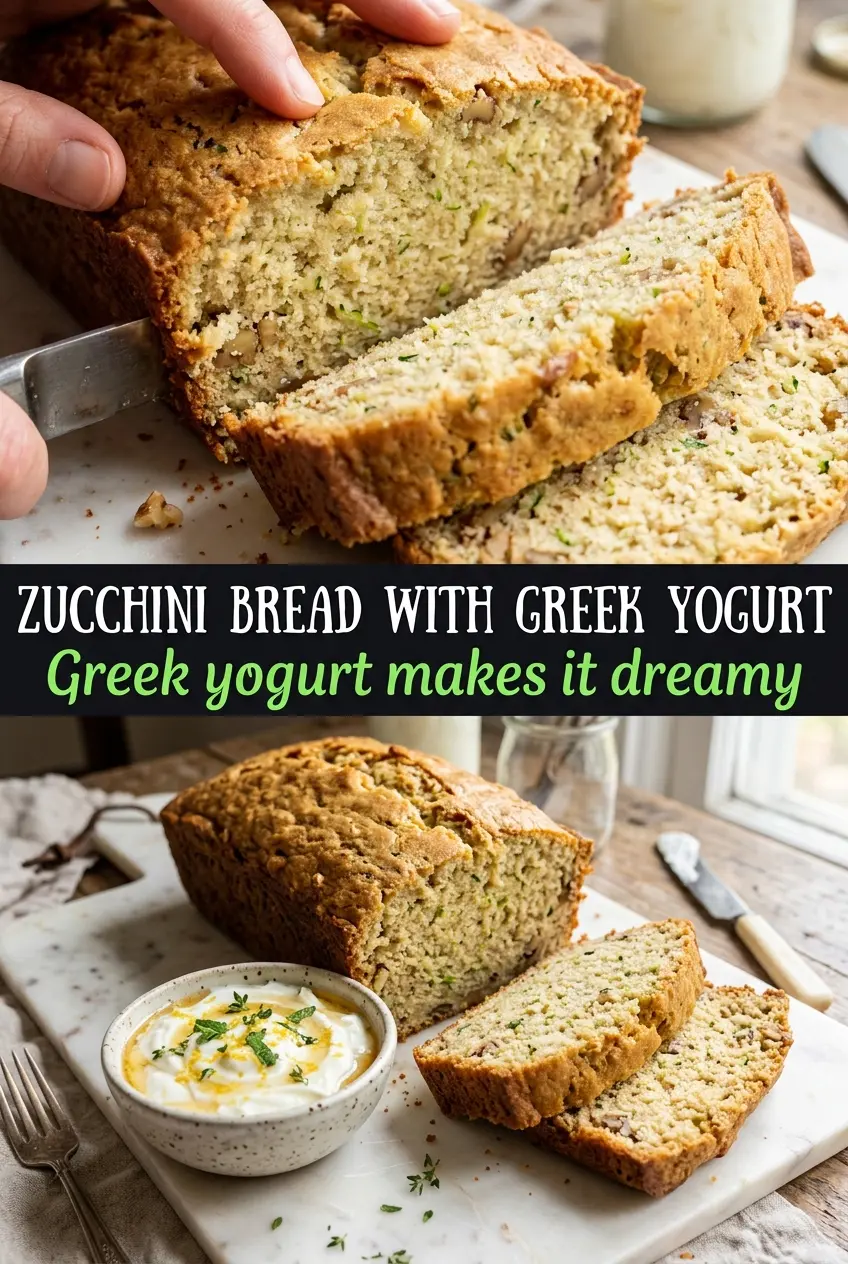
Zucchini Bread with Greek Yogurt
Ingredients
Equipment
Method
- Preheat the oven to 350°F and grease a 9x5 loaf pan.
- Whisk all-purpose flour, baking soda, baking powder, salt, and cinnamon together until evenly combined.
- Beat granulated sugar, eggs, vegetable oil, plain Greek yogurt (full fat), and vanilla extract until smooth and creamy.
- Stir in zucchini, grated and squeezed dry until the batter looks evenly streaked with zucchini.
- Fold the dry ingredients into the wet mixture until just combined, stopping as soon as no dry flour remains.
- Pour the batter into the loaf pan and sprinkle turbinado sugar mixed with cinnamon evenly over the surface.
- Bake for 50–60 minutes at 350°F until a toothpick comes out clean and the top is golden.
- Cool the loaf for 15 minutes before slicing to help the crumb set and stay tender.