Zucchini cake has a way of disappearing faster than people expect. The crumb stays soft and moist for days, the cinnamon and nutmeg give it that warm carrot-cake feel, and the cream cheese frosting turns a plain sheet cake into the kind of dessert people cut “just one more” piece of. The zucchini doesn’t make the cake taste green or vegetal; it melts into the batter and leaves behind tenderness that oil alone can’t quite give you.
The trick is squeezing the zucchini dry before it goes into the bowl. Skip that step and the cake can bake up heavy in the center or turn wet around the edges. The other thing that matters is not overmixing once the flour goes in. You want a tender crumb, not a tight, bready cake. The frosting also works best when the cake is fully cool, because even a little warmth will loosen it and make the whole top slide.
Below you’ll find the exact method that keeps this zucchini sheet cake soft, spiced, and sturdy enough for a thick layer of frosting. I also added the substitutions that actually work if you need to leave out the walnuts or make the cake a little less sweet.
I squeezed the zucchini like you said and the cake baked up perfectly even. The frosting set thick and creamy, and the walnuts added just enough crunch without taking over.
Save this zucchini cake with cream cheese frosting for the days when you want a tender, spiced sheet cake that stays moist for hours.
The Reason Zucchini Cake Stays Tender When Other Cakes Dry Out
The biggest mistake with zucchini cake is treating the zucchini like a garnish instead of part of the batter. Fresh zucchini carries a lot of water, and that water can work for you or against you. When it goes in squeezed dry, it softens the crumb without flooding the batter. When it goes in wet, the center can bake up dense and a little gummy, especially in a 9×13 pan where the middle has to set through a thick layer of batter.
The other part of the structure comes from the balance of oil, eggs, and leavening. Oil keeps the cake soft even after chilling, eggs give it lift and body, and both baking soda and baking powder help the crumb rise evenly instead of doming too much in the center. That mix gives you a cake that slices cleanly once cooled, which matters when you’re spreading frosting over the top in a thick layer.
What Each Ingredient Is Actually Doing in This Zucchini Sheet Cake
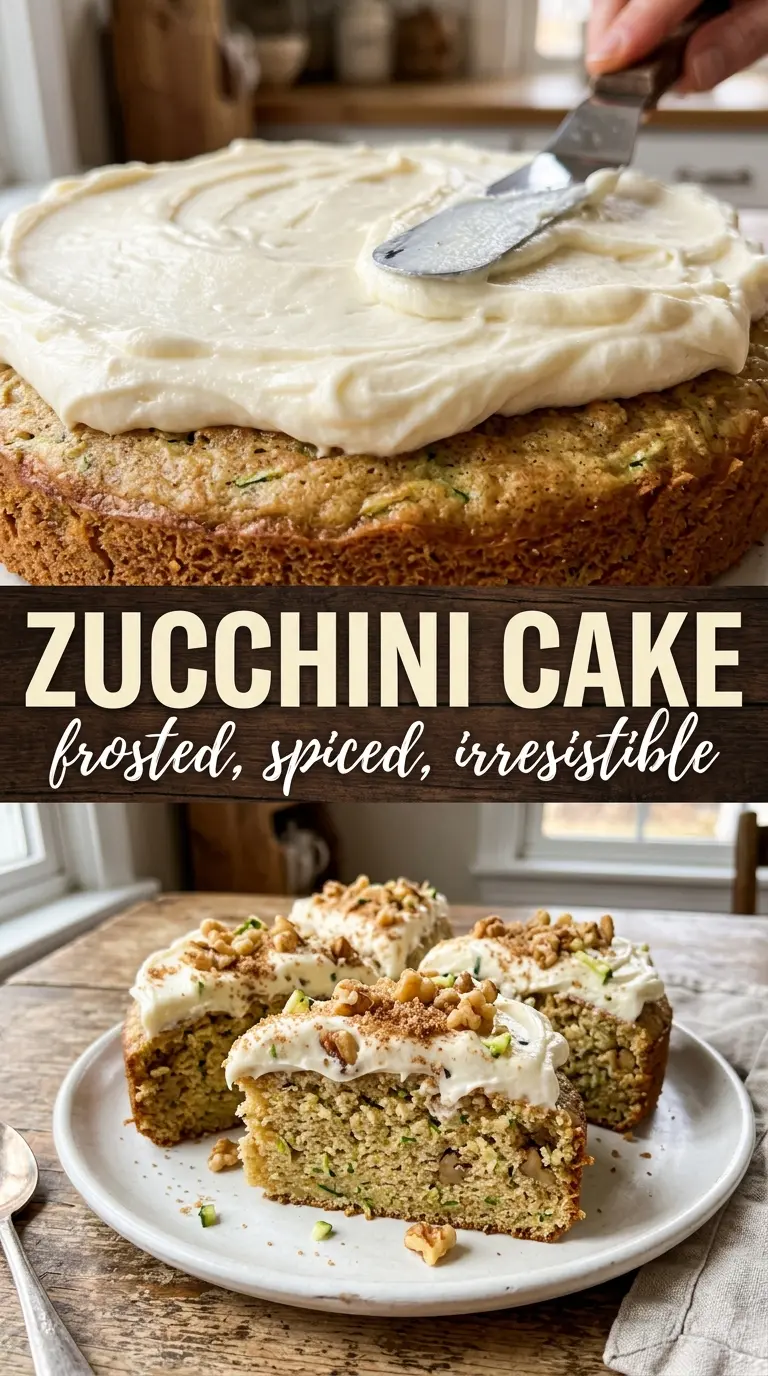
- Zucchini — This is the moisture source that keeps the cake soft for days. Grate it fine and squeeze it dry in a clean kitchen towel or sturdy paper towels; if you leave too much water in it, the cake can sink in the center.
- Vegetable oil — Oil gives this cake its plush, tender crumb. Butter would add flavor, but it also firms up when chilled, and this style of cake is better when it stays soft straight from the fridge or at room temperature.
- Cinnamon and nutmeg — These are what give the cake that warm, carrot-cake-style flavor. If your spice drawer is old, replace the nutmeg first; stale nutmeg disappears fast in a cake like this.
- All-purpose flour — The regular flour keeps the crumb light but sturdy enough for frosting. Cake flour would make it a little softer, but the cake can become too delicate for a thick cream cheese topping.
- Cream cheese and butter — Both need to be softened for the frosting to come together smooth and fluffy. Cold cream cheese leaves little lumps, and melted butter makes the frosting slack instead of spreadable.
- Walnuts — Optional, but they add a good crunch against the soft crumb. Leave them out for a nut-free cake, or toast them first if you want a deeper, more noticeable nuttiness.
Building the Batter So the Cake Stays Light, Not Heavy
Mix the Wet Ingredients Until They Look Smooth
Beat the sugar, oil, eggs, and vanilla until the mixture looks glossy and even. You don’t need to whip in a ton of air here; you just want the sugar starting to dissolve so the cake bakes up with a fine, even crumb. If the eggs are cold and the mixture looks curdled at first, keep going for another minute and it will smooth out.
Fold in the Zucchini Before the Flour
Stir the squeezed zucchini into the wet ingredients before the dry ingredients go in. That helps the zucchini distribute evenly, so you don’t end up with one wet layer at the bottom of the pan. Once the flour goes in, work quickly and stop as soon as the batter disappears; overmixing is what makes zucchini cake tight instead of tender.
Bake Until the Center Springs Back
Spread the batter into a greased 9×13 pan and bake until the top looks set and a toothpick in the center comes out clean or with a few dry crumbs. The edges will pull slightly from the pan when it’s ready. If the top browns before the middle is done, the cake needs a little more time, not a hotter oven.
Cool Completely Before the Frosting Goes On
Let the cake cool all the way before you frost it. Even a warm cake will melt cream cheese frosting into a thin layer, and the top won’t hold those thick swirls. Once it’s cool, beat the frosting until light and fluffy, then spread it all the way to the edges in a generous layer.
Three Ways to Adapt This Zucchini Cake Without Losing the Good Part
Make It Nut-Free
Leave out the walnuts entirely and the cake still holds its soft, moist texture. Nothing else needs to change. If you want a little crunch on top, add chopped toasted pepitas after frosting instead of mixing nuts into the batter.
Make the Frosting Less Sweet
Use 2 cups powdered sugar instead of 2 1/2 cups and add the milk a teaspoon at a time until it spreads easily. The frosting will taste a little tangier and less cloudlike, but it balances the sweet cake nicely.
Gluten-Free Version
Swap the all-purpose flour for a cup-for-cup gluten-free baking blend that includes xanthan gum. The crumb may be a touch more delicate, but the cake still bakes up moist and sliceable if you don’t overmix it.
Storage and Reheating
- Refrigerator: Store covered for up to 5 days. The frosting will firm up, but the cake underneath stays moist.
- Freezer: Freeze unfrosted or frosted slices wrapped well for up to 2 months. Thaw in the refrigerator so the frosting doesn’t weep.
- Reheating: This cake is best served cool or at room temperature, not warmed. If it’s been chilled, let slices sit out for 20 to 30 minutes so the frosting softens and the crumb tastes tender again.
Answers to the Questions Worth Asking
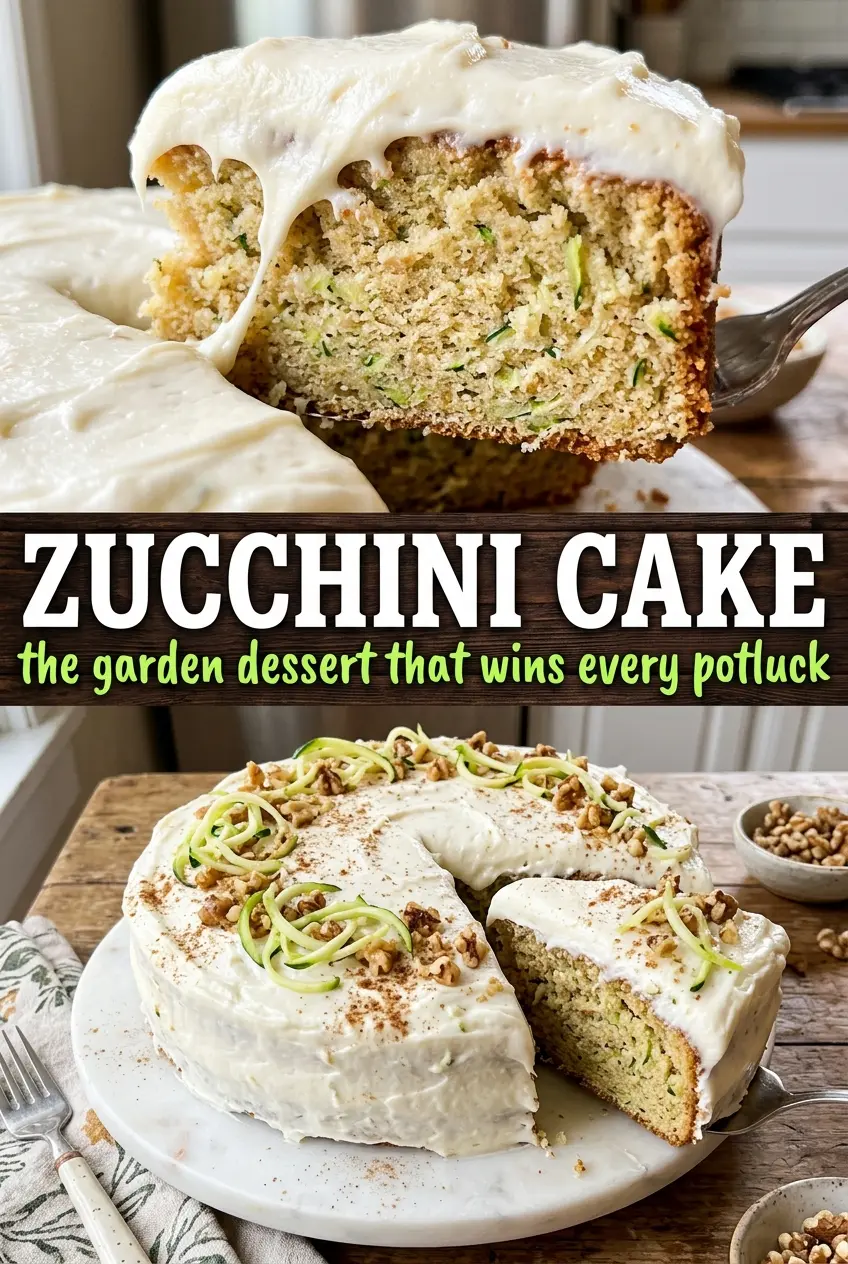
Zucchini Cake
Ingredients
Equipment
Method
- Preheat the oven to 350°F and grease a 9x13 baking pan so the cake releases cleanly after baking.
- Whisk all-purpose flour, cinnamon, baking soda, baking powder, salt, and nutmeg together until evenly combined and free of lumps.
- Beat granulated sugar, vegetable oil, eggs, and vanilla extract until smooth and glossy.
- Stir in the grated, squeezed-dry zucchini until the batter looks uniformly speckled.
- Fold in the dry ingredients and chopped walnuts (if using) until just combined, stopping as soon as no dry streaks remain.
- Pour the batter into the prepared pan and bake for 30–35 minutes, until a toothpick inserted in the center comes out clean.
- Cool the cake completely in the pan before frosting so the frosting won’t melt or slide.
- Beat softened cream cheese, softened butter, powdered sugar, vanilla, and milk until light and fluffy with a spreadable texture.
- Spread the cream cheese frosting over the cooled cake, using gentle pressure to level the top for clean slices.